Japan Macro Daily(Beta Mode)
Machinery Orders Miss Lifts Nikkei, JGB Yields
Market Snapshot
| Asset | Level | Change |
|---|---|---|
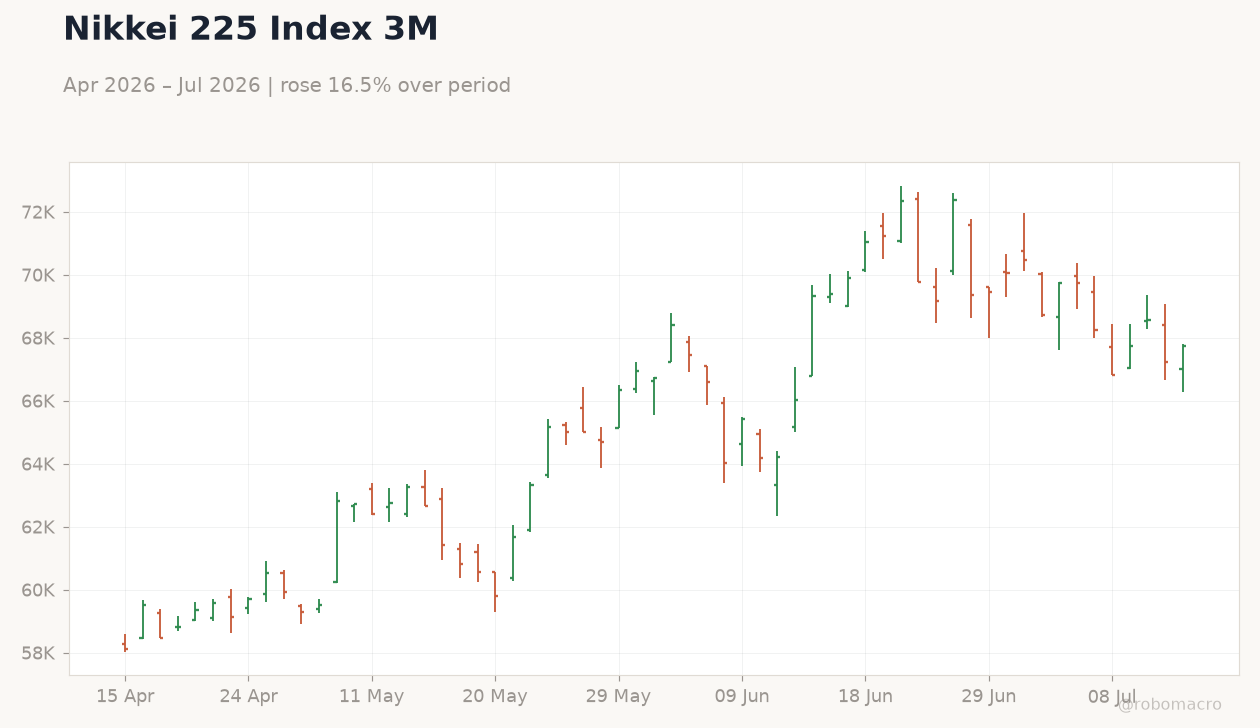
| Nikkei 225 | 67,743.50 | +0.74% |
| USD/JPY | 162.23 | -0.12% |
| EUR/JPY | 186.03 | +0.63% |
| GBP/JPY | 219.43 | +0.99% |
| Gold | 4,069.50 | +0.21% |
| Brent Crude | 85.77 | +1.23% |
| Bitcoin | 64,936.83 | -0.03% |
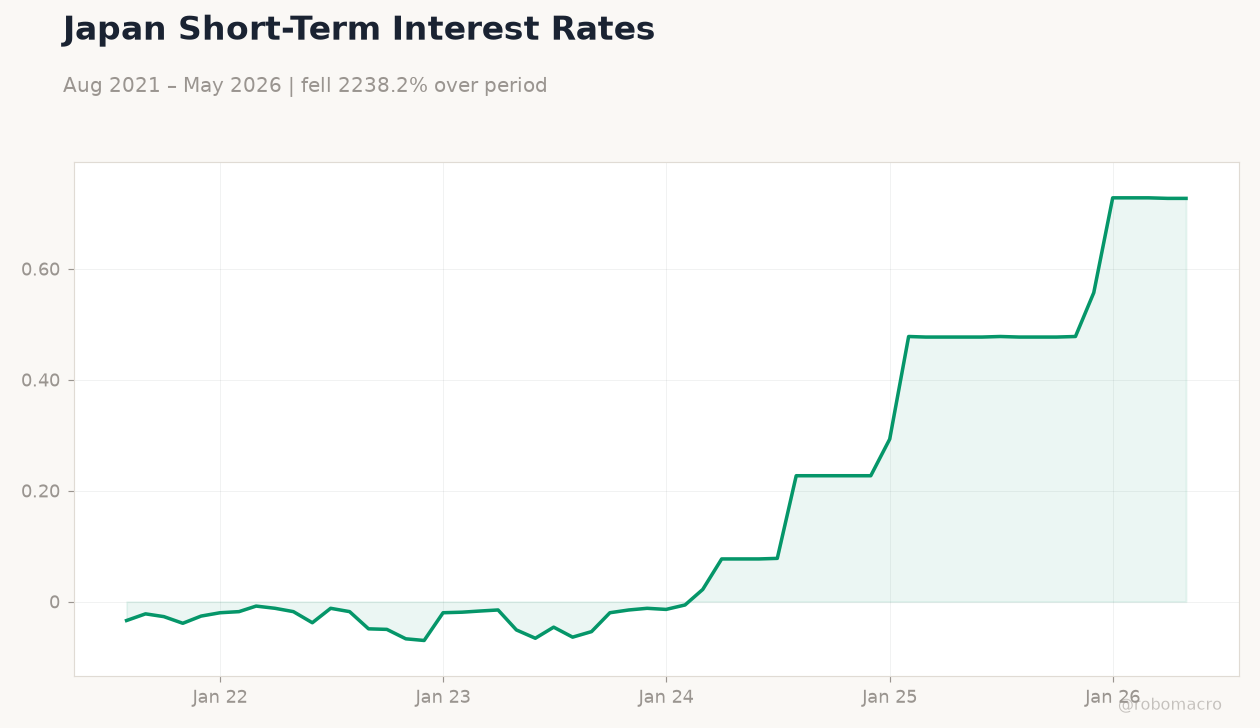
| Japan 2Y Govt Yield | 0.73% | +0.00% |
| Japan 10Y Govt Yield | 2.65% | +5.37% |
Prior Economic Events
| Data | Prior | Cons | Actual |
|---|---|---|---|
| Machinery Orders Month-over-Month | 8.70 | -4.20 | -12.40 |
| Machinery Orders Year-over-Year | 15.60 | 12.90 | -1.90 |
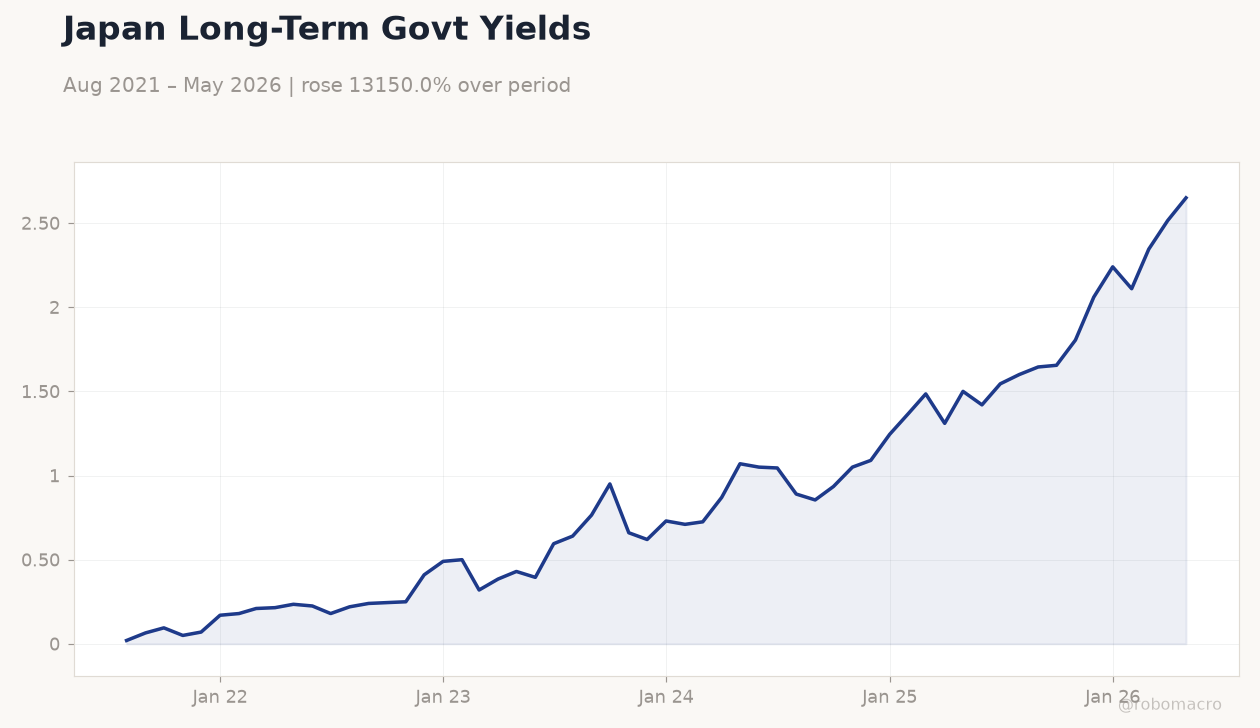 Japan Long-Term Govt Yields | Type: macro_line | Yield %: 2.65 (2026-05-01) | Range: 0.02–2.65 | Trend(6pt): 0.02,0.245,0.62,1.37,2.515,2.65
Today's Economic Events
| Data | Prior | Cons | Time |
|---|---|---|---|
| Tuesday (2026-07-21) | |||
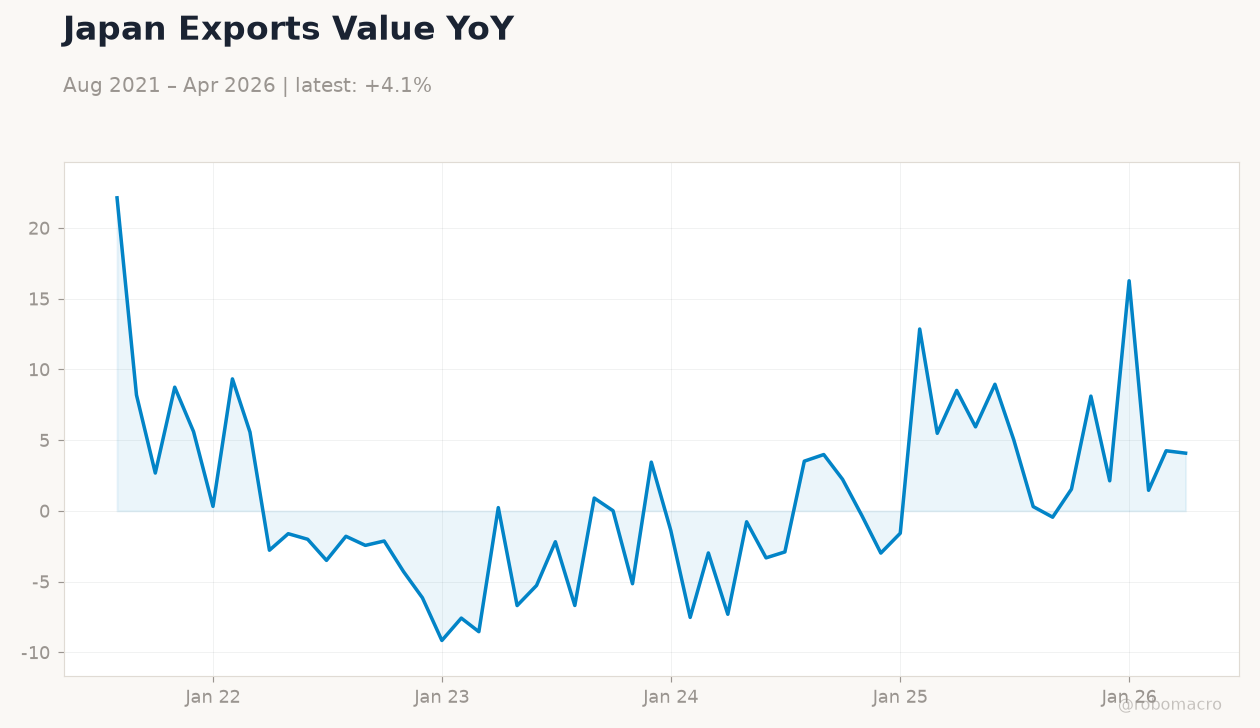
| Trade Balance | -378,700m | - | 19:50 |
| Exports Year-over-Year | 17 | - | 19:50 |
- Machinery orders contracted sharply, missing consensus on both monthly and annual bases
- Nikkei 225 advanced 0.74% to 67,743.50 while 10-year JGB yields rose 5.37%
- Government draft adds explicit BoJ autonomy footnote amid ongoing policy normalisation
Yesterday's Recap
Japanese machinery orders posted a steep contraction on 14 July, with the month-over-month reading falling to -12.4% against a -4.2% consensus and the year-over-year print dropping to -1.9% from an expected 12.9%. The weak capital-spending signals weighed on growth expectations yet failed to derail equity sentiment. The Nikkei 225 closed 0.74% higher at 67,743.50 while USD/JPY eased 0.12% to 162.23.
The 10-year JGB yield climbed 5.37% to 2.71%, lifting the Japan 2-year yield to 0.73%. Cross rates strengthened, with EUR/JPY up 0.63% and GBP/JPY up 0.99%. Brent crude gained 1.23% to $85.77, providing a modest tailwind for Japanese exporters.
No senior BoJ speakers appeared, leaving markets to interpret the data against the verified 0.73% policy rate and 1.50% CPI reading. Gold rose 0.21% to 4,069.50 while Bitcoin eased 0.03% to 64,936.83, reflecting selective risk appetite.
The Day Ahead
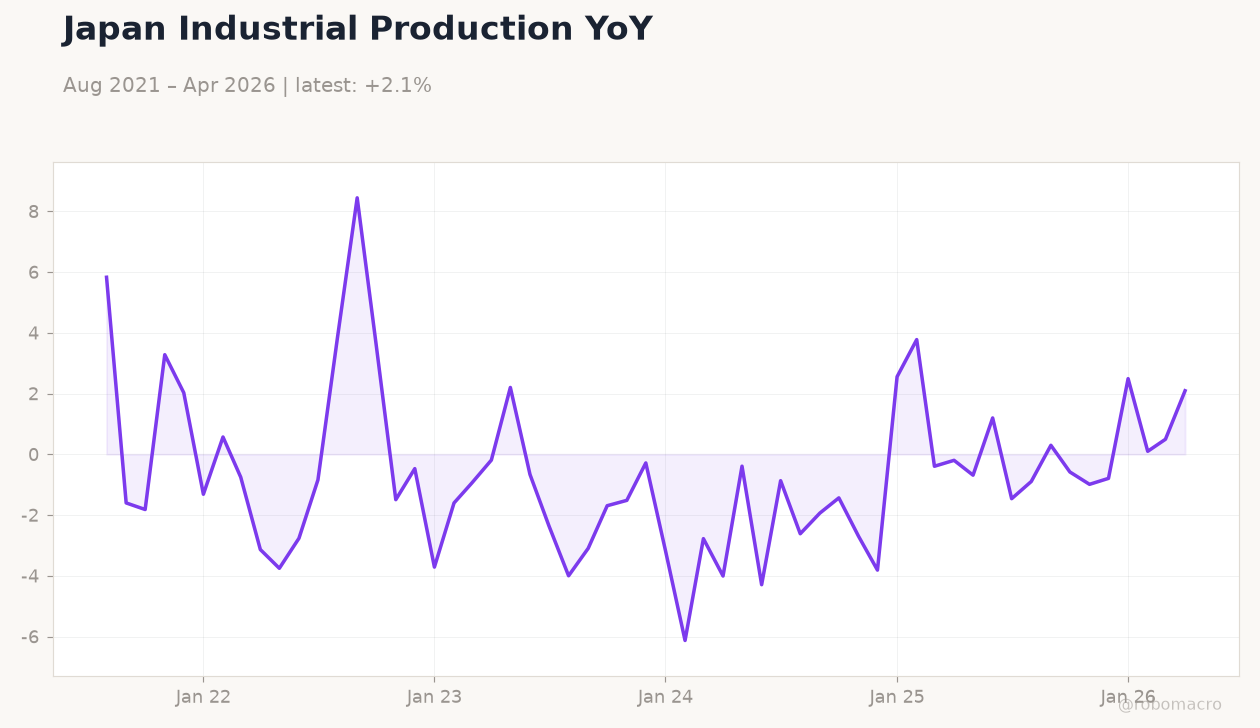
No high-impact Japanese data releases are scheduled for 15 July, leaving markets to digest the prior day’s machinery orders miss. Attention shifts to the 21 July trade balance and exports prints, both carrying high market sensitivity. Industrial production and tertiary industry figures remain on the calendar for later in the month.
Traders will monitor any follow-up comments from government officials on the fiscal policy draft that now includes an explicit BoJ independence clause. Yen volatility is expected to stay contained absent fresh BoJ guidance or global risk shocks. Equity positioning may hinge on external drivers given the domestic data vacuum.
The verified 1.50% CPI level continues to anchor expectations for measured policy adjustment rather than abrupt moves.
Other Economic Notes
Cash-rich Japanese firms continue to downplay the impact of gradual rate normalisation, supporting equity valuations near record levels. The verified 1.50% CPI print underscores persistent but contained price pressures that align with the BoJ’s measured approach. Fiscal authorities are prioritising household support measures while embedding central-bank autonomy language in the final economic blueprint.
<i>↓ p.2</i>