Japan Macro Daily(Beta Mode)
Nikkei Surges as Yen Weakens, Yields Climb
Market Snapshot
| Asset | Level | Change |
|---|---|---|
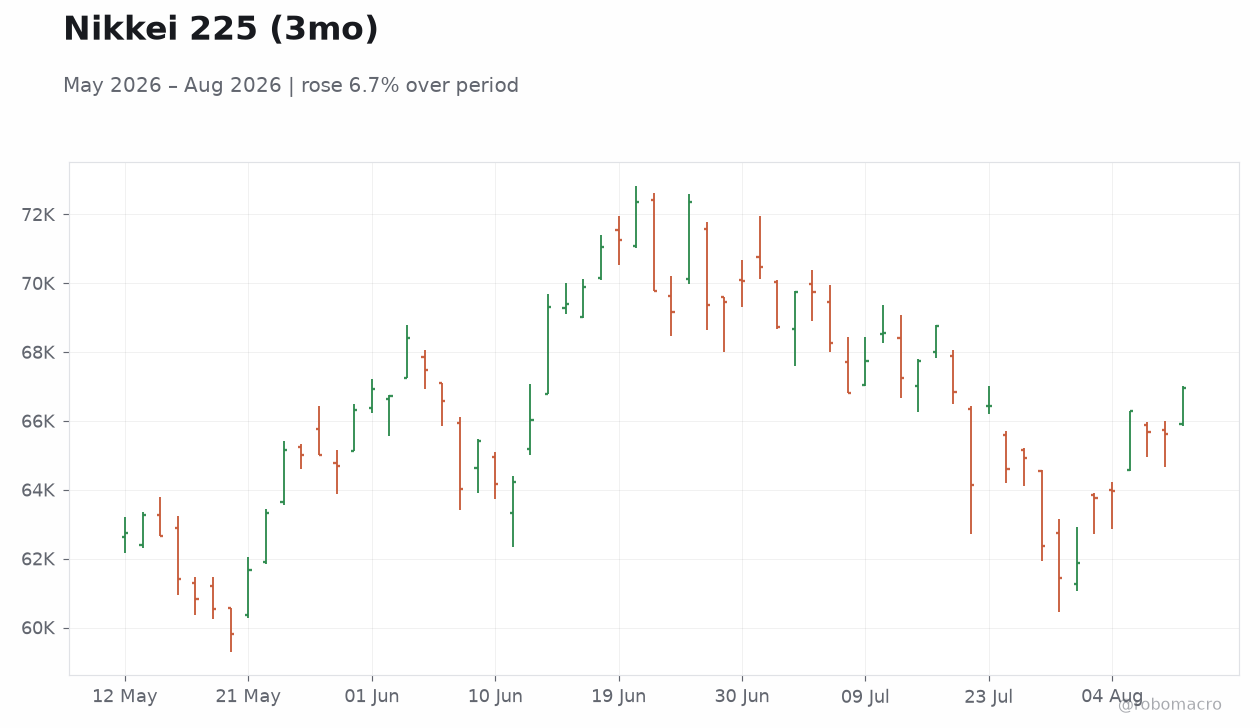
| Nikkei 225 | 66,970.22 | +2.08% |
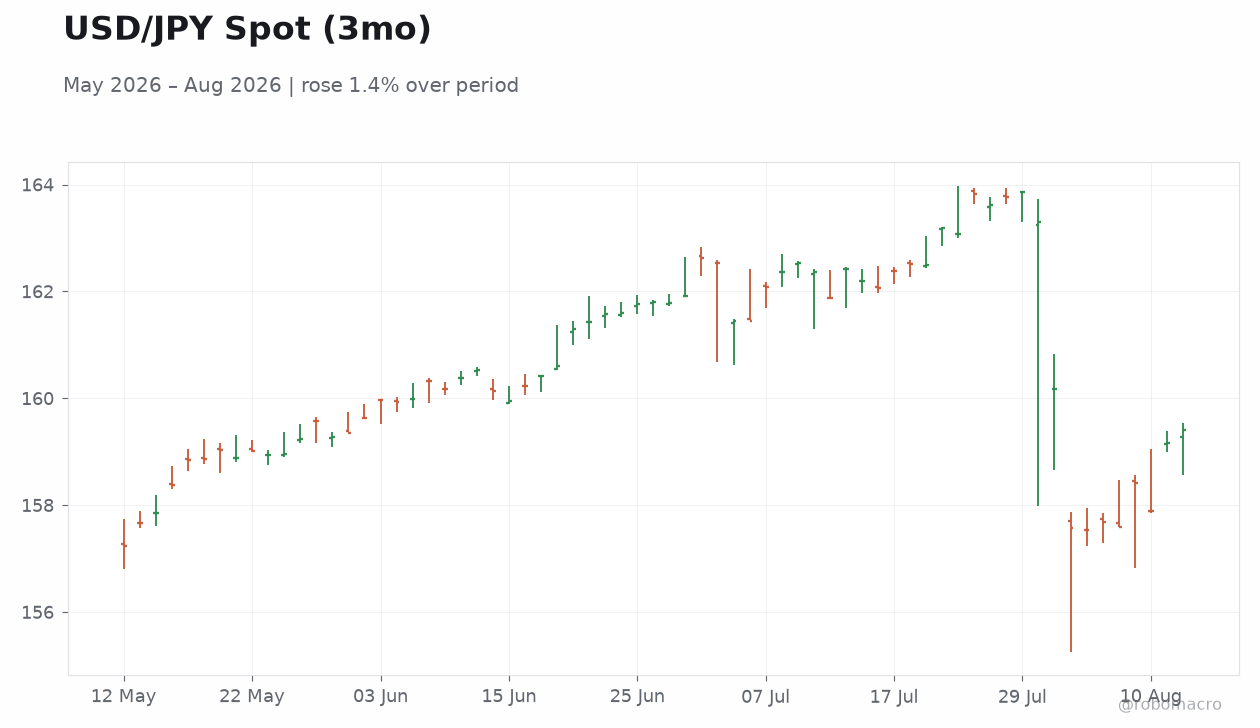
| USD/JPY | 159.40 | +0.08% |
| EUR/JPY | 183.76 | -0.05% |
| GBP/JPY | 215.12 | -0.02% |
| Gold | 4,468.40 | +1.95% |
| Brent Crude | 88.39 | -0.58% |
| Bitcoin | 63,561.61 | +0.02% |
| Japan 2Y Govt Yield | 0.84% | +15.68% |
| Japan 10Y Govt Yield | 2.67% | +0.75% |
Prior Economic Events
| Data | Prior | Cons | Actual |
|---|---|---|---|
| No events available | |||
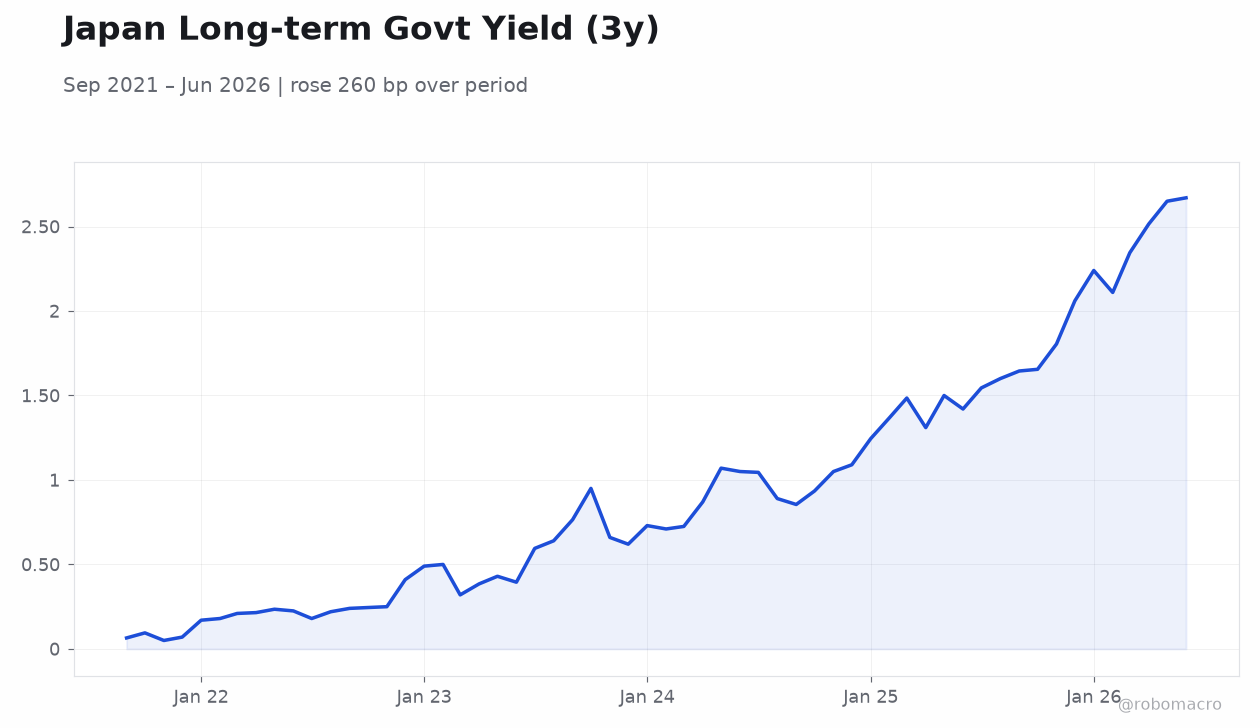
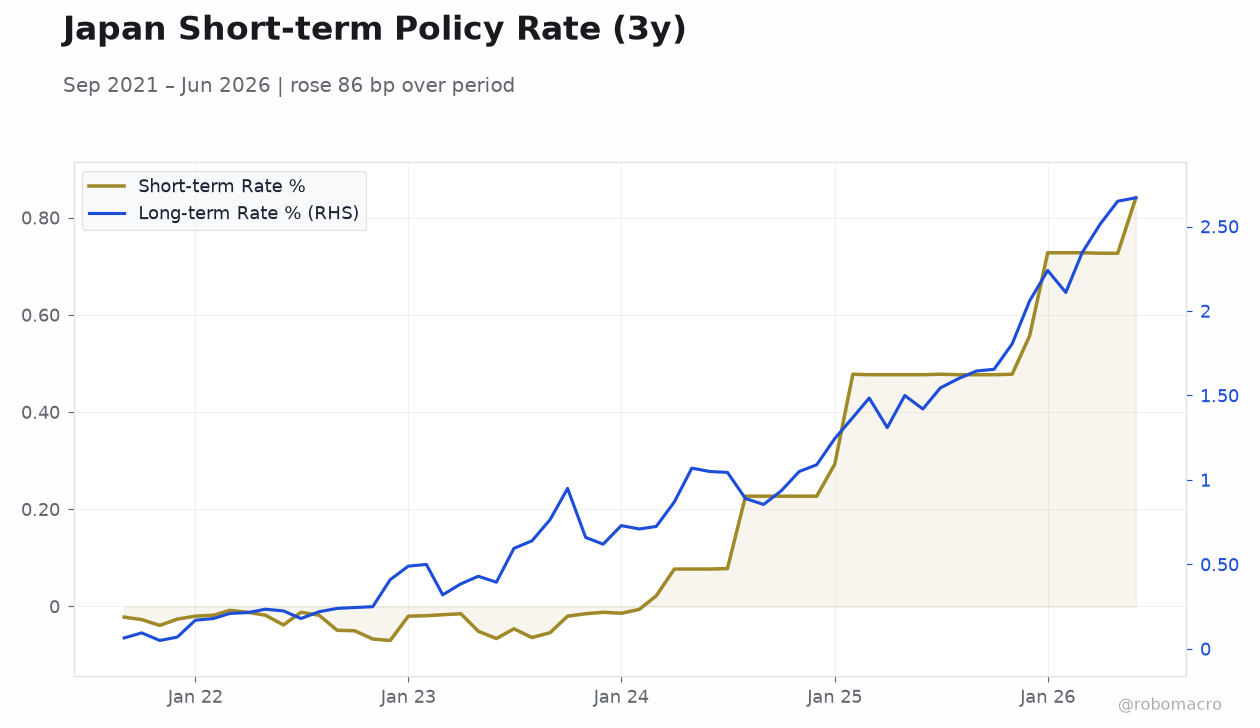 Japan Short-term Policy Rate (3y) | Type: macro_line | Short-term Rate %: 0.841 (2026-06-01) | Range: -0.07–0.841 | Trend(6pt): -0.022,-0.067,-0.014,0.477,0.727,0.841 | Long-term Rate %: 2.67 (2026-06-01) | Range: 0.05–2.67 | Trend(6pt): 0.065,0.25,0.73,1.485,2.65,2.67
Today's Economic Events
| Data | Prior | Cons | Time |
|---|---|---|---|
| Sunday (2026-08-16) | |||
| GDP Growth Quarter-over-Quarter Preliminary | 0.50 | 0.50 | 15:50 |
| GDP Growth Annualized Preliminary | 1.80 | 2 | 15:50 |
- Nikkei 225 rose 2.08% to 66,970.22 while USD/JPY edged to 159.40 amid thin data.
- Japan 2Y yield jumped 15.68% to 0.84% and 10Y yield reached 2.67% on position adjustments.
- Markets await Sunday GDP prints that could shift BoJ normalisation odds.
Yesterday's Recap
Equity markets advanced sharply with the Nikkei 225 closing at 66,970.22, up 2.08%, as investors rotated into exporters amid the weaker yen. USD/JPY settled at 159.40 after a modest 0.08% gain, while EUR/JPY and GBP/JPY posted small declines. Fixed-income markets saw pronounced moves at the front end, with the Japan 2Y government yield rising 15.68% to 0.84% and the 10Y yield increasing 0.75% to 2.67%.
Gold gained 1.95% to 4,468.40 while Brent crude fell 0.58% to 88.39, reflecting mixed commodity sentiment. No domestic data releases occurred on 11 August, leaving price action driven by positioning ahead of the weekend GDP figures. Bitcoin remained essentially flat at 63,561.61.
The absence of fresh intervention signals from the Ministry of Finance kept yen volatility contained despite the elevated USD/JPY level. Broader market liquidity stayed thin on the holiday-shortened session, amplifying moves in JGB futures and cross-yen pairs.
The Day Ahead
Attention turns to the 16 August preliminary GDP release scheduled for 15:50 ET, with quarter-over-quarter growth expected at 0.5% and annualized growth at 2.0%. A print in line with consensus would leave current BoJ policy settings largely unchallenged. No tier-one releases are scheduled for 12 or 13 August, creating a quiet window for market digestion of recent yield moves.
Currency desks will monitor any Ministry of Finance commentary for signs of renewed intervention appetite at current USD/JPY levels. Traders also eye any follow-through in gold and crude as proxies for global risk appetite, while equity flows may continue favoring exporters if the yen holds near 159. The lack of scheduled speakers leaves verbal guidance from officials as the main potential catalyst before the GDP print.
Other Economic Notes
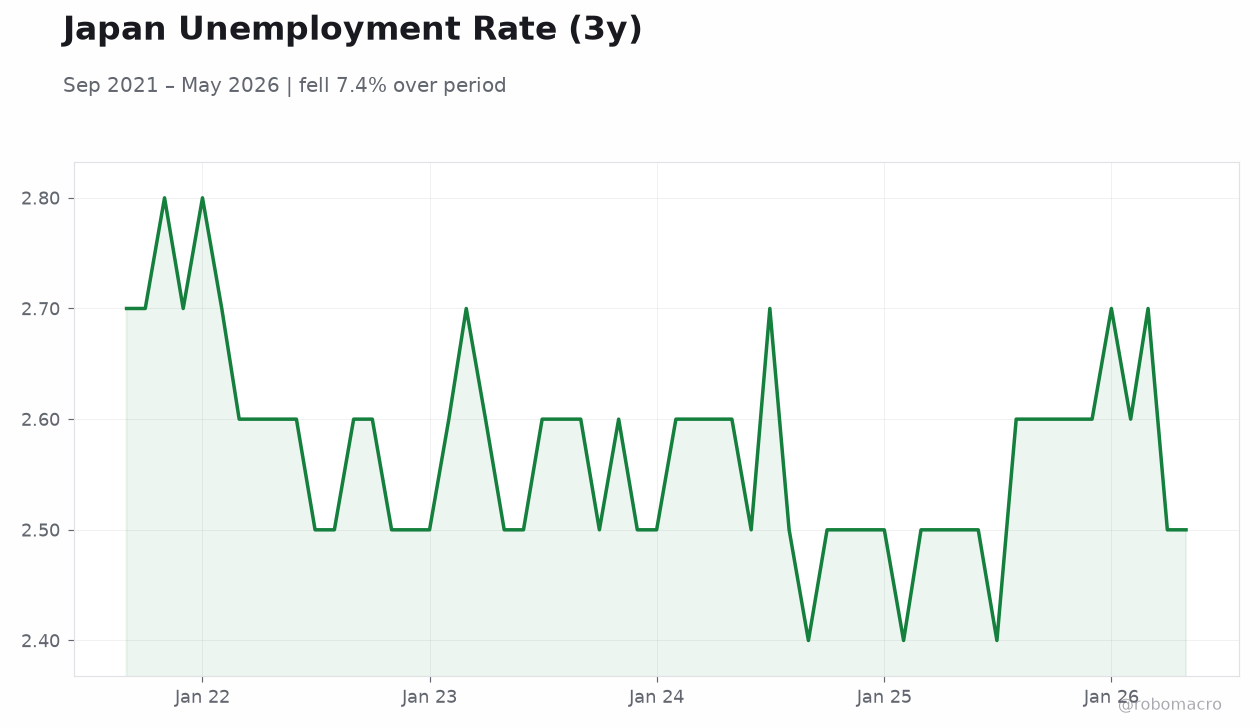
Japan’s 1.70% CPI reading continues to anchor expectations that the BoJ will maintain its 1.00% policy rate through the near term. Elevated 10Y JGB yields at 2.81% signal that markets have already priced substantial policy normalisation since the start of the tightening cycle. Export-oriented sectors benefit from the current yen level, yet margin pressure on importers and households remains a latent risk.
<i>↓ p.2</i>