Japan Macro Daily(Beta Mode)
Weak GDP Muddies BoJ Rate Hike Path
Market Snapshot
| Asset | Level | Change |
|---|---|---|
| Nikkei 225 | 68,713.80 | +0.59% |
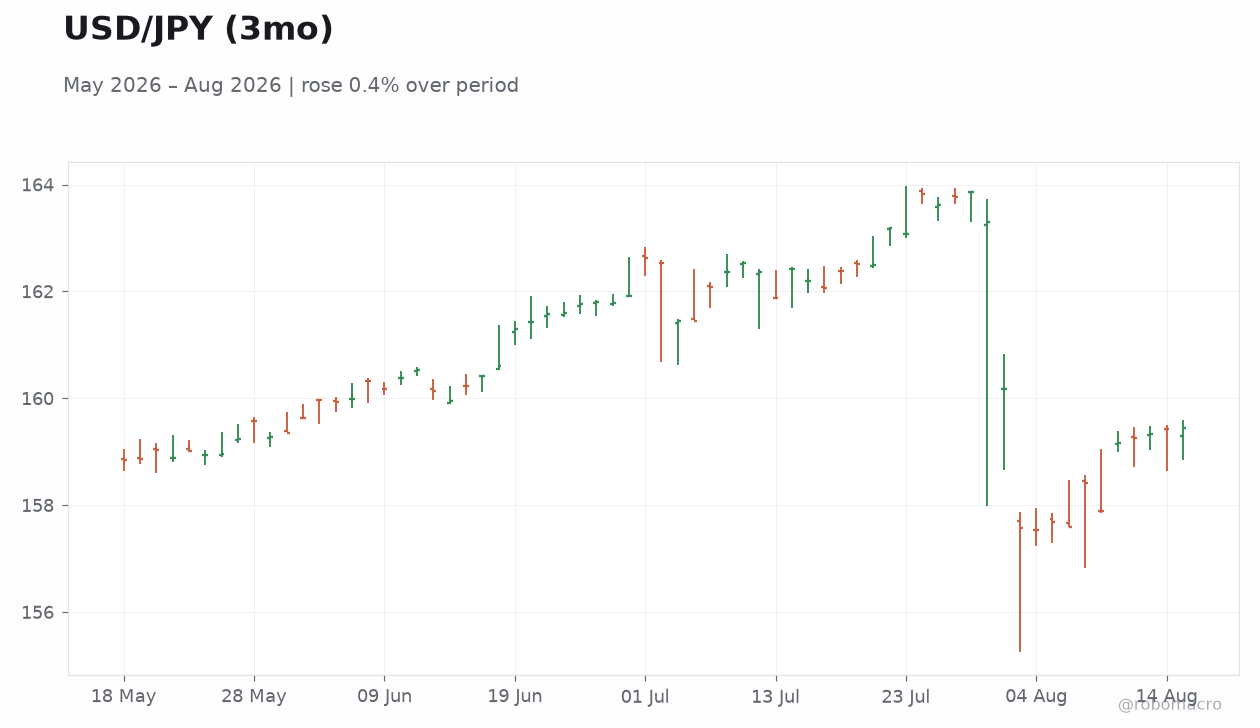
| USD/JPY | 159.44 | +0.01% |
| EUR/JPY | 184.66 | +0.42% |
| GBP/JPY | 216.02 | +0.16% |
| Gold | 4,472.20 | +2.10% |
| Brent Crude | 91.08 | +2.89% |
| Bitcoin | 64,353.59 | +2.44% |
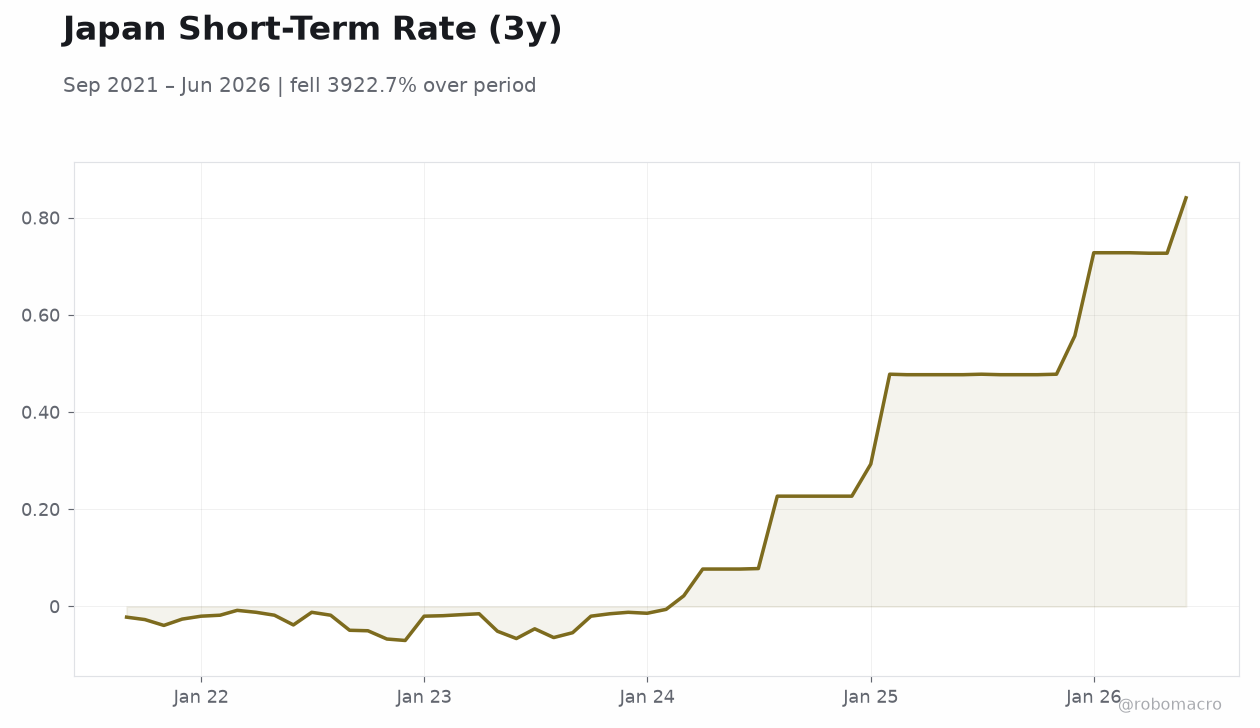
| Japan 2Y Govt Yield | 0.84% | +15.68% |
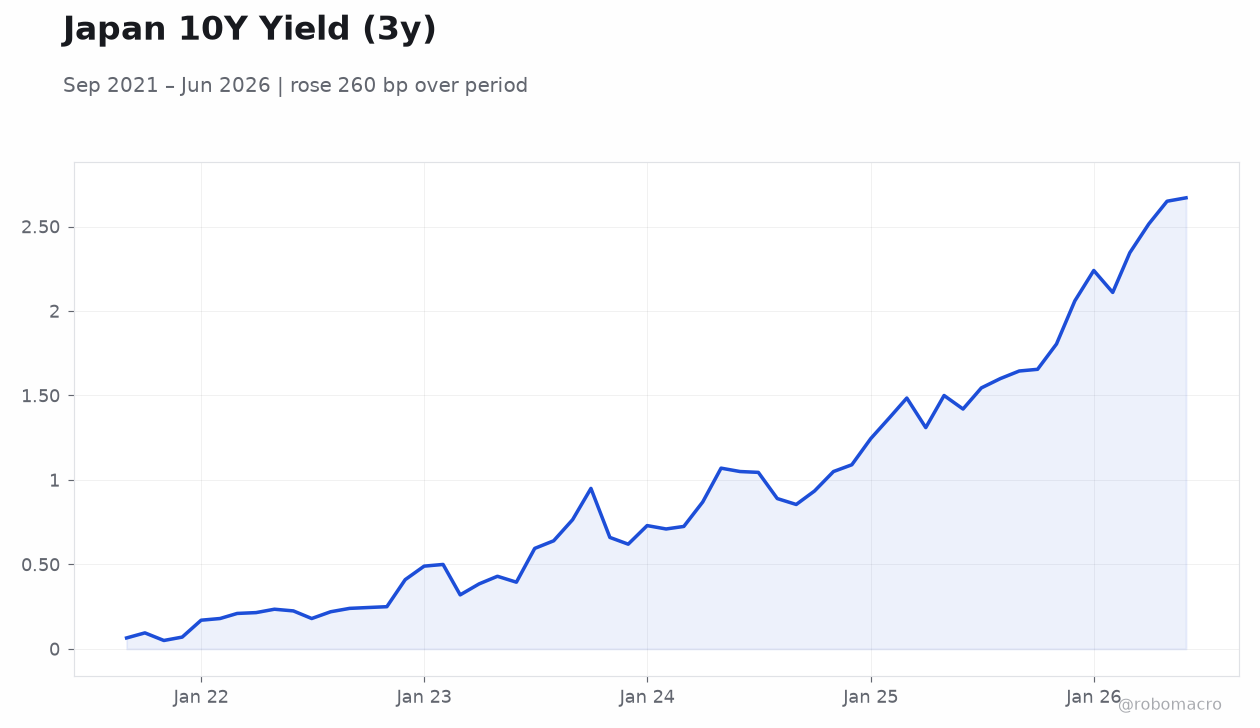
| Japan 10Y Govt Yield | 2.67% | +0.75% |
Prior Economic Events
| Data | Prior | Cons | Actual |
|---|---|---|---|
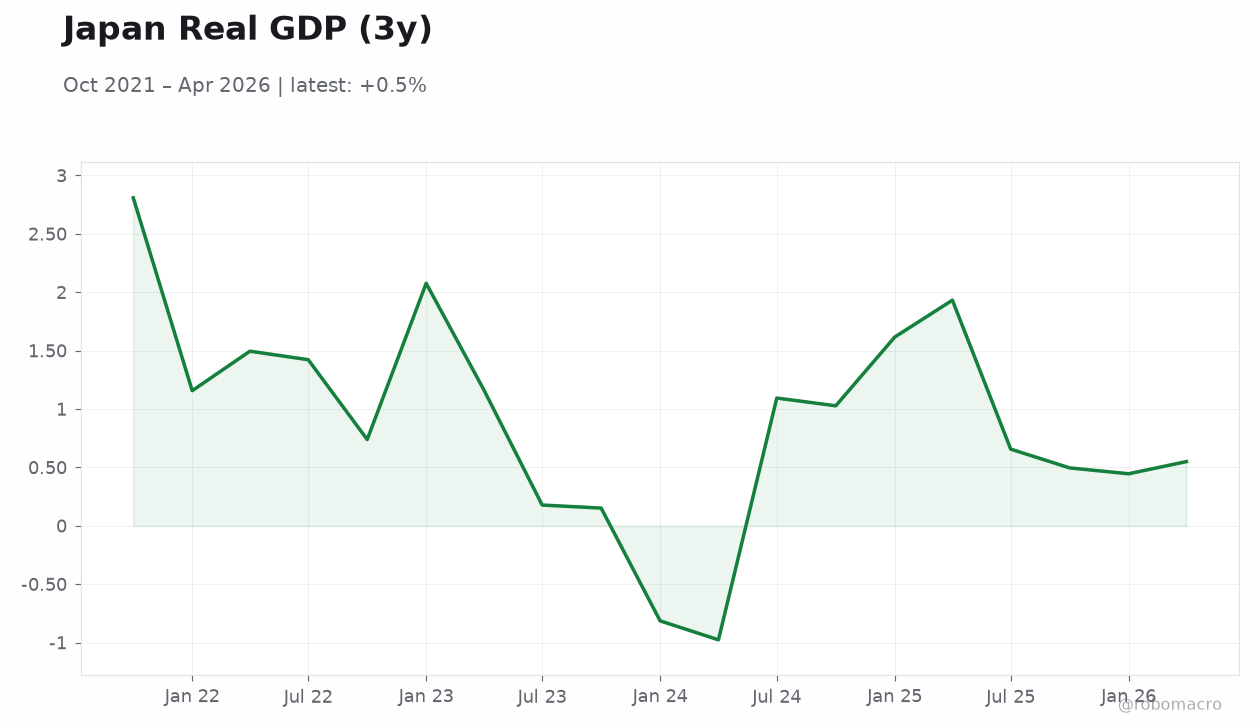
| GDP Growth Quarter-over-Quarter Preliminary | 0.50 | 0.50 | 0.30 |
| GDP Growth Annualized Preliminary | 1.90 | 2 | 1.10 |
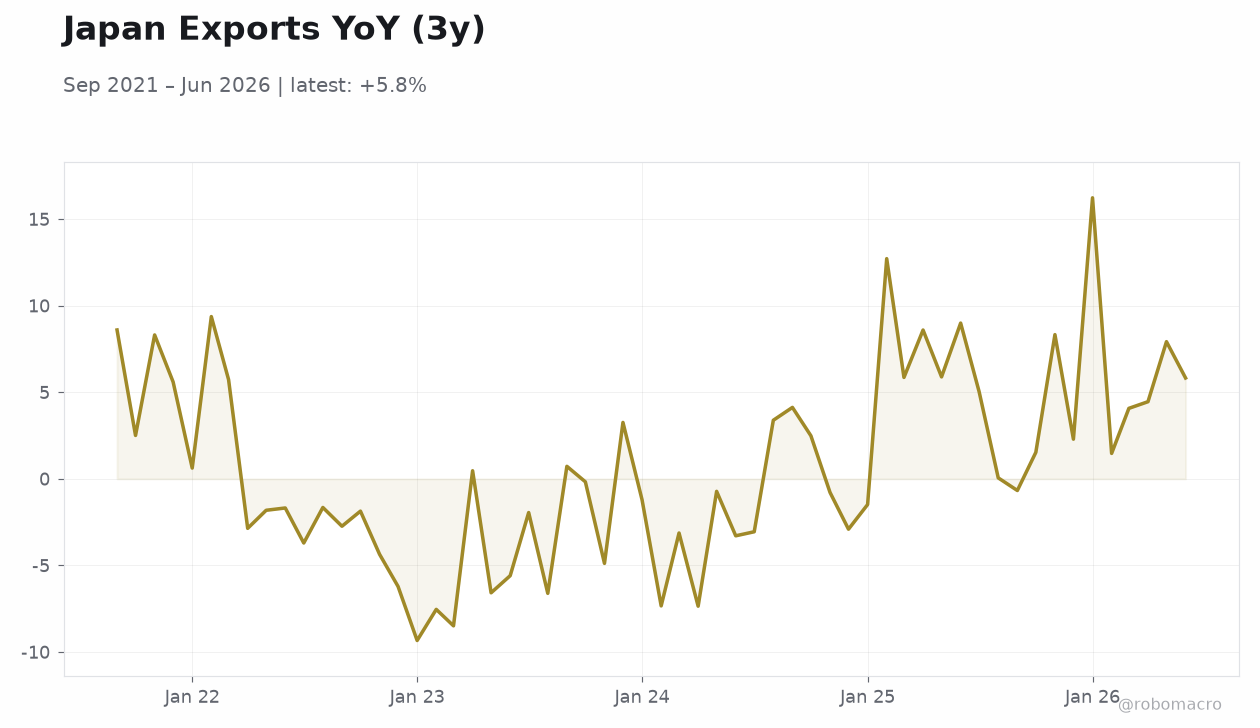 Japan Exports YoY (3y) | Type: macro_line | Exports YoY %: 5.825 (2026-06-01) | Range: -9.333–16.23 | Trend(6pt): 8.598,-4.354,-1.211,5.858,7.922,5.825
Today's Economic Events
| Data | Prior | Cons | Time |
|---|---|---|---|
| Tuesday (2026-08-18) | |||
| Machinery Orders Month-over-Month | -12.40 | 7.80 | 19:50 |
| Machinery Orders Year-over-Year | -1.90 | 10.80 | 19:50 |
| Wednesday (2026-08-19) | |||
| Trade Balance | -406,900m | -680,000m | 19:50 |
| Exports Year-over-Year | 19.30 | 19.90 | 19:50 |
| Thursday (2026-08-20) | |||
| Inflation Rate Year-over-Year | 1.70 | - | 19:30 |
| Core Inflation Rate Year-over-Year | 1.60 | 1.80 | 19:30 |
| Friday (2026-08-21) | |||
- GDP growth misses forecasts, clouding September hike odds
- 10Y JGB yields near 3% as yen weakness tests policy
- Machinery orders and inflation data due this week
Yesterday's Recap
Japan’s preliminary GDP growth came in below expectations, with quarter-over-quarter expansion at 0.3 percent versus the 0.5 percent consensus and annualized growth at 1.1 percent against the 2.0 percent forecast. The shortfall highlighted softening domestic demand and export momentum despite prior resilience. Equity markets responded positively, with the Nikkei 225 rising 0.59 percent to 68,713.80 as exporters benefited from a steady USD/JPY rate at 159.44.
The 10-year JGB yield edged up 0.75 percent to 2.67 percent while the two-year yield jumped 15.68 percent to 0.84 percent, reflecting ongoing repricing of policy normalization. Gold and Brent crude posted strong gains of 2.10 percent and 2.89 percent respectively, underscoring broader commodity support amid yen stability. Market participants noted that the GDP print reinforced views of sticky but moderating inflation pressures without derailing BoJ tightening expectations.
The Day Ahead
Attention turns to Tuesday’s machinery orders figures, where month-over-month growth is expected to rebound sharply to 7.8 percent from the prior -12.4 percent contraction. Wednesday brings the trade balance, forecast at a wider deficit of 680 billion yen alongside exports rising 19.9 percent year-over-year. Thursday’s inflation release will show headline CPI at the verified 1.70 percent pace while core inflation is projected at 1.8 percent.
Friday features flash PMI readings for manufacturing and services, which could clarify whether the recent growth dip is temporary. These releases arrive against a backdrop of elevated 10-year yields at the verified 2.88 percent level and sustained BoJ policy rate of 1.00 percent. Traders will monitor any signals on intervention or further normalization steps.
Other Economic Notes
Japan’s inflation paradox continues to generate divergent outcomes across sectors, with wage gains supporting consumption in some areas while higher costs squeeze households and smaller firms. Slowing growth has widened the policy divide between government stimulus preferences and the Bank of Japan’s focus on sustainable price stability. Yen weakness persists as a key transmission channel, amplifying imported inflation yet pressuring the central bank to consider faster normalization.
<i>↓ p.2</i>