Japan Macro Daily(Beta Mode)
BoJ Hike Looms as Yen Awaits Ueda Signal
Market Snapshot
| Asset | Level | Change |
|---|---|---|
| Nikkei 225 | 63,923.00 | +0.69% |
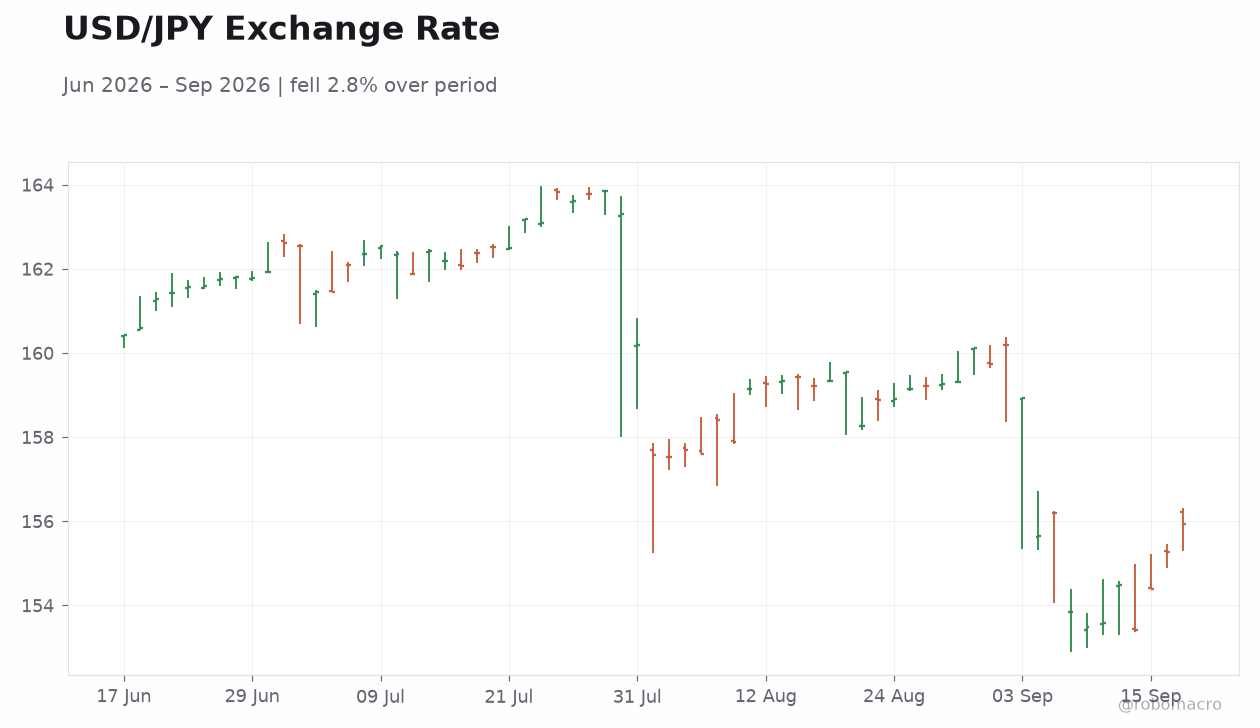
| USD/JPY | 155.95 | -0.04% |
| EUR/JPY | 178.88 | -0.05% |
| GBP/JPY | 208.28 | -0.43% |
| Gold | 4,380.60 | -0.16% |
| Brent Crude | 104.17 | -1.57% |
| Bitcoin | 76,500.25 | +0.46% |
| Japan 2Y Govt Yield | 1.86% | +2 bp |
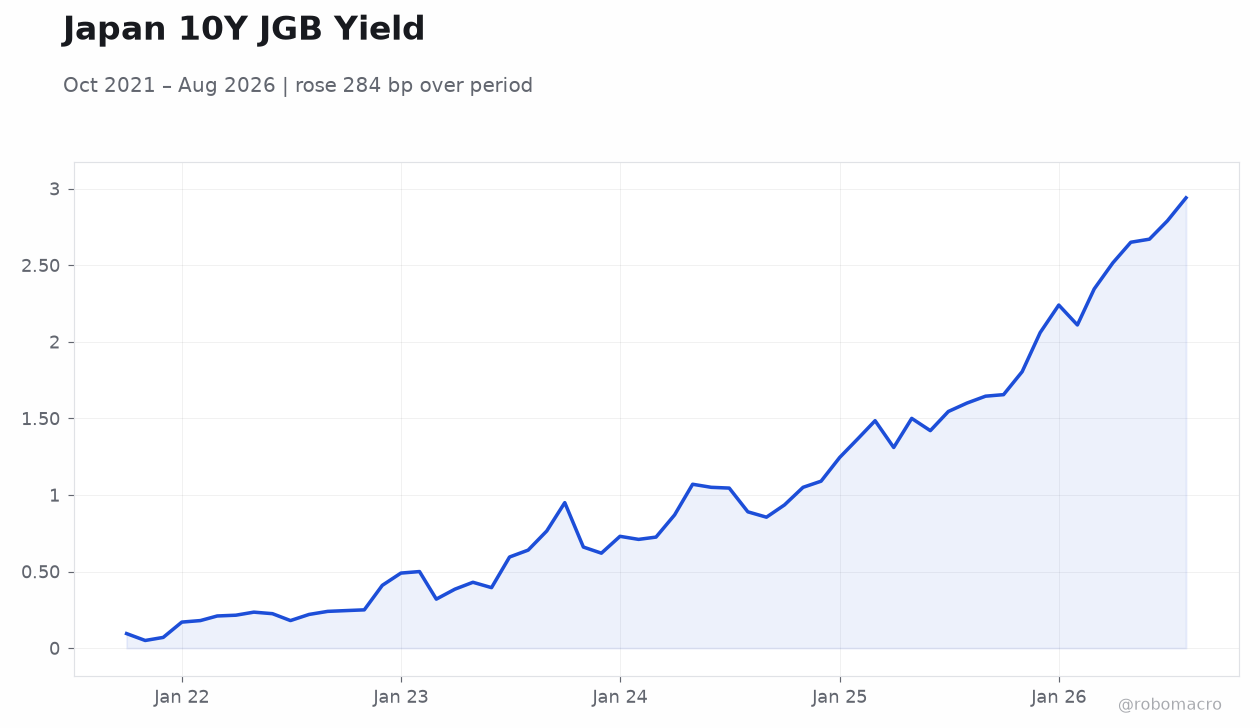
| Japan 10Y Govt Yield | 3.03% | +4 bp |
Prior Economic Events
| Data | Prior | Cons | Actual |
|---|---|---|---|
| No events available | |||
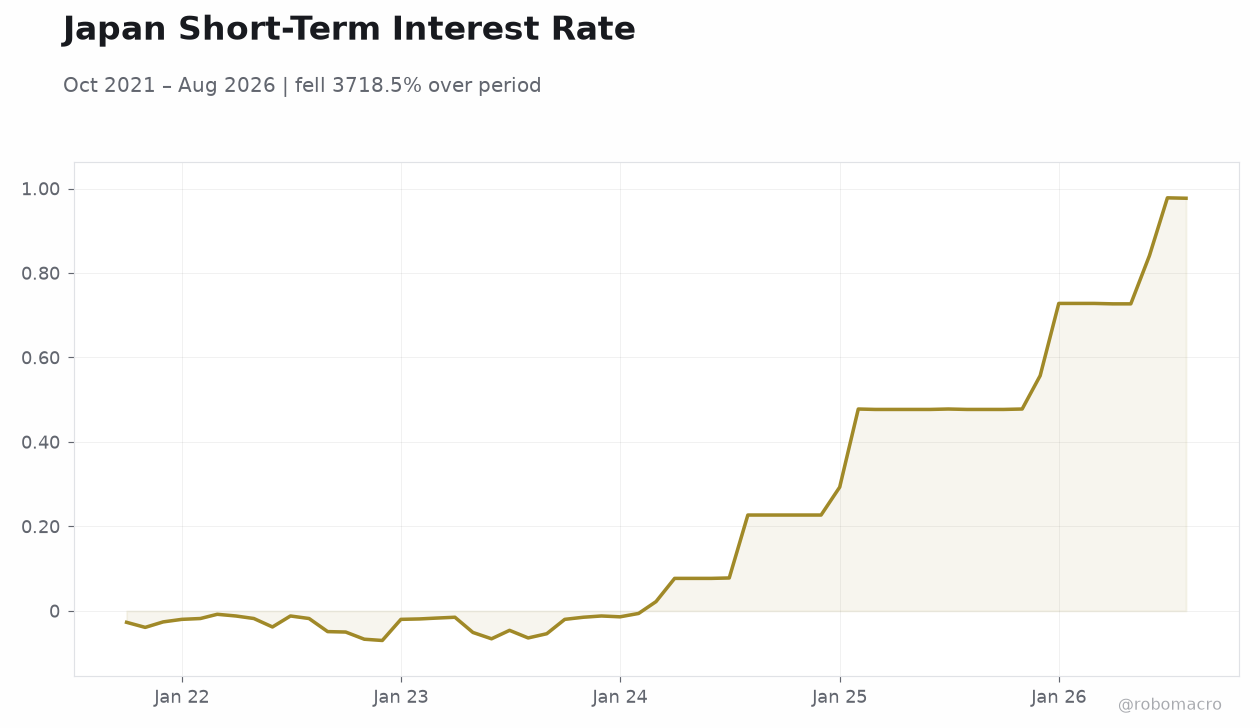 Japan Short-Term Interest Rate | Type: macro_line | Short-Term Rate %: 0.977 (2026-08-01) | Range: -0.07–0.978 | Trend(6pt): -0.027,-0.07,-0.006,0.477,0.841,0.977
Today's Economic Events
| Data | Prior | Cons | Time |
|---|---|---|---|
| Inflation Rate Year-over-Year | 2 | - | 19:30 |
| Core Inflation Rate Year-over-Year | 1.80 | 1.80 | 19:30 |
| Friday (2026-09-18) | |||
| BoJ Interest Rate Decision | 1 | 1.25 | 23:00 |
| Thursday (2026-09-24) | |||
| S&P Global Manufacturing PMI Flash | 54.90 | - | 20:30 |
| S&P Global Services PMI Flash | 52.50 | - | 20:30 |
- Markets price a 25 bp BoJ rate increase to 1.25% tonight, shifting focus to Governor Ueda’s guidance on further normalisation.
- Japan inflation data due at 19:30 ET will test whether price pressures remain above the 1.90% July level amid surging food costs.
- Nikkei 225 rose 0.69% to 63,923 while the 10-year JGB yield climbed 4 bp to 3.03% ahead of the decision.
Yesterday's Recap
Equity and fixed-income markets advanced on 16 September as investors positioned for the Bank of Japan meeting. The Nikkei 225 closed at 63,923.00, up 0.69%, while USD/JPY eased 0.04% to 155.95 and EUR/JPY slipped 0.05% to 178.88. GBP/JPY fell 0.43% to 208.28 after the Bank of England left rates unchanged.
The Japan 2-year JGB yield rose 2 bp to 1.86% and the 10-year yield increased 4 bp to 3.03%, reflecting expectations for tighter policy. No economic data were released and Brent crude declined 1.57% to 104.17. Bitcoin gained 0.46% to 76,500.25.
Japanese households’ direct equity holdings surpassed insurance and pension assets for the first time, underscoring a shift toward risk assets amid persistent inflation.
The Day Ahead
Two high-impact releases arrive today at 19:30 ET: the headline inflation rate year-over-year, last reported at 2.0%, and core inflation, expected to hold at 1.8%. The Bank of Japan interest-rate decision follows at 23:00 ET, with consensus pointing to a 25 bp lift from the current 1.00% policy rate. Attention centres on the statement and Governor Ueda’s press conference for signals on the pace of additional tightening.
Tomorrow’s S&P Global flash PMIs for manufacturing and services are lower-impact but will provide an early read on third-quarter activity. Currency volatility is likely to remain elevated until the BoJ outcome clarifies the path for yen crosses and JGB yields.
Other Economic Notes
Food-price inflation continues to bite, with pork and egg costs surging and prompting cash-strapped Buddhist temples to increase investment activity. Japanese households have redirected savings into equities at a record pace, overtaking traditional insurance and pension holdings. These portfolio shifts occur against a backdrop of still-elevated consumer prices that have yet to show clear deceleration from the 1.90% July CPI print.
Broader sentiment reflects growing acceptance that the era of ultra-low rates is ending, encouraging domestic investors to seek higher returns in local equities rather than overseas assets hedged back into yen.