Japan Macro Daily(Beta Mode)
BoJ Hikes Rate to 1.25% as Yen Weakens
Market Snapshot
| Asset | Level | Change |
|---|---|---|
| Nikkei 225 | 65,018.95 | +1.38% |
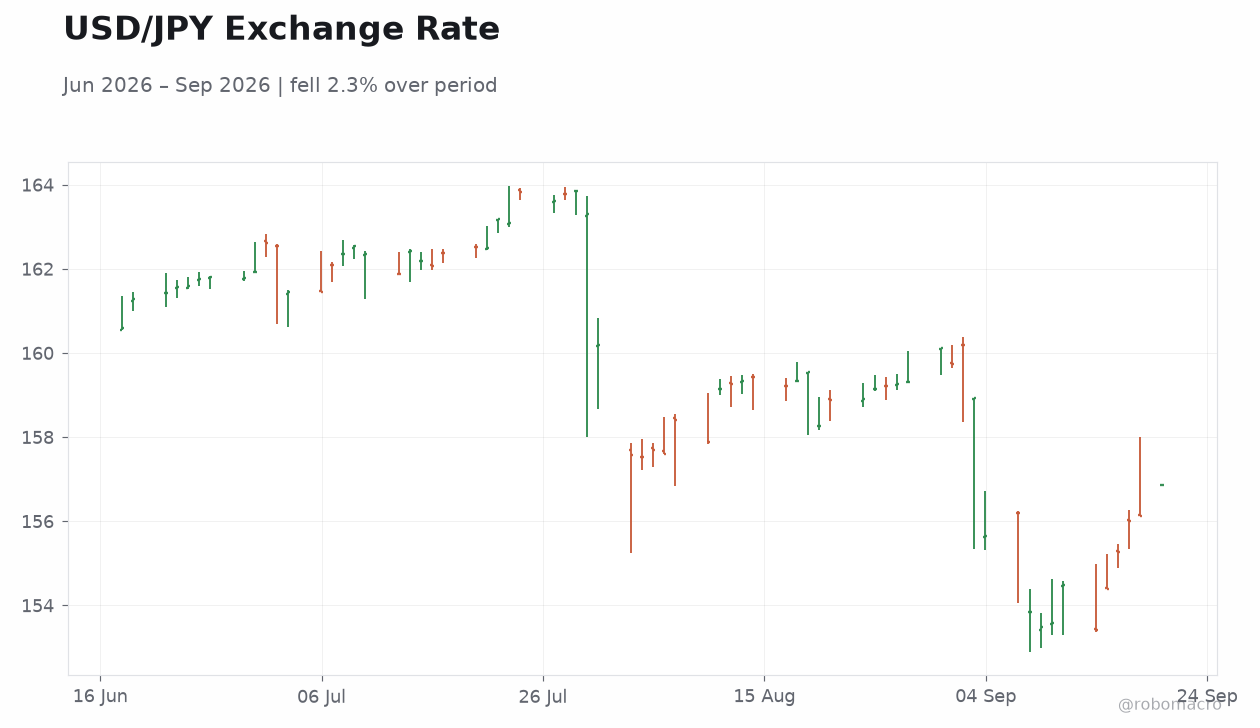
| USD/JPY | 156.85 | +0.46% |
| EUR/JPY | 179.90 | +0.39% |
| GBP/JPY | 210.01 | +0.71% |
| Gold | 4,424.90 | +0.57% |
| Brent Crude | 99.29 | -5.28% |
| Bitcoin | 81,059.00 | -0.22% |
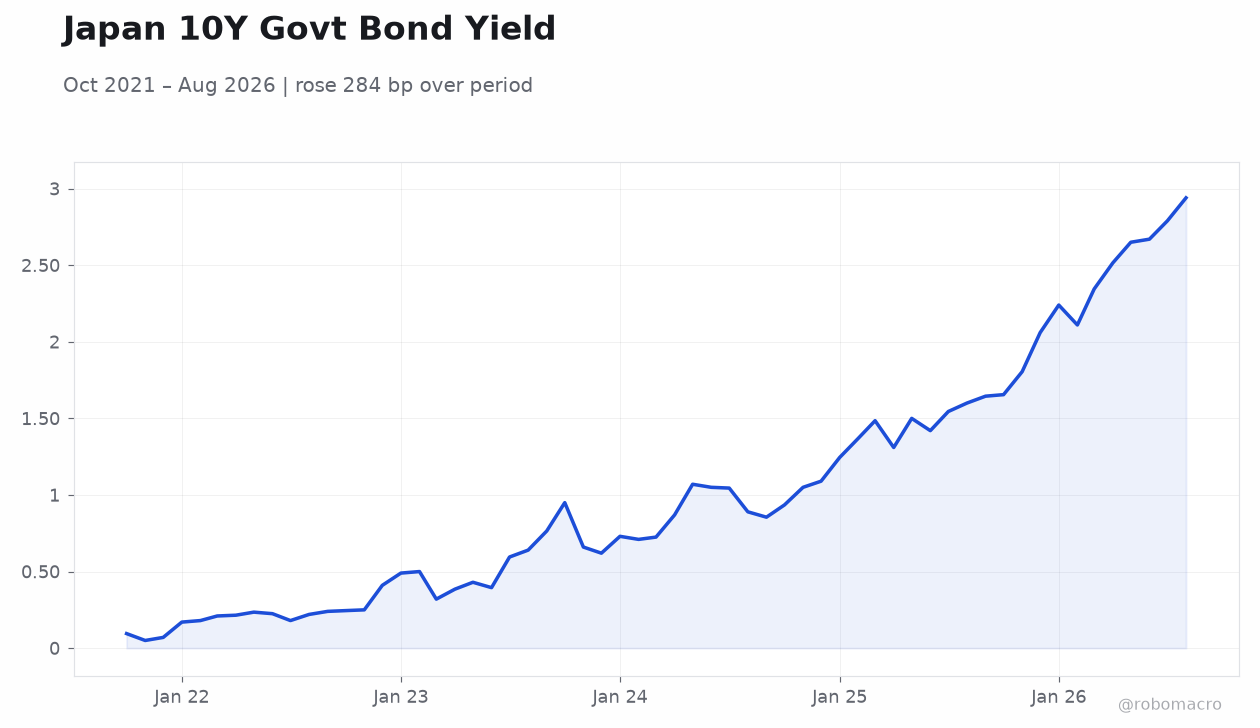
| Japan 2Y Govt Yield | 1.87% | +2 bp |
| Japan 10Y Govt Yield | 2.99% | -1 bp |
Prior Economic Events
| Data | Prior | Cons | Actual |
|---|---|---|---|
| No events available | |||
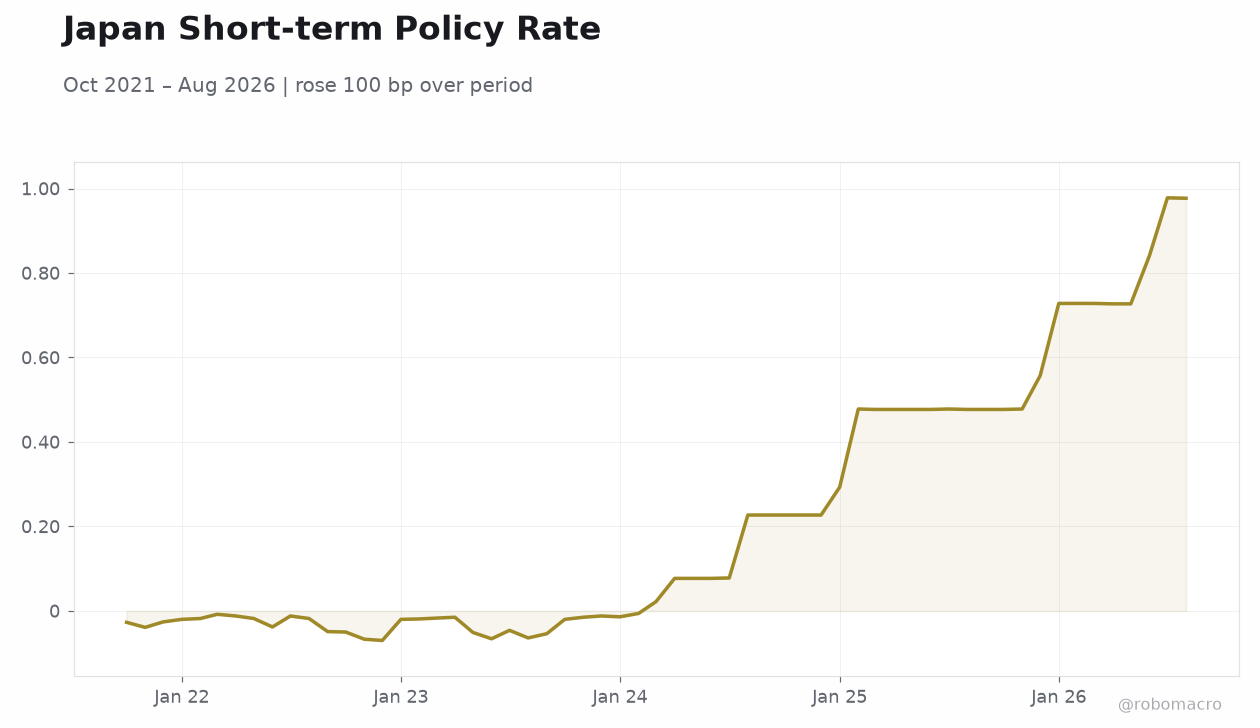 Japan Short-term Policy Rate | Type: macro_line | %: 0.977 (2026-08-01) | Range: -0.07–0.978 | Trend(6pt): -0.027,-0.07,-0.006,0.477,0.841,0.977
Today's Economic Events
| Data | Prior | Cons | Time |
|---|---|---|---|
| Thursday (2026-09-24) | |||
| S&P Global Manufacturing PMI Flash | 54.90 | 55 | 20:30 |
| S&P Global Services PMI Flash | 52.50 | - | 20:30 |
| Sunday (2026-09-27) | |||
| BoJ Monetary Policy Meeting Minutes | - | - | 19:50 |
- Bank of Japan raised policy rate to 1.25%, highest since 1995, to address persistent inflation pressures.
- Japan CPI YoY slowed to 1.90% in August, first deceleration in four months, while Nikkei 225 rose 1.38% to 65,018.95.
- Yen depreciated despite the tightening, with USD/JPY climbing 0.46% to 156.85 and 10-year JGB yield easing 1 bp to 2.99%.
Yesterday's Recap
No economic data releases occurred on 19 September. The Bank of Japan lifted its policy rate to 1.25% from the prior 1.00% level to counter rising prices amid a weak yen. Japan’s inflation rate slowed for the first time in four months, registering 1.90% YoY in August.
Equity markets responded positively, with the Nikkei 225 advancing 1.38% to close at 65,018.95. The yen nevertheless depreciated, pushing USD/JPY to 156.85 and EUR/JPY to 179.90. The 2-year JGB yield rose 2 bp to 1.87% while the 10-year yield declined 1 bp to 2.99%.
Market participants interpreted the BoJ’s forward guidance as less aggressive than expected, leading to mixed signals on the pace of further normalisation.
The Day Ahead
No releases are scheduled for 20 September. Attention turns to the S&P Global Manufacturing PMI Flash on 23 September, with consensus at 55.0 versus the prior 54.9 reading. The accompanying Services PMI Flash will also be released that day.
The BoJ Monetary Policy Meeting Minutes on 27 September represent the next high-impact event for yen crosses and JGB yields. Markets will scrutinise the minutes for details on the committee’s assessment of inflation risks and the timing of additional tightening steps. Yen volatility is likely to remain elevated ahead of these prints.
Other Economic Notes
The recent rate increase marks a clear acceleration in policy normalisation as the BoJ seeks to curb imported inflation driven by yen weakness. Lower CPI momentum in August provides some breathing room yet does not alter the central bank’s focus on price stability. Rising terminal-rate expectations have lifted shorter-dated JGB yields, steepening the front end of the curve.
Corporate and household sectors face higher borrowing costs that could moderate domestic demand in coming quarters. The absence of fresh data this week leaves the minutes as the primary window into the BoJ’s updated reaction function.