Japan Macro Daily(Beta Mode)
BoJ Lifts Rate as Yen Weakens
Market Snapshot
| Asset | Level | Change |
|---|---|---|
| Nikkei 225 | 65,018.95 | +1.38% |
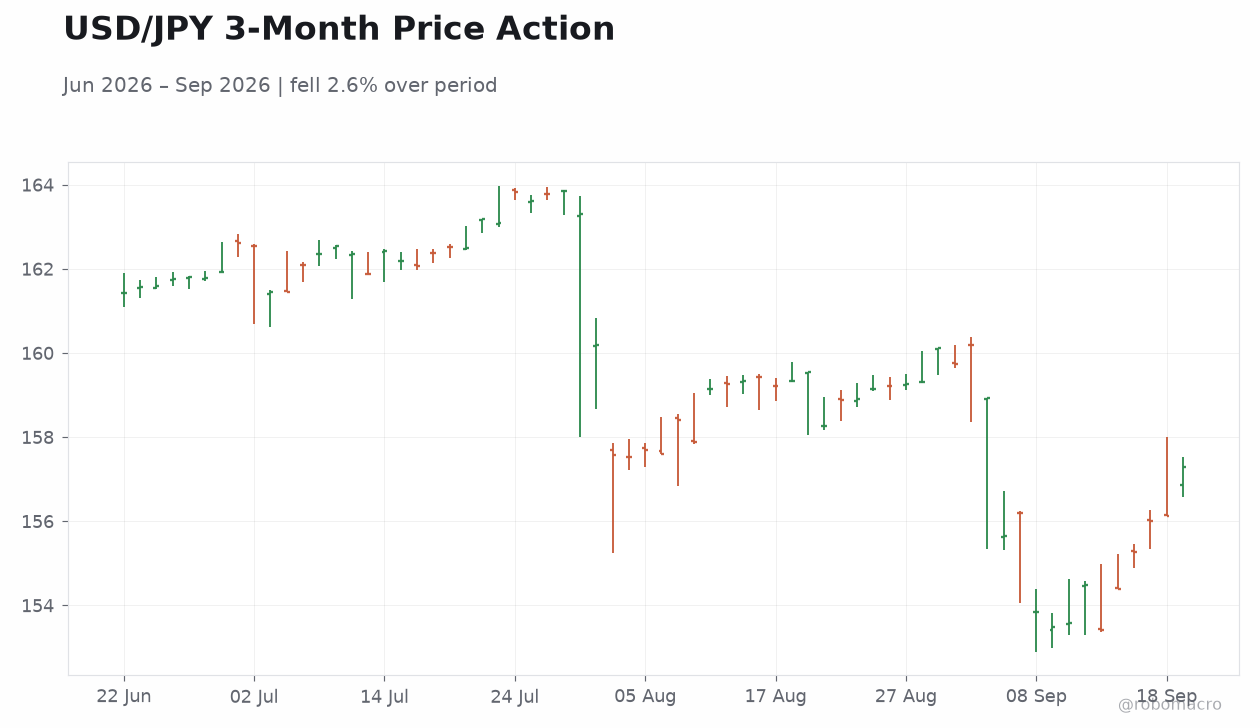
| USD/JPY | 157.25 | +0.13% |
| EUR/JPY | 180.30 | +0.01% |
| GBP/JPY | 210.22 | +0.81% |
| Gold | 4,380.50 | -1.00% |
| Brent Crude | 96.10 | -7.48% |
| Bitcoin | 86,877.00 | +7.07% |
| Japan 2Y Govt Yield | 1.87% | +2 bp |
| Japan 10Y Govt Yield | 2.99% | -1 bp |
Prior Economic Events
| Data | Prior | Cons | Actual |
|---|---|---|---|
| No events available | |||
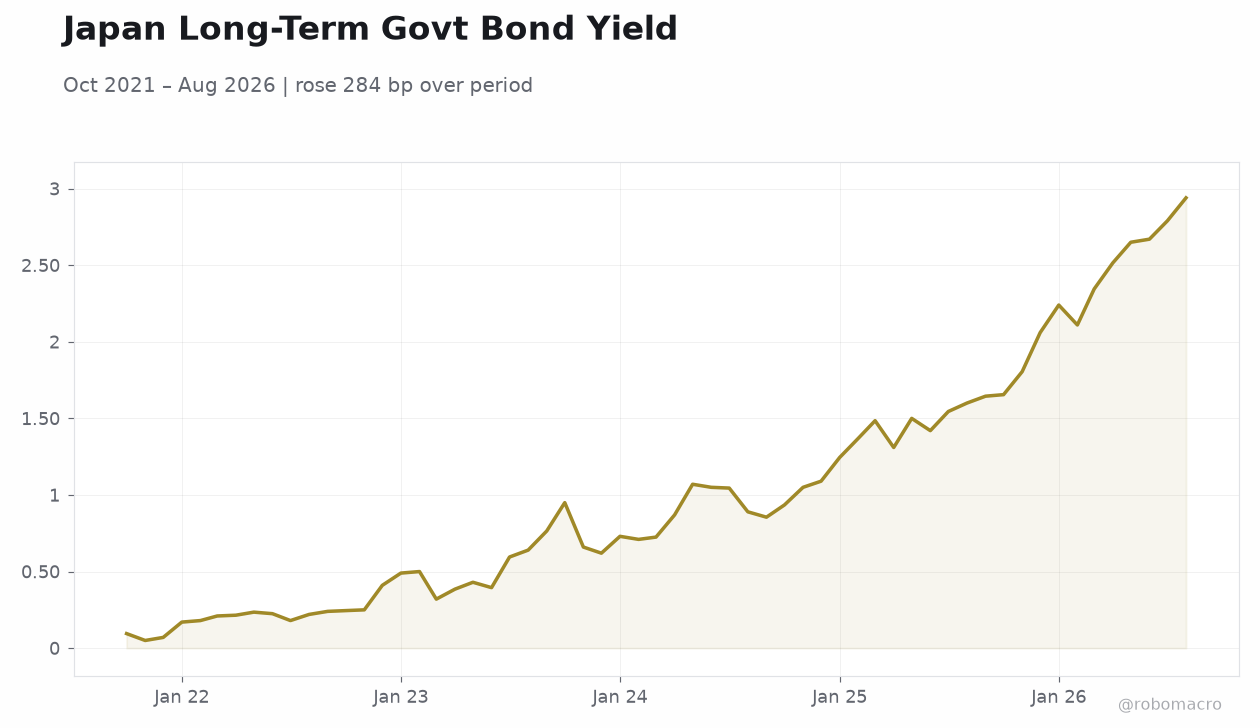 Japan Long-Term Govt Bond Yield | Type: macro_line | 10Y Yield %: 2.94 (2026-08-01) | Range: 0.05–2.94 | Trend(6pt): 0.095,0.41,0.71,1.31,2.67,2.94
Today's Economic Events
| Data | Prior | Cons | Time |
|---|---|---|---|
| Wednesday (2026-09-23) | |||
| S&P Global Manufacturing PMI Flash | 54.90 | 55 | 16:30 |
| S&P Global Services PMI Flash | 52.50 | - | 16:30 |
| Sunday (2026-09-27) | |||
| BoJ Monetary Policy Meeting Minutes | - | - | 15:50 |
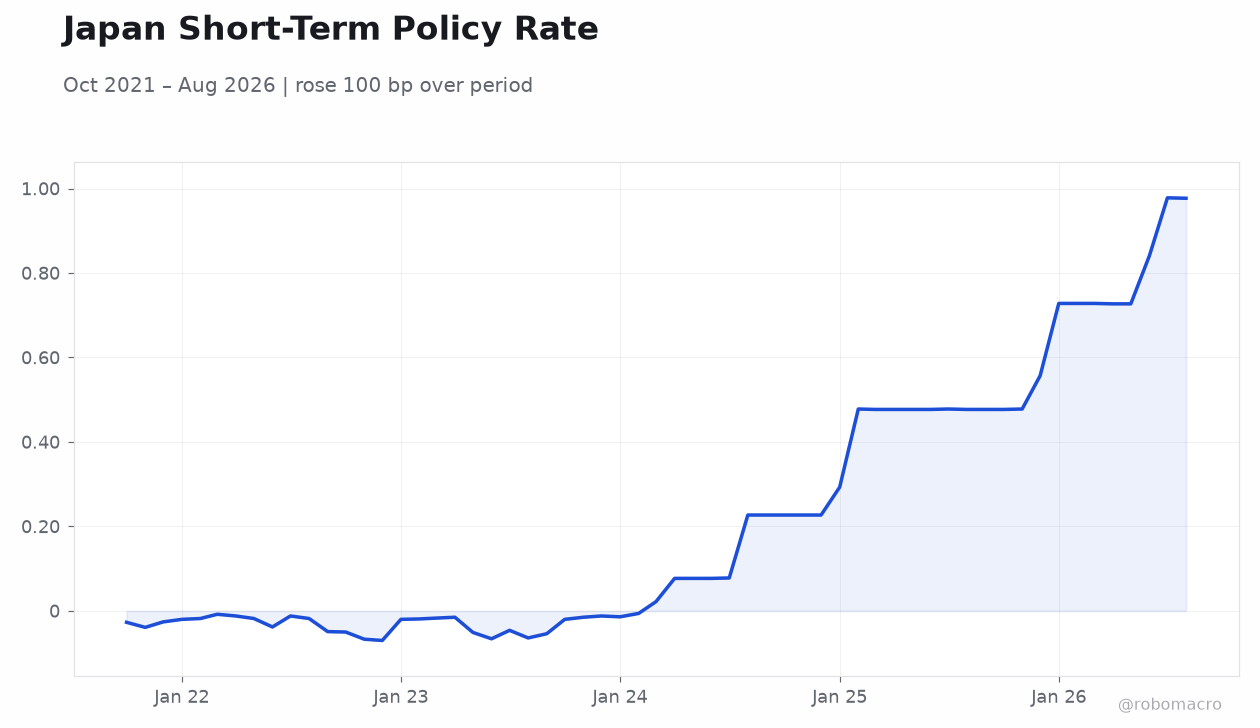
- Bank of Japan raised its policy rate to 1.25%, the highest since 1995, to address inflation pressures.
- Nikkei 225 rose 1.38% to 65,018.95 while the 10-year JGB yield eased 1 bp to 2.99%.
- Upcoming S&P Global PMI flashes and BoJ meeting minutes may shape near-term yen and equity moves.
Yesterday's Recap
No economic data releases occurred on 20 September. Markets digested the Bank of Japan’s decision to lift the policy rate to 1.25%, the highest level since 1995, aimed at curbing price pressures from a weak yen. Japan’s inflation slowed for the first time in four months, tempering some expectations for aggressive follow-up tightening.
The Nikkei 225 advanced 1.38% to close at 65,018.95. USD/JPY edged 0.13% higher to 157.25 while the 2-year JGB yield rose 2 bp to 1.87% and the 10-year yield fell 1 bp to 2.99%. Gold declined 1.00% and Brent crude dropped 7.48%, reflecting broader commodity weakness.
Yen volatility persisted as markets assessed mixed signals on the pace of further normalisation. Coverage across outlets highlighted the BoJ playing catch-up with global peers and accelerating tightening even as the yen initially sank.
The Day Ahead
Attention turns to the 23 September S&P Global Manufacturing PMI Flash, expected at 55.0 versus the prior 54.9, and the Services PMI Flash, both due at 16:30 ET with medium impact. These prints will provide fresh readings on private-sector momentum ahead of the weekend. The 27 September release of BoJ Monetary Policy Meeting Minutes carries high impact and may clarify the committee’s views on the 1.25% rate level.
No data are scheduled for 21 or 22 September. Traders will monitor any yen intervention rhetoric alongside global equity and commodity flows that could influence JGB demand. Positioning ahead of the minutes may keep USD/JPY sensitive to risk sentiment.
Other Economic Notes
Japan’s inflation moderation marks the first slowdown in four months and coincides with the BoJ’s latest tightening step. The move to a 31-year high in the policy rate reflects efforts to counter imported price pressures from the weak yen. Equity markets responded positively, suggesting investors view the hike as measured rather than disruptive.
JGB yields showed limited reaction, with the curve flattening slightly as the 2-year rose and the 10-year eased. Broader themes include the BoJ’s catch-up with global central banks and the risk that persistent yen softness could sustain inflation above target.