Ueda Speech Leaves Yields Grinding Higher
35.40 Consumer Confidence
Nikkei 22570,683.98+1.05%
USD/JPY158.03-0.17%
EUR/JPY176.90-0.70%
GBP/JPY208.87-0.55%
Market Snapshot
| Asset | Level | Change |
|---|
| Nikkei 225 | 70,683.98 | +1.05% |
| USD/JPY | 158.03 | -0.17% |
| EUR/JPY | 176.90 | -0.70% |
| GBP/JPY | 208.87 | -0.55% |
| Gold | 4,134.00 | -1.27% |
| Brent Crude | 101.00 | +0.42% |
| Bitcoin | 83,379.86 | -2.55% |
| Japan 2Y Govt Yield | 1.93% | +2 bp |
| Japan 10Y Govt Yield | 3.10% | +2 bp |
Prior Economic Events
| Data |
Prior |
Cons |
Actual |
| Consumer Confidence Index | 35.50 | 35.30 | 35.40 |
| BoJ Gov Ueda Speech | - | - | - |
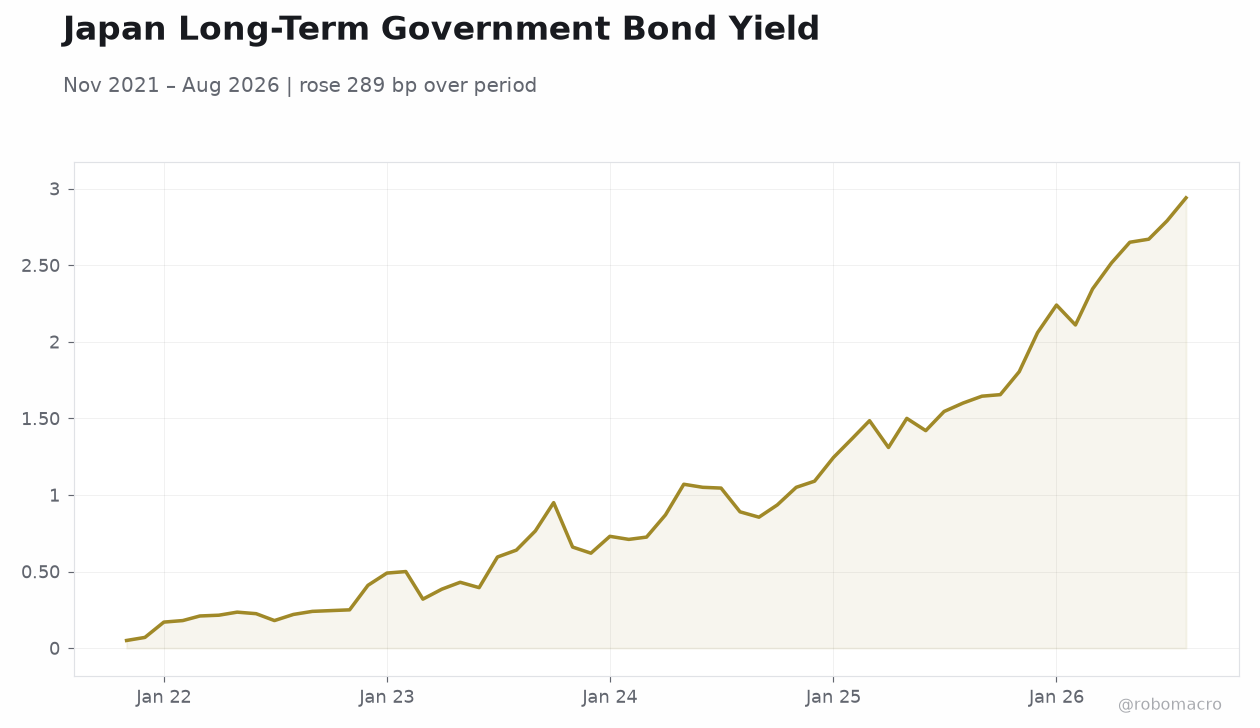 Japan Long-Term Government Bond Yield | Type: macro_line | 10Y JGB Yield (%): 2.94 (2026-08-01) | Range: 0.05–2.94 | Trend(6pt): 0.05,0.49,0.725,1.5,2.79,2.94
Today's Economic Events
| Data |
Prior |
Cons |
Time |
| Current Account Balance | 2,989,000m | 3,194,600m | 19:50 |
|
| Thursday (2026-10-08) |
| Household Spending Month-over-Month | 0.50 | 0.50 | 19:30 |
| Household Spending Year-over-Year | -3.60 | -3.60 | 19:30 |
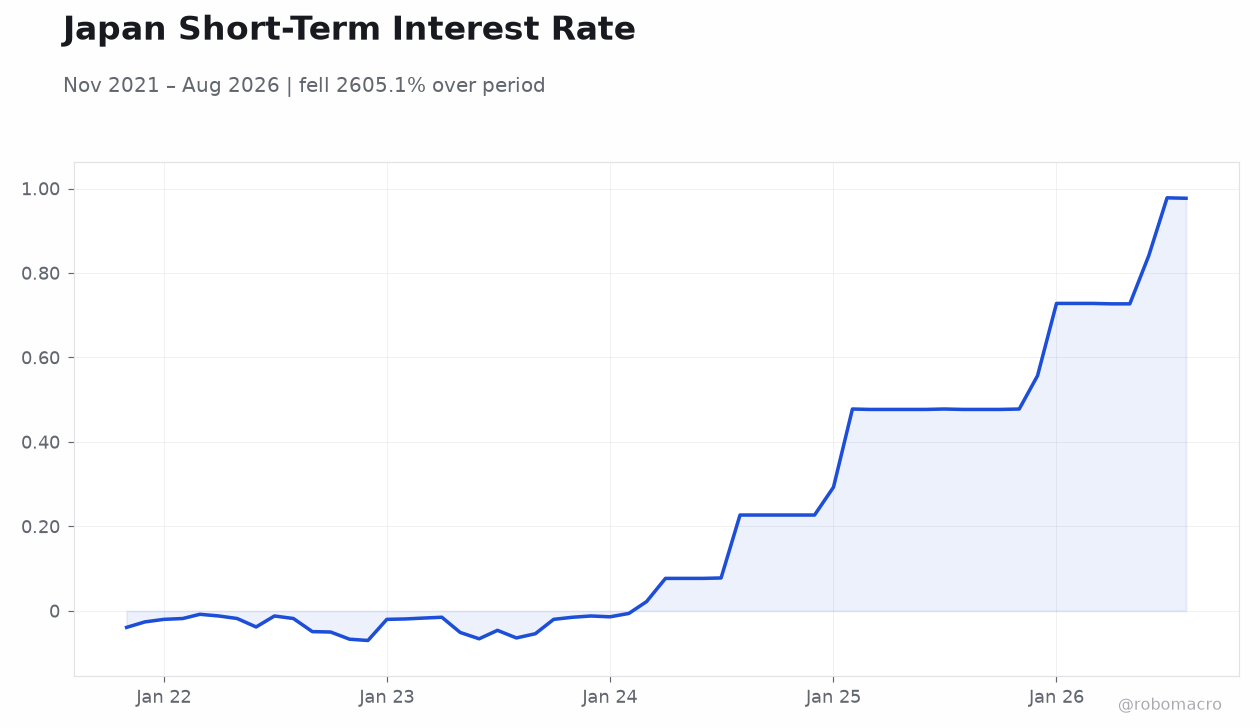
- Governor Ueda's speech offered no new policy signals, leaving the BoJ on hold at 1.25% while markets parse normalisation timing
- JGB yields rose 2 bp, with the 10-year at 3.10% and bond-auction nerves easing
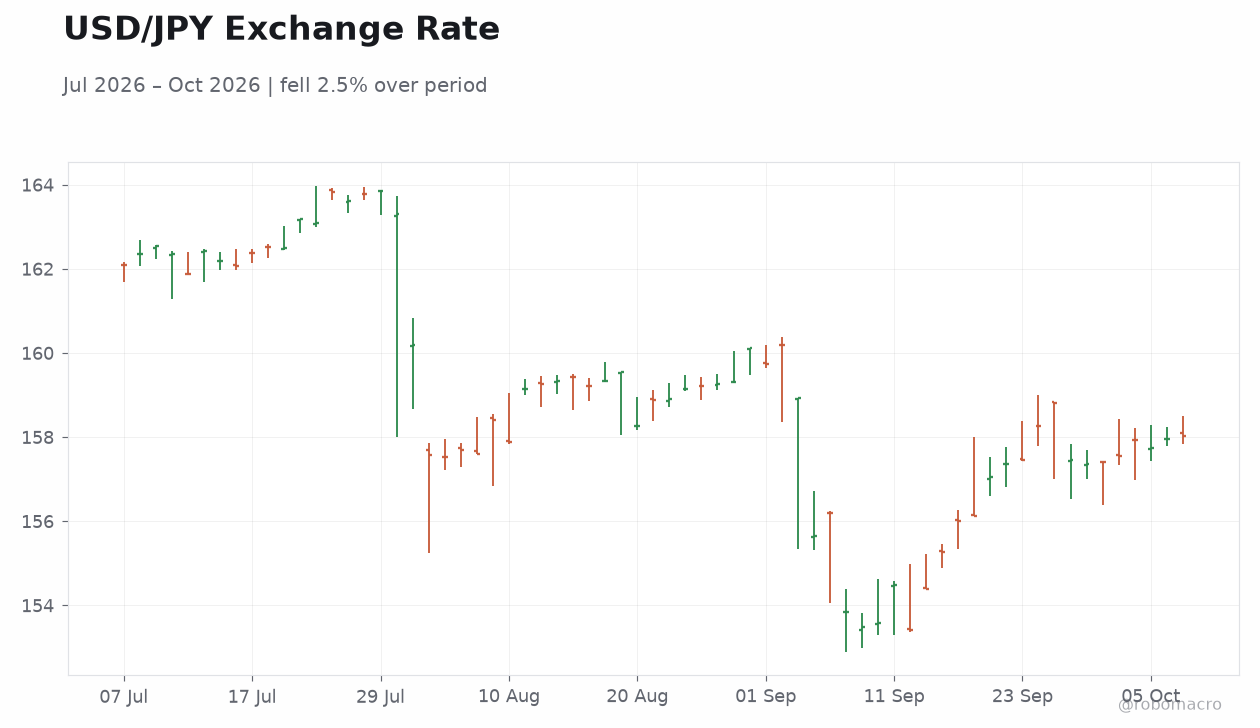
- USD/JPY slipped to 158.03 as hawkish board commentary failed to lift the yen against dollar demand
Yesterday's Recap
Japan's consumer confidence index printed at 35.4 on October 5, marginally above the 35.3 consensus though shy of the prior 35.5 reading, suggesting household sentiment remains fragile but stabilising. The headline event was Governor Ueda's speech at 02:35 ET, which market commentary characterised as uneventful — the yen flatlined through remarks that changed little, with FX desks noting no fresh guidance on the normalisation path. In rates, the 10-year JGB yield climbed 2 bp to 3.10% and the 2-year rose 2 bp to 1.93%, a grind higher that followed a well-received bond auction that calmed rate-fear narratives.
Equity markets responded positively: the Nikkei 225 advanced 1.05% to 70,683.98, with Tokyo shares surging as auction results soothed concerns about a sharper tightening cycle. In FX, USD/JPY slipped 0.17% to 158.03, while crosses weakened more materially — EUR/JPY fell 0.70% to 176.90 and GBP/JPY lost 0.55% to 208.87 — reflecting yen resilience against European currencies even as dollar strength dominated. Elsewhere, gold retreated 1.27% to $4,134 and Brent crude firmed 0.42% to $101, a mix that kept Japan's terms-of-trade picture mixed.
Bitcoin's 2.55% decline to $83,379 underscored the risk-off tone in peripheral assets even as Japanese equities rallied on domestic catalysts.
The Day Ahead
Tonight at 19:50 ET Japan releases the current account balance, with consensus at ¥3.19 trillion versus the prior ¥2.99 trillion surplus. The surplus trajectory matters for the yen's structural funding-currency appeal, a theme Rabobank flagged as eroding amid BoJ hikes. Thursday brings household spending data at 19:30 ET, with month-over-month and year-over-year prints expected at 0.5% and -3.6% respectively, matching prior readings.
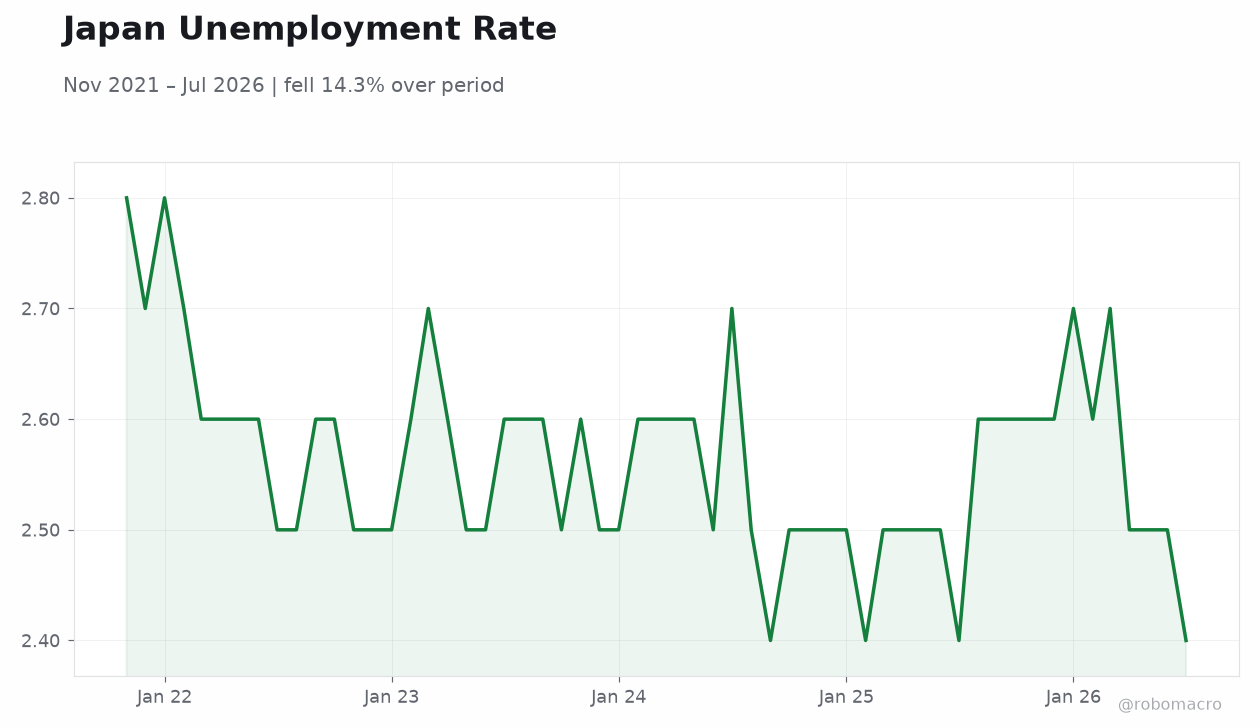
Given real wages have now risen for eight consecutive months, the spending figures will test whether income gains translate into consumption or are being saved amid soft confidence. A downside surprise would complicate the BoJ's demand-led inflation narrative, while an upside beat would reinforce the case for continued normalisation. Watch also for follow-through commentary from board members after Ueda's speech failed to move markets.
Page 1
Never miss an issue
Subscribe to Japan Macro Daily and get each new issue delivered to your inbox.
Already a member? Visit robomacro.com
to log in and manage subscriptions, or use Forgot Password to set a password.