Yen Grinds Lower as JGB Yields Ease; BoJ Hold Seen
35.40 Consumer Confidence4,062,000m Current Account Balance0.10 Household Spending-3.10 Household Spending
Nikkei 22569,030.92-0.02%
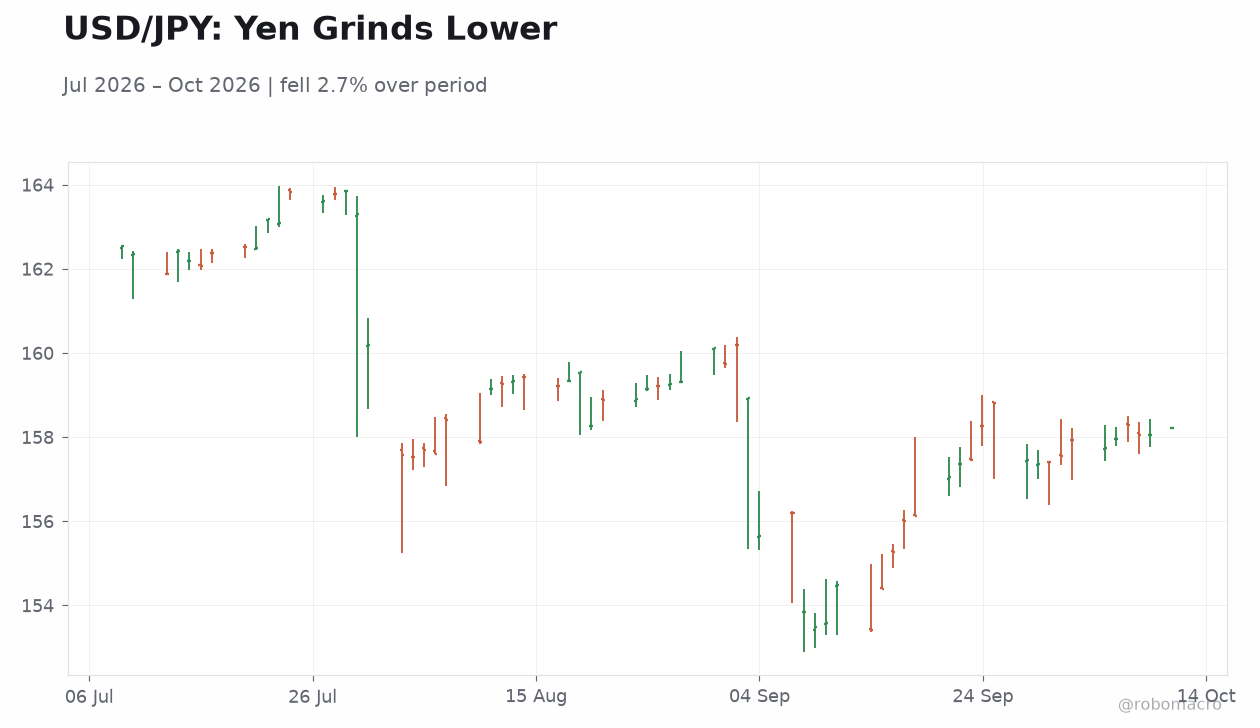
USD/JPY158.22+0.10%
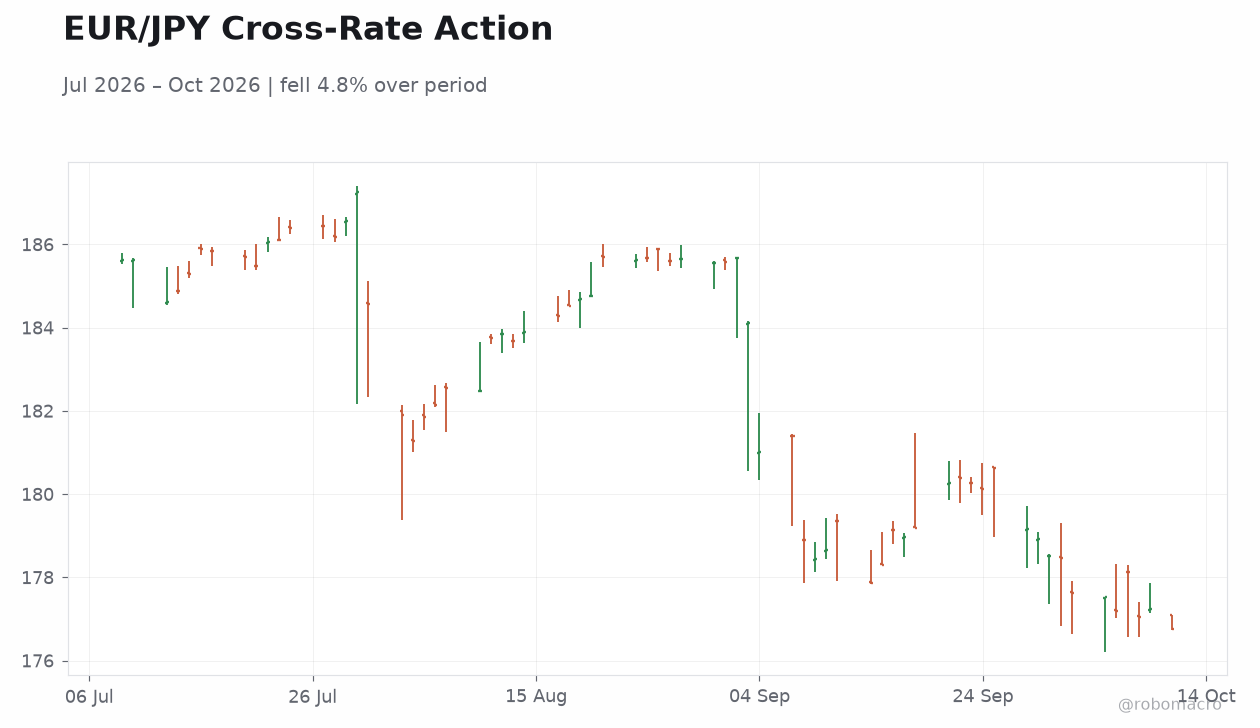
EUR/JPY176.83-0.23%
GBP/JPY209.01-0.04%
Market Snapshot
| Asset | Level | Change |
|---|
| Nikkei 225 | 69,030.92 | -0.02% |
| USD/JPY | 158.22 | +0.10% |
| EUR/JPY | 176.83 | -0.23% |
| GBP/JPY | 209.01 | -0.04% |
| Gold | 4,216.30 | +1.43% |
| Brent Crude | 104.72 | +0.42% |
| Bitcoin | 83,548.63 | +0.77% |
| Japan 2Y Govt Yield | 1.94% | -1 bp |
| Japan 10Y Govt Yield | 3.09% | -2 bp |
Prior Economic Events
| Data |
Prior |
Cons |
Actual |
| Consumer Confidence Index | 35.50 | 35.30 | 35.40 |
| BoJ Gov Ueda Speech | - | - | - |
| Current Account Balance | 2,989,000m | 3,194,600m | 4,062,000m |
| Household Spending Month-over-Month | 0.50 | 0.50 | 0.10 |
| Household Spending Year-over-Year | -3.60 | -3.60 | -3.10 |
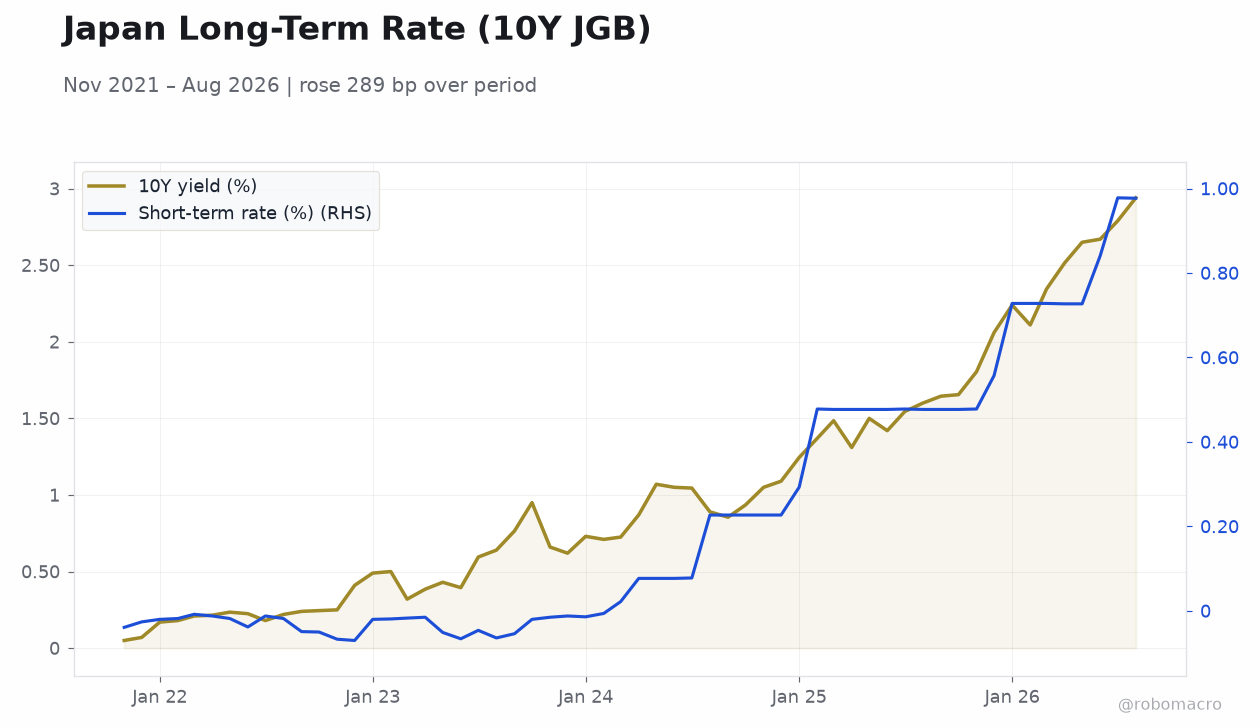 Japan Long-Term Rate (10Y JGB) | Type: macro_line | 10Y yield (%): 2.94 (2026-08-01) | Range: 0.05–2.94 | Trend(6pt): 0.05,0.49,0.725,1.5,2.79,2.94 | Short-term rate (%): 0.977 (2026-08-01) | Range: -0.07–0.978 | Trend(6pt): -0.039,-0.02,0.022,0.477,0.978,0.977
Today's Economic Events
| Data |
Prior |
Cons |
Time |
| No events available |
- The yen underperformed broadly, with USD/JPY firming 0.10% to 158.22 as the wide US-Japan rate differential kept carry trades attractive despite softer JGB yields.
- Japan's current account surplus surged to ¥4.06 trillion in August, far above the ¥3.19 trillion consensus, while household spending contracted 3.1% year-on-year, underscoring a fragile consumption recovery.
- The 10-year JGB yield eased 2 bp to 3.09% and the 2-year slipped 1 bp to 1.94%, with the BoJ widely expected to hold at 1.25% on October 29-30 before a possible December or January move.
Yesterday's Recap
Japanese markets closed a quiet week with the Nikkei 225 essentially flat at 69,030.92, down just 0.02%, as an early AI-driven rally reversed late in the session. The yen remained the day's focal point, weakening 0.10% against the dollar to 158.22 and losing ground to sterling at 209.01, though it gained slightly on the euro at 176.83. FX commentary centred on the persistent US-Japan yield gap, which continues to anchor dollar-yen near multi-decade highs despite expectations of eventual BoJ normalisation.
On the data front, August's current account surplus printed at ¥4.06 trillion, comfortably exceeding the ¥3.19 trillion consensus and the prior ¥2.99 trillion, driven by the primary income balance. Household spending offered a mixed picture: the month-on-month rise of just 0.1% missed the 0.5% consensus, while the year-on-year decline of 3.1% was a modest improvement from the prior 3.6% contraction but still signalled weak domestic demand. Consumer confidence for October, released earlier in the week at 35.4, edged above the 35.3 consensus though it sat just below the prior 35.5 reading, offering little reassurance on household sentiment.
In fixed income, the 10-year JGB yield eased 2 bp to 3.09% and the 2-year fell 1 bp to 1.94%, a mild bull-flattening that suggests reduced pressure near the policy horizon.
The Day Ahead
Monday, October 12 is a national holiday in Japan (Sports Day), so domestic markets, the TSE, and the BOJ's money-market operations are closed, and no tier-one Japanese data are scheduled. The absence of domestic catalysts leaves the yen trading on external drivers, chiefly US rate expectations and Treasury yields into the Columbus Day-adjacent week. With the BoJ's October 29-30 meeting now under three weeks away, market participants will begin positioning for the policy statement and the quarterly Outlook Report, where staff forecasts for growth and inflation will be scrutinised for hints on the timing of the next hike.
↓ p.2
Page 1
Never miss an issue
Subscribe to Japan Macro Daily and get each new issue delivered to your inbox.
Already a member? Visit robomacro.com
to log in and manage subscriptions, or use Forgot Password to set a password.