Yen Grinds Lower; JGBs Firm Ahead of Koeda
Nikkei 22569,030.92-0.02%
USD/JPY158.60+0.34%
EUR/JPY176.89-0.19%
GBP/JPY209.50+0.20%
Market Snapshot
| Asset | Level | Change |
|---|
| Nikkei 225 | 69,030.92 | -0.02% |
| USD/JPY | 158.60 | +0.34% |
| EUR/JPY | 176.89 | -0.19% |
| GBP/JPY | 209.50 | +0.20% |
| Gold | 4,194.30 | -0.52% |
| Brent Crude | 106.08 | +1.30% |
| Bitcoin | 83,006.12 | -0.80% |
| Japan 2Y Govt Yield | 1.94% | -1 bp |
| Japan 10Y Govt Yield | 3.09% | -2 bp |
Prior Economic Events
| Data |
Prior |
Cons |
Actual |
| No events available |
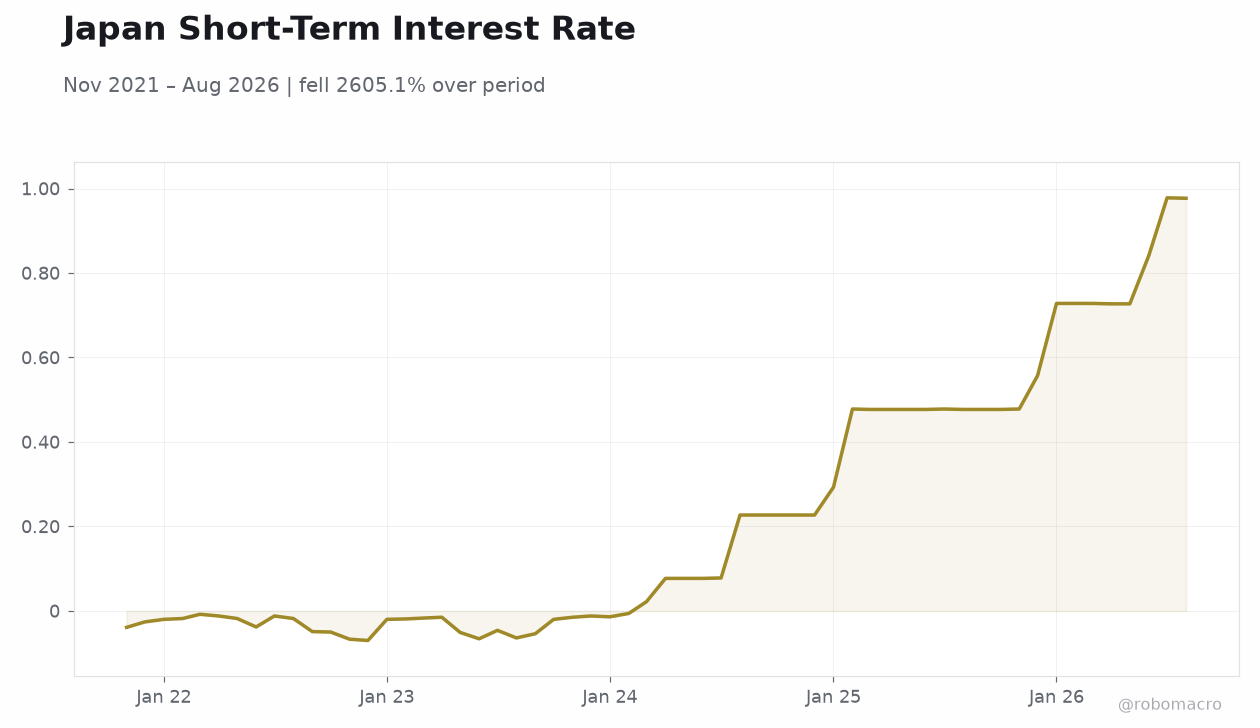 Japan Short-Term Interest Rate | Type: macro_line | Short-Term Rate (%): 0.977 (2026-08-01) | Range: -0.07–0.978 | Trend(6pt): -0.039,-0.02,0.022,0.477,0.978,0.977
Today's Economic Events
| Data |
Prior |
Cons |
Time |
|
| Wednesday (2026-10-14) |
| Machinery Orders Month-over-Month | -3.70 | 2.50 | 19:50 |
| Machinery Orders Year-over-Year | 11.20 | - | 19:50 |
| BoJ Koeda Speech | - | - | 21:30 |
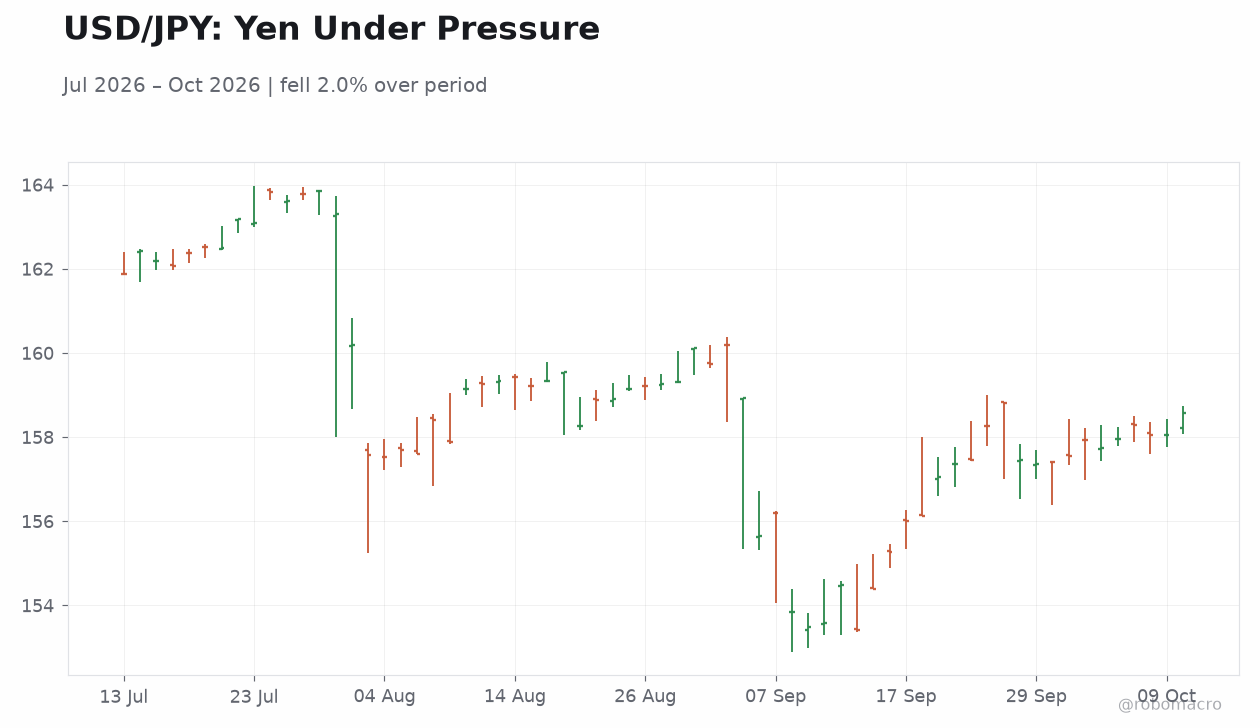
- USD/JPY climbs to 158.60 as wide US-Japan rate differentials and firm oil prices weigh on the yen
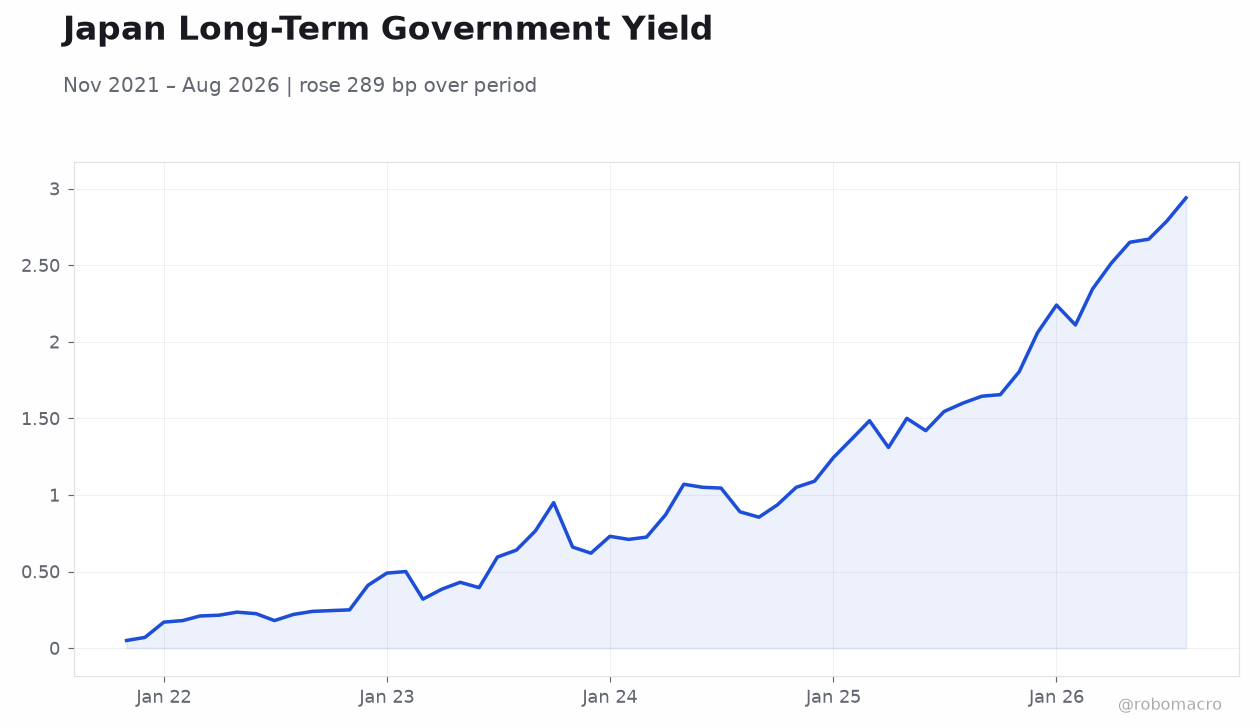
- JGB yields ease, with the 10-year down 2 bp to 3.09%, ahead of a heavy data week
- Machinery orders and a speech from BoJ board member Koeda headline Wednesday's calendar
Yesterday's Recap
Japanese markets operated on a quiet footing into the Monday session, with the calendar showing no scheduled data releases and liquidity thinned by holiday-adjacent positioning. The Nikkei 225 closed essentially flat at 69,030.92, down just 0.02%, as an early reversal in the AI-driven rally left the index treading water near multi-month highs. Currency markets did the heavy lifting: USD/JPY firmed 0.34% to 158.60, with dealers citing the wide US-Japan yield gap and a rally in Brent crude to 106.08, up 1.30%, that worsens Japan's terms of trade.
Cross-yen pairs were mixed — GBP/JPY added 0.20% to 209.50 while EUR/JPY slipped 0.19% to 176.89 — underscoring that yen weakness is a broad, dollar-led story rather than a single-currency squeeze. In fixed income, the front end of the JGB curve eased a basis point, with the 2-year at 1.94%, and the 10-year declined 2 bp to 3.09%, a modest bull-flattening that suggests investors are positioning cautiously ahead of supply and policy events. Gold's 0.52% retreat to 4,194.30 and Bitcoin's 0.80% dip to 83,006.12 hinted at a mild de-risking tone at the margin.
Prime Minister commentary that the government is watching yen and inflation moves carefully kept fiscal-and-FX scrutiny high, but offered no fresh policy signal.
The Day Ahead
Wednesday brings the first substantive data of the week when machinery orders are released at 19:50 ET. The month-over-month print is expected to rebound 2.5% after the prior 3.7% contraction, while the year-over-year rate — which ran at 11.2% previously — will be scrutinised for evidence that the capital-expenditure upcycle is intact; no consensus is posted for the annual figure, widening the surprise risk. The same release carries a medium impact tag but outsized signalling value, since machinery orders are the canonical leading indicator of business investment and a key input into the BoJ's growth outlook.
At 21:30 ET, BoJ board member Koeda speaks, tagged high impact, and markets will parse the remarks for clues on the timing of the next rate adjustment and the committee's comfort with current real-rate levels. With the policy rate at 1.25% and headline CPI at 1.90% year over year, any hint on the neutral rate or the pace of normalisation will move the yen and JGBs. Positioning into the speech is likely to remain defensive given thin holiday-week liquidity.
Page 1
Never miss an issue
Subscribe to Japan Macro Daily and get each new issue delivered to your inbox.
Already a member? Visit robomacro.com
to log in and manage subscriptions, or use Forgot Password to set a password.