Machinery Orders, Koeda Speech in Focus as Yen Idles Near 158
Nikkei 22567,777.52-1.82%
USD/JPY158.28-0.15%
EUR/JPY176.53-0.21%
GBP/JPY208.66-0.35%
Market Snapshot
| Asset | Level | Change |
|---|
| Nikkei 225 | 67,777.52 | -1.82% |
| USD/JPY | 158.28 | -0.15% |
| EUR/JPY | 176.53 | -0.21% |
| GBP/JPY | 208.66 | -0.35% |
| Gold | 4,121.60 | -1.33% |
| Brent Crude | 105.99 | +0.28% |
| Bitcoin | 81,706.98 | -1.67% |
| Japan 2Y Govt Yield | 1.93% | +2 bp |
| Japan 10Y Govt Yield | 3.02% | -1 bp |
Prior Economic Events
| Data |
Prior |
Cons |
Actual |
| No events available |
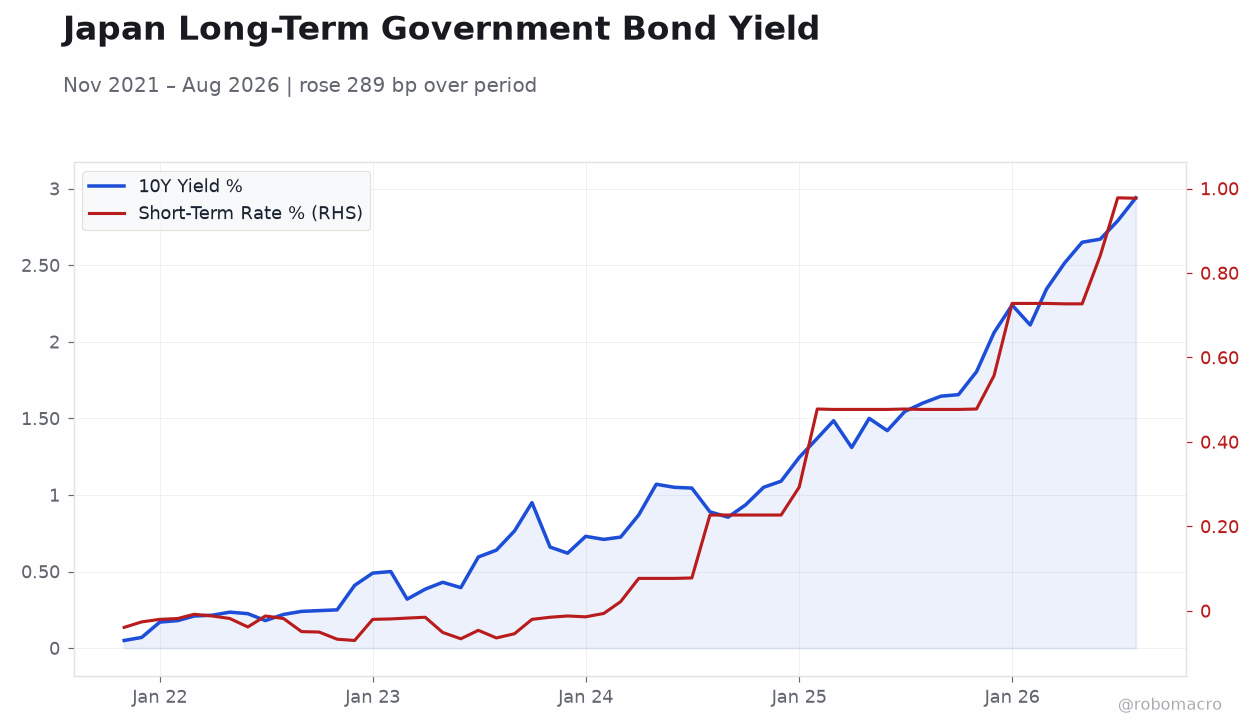
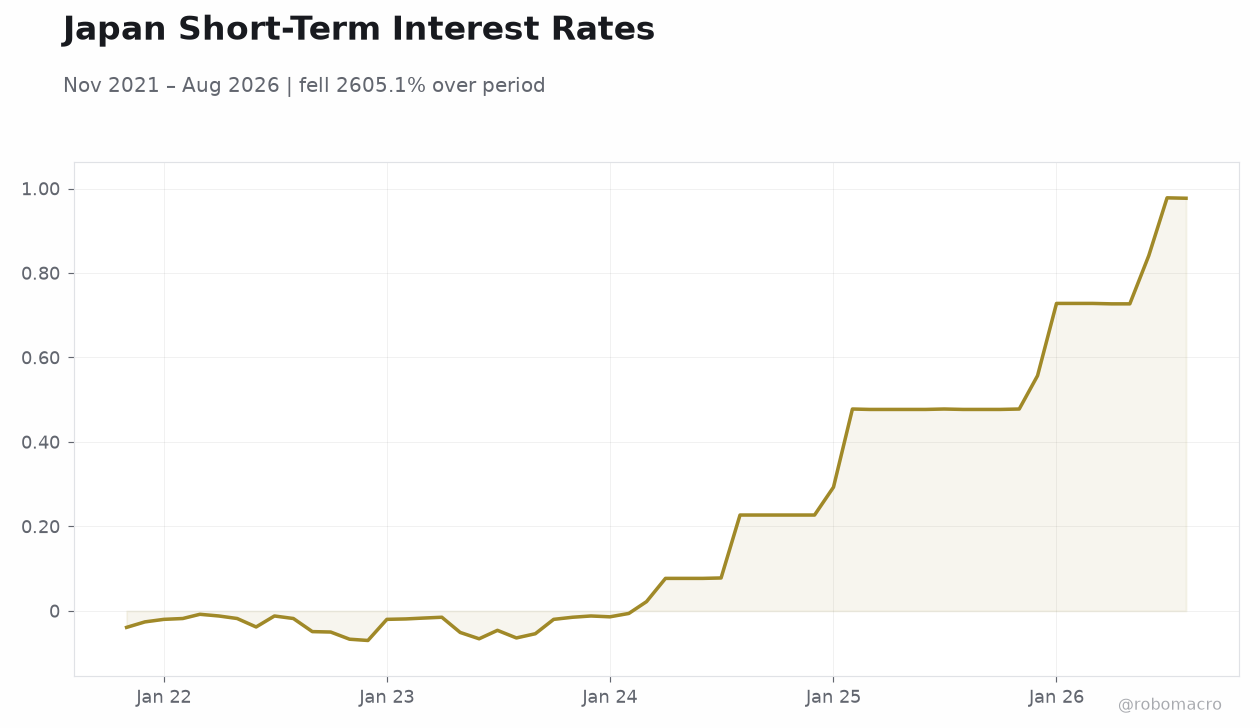 Japan Short-Term Interest Rates | Type: macro_line | Short-Term Rate %: 0.977 (2026-08-01) | Range: -0.07–0.978 | Trend(6pt): -0.039,-0.02,0.022,0.477,0.978,0.977
Today's Economic Events
| Data |
Prior |
Cons |
Time |
| Machinery Orders Month-over-Month | -3.70 | 3 | 19:50 |
| Machinery Orders Year-over-Year | 11.20 | 15.70 | 19:50 |
| BoJ Koeda Speech | - | - | 21:30 |
- Machinery orders and a Koeda speech headline a thin Tokyo data slate; the BoJ is widely expected to hold in October with December hike odds near 90%.
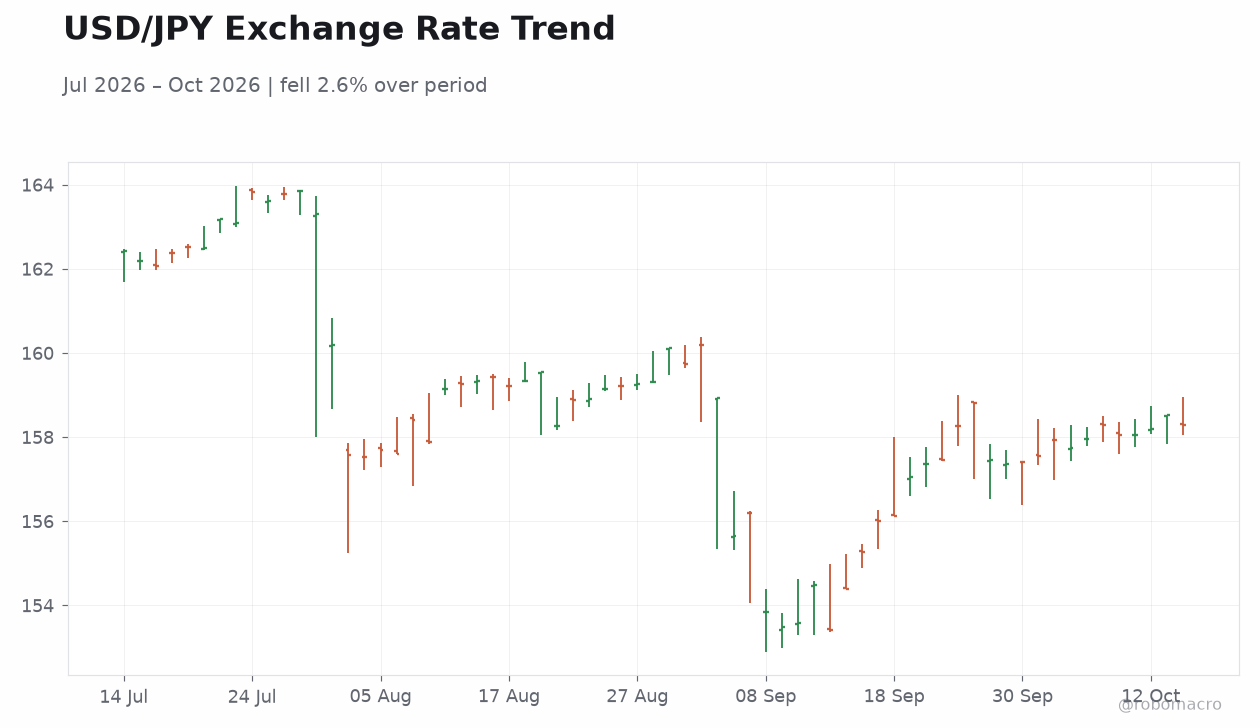
- The Nikkei fell 1.82% to 67,777.52 as the chip rebound faded; USD/JPY eased 0.15% to 158.28 ahead of US CPI.
- JGB curves flattened: the 2-year rose 2 bp to 1.93% while the 10-year eased 1 bp to 3.02%.
Yesterday's Recap
Japanese markets closed lower on Tuesday, October 13, with the Nikkei 225 shedding 1.82% to 67,777.52 as an early rebound in semiconductor names faded and investors positioned cautiously ahead of US CPI. The yen traded in a narrow range, with USD/JPY easing 0.15% to 158.28, EUR/JPY down 0.21% at 176.53, and GBP/JPY slipping 0.35% to 208.66. Currency commentary noted the yen remains range-bound near the upper end of its recent band, with the BoJ's perceived inclination to hold steady in October weighing on the currency.
In fixed income, the 2-year JGB yield rose 2 bp to 1.93%, while the 10-year eased 1 bp to 3.02%, a modest flattening that suggests the long end is anchoring even as short-end pricing firms. Gold fell 1.33% to $4,121.60 and Bitcoin dropped 1.67% to $81,706.98, while Brent crude added 0.28% to $105.99. No domestic economic releases were scheduled for the session, leaving the price action driven largely by external cues and positioning.
The dominant narrative remained the tension between elevated wholesale inflation — which keeps the rate-hike case alive — and a central bank in no hurry to move again so soon after its last adjustment.
The Day Ahead
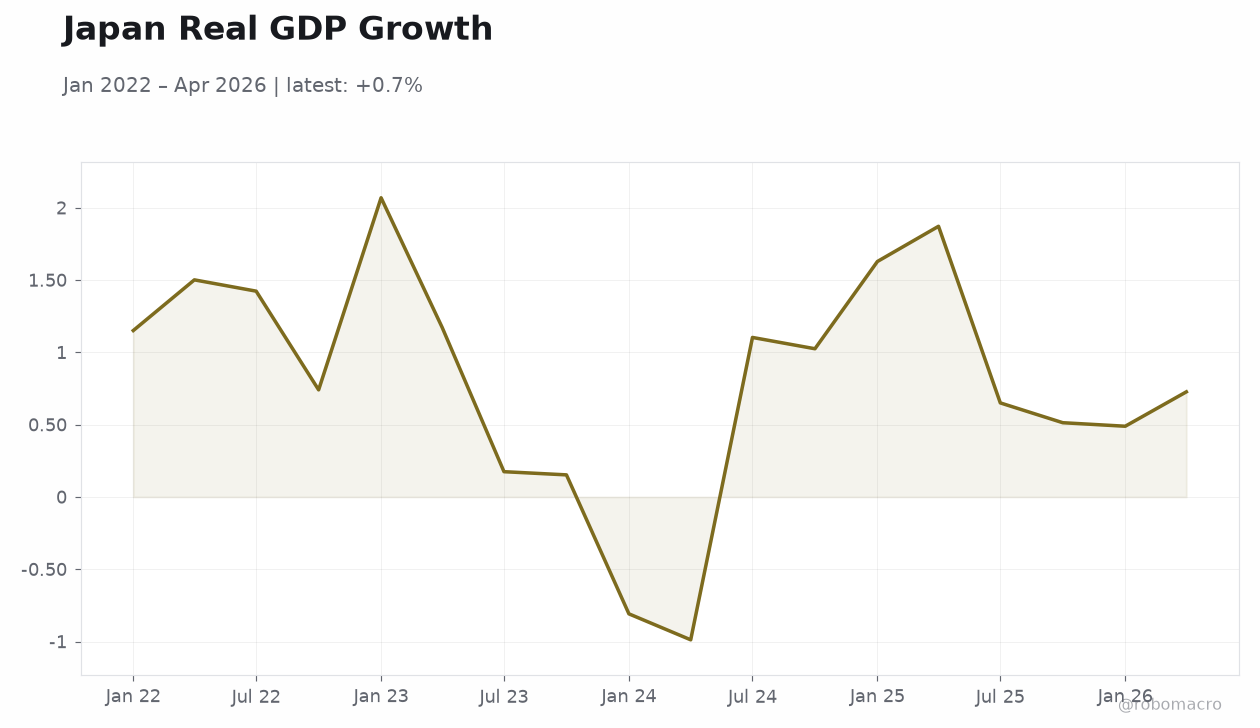
Today's calendar brings Japan's Machinery Orders for the latest month, with the month-over-month figure expected to rebound 3.0% after the prior 3.7% contraction, and the year-over-year rate seen accelerating to 15.7% from 11.2% — a print that will test the durability of the capex recovery underpinning the BoJ's normalisation thesis. The headline event is a speech by BoJ board member Koeda at 21:30 ET, flagged as high impact; markets will parse her remarks for clues on the timing of the next hike and her assessment of underlying inflation momentum. Koeda has been a key voice on the policy board, and any signal on the balance of risks around wage growth and services inflation could shift December pricing.
With no other domestic data scheduled, attention will also stay on the currency, where a break of 158.50 in USD/JPY would mark a fresh leg toward September extremes if the dollar strengthens post-CPI. Equity traders will watch whether the chip-led weakness extends or stabilises after Tuesday's fade.
Page 1
Never miss an issue
Subscribe to Japan Macro Daily and get each new issue delivered to your inbox.
Already a member? Visit robomacro.com
to log in and manage subscriptions, or use Forgot Password to set a password.