JGBs Rally, Machinery Orders Beat, BoJ Hawks Circle
5.20 Machinery Orders18.60 Machinery Orders
Nikkei 22565,324.29+1.39%
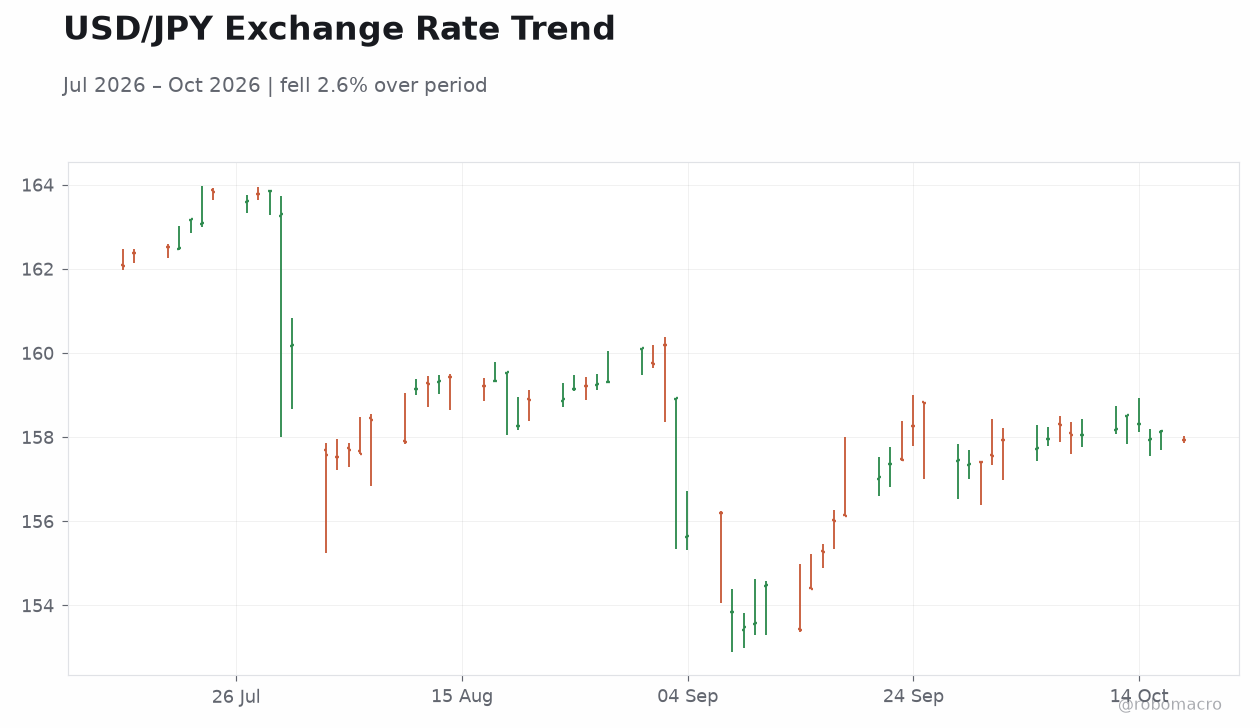
USD/JPY157.86-0.18%
EUR/JPY176.82-0.29%
GBP/JPY210.20+0.15%
Market Snapshot
| Asset | Level | Change |
|---|
| Nikkei 225 | 65,324.29 | +1.39% |
| USD/JPY | 157.86 | -0.18% |
| EUR/JPY | 176.82 | -0.29% |
| GBP/JPY | 210.20 | +0.15% |
| Gold | 4,181.10 | +0.26% |
| Brent Crude | 109.86 | +3.72% |
| Bitcoin | 80,855.35 | -0.65% |
| Japan 2Y Govt Yield | 1.91% | -2 bp |
| Japan 10Y Govt Yield | 2.95% | -7 bp |
Prior Economic Events
| Data |
Prior |
Cons |
Actual |
| Machinery Orders Month-over-Month | -3.70 | 3 | 5.20 |
| Machinery Orders Year-over-Year | 11.20 | 15.70 | 18.60 |
| BoJ Koeda Speech | - | - | - |
| BoJ Uchida Speech | - | - | - |
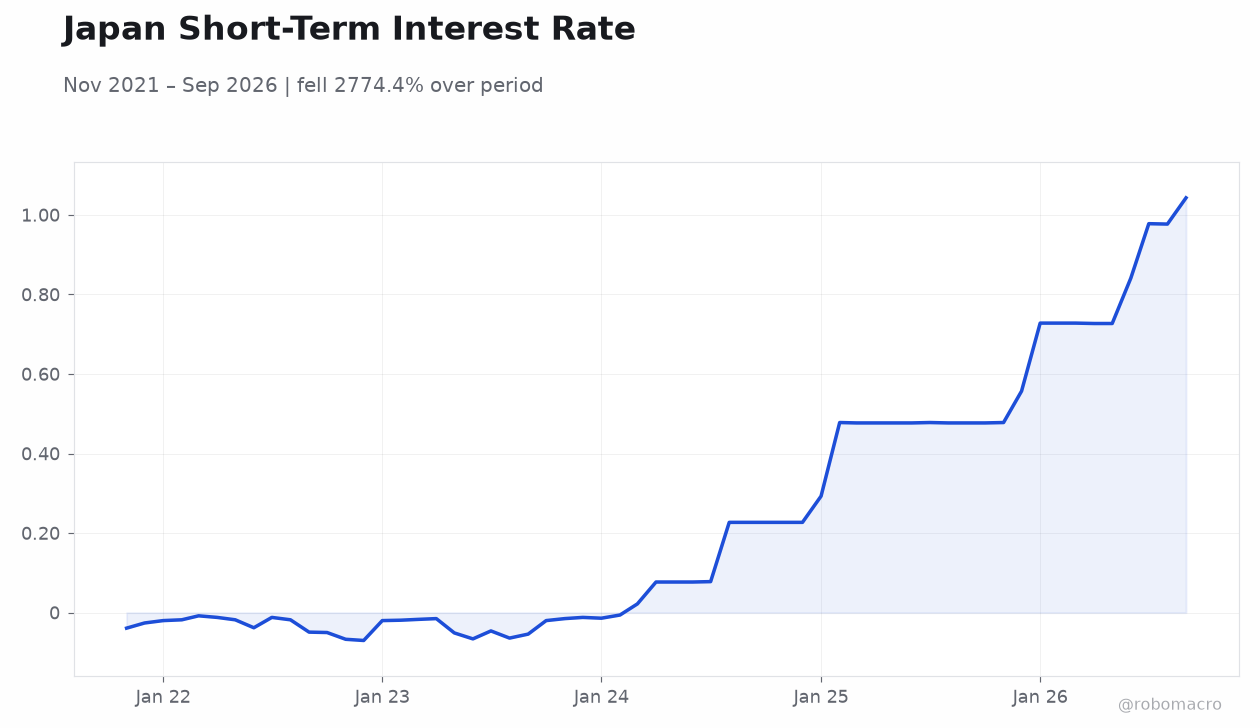
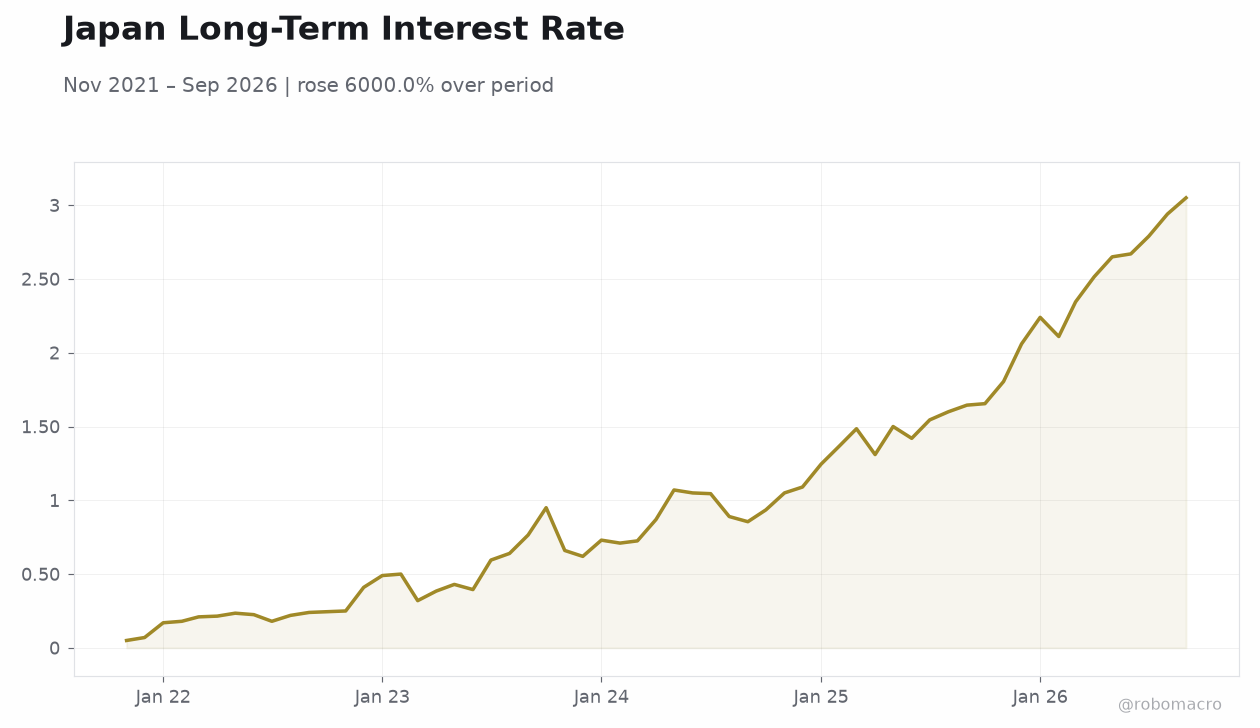 Japan Long-Term Interest Rate | Type: macro_line | Long-Term Rate (%): 3.05 (2026-09-01) | Range: 0.05–3.05 | Trend(6pt): 0.05,0.49,0.725,1.5,2.79,3.05
Today's Economic Events
| Data |
Prior |
Cons |
Time |
| No events available |
- Machinery orders surged 5.2% m/m and 18.6% y/y in August, far exceeding consensus of 3.0% and 15.7%, signalling resilient corporate capex momentum.
- The 10-year JGB yield eased 7 bp to 2.95% and the 2-year slipped 2 bp to 1.91%, while the Nikkei gained 1.39% to 65,324.29.
- Governor Ueda said the BoJ "can't tolerate" underlying inflation staying above 2%, while board member Koeda warned against excessive caution on further rate hikes.
Yesterday's Recap
Japanese markets closed the week on a constructive note, with the Nikkei 225 advancing 1.39% to 65,324.29 as risk appetite held firm into the weekend. Fixed income outperformed, with the 10-year JGB yield easing 7 bp to 2.95% and the 2-year slipping 2 bp to 1.91% — a rally that suggests markets are pricing a measured, rather than aggressive, normalisation path. The yen was mixed: USD/JPY slipped 0.18% to 157.86 and EUR/JPY lost 0.29% to 176.82, while GBP/JPY bucked the trend, adding 0.15% to 210.20.
On the data front, August machinery orders printed strongly, rising 5.2% m/m against a 3.0% consensus and 18.6% y/y versus expectations of 15.7% — a robust capex signal that supports the BoJ's growth narrative. The print followed a heavy week of BoJ communication, with board member Koeda speaking on October 14 and Executive Director Uchida on October 16. Brent crude jumped 3.72% to $109.86, a move that matters for Japan's import bill and inflation dynamics.
Gold firmed 0.26% to $4,181.10, while Bitcoin eased 0.65% to $80,855.35.
The Day Ahead
The calendar is quiet to start the week, with no scheduled Japanese data releases today or tomorrow, leaving markets to digest last week's capex beat and the accumulating weight of BoJ rhetoric. Attention will shift to positioning ahead of the next policy meeting, with December increasingly flagged by commentators as the focal point for the next hike. Watch for follow-through in JGBs after Friday's rally, particularly whether the 10-year can consolidate below 3.00% amid supply and fiscal considerations.
Currency markets will remain the key transmission channel, with USD/JPY's ability to hold below 158 contingent on both Fed repricing and BoJ hawkishness. Any ad hoc comments from BoJ officials or ministry of finance figures on FX levels will be market-moving given the US Treasury's recent intervention-adjacent commentary. Liquidity may be thinner than usual early in the week, amplifying moves in both rates and FX.
Page 1
Never miss an issue
Subscribe to Japan Macro Daily and get each new issue delivered to your inbox.
Already a member? Visit robomacro.com
to log in and manage subscriptions, or use Forgot Password to set a password.