Japan Macro Daily(Beta Mode)
Yen Pinned Near 158 as BoJ Hikes Loom
Market Snapshot
| Asset | Level | Change |
|---|---|---|
| Nikkei 225 | 64,916.70 | -0.62% |
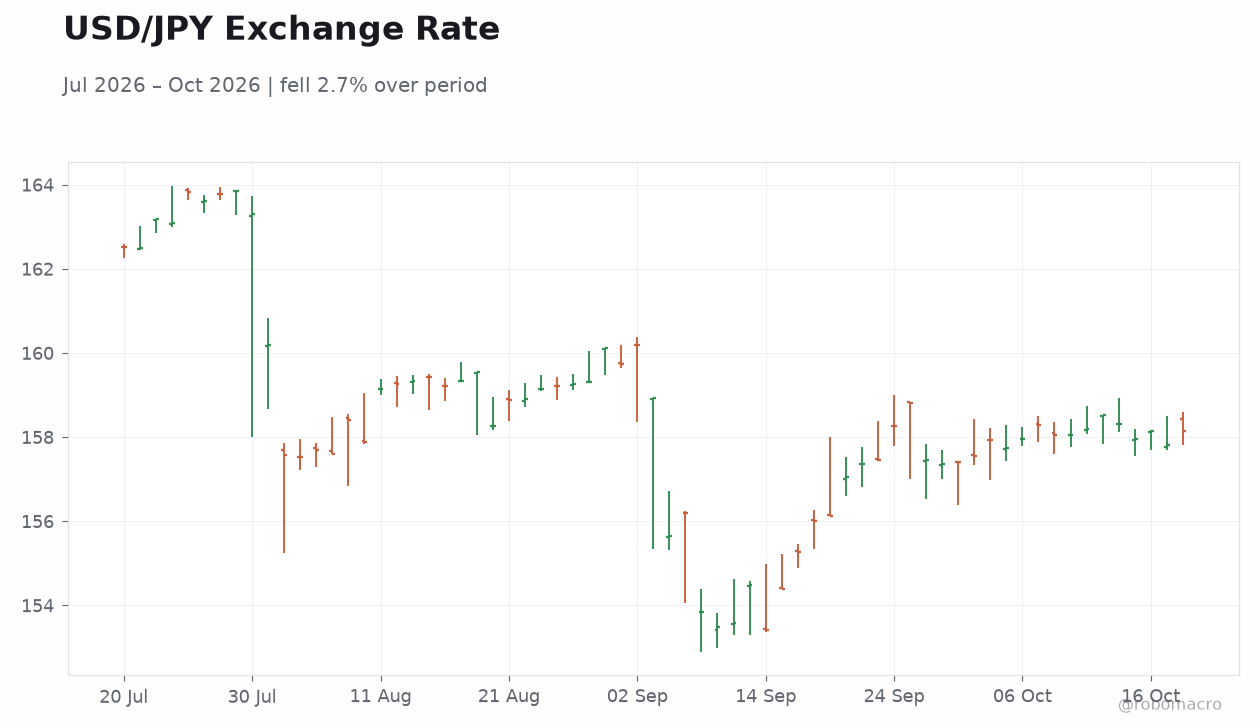
| USD/JPY | 158.12 | +0.20% |
| EUR/JPY | 177.49 | -0.15% |
| GBP/JPY | 211.50 | +0.24% |
| Gold | 4,142.10 | -0.43% |
| Brent Crude | 109.17 | -0.35% |
| Bitcoin | 82,739.42 | +1.08% |
| Japan 2Y Govt Yield | 1.90% | -2 bp |
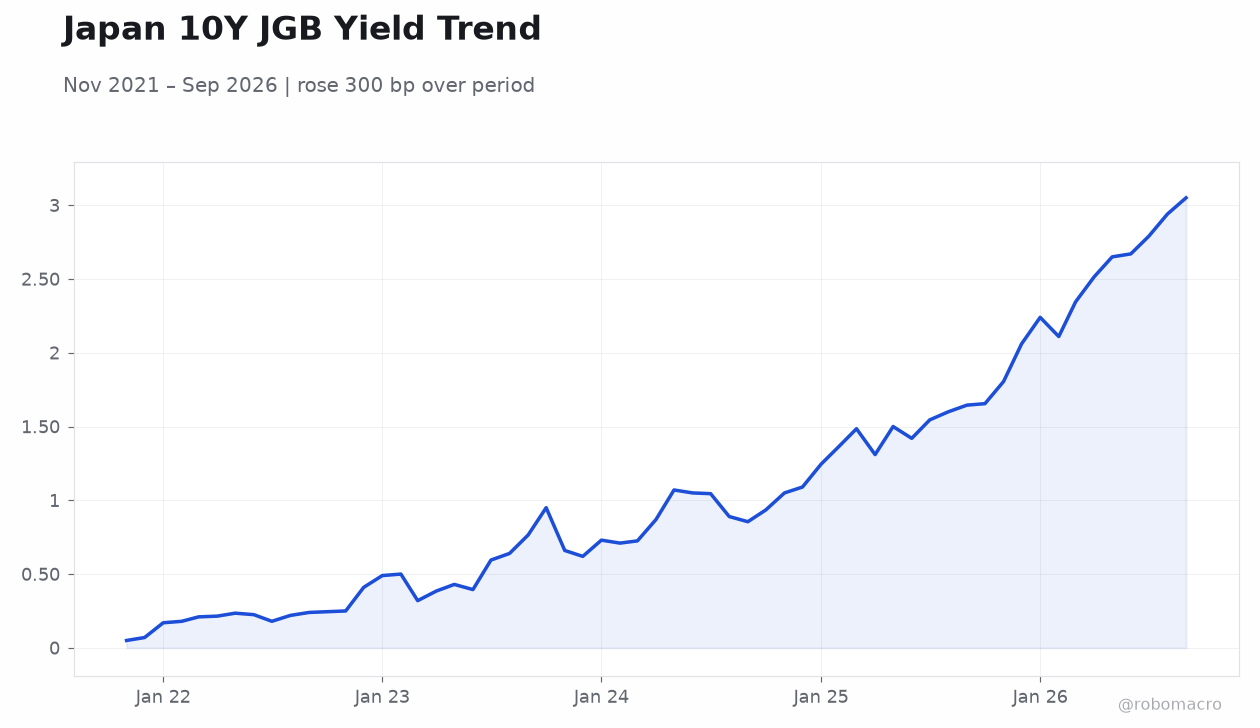
| Japan 10Y Govt Yield | 2.94% | -2 bp |
Prior Economic Events
| Data | Prior | Cons | Actual |
|---|---|---|---|
| No events available | |||
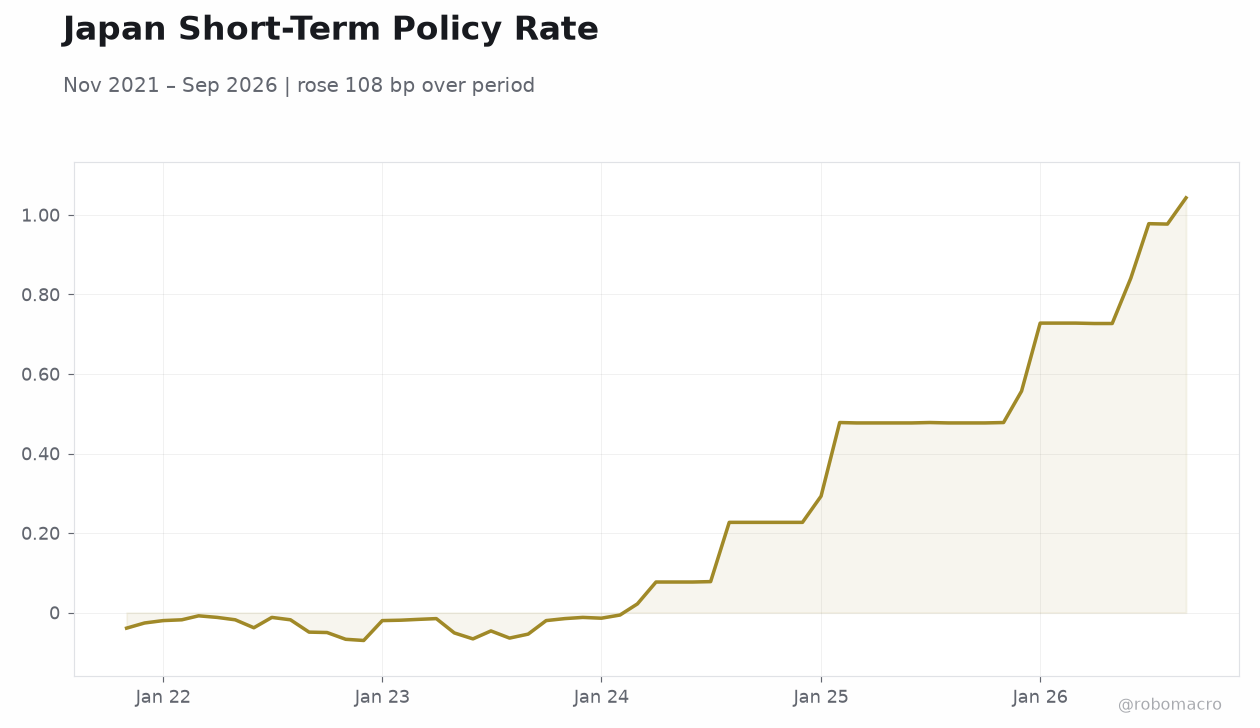 Japan Short-Term Policy Rate | Type: macro_line | Short-term rate (%): 1.043 (2026-09-01) | Range: -0.07–1.043 | Trend(6pt): -0.039,-0.02,0.022,0.477,0.978,1.043
Today's Economic Events
| Data | Prior | Cons | Time |
|---|---|---|---|
| No events available | |||
- Nikkei 225 fell 0.62% to 64,916.70 as AI-related concerns and elevated oil prices weighed on Tokyo equities.
- USD/JPY held near 158.12 (+0.20%) while JGB yields eased 2 bp across the curve, with 10Y at 2.94% and 2Y at 1.90%.
- BoJ Governor Ueda signaled inflation is near the 2% target and flagged scope for further rate hikes, with the IMF urging faster normalization.
Yesterday's Recap
Tokyo equities came under pressure Monday, with the Nikkei 225 sliding 0.62% to 64,916.70 as AI-valuation concerns and firm oil prices sapped risk appetite across the tech and energy complex. The yen remained pinned near the 158 handle, with USD/JPY edging up 0.20% to 158.12 and EUR/JPY easing 0.15% to 177.49, while GBP/JPY climbed 0.24% to 211.50 on the back of strong UK labour data. JGB markets rallied modestly, with the 10-year yield easing 2 bp to 2.94% and the 2-year down 2 bp to 1.90%, steepening the curve slightly as investors positioned for policy risk.
The policy rate remains at 1.25% following the October 13 BIS snapshot, with CPI running at 1.90% year-on-year as of August. No scheduled Japanese data releases printed during the session, leaving markets to trade off external cues and BoJ commentary. The session's tone reflected a market caught between a resilient inflation backdrop and growing unease over stretched equity valuations.
The Day Ahead
The calendar is light for Japan on Tuesday, with no tier-one data releases scheduled, leaving focus squarely on BoJ communication and external risk factors. Traders will watch for any follow-through in JGB markets after Monday's yield compression, particularly whether the 10-year can hold below the 2.95% threshold. Currency markets will key off US session developments, with USD/JPY's drift toward 158.50 keeping intervention risk on the radar.
Equity flows may remain defensive given the AI-related selloff, with semiconductor names likely to stay under pressure. Attention also turns to the government's fiscal outreach efforts, with officials reportedly working to reassure global investors about Japan's fiscal trajectory.
Other Economic Notes
Japan's economy minister Katayama reaffirmed respect for central bank independence while pledging to consider measures for stable funding and fiscal sustainability, a balancing act that underscores the political sensitivity of the current tightening cycle. Prime Minister Takaichi publicly denied that her administration is driving the weak yen and high rates, pushing back against market narratives that fiscal expansion is fuelling currency weakness. ↓ p.2