Japan Macro Daily(Beta Mode)
BoJ Signals Further Hikes as Yen Pressure Builds
Market Snapshot
| Asset | Level | Change |
|---|---|---|
| Japan 2Y Govt Yield | 1.91% | 0 bp |
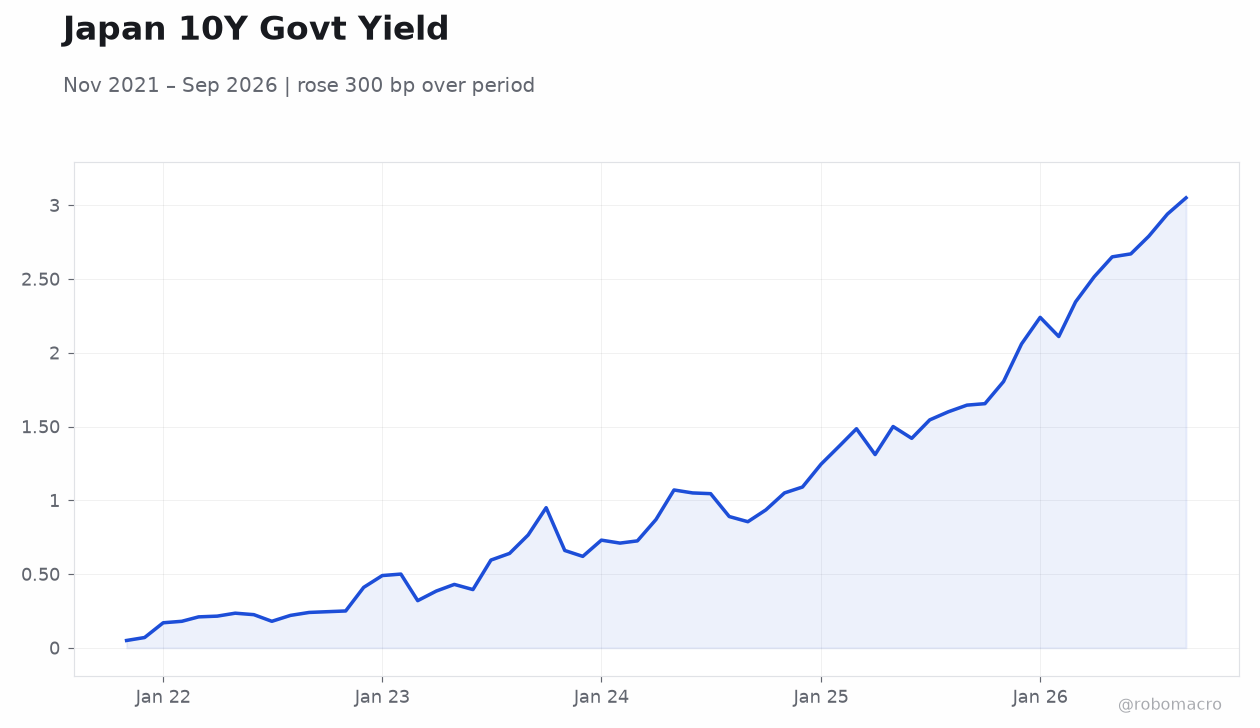
| Japan 10Y Govt Yield | 2.92% | -1 bp |
Prior Economic Events
| Data | Prior | Cons | Actual |
|---|---|---|---|
| No events available | |||
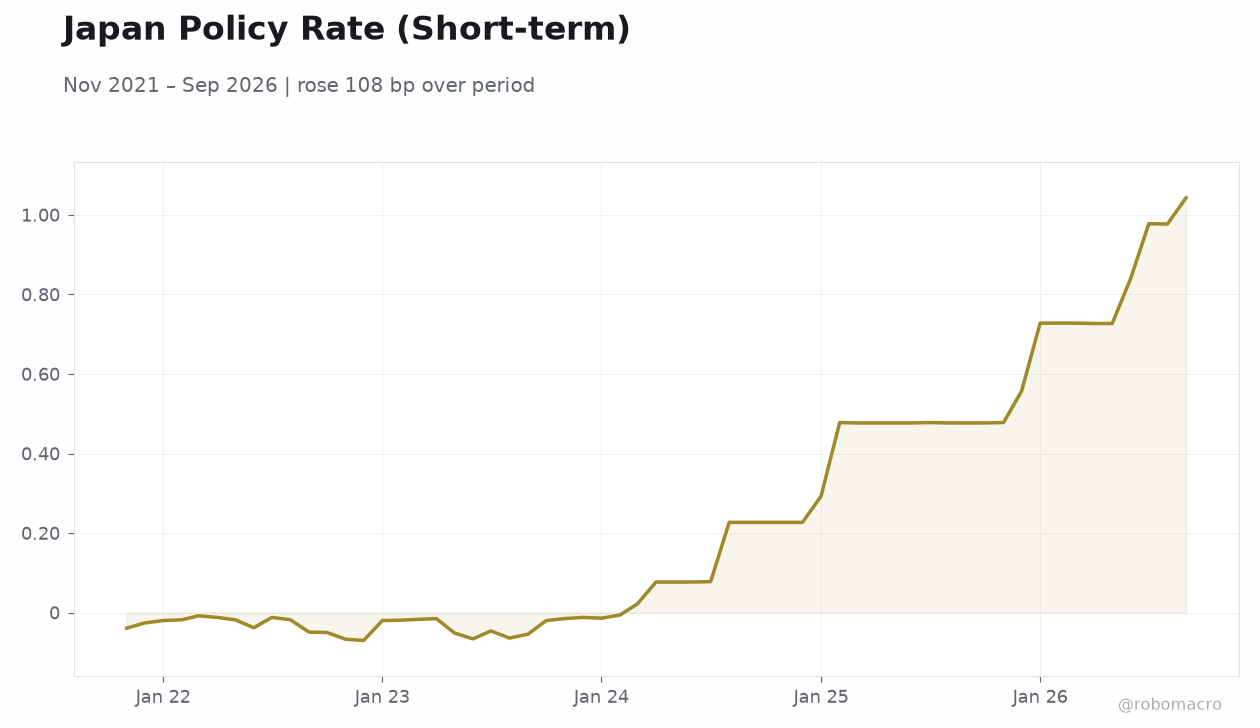 Japan Policy Rate (Short-term) | Type: macro_line | Policy Rate %: 1.043 (2026-09-01) | Range: -0.07–1.043 | Trend(6pt): -0.039,-0.02,0.022,0.477,0.978,1.043
Today's Economic Events
| Data | Prior | Cons | Time |
|---|---|---|---|
| No events available | |||
- BoJ Deputy Governor Himino signals readiness to raise rates as underlying inflation nears 2%.
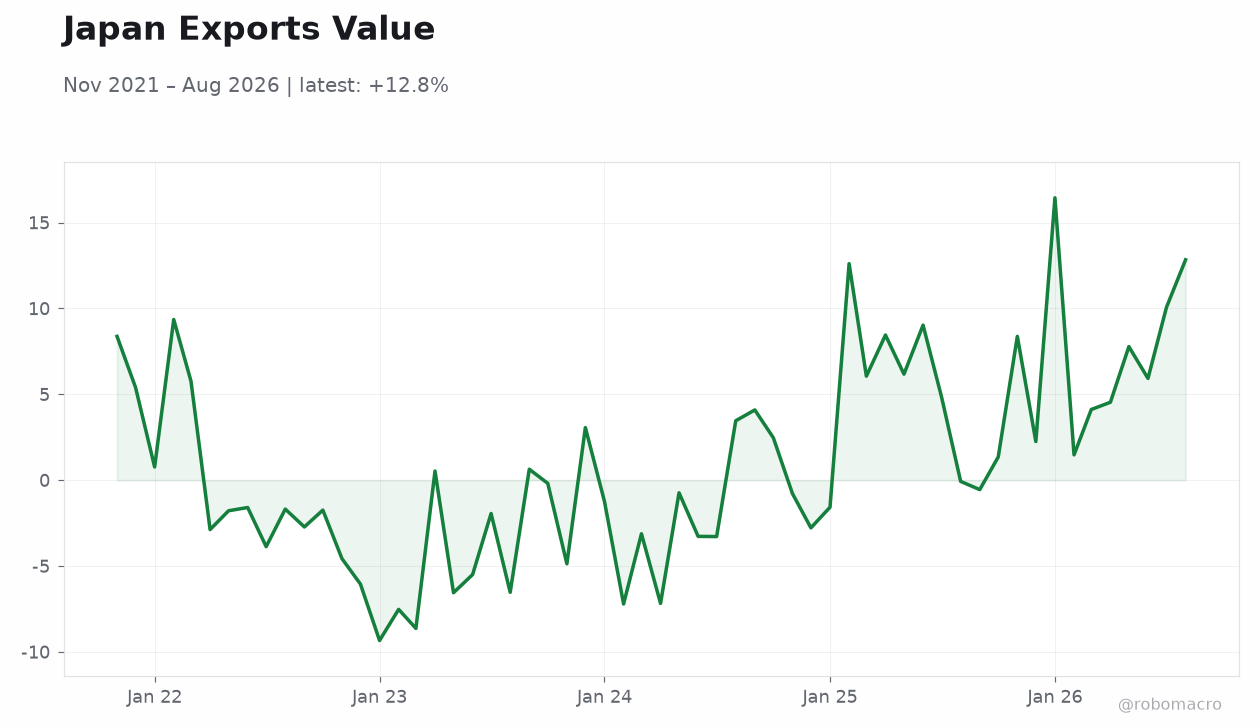
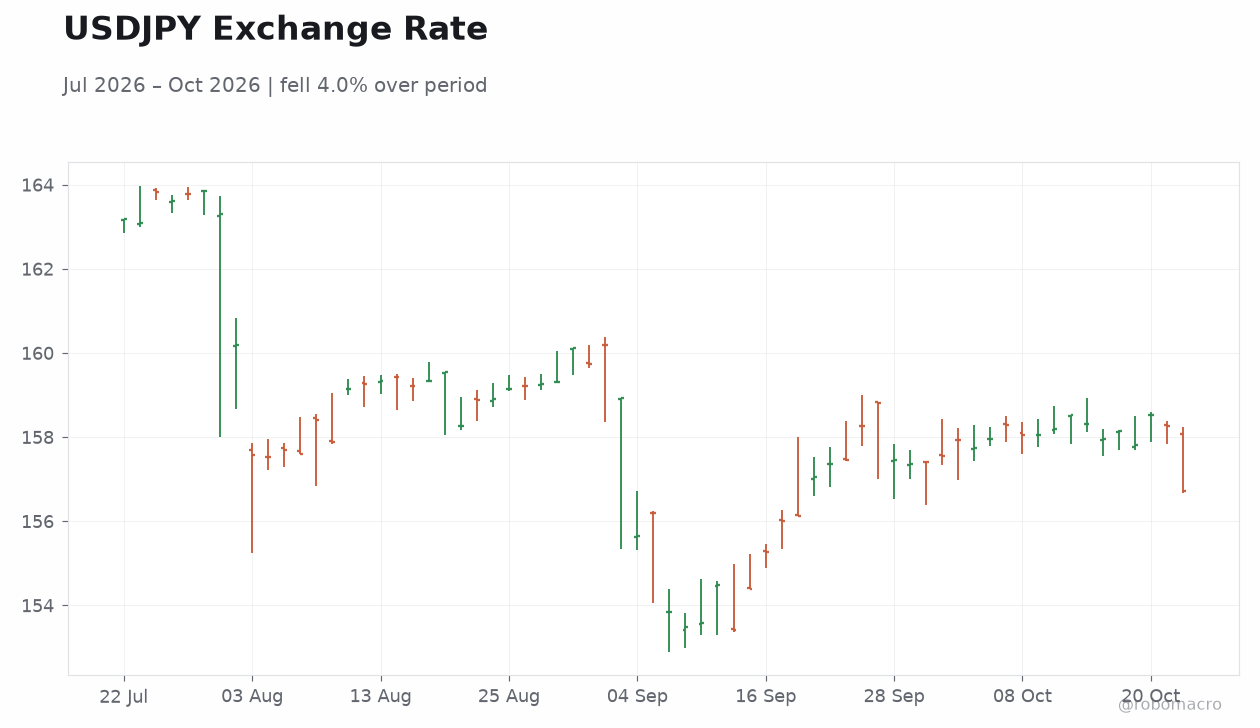
- Yen shows mixed moves amid widening trade deficit and risk-off safe-haven demand.
- JGB curve remains anchored with 10-year yield easing 1 bp to 2.92% while 2-year holds at 1.91%.
Yesterday's Recap
Markets digested fresh BoJ communications indicating inflation is approaching the 2% target and that further policy adjustments remain under review. Deputy Governor Himino explicitly flagged readiness to lift borrowing costs, reinforcing expectations of gradual normalisation. The yen posted gains on risk-off flows but faced counter-pressure from a widening trade deficit that highlighted persistent import costs.
Funding conditions stayed accommodative despite prior hikes, with corporate loan demand rising ahead of the next policy meeting. The 10-year JGB yield declined 1 bp to 2.92% while the 2-year yield was unchanged at 1.91%, reflecting contained term-premium shifts. Oxford Economics noted Japan’s low corporate leverage should limit damage from higher rates.
Overall price action remained orderly with no sharp repricing in front-end yields. Analysts observed that Japan’s low-leverage economy continues to support measured tightening without balance-sheet strain, even as trade data underscore ongoing import pressures.
The Day Ahead
The domestic calendar stays quiet with no major releases scheduled, leaving focus on BoJ rhetoric and external drivers. Market participants will monitor any follow-up comments from policy board members on the inflation assessment process. Yen volatility is likely to persist given ongoing global risk sentiment and USD direction.
Analysts expect continued emphasis on whether underlying price pressures have durably reached target levels. Positioning ahead of potential quarter-end adjustments may influence JGB flows. Broader attention remains on how loose financial conditions interact with the 1.25% policy rate.
External volatility from risk-off flows could continue to support safe-haven bids for the yen even as domestic fundamentals such as the trade gap exert opposing pressure.
Other Economic Notes
Japan’s corporate sector enters the rate-hike cycle with unusually low leverage, reducing the risk of balance-sheet stress. Persistent but contained inflation at 1.90% YoY supports the case for measured policy tightening without abrupt disruption. ↓ p.2