Japan Macro Daily(Beta Mode)
BoJ Hold Eyed as Yen Slides Toward 158
Market Snapshot
| Asset | Level | Change |
|---|---|---|
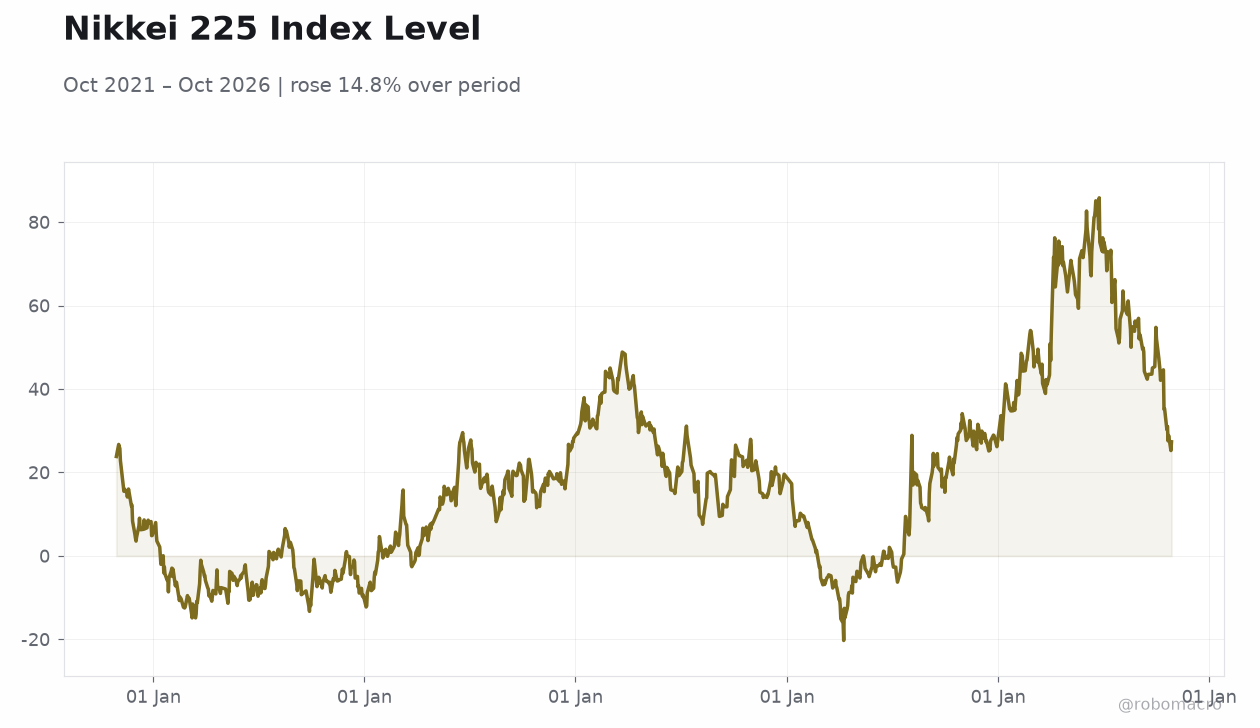
| Nikkei 225 | 63,268.37 | +1.73% |
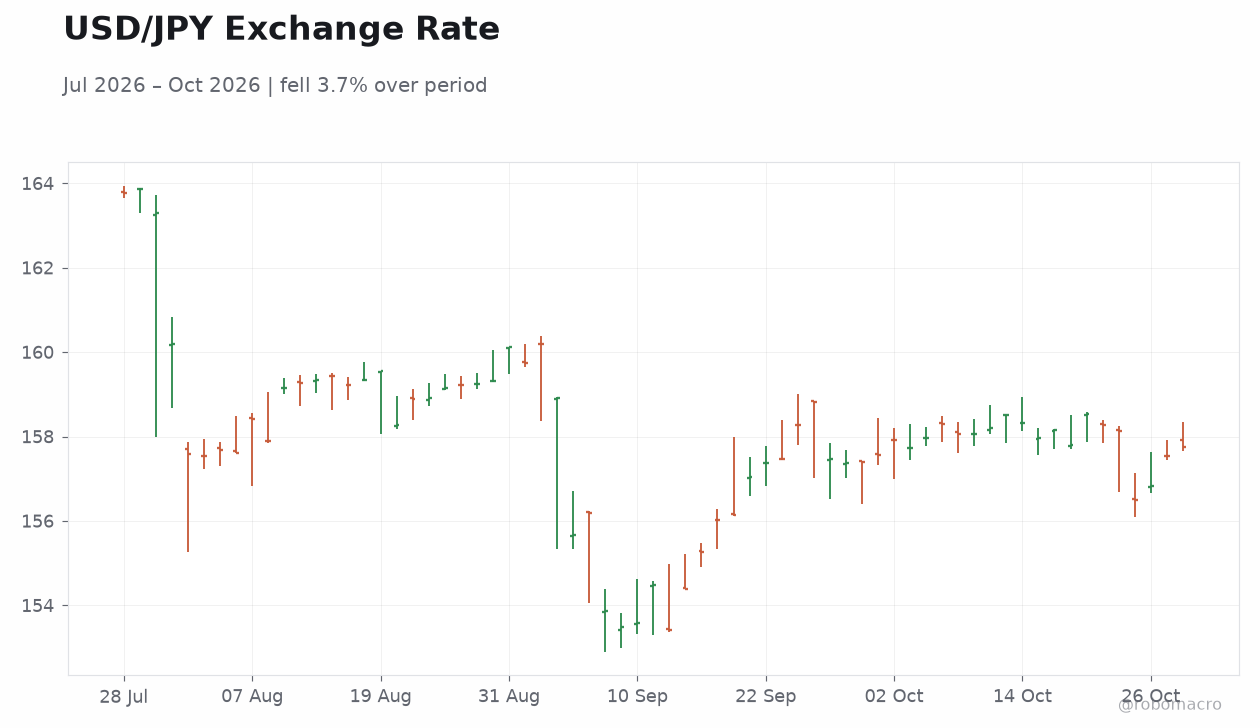
| USD/JPY | 157.76 | +0.14% |
| EUR/JPY | 176.02 | -0.00% |
| GBP/JPY | 210.26 | +0.03% |
| Gold | 4,083.80 | +0.23% |
| Brent Crude | 110.60 | -2.88% |
| Bitcoin | 81,276.20 | +0.58% |
| Japan 2Y Govt Yield | 1.89% | 0 bp |
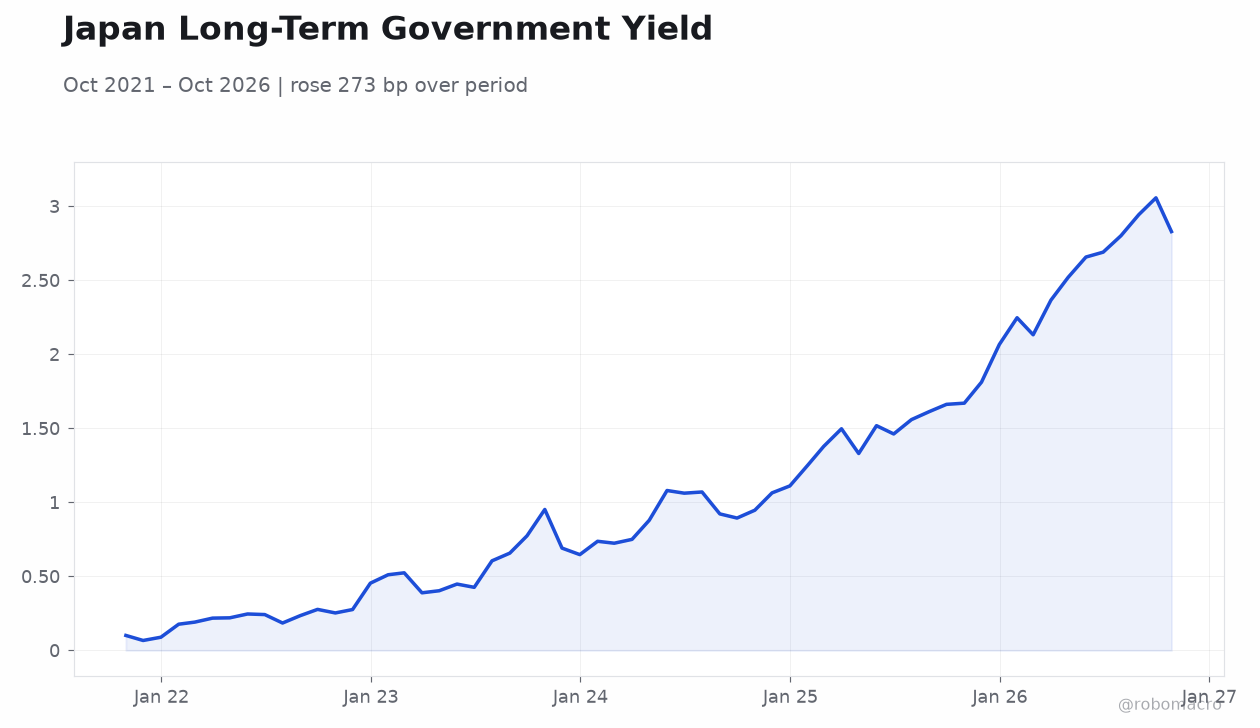
| Japan 10Y Govt Yield | 2.83% | +1 bp |
Prior Economic Events
| Data | Prior | Cons | Actual |
|---|---|---|---|
| No events available | |||
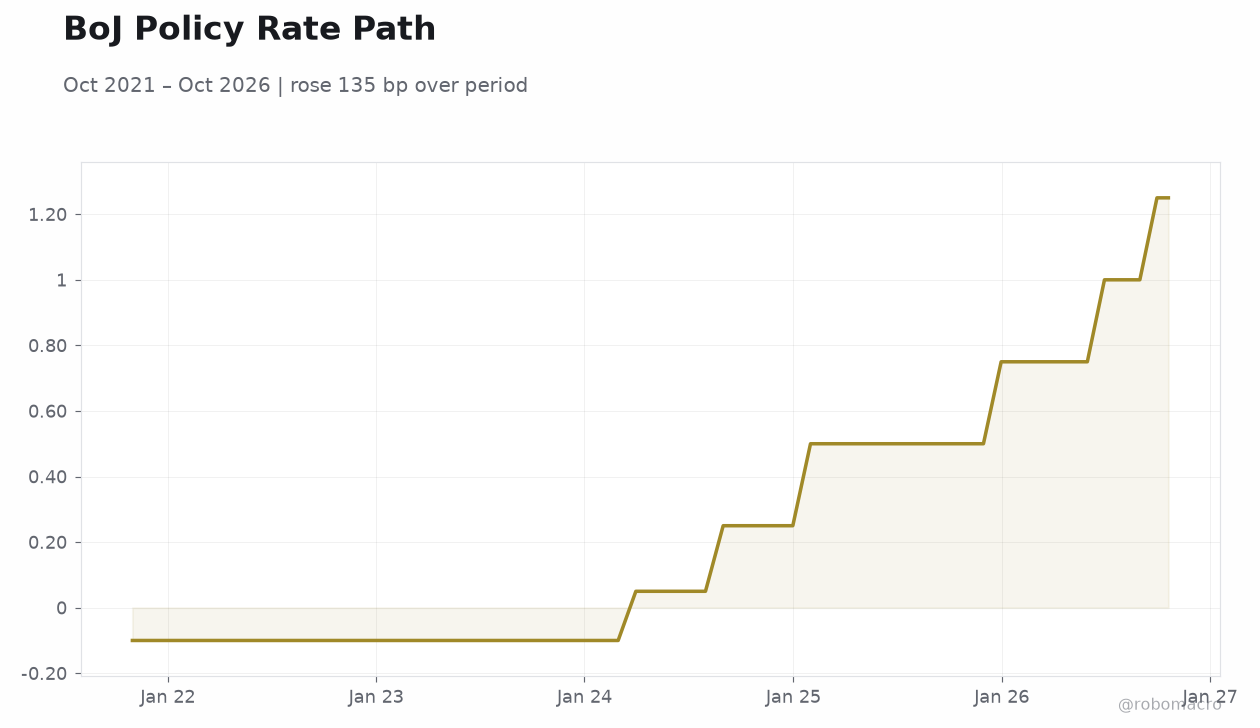 BoJ Policy Rate Path | Type: macro_line | Policy rate (%): 1.25 (2026-10-20) | Range: -0.1–1.25 | Trend(5pt): -0.1,-0.1,0.05,0.5,1.25
Today's Economic Events
| Data | Prior | Cons | Time |
|---|---|---|---|
| Thursday (2026-10-29) | |||
| Consumer Confidence Index | 35.40 | 35.10 | 01:00 |
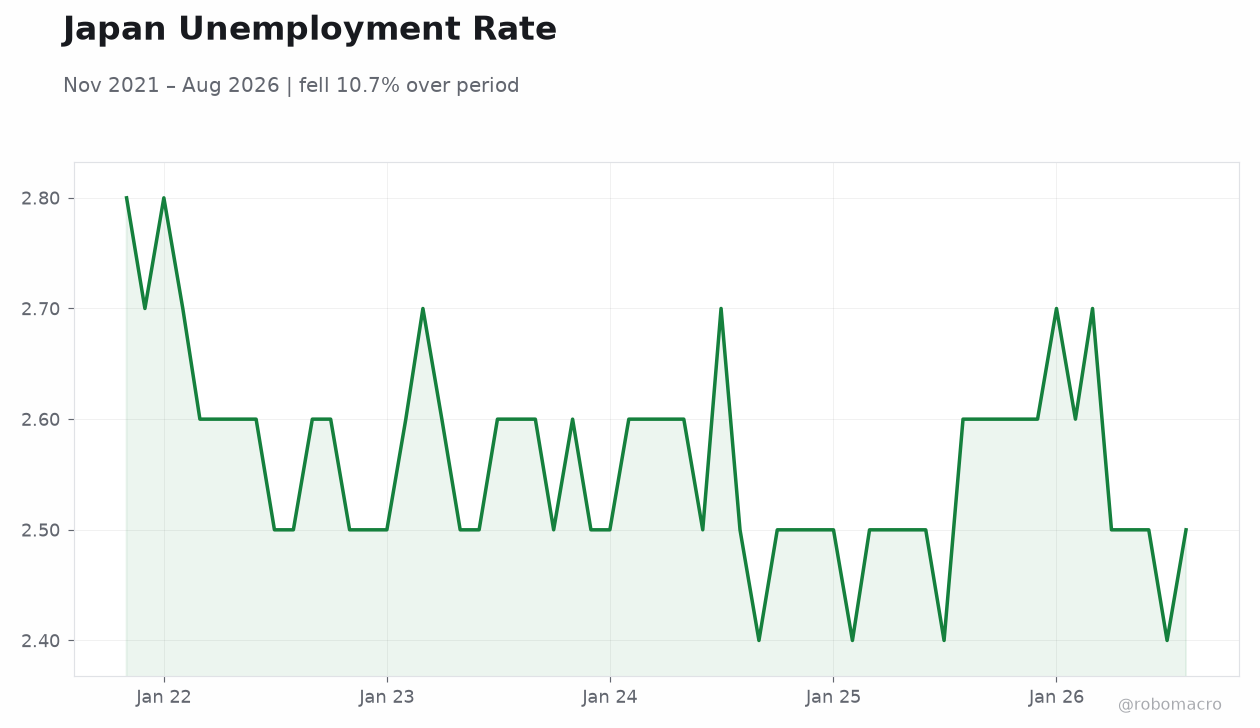
| Headline Unemployment Rate | 2.50 | 2.50 | 19:30 |
| Industrial Production Month-over-Month Preliminary | -2.40 | 1.30 | 19:50 |
| Retail Sales Year-over-Year | 2.70 | 3.30 | 19:50 |
| BoJ Interest Rate Decision | 1.25 | 1.25 | 23:00 |
| BoJ Quarterly Outlook Report | - | - | 23:00 |
| Friday (2026-10-30) | |||
| Housing Starts Year-over-Year | 6.10 | 2.90 | 01:00 |
- BoJ expected to hold policy rate at 1.25% at the October 29 decision, with focus on the quarterly Outlook Report and December normalisation signals
- Yen weakens toward 158 per dollar as Fed hold reveals hawkish divide; MoF reaffirms readiness to intervene
- JGB 10Y yield edges up 1 bp to 2.83% while Nikkei surges 1.73% to 63,268
Yesterday's Recap
Japanese markets traded with a firm risk tone on October 27, with the Nikkei 225 climbing 1.73% to 63,268.37 as investors positioned ahead of the BoJ and Fed decisions. The yen continued its gradual slide, with USD/JPY rising 0.14% to 157.76, keeping intervention risk squarely in focus. JGB yields were steady to slightly higher, with the 10-year yield up 1 bp to 2.83% and the 2-year holding at 1.89%, reflecting cautious positioning into the policy meetings.
Cross-JPY pairs were largely flat, with EUR/JPY unchanged at 176.02 and GBP/JPY up 0.03% at 210.26. Commodities diverged sharply, with Brent crude tumbling 2.88% to $110.60 while gold gained 0.23% to $4,083.80. No Japanese data releases were scheduled for the session, leaving markets to trade on policy expectations and external cues.
The Day Ahead
The calendar pivots to a dense slate of Japanese releases culminating in the BoJ decision. Consumer Confidence Index for October is due at 01:00 ET, with consensus at 35.1 versus the prior 35.4, pointing to a modest deterioration in household sentiment. Later, the Headline Unemployment Rate is expected to hold at 2.5%, while Industrial Production month-over-month preliminary is forecast to rebound 1.3% after the prior 2.4% contraction.
Retail Sales year-over-year is seen accelerating to 3.3% from 2.7%, a signal that consumption may be firming despite yen weakness and import-cost pressures. The BoJ Interest Rate Decision at 23:00 ET is expected to keep the policy rate at 1.25%, accompanied by the Quarterly Outlook Report, which will be scrutinised for inflation forecast revisions and any shift in the normalisation trajectory. Housing Starts year-over-year follow on Friday at 01:00 ET, with consensus at 2.9% versus the prior 6.1%.
Other Economic Notes
The yen's persistent weakness is feeding directly into import-cost inflation, with higher oil prices compounding the pressure on household real incomes and corporate margins. Consumer confidence at 35.1 would mark a further erosion from already depressed levels, consistent with the squeeze from energy and food costs. The anticipated industrial production rebound of 1.3% would partially reverse the prior 2.4% decline, though the underlying trend remains fragile given soft external demand.
↓ p.2