Japan Macro Daily(Beta Mode)
Yen Presses 158 as December BoJ Hike Bets Build
Market Snapshot
| Asset | Level | Change |
|---|---|---|
| Nikkei 225 | 63,081.86 | -0.33% |
| USD/JPY | 158.73 | +0.67% |
| EUR/JPY | 177.64 | +0.98% |
| GBP/JPY | 212.90 | +0.88% |
| Gold | 3,930.60 | -0.98% |
| Brent Crude | 104.27 | -0.48% |
| Bitcoin | 77,749.31 | +1.40% |
| Japan 2Y Govt Yield | - | - |
| Japan 10Y Govt Yield | - | - |
Prior Economic Events
| Data | Prior | Cons | Actual |
|---|---|---|---|
| No events available | |||
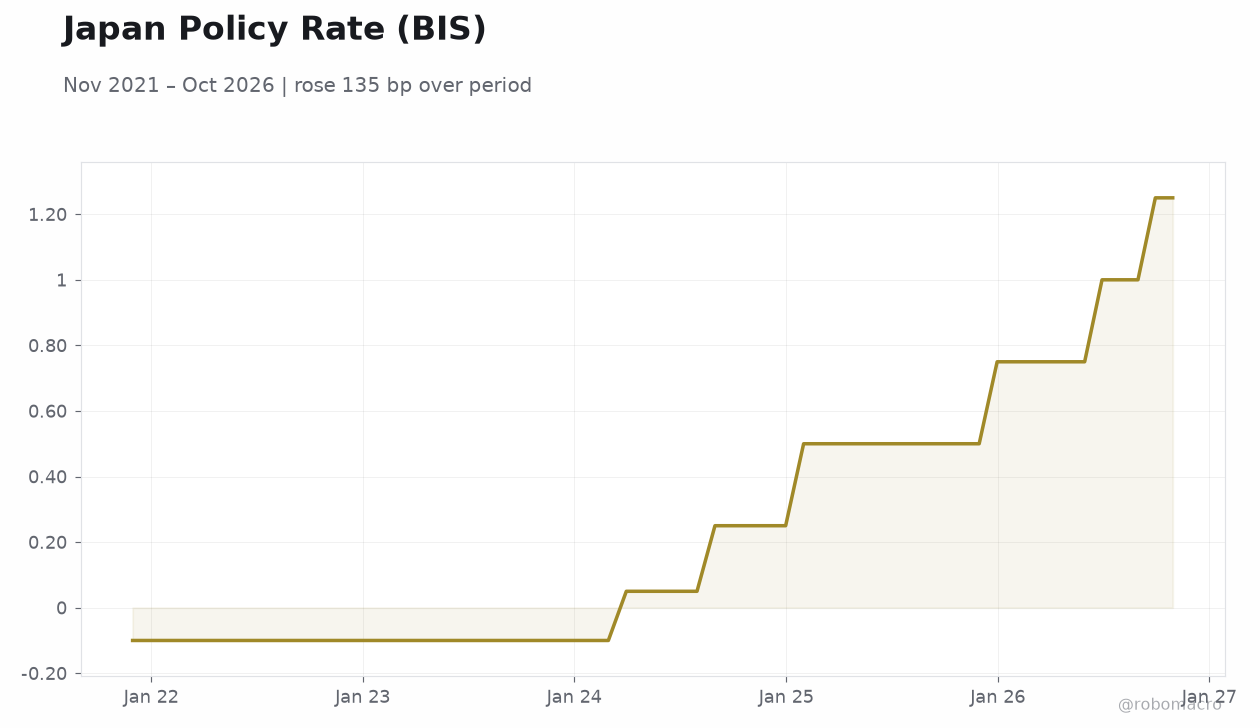 Japan Policy Rate (BIS) | Type: macro_line | Policy rate (%): 1.25 (2026-10-30) | Range: -0.1–1.25 | Trend(5pt): -0.1,-0.1,0.05,0.5,1.25
Today's Economic Events
| Data | Prior | Cons | Time |
|---|---|---|---|
| Wednesday (2026-11-04) | |||
| BoJ Monetary Policy Meeting Minutes | - | - | 18:50 |
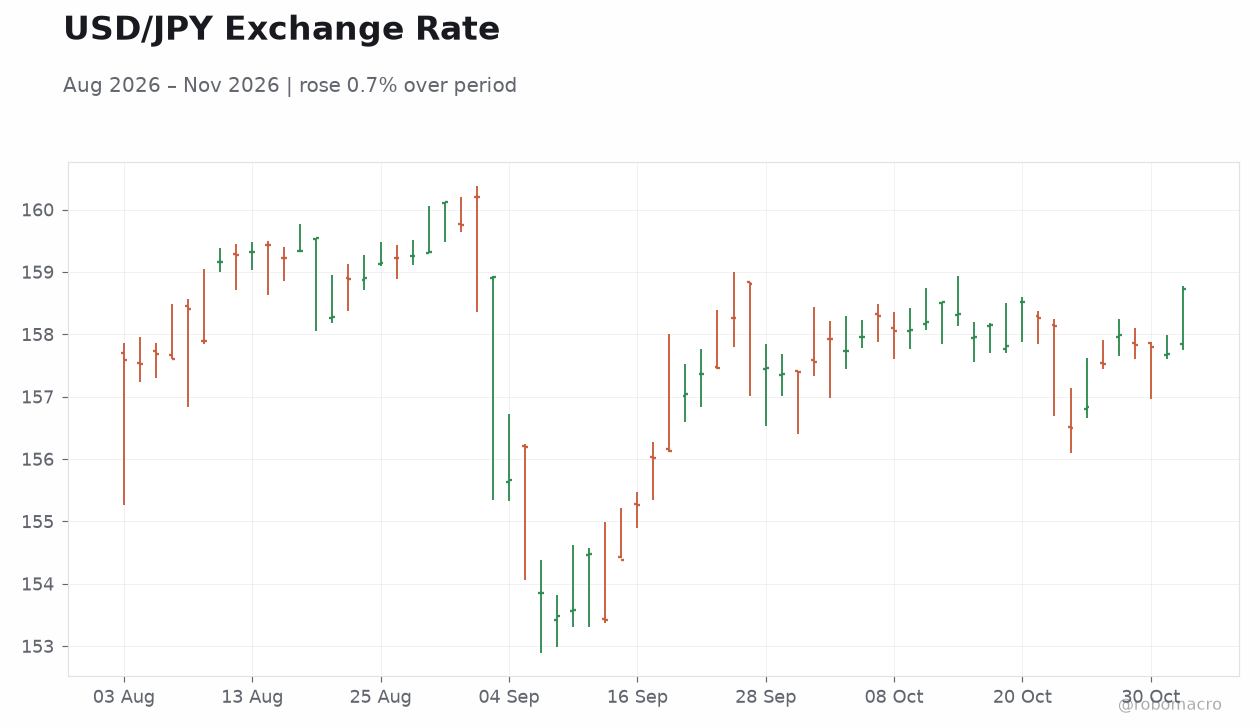
- USD/JPY pushed to 158.73 (+0.67%) as wide rate differentials and elevated oil prices keep the yen on the back foot despite firming December BoJ hike expectations.
- Japan CPI at 2.10% has reinforced market pricing for a December move; BoJ communications flag rising real interest rates.
- Nikkei 225 slipped 0.33% to 63,081.86; cross-JPY pairs firmer (EUR/JPY 177.64, GBP/JPY 212.90).
Yesterday's Recap
Japanese markets opened the week with mixed risk sentiment. The Nikkei 225 eased 0.33% to 63,081.86, giving back a slice of recent gains as exporters weighed a firmer yen-cross backdrop and higher energy input costs. The dominant move was in FX: USD/JPY advanced 0.67% to 158.73, extending its grind toward the 158 handle, while EUR/JPY rose 0.98% to 177.64 and GBP/JPY added 0.88% to 212.90.
The yen's softness came despite increasingly hawkish BoJ commentary, with wide US-Japan rate differentials and elevated Brent crude (104.27, -0.48%) cited as persistent drags. Gold slipped 0.98% to 3,930.60, while Bitcoin firmed 1.40% to 77,749.31, suggesting no broad risk-off impulse. No tier-one Japanese data printed on the day, leaving FX and BoJ signalling to drive price action.
JGB yield levels were not populated in the feed, so direction is inferred from BoJ real-rate commentary rather than observed prints.
The Day Ahead
The calendar is thin, with the next scheduled Japanese event being the BoJ Monetary Policy Meeting Minutes, listed for 18:50 ET on Wednesday (2026-11-04). These minutes will be scrutinised for the internal debate behind the October hold and for the degree of consensus around a December normalisation step. With the policy rate held at 1.25% at the 2026-10-30 decision and the next meeting set for 2026-12-18, the minutes are the key bridge between decisions.
Traders will parse language on inflation durability, wage pass-through, and the pace of any further tightening beyond 1.25%. Absent fresh data, yen direction will likely be driven by offshore cues, particularly US midterm election headlines and oil. Liquidity may be thinner into the Wednesday release, amplifying reaction in USD/JPY around the 158 level.
Other Economic Notes
Japan's inflation backdrop is doing the heavy lifting for policy expectations, with CPI at 2.10% keeping the BoJ's target in view and fuelling December hike bets. BoJ research noting that real interest rates have risen recently is significant: it implies the effective policy stance is tightening even without new hikes, which complicates the case for aggressive further normalisation. ↓ p.2