Japan Macro Daily(Beta Mode)
Yen Weakness Tests BoJ Resolve as Hike Bets Build
Market Snapshot
| Asset | Level | Change |
|---|---|---|
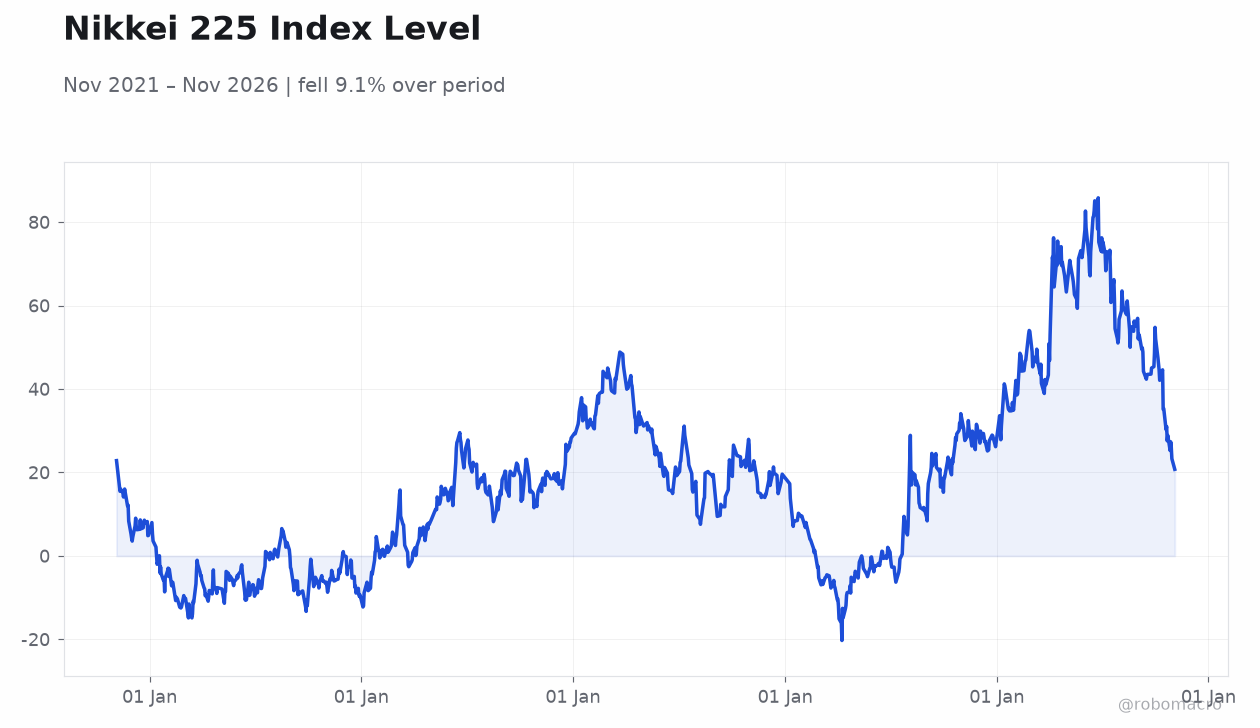
| Nikkei 225 | 63,081.86 | -0.33% |
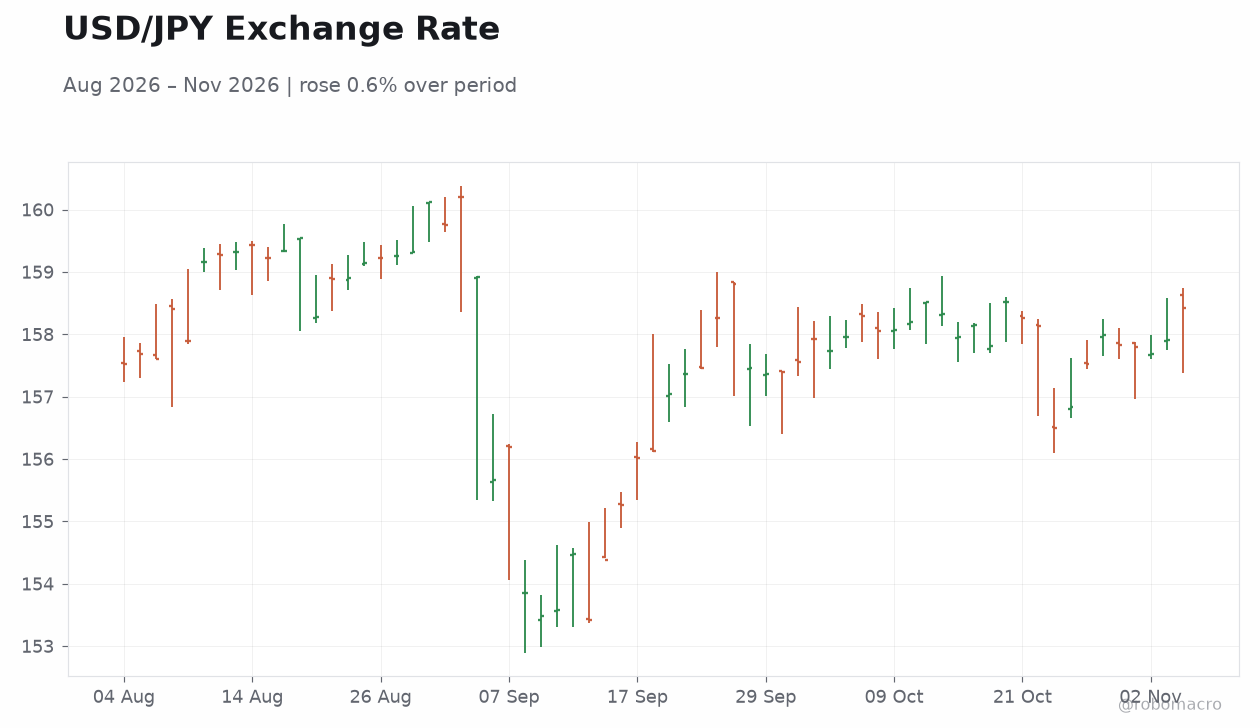
| USD/JPY | 158.42 | +0.32% |
| EUR/JPY | 177.88 | +0.66% |
| GBP/JPY | 213.38 | +0.77% |
| Gold | 4,069.30 | +3.27% |
| Brent Crude | 94.83 | -8.47% |
| Bitcoin | 80,159.36 | +3.64% |
| Japan 2Y Govt Yield | - | - |
| Japan 10Y Govt Yield | - | - |
Prior Economic Events
| Data | Prior | Cons | Actual |
|---|---|---|---|
| No events available | |||
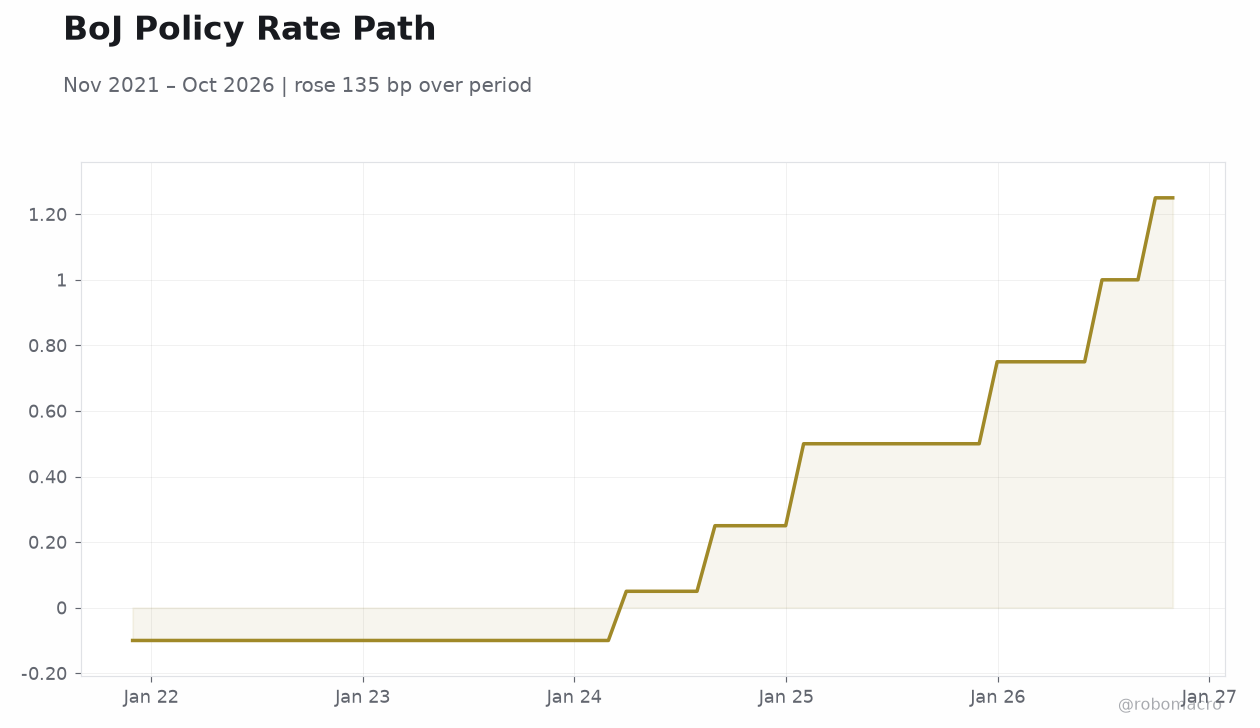 BoJ Policy Rate Path | Type: macro_line | Policy Rate (%): 1.25 (2026-10-30) | Range: -0.1–1.25 | Trend(5pt): -0.1,-0.1,0.05,0.5,1.25
Today's Economic Events
| Data | Prior | Cons | Time |
|---|---|---|---|
| BoJ Monetary Policy Meeting Minutes | - | - | 18:50 |
- USD/JPY holds near 158.42 (+0.32%) even as broad dollar weakness lifts EUR/JPY to 177.88 (+0.66%) and GBP/JPY to 213.38 (+0.77%), underscoring idiosyncratic yen softness.
- Markets lean toward a December BoJ hike as inflation dynamics keep policy normalisation in focus ahead of the 18 December decision.
- Nikkei 225 slips 0.33% to 63,081.86 while Brent crude collapses 8.47% to $94.83 and gold surges 3.27% to $4,069.30.
Yesterday's Recap
No Japanese data releases were scheduled for 3 November, leaving markets to trade on positioning and external cues. The Nikkei 225 eased 0.33% to 63,081.86, a modest pullback consistent with mixed regional risk appetite. The yen was the standout underperformer, with USD/JPY adding 0.32% to 158.42 despite a broadly weaker dollar following the US midterm outcome.
Cross-yen pairs moved more sharply, with EUR/JPY up 0.66% to 177.88 and GBP/JPY up 0.77% to 213.38, pointing to supply-side yen weakness rather than pure dollar dynamics. JGB yields were unchanged in the data feed, with the 10-year at 2.82% and the 2-year at 1.88% as of 2 November. Commodity markets diverged sharply, with Brent down 8.47% to $94.83 while gold jumped 3.27% to $4,069.30.
The Day Ahead
The sole scheduled Japanese event is the BoJ Monetary Policy Meeting Minutes at 18:50 ET (High impact), covering the deliberations behind a prior decision. Traders will parse the minutes for the balance of views on the pace of normalisation and tolerance for yen weakness, given the policy rate sits at 1.25% following the 30 October hold. With no tier-one data on the docket, yen price action and intervention rhetoric are likely to dominate intraday flows.
Attention also turns toward the 18 December meeting, where hike expectations have been building. Liquidity may thin ahead of the US session, leaving cross-yen pairs prone to headline-driven volatility.
Other Economic Notes
Japan's inflation backdrop remains the central macro puzzle, with CPI running at 2.10% year-on-year as of September, keeping real rates deeply negative and fuelling debate over whether expansionary fiscal policy is still appropriate. The 2% inflation regime, sustained rather than transitory, complicates the government's growth-first agenda and raises questions about fiscal credibility. Corporate stress is visible at the micro level, with scandal-hit Nidec securing renewal of $3.8bn in credit lines, a reminder that governance risk can bite even in a benign rate environment.
Consumer demand for imported niche products, such as Australian red-tipped bananas entering regular shipments, illustrates ongoing appetite for premium goods despite cost-of-living pressure. ↓ p.2