Japan Macro Daily(Beta Mode)
Yen Near 160 as GDP Contracts, BoJ Hike Bets Build
Market Snapshot
| Asset | Level | Change |
|---|---|---|
| Nikkei 225 | 61,142.35 | +0.53% |
| USD/JPY | 159.88 | +0.09% |
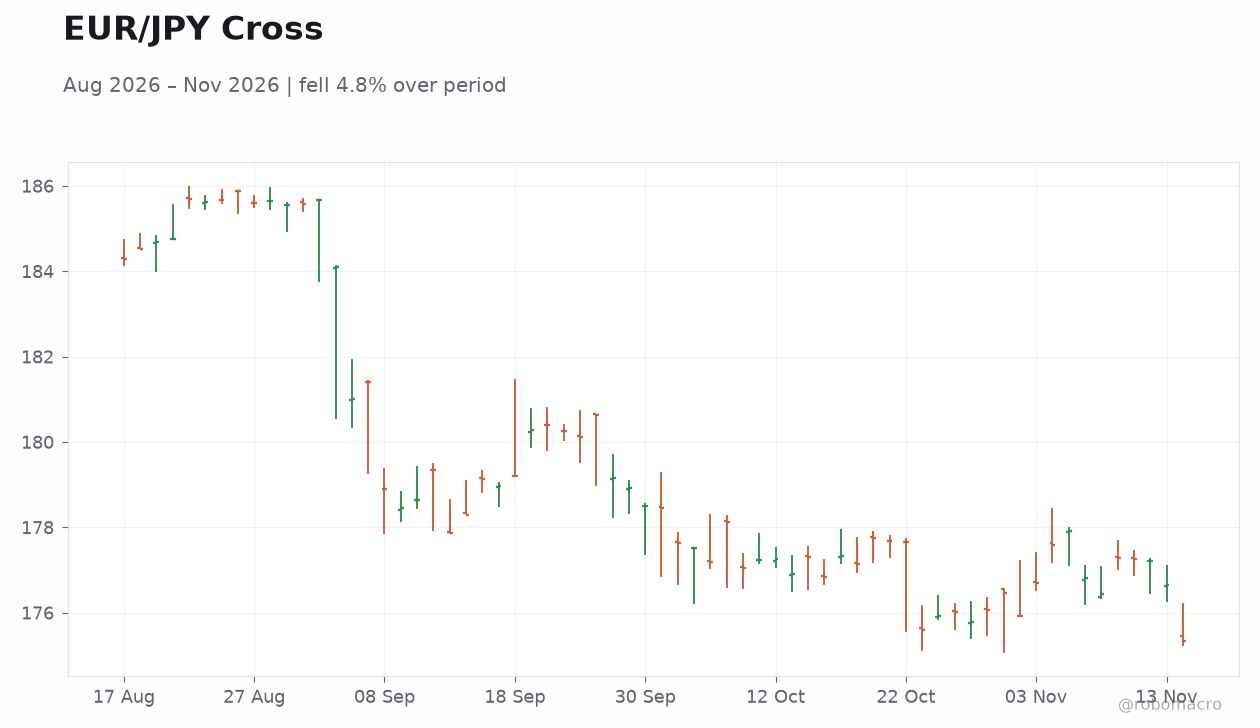
| EUR/JPY | 175.35 | -0.74% |
| GBP/JPY | 211.54 | -0.25% |
| Gold | 3,855.50 | -0.79% |
| Brent Crude | 92.38 | -3.61% |
| Bitcoin | 64,995.20 | -0.47% |
| Japan 2Y Govt Yield | 1.88% | +2 bp |
| Japan 10Y Govt Yield | 2.90% | +6 bp |
Prior Economic Events
| Data | Prior | Cons | Actual |
|---|---|---|---|
| No events available | |||
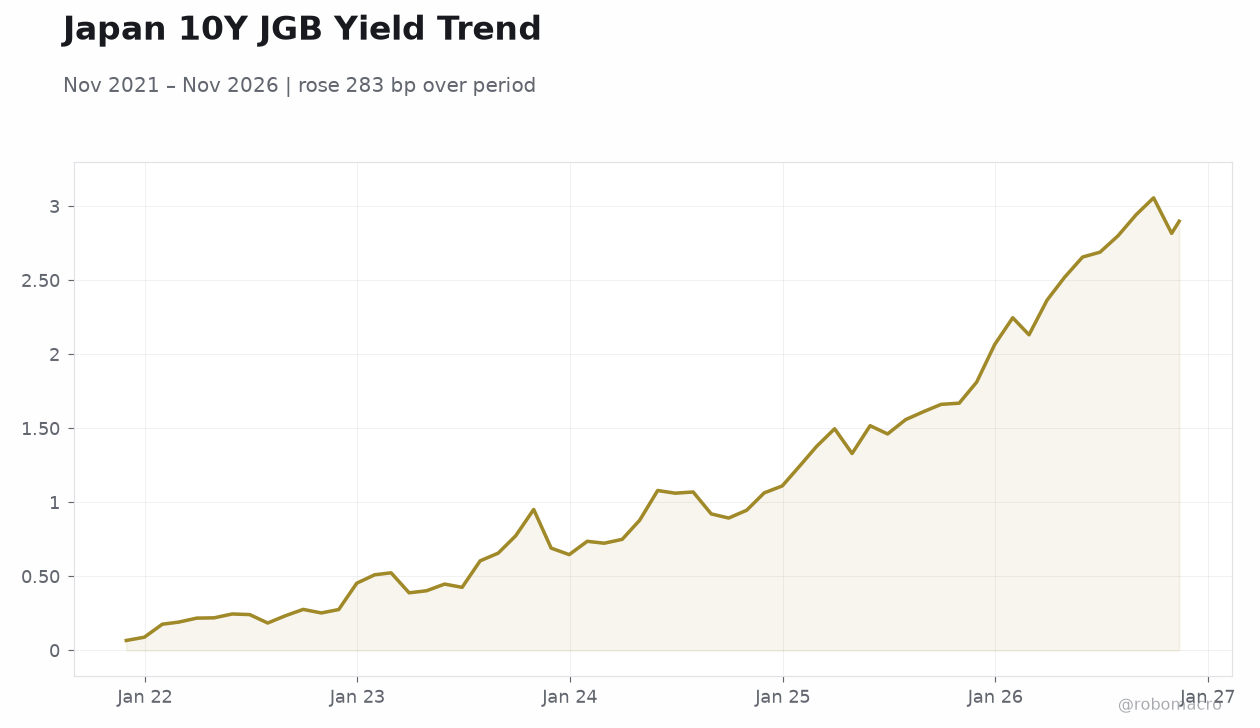 Japan 10Y JGB Yield Trend | Type: macro_line | 10Y yield (%): 2.899 (2026-11-13) | Range: 0.067–3.057 | Trend(5pt): 0.067,0.524,1.08,1.613,2.899
Today's Economic Events
| Data | Prior | Cons | Time |
|---|---|---|---|
| Tuesday (2026-11-17) | |||
| Trade Balance | -536,600m | - | 18:50 |
| Exports Year-over-Year | 16.70 | - | 18:50 |
| Wednesday (2026-11-18) | |||
| Machinery Orders Month-over-Month | 5.20 | - | 18:50 |
| Machinery Orders Year-over-Year | 18.60 | - | 18:50 |
| Thursday (2026-11-19) | |||
| Inflation Rate Year-over-Year | 2.10 | - | 18:30 |
| Core Inflation Rate Year-over-Year | 2.10 | - | 18:30 |
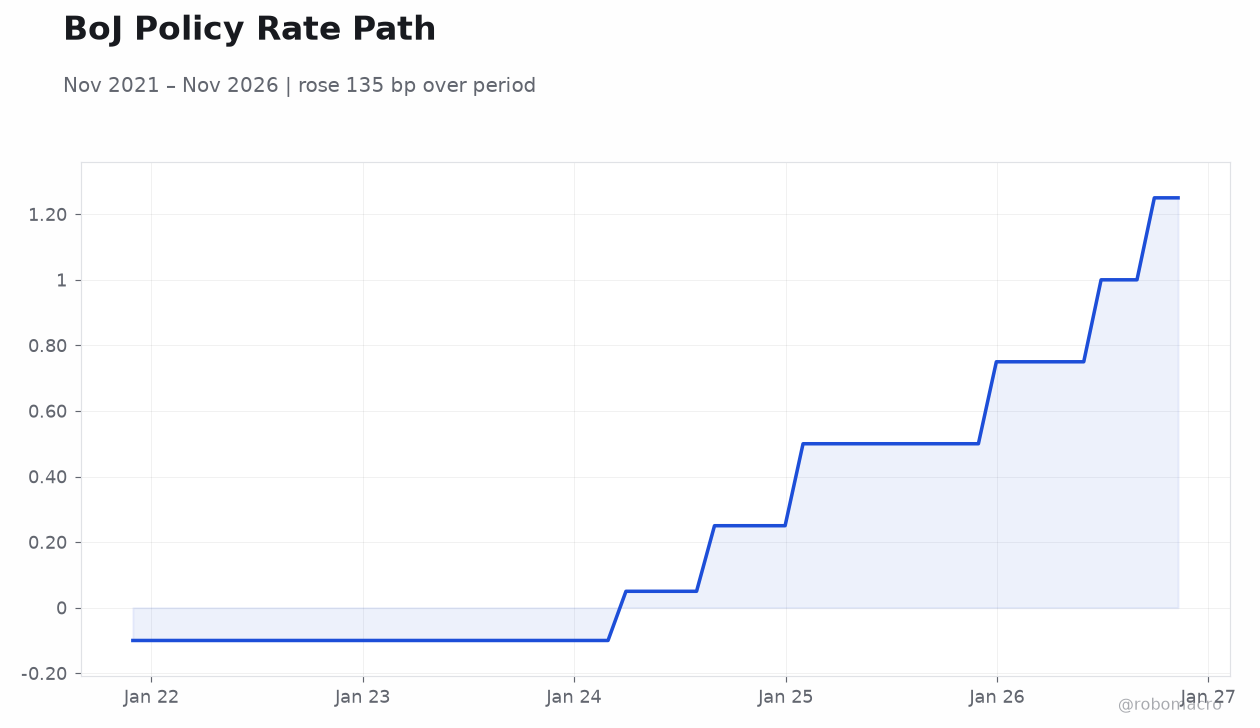
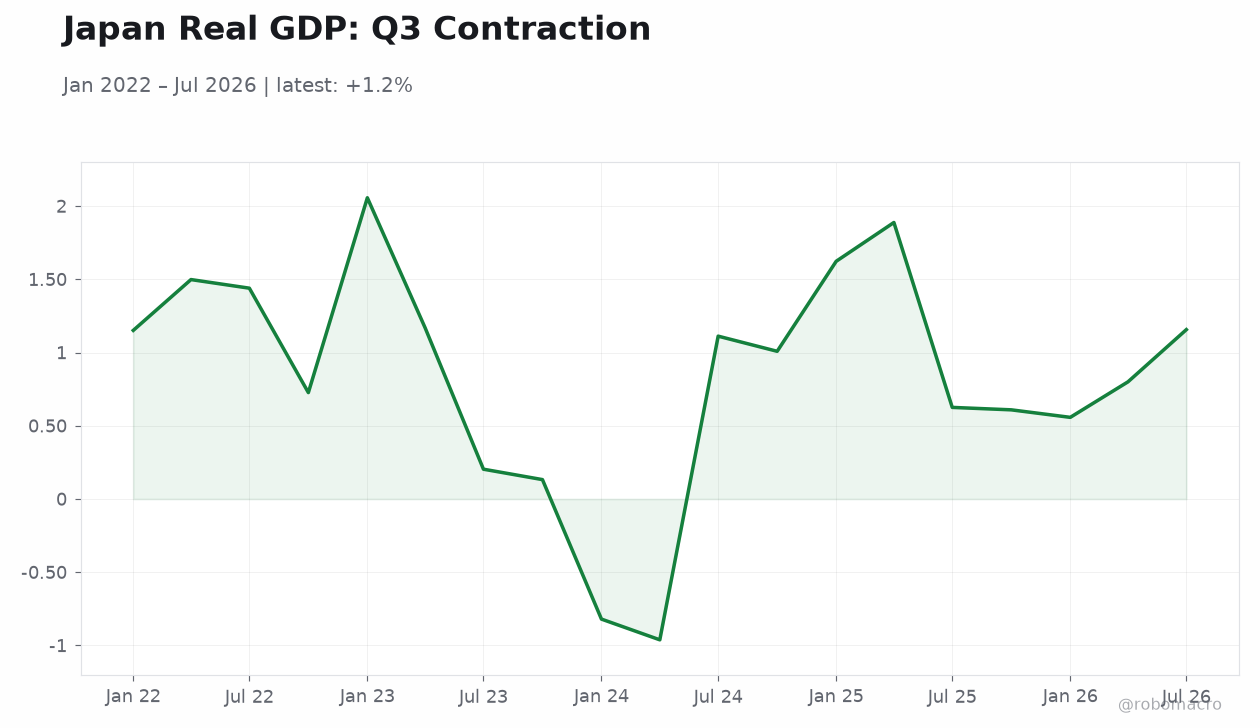
- Japan's economy unexpectedly contracted in Q3 as inflation squeezed household spending, yet the yen held near two-month lows around 159.88 per dollar.
- JGB yields pushed higher, with the 10-year up 6 bp to 2.90% and the 2-year up 2 bp to 1.88%, as markets price a December BoJ hike.
- BoJ hawk Takata called for an early, nimble rate increase, keeping the December 18 meeting live even as growth disappoints.
Yesterday's Recap
Japan's third-quarter GDP unexpectedly contracted, with weak consumer spending and adverse weather cited as drags on activity, a soft print that nonetheless failed to lift the yen. USD/JPY held around 159.88, up 0.09% on the day, hovering near a two-month low for the Japanese currency and keeping the 160 line in focus. Cross-yen pairs diverged, with EUR/JPY down 0.74% to 175.35 and GBP/JPY off 0.25% to 211.54.
The Nikkei 225 shrugged off the weak growth data, rising 0.53% to 61,142.35, supported by expectations that a December BoJ hike will lift bank margins — the top three banking groups lifted profit outlooks amid the rate-rise cycle. JGBs sold off, with the 10-year yield rising 6 bp to 2.90% and the 2-year up 2 bp to 1.88%, steepening the curve as hike bets firmed. Brent crude fell 3.61% to $92.38 and gold slipped 0.79% to $3,855.50, while Bitcoin eased 0.47% to $64,995.20.
The Day Ahead
The calendar turns to October trade data on Tuesday, with the trade balance and exports year-over-year due at 18:50 ET; exports previously ran at 16.7% and the trade balance stood at a ¥536.6bn deficit. Wednesday brings October machinery orders, with month-over-month previously at 5.2% and year-over-year at 18.6%, a key read on capex momentum after the weak GDP print. Thursday's highlight is October inflation, with the headline and core year-over-year rates both previously at 2.1%, critical for validating the December hike narrative.
No consensus figures are published for these releases, so markets will trade the prints against prior readings. Attention also remains on any BoJ communication ahead of the December 18 decision.
Other Economic Notes
The Q3 contraction complicates the policy picture, as the BoJ confronts inflation at 2.10% alongside stalling growth — a stagflationary mix that limits the room for aggressive tightening. Bank profitability is improving, with the top three banking groups raising outlooks on the back of higher rates, a channel through which normalisation supports the financial sector even as households feel the squeeze. Digital-currency initiatives are being framed by Japanese banks as a potential support for the yen, an emerging structural theme.
↓ p.2