Japan Macro Daily(Beta Mode)
Nikkei Tumbles as GDP Slump Fuels BoJ Doubts
Market Snapshot
| Asset | Level | Change |
|---|---|---|
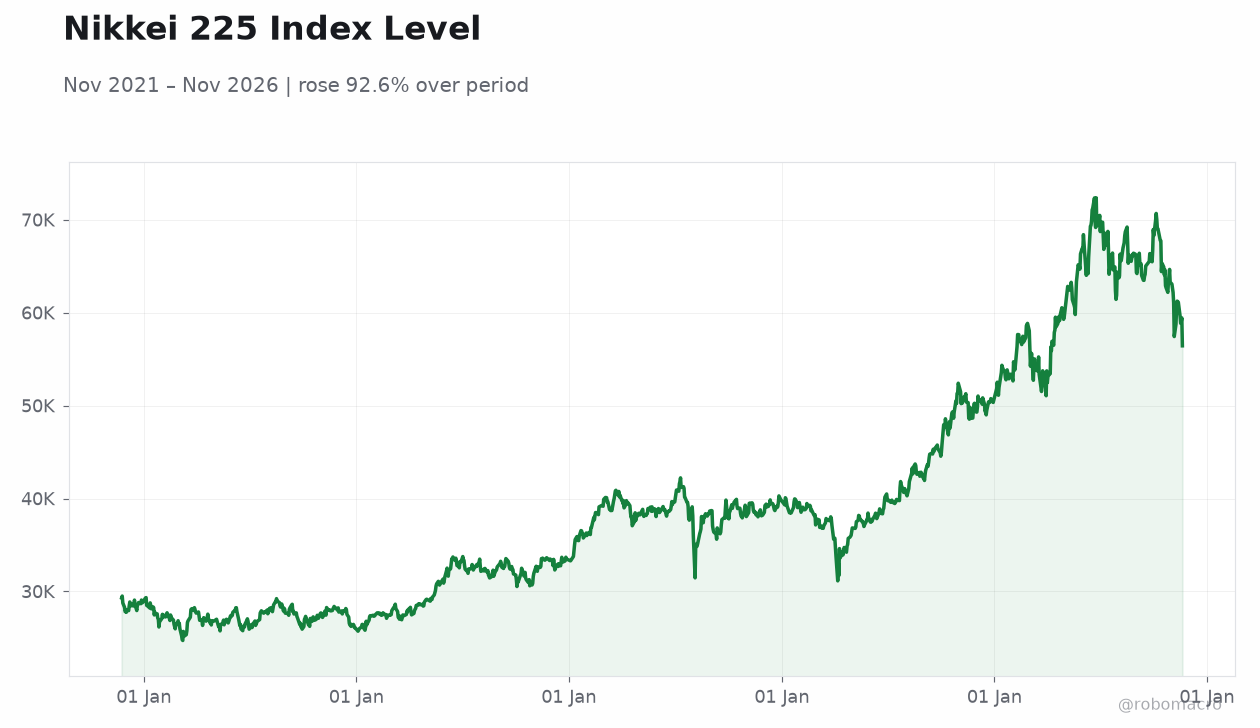
| Nikkei 225 | 56,436.65 | -5.06% |
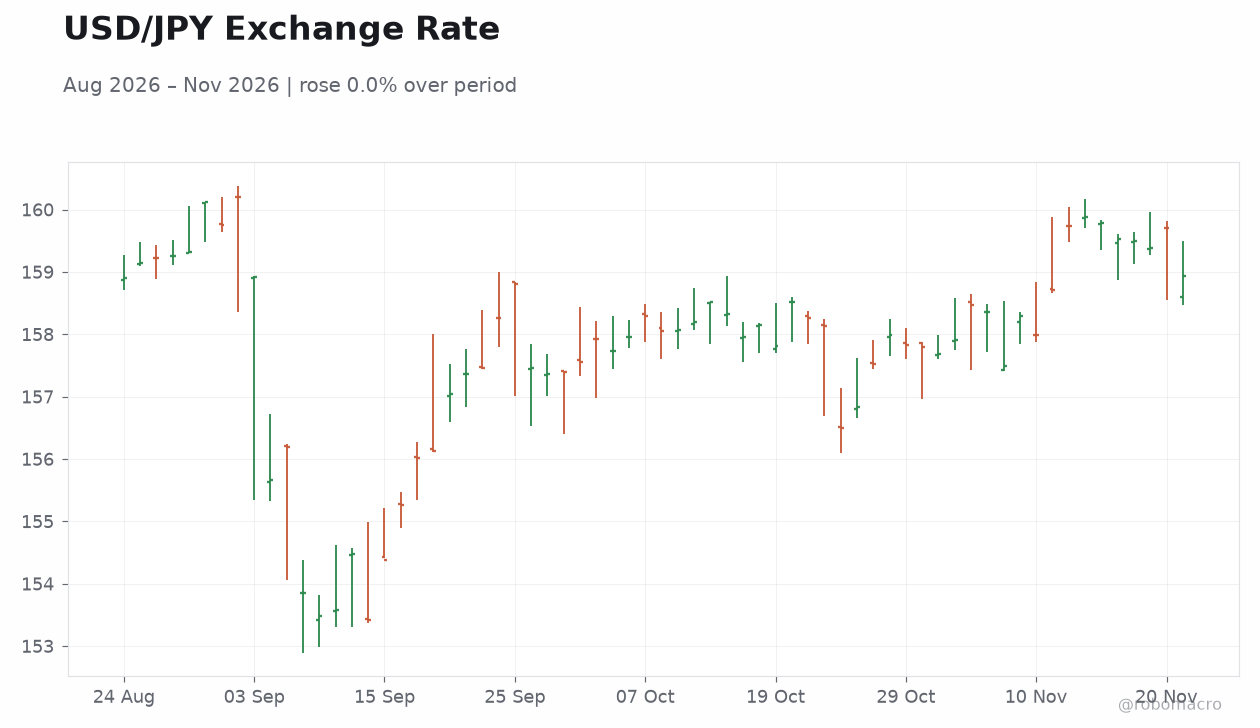
| USD/JPY | 158.93 | -0.48% |
| EUR/JPY | 173.26 | -1.09% |
| GBP/JPY | 207.15 | -0.88% |
| Gold | 3,636.30 | +3.44% |
| Brent Crude | 86.56 | -6.49% |
| Bitcoin | 61,291.13 | +0.21% |
| Japan 2Y Govt Yield | 1.85% | -2 bp |
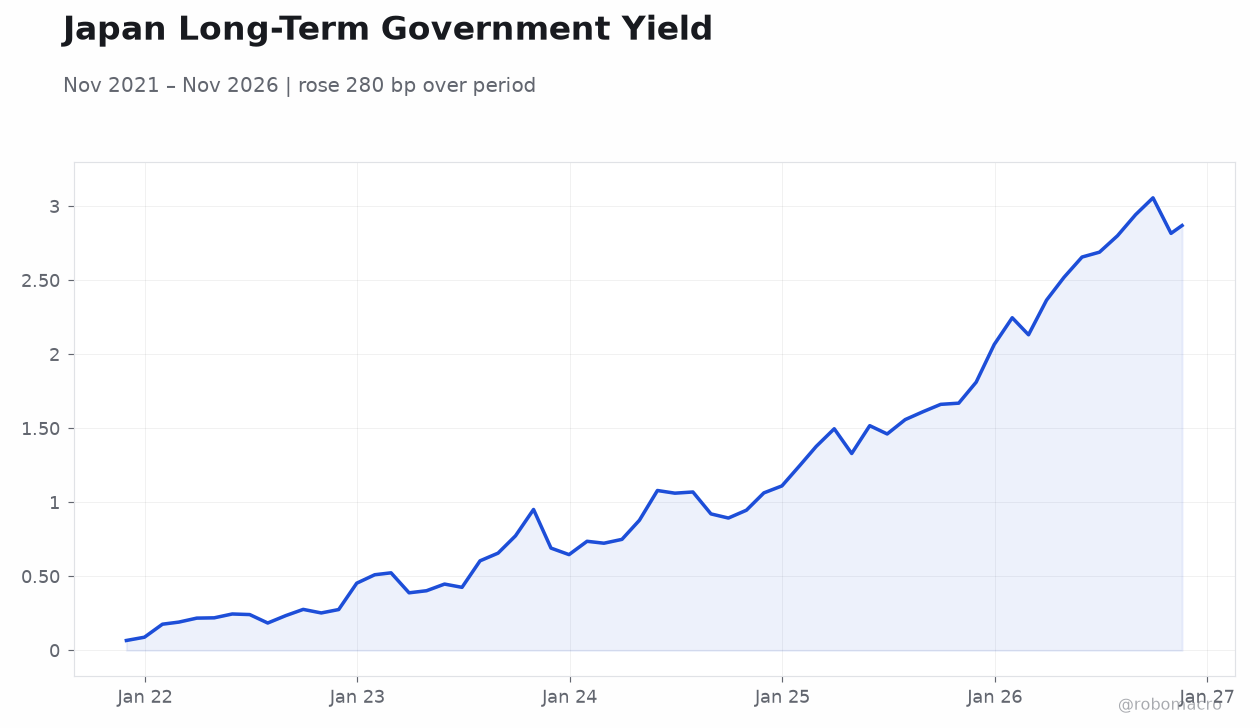
| Japan 10Y Govt Yield | 2.87% | -5 bp |
Prior Economic Events
| Data | Prior | Cons | Actual |
|---|---|---|---|
| No events available | |||
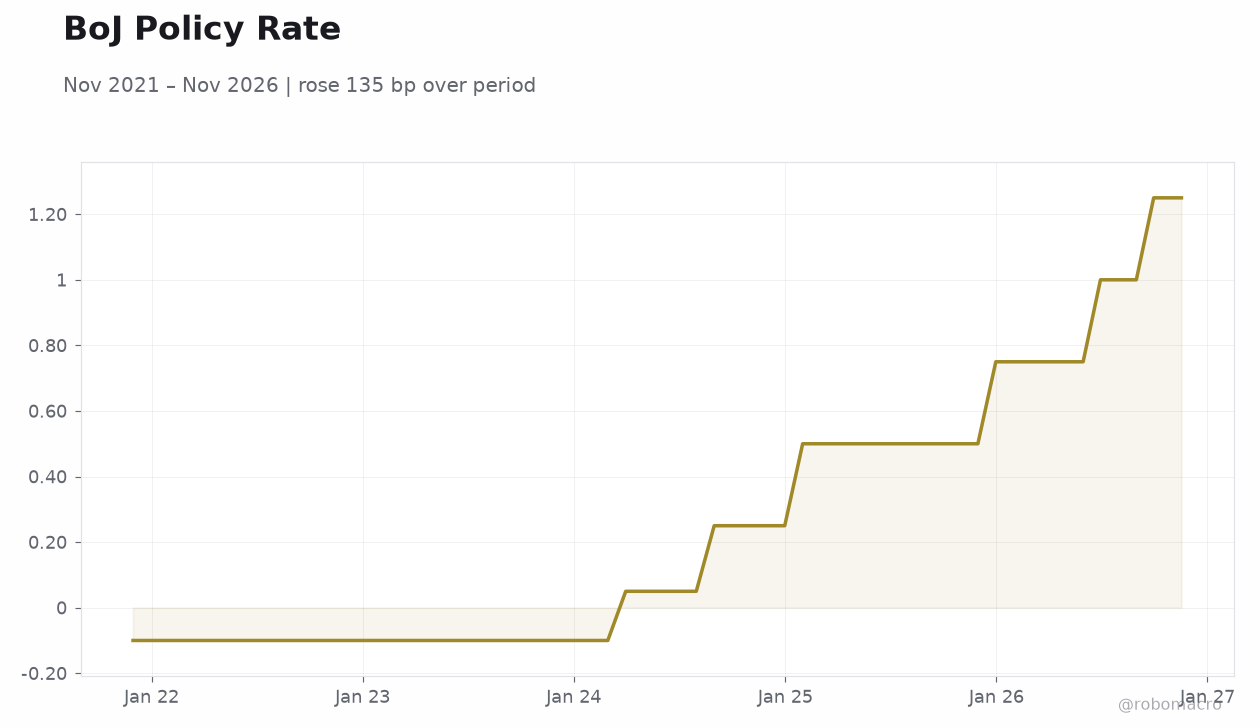 BoJ Policy Rate | Type: macro_line | Policy rate (%): 1.25 (2026-11-17) | Range: -0.1–1.25 | Trend(5pt): -0.1,-0.1,0.05,0.5,1.25
Today's Economic Events
| Data | Prior | Cons | Time |
|---|---|---|---|
| S&P Global Manufacturing PMI Flash | 53.30 | 53.50 | 19:30 |
| S&P Global Services PMI Flash | 51.70 | - | 19:30 |
| Wednesday (2026-11-25) | |||
| BoJ Tamura Speech | - | - | 20:00 |
| Friday (2026-11-27) | |||
| Housing Starts Year-over-Year | -2.70 | - | 00:00 |
| Saturday (2026-11-28) | |||
| BoJ Gov Ueda Speech | - | - | 20:05 |
| Sunday (2026-11-29) | |||
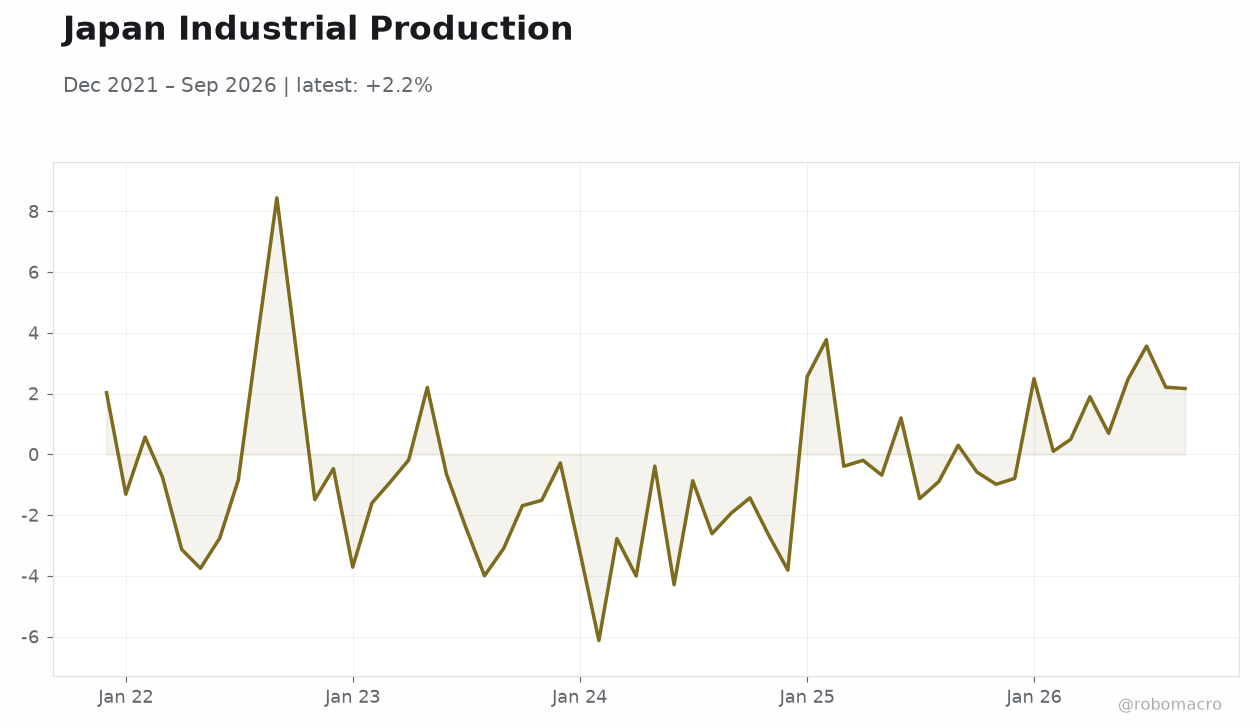
| Industrial Production Month-over-Month Preliminary | 2 | - | 18:50 |
- Nikkei 225 plunges 5.06% to 56,436.65 as Japan's GDP contraction and inflation squeeze spark broad risk-off selling
- JGB yields decline across the curve (10Y -5bp to 2.87%, 2Y -2bp to 1.85%) on safe-haven demand and growth concerns
- USD/JPY retreats 0.48% to 158.93 as yen strengthens modestly despite BoJ policy uncertainty; flash PMIs due tonight
Yesterday's Recap
Japanese markets experienced a severe risk-off session, with the Nikkei 225 cratering 5.06% to close at 56,436.65 — one of the sharpest single-day declines in recent memory. The selloff was triggered by Japan's GDP contraction, which WSJ characterized as occurring "amid inflation squeeze," raising fears that the economy may be entering a stagflationary phase. JGB yields moved lower as investors sought safety: the 10-year yield eased 5 bp to 2.87% and the 2-year declined 2 bp to 1.85%, reflecting both flight-to-quality flows and diminished expectations for aggressive near-term BoJ tightening.
The yen strengthened modestly against the dollar, with USD/JPY falling 0.48% to 158.93, though the currency remains near multi-decade lows. Cross-yen pairs also retreated, with EUR/JPY down 1.09% to 173.26 and GBP/JPY off 0.88% to 207.15. Brent crude collapsed 6.49% to $86.56, adding to the deflationary undertone, while gold surged 3.44% to $3,636.30 as a classic risk-off hedge.
The Day Ahead
Tonight at 19:30 ET, S&P Global releases flash November PMIs for Japan's manufacturing and services sectors. Manufacturing is expected to tick up to 53.5 from 53.3 previously, while services — which printed 51.7 last month — carry no consensus estimate. These surveys will be scrutinized for evidence that the GDP contraction is bleeding into the current quarter, particularly whether new export orders are holding up amid global trade tensions.
A downside surprise in services would reinforce the narrative that domestic demand is faltering. Later in the week, BoJ Board Member Tamura speaks Wednesday (20:00 ET) and Governor Ueda addresses markets Saturday (20:05 ET), both high-impact events that could shape December meeting expectations.
Other Economic Notes
Japan's inflation dynamics remain a critical variable for policy normalization, with CPI running at 2.30% year-over-year as of October — comfortably above the BoJ's 2% target but accompanied by stagnant real growth. The GDP slump reported this week raises uncomfortable questions about whether higher prices are demand-pull or cost-push in nature; if the latter, the BoJ faces a policy dilemma. Housing starts data due Friday will provide a read on construction activity, which has been contracting (-2.7% prior).
↓ p.2