Korea Macro Daily(Beta Mode)
KOSPI Surges 5.8% on Chip Rally, 24-Hour Won Trade
Market Snapshot
| Asset | Level | Change |
|---|---|---|
| KOSPI | 8,088.34 | +5.76% |
| KOSDAQ | 868.41 | +0.19% |
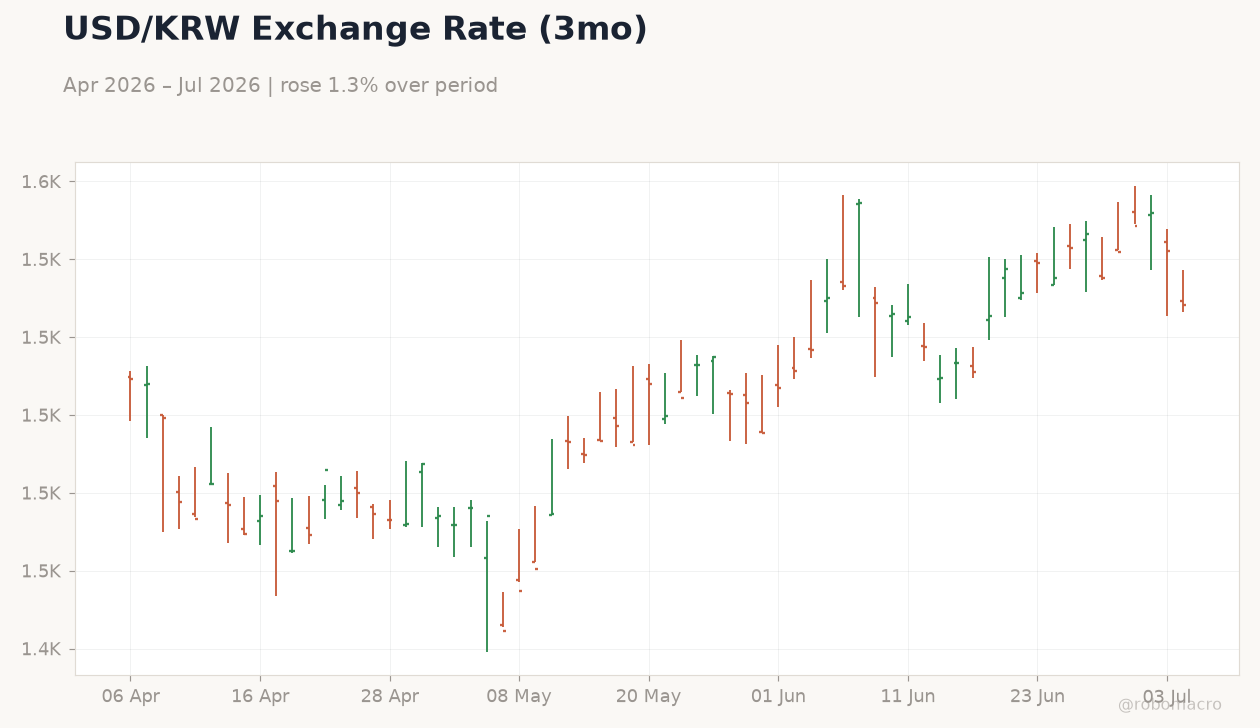
| USD/KRW | 1,528.01 | -0.92% |
| Samsung | 309,500.00 | +8.22% |
| SK Hynix | 2,425,000.00 | +10.88% |
| Brent Crude | 72.13 | +0.46% |
| Gold | 4,175.70 | +1.53% |
| Bitcoin | 63,827.84 | +0.44% |
| Korea Short-term Rate | 2.54% | +0.79% |
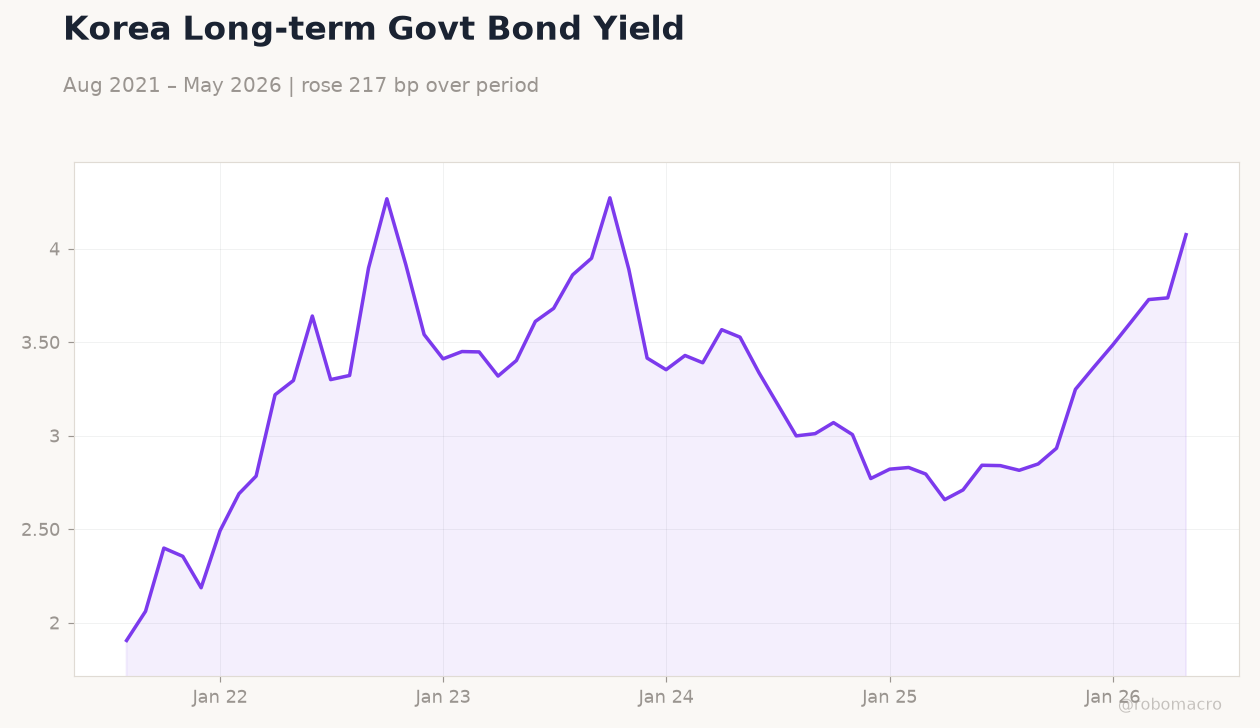
| Korea Long-term Rate | 4.08% | +9.04% |
Prior Economic Events
| Data | Prior | Cons | Actual |
|---|---|---|---|
| No events available | |||
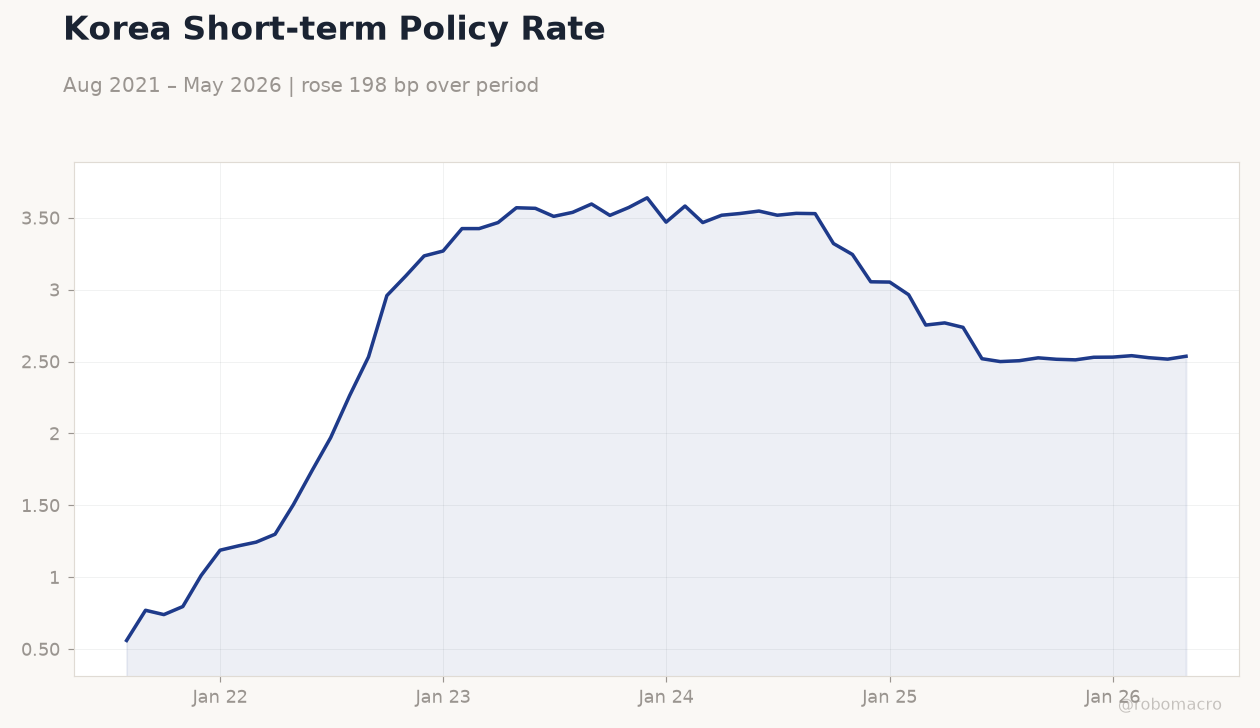 Korea Short-term Policy Rate | Type: macro_line | Short-term Rate %: 2.537 (2026-05-01) | Range: 0.56–3.639 | Trend(6pt): 0.56,2.959,3.639,2.965,2.517,2.537
Today's Economic Events
| Data | Prior | Cons | Time |
|---|---|---|---|
| No events available | |||
- KOSPI jumped 5.76% to 8,088.34 as Samsung and SK Hynix surged on memory demand.
- USD/KRW fell 0.92% to 1,528.01 after South Korea launched 24-hour dollar-won trading.
- Authorities announced $9.7 billion in relief measures to cushion firms from the weak won.
Yesterday's Recap
South Korea opened 24-hour won trading on July 5, with markets opening to applause despite memories of the 1997 crisis. KOSPI rebounded sharply to 8,088.34 after earlier weakness, driven by an 8.22% gain in Samsung and a 10.88% surge in SK Hynix. The won steadied near 1,528 per dollar as FX reserves rose modestly in June, easing immediate defence pressure.
KOSDAQ edged up 0.19% while short-term rates held at 2.54%. Long-term yields climbed 9.04% to 4.08% on shifting rate expectations. The launch aims to deepen FX markets and support an MSCI developed-market upgrade.
No major data releases occurred, leaving equity and currency moves driven by policy and semiconductor flows.
The Day Ahead
Market participants will monitor the second day of 24-hour won trading for liquidity and volatility patterns. Exporters and chip firms continue to adjust to the new FX regime and repatriation flows. Attention remains on any further Bank of Korea interventions should USD/KRW test higher levels.
Global semiconductor demand data and U.S. tech earnings will influence Samsung and SK Hynix performance. Officials are expected to track corporate hedging activity following the $9.7 billion relief package.
No domestic economic indicators are scheduled.
Other Economic Notes
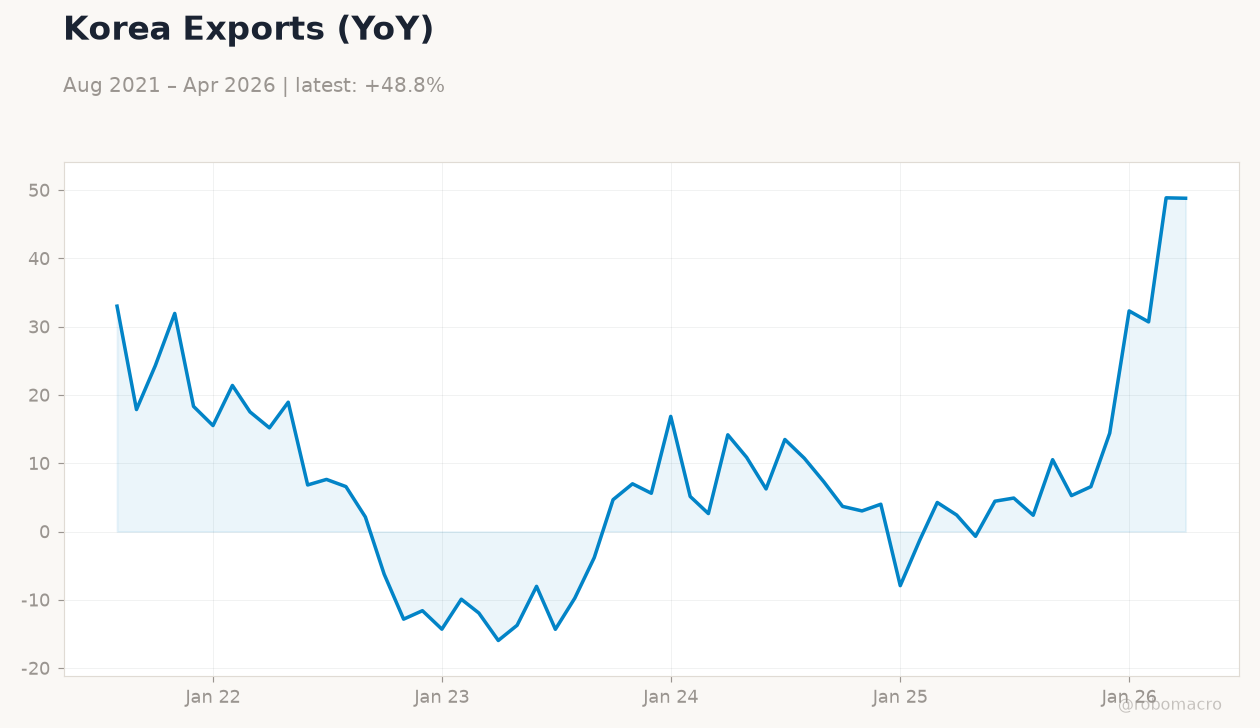
The weak won continues to pressure import costs and corporate balance sheets despite the relief measures. FX reserve accumulation provides a buffer but highlights ongoing capital-flow sensitivity. Semiconductor exports remain the dominant growth driver, with memory prices supporting the trade surplus.
Authorities view extended trading hours as a structural step toward deeper capital markets rather than a short-term fix. Export-oriented manufacturers face margin compression that could weigh on second-half investment plans.