Korea Macro Daily(Beta Mode)
24-Hour Won Trading Launches as KOSPI Drops
Market Snapshot
| Asset | Level | Change |
|---|---|---|
| KOSPI | 8,051.33 | -0.46% |
| KOSDAQ | 847.07 | -2.46% |
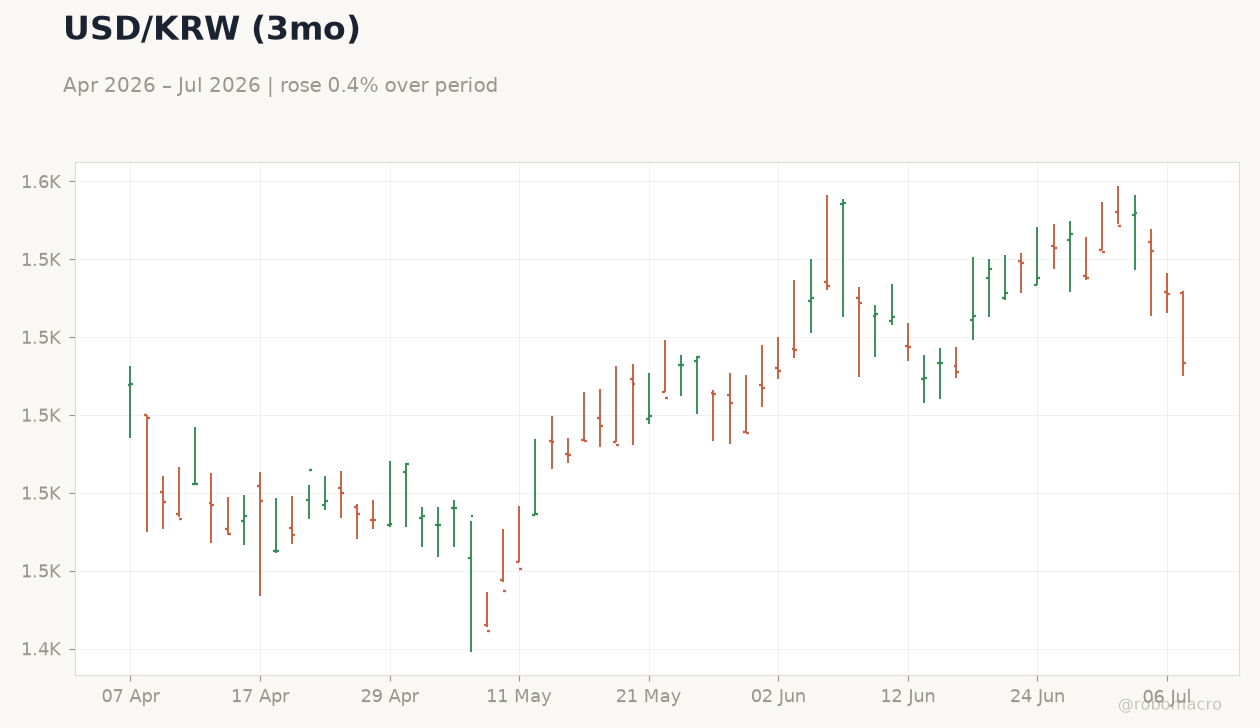
| USD/KRW | 1,514.43 | -1.08% |
| Samsung | 296,000.00 | -6.92% |
| SK Hynix | 2,201,000.00 | -6.06% |
| Brent Crude | 75.86 | +5.38% |
| Gold | 4,116.60 | -0.93% |
| Bitcoin | 63,472.29 | -0.82% |
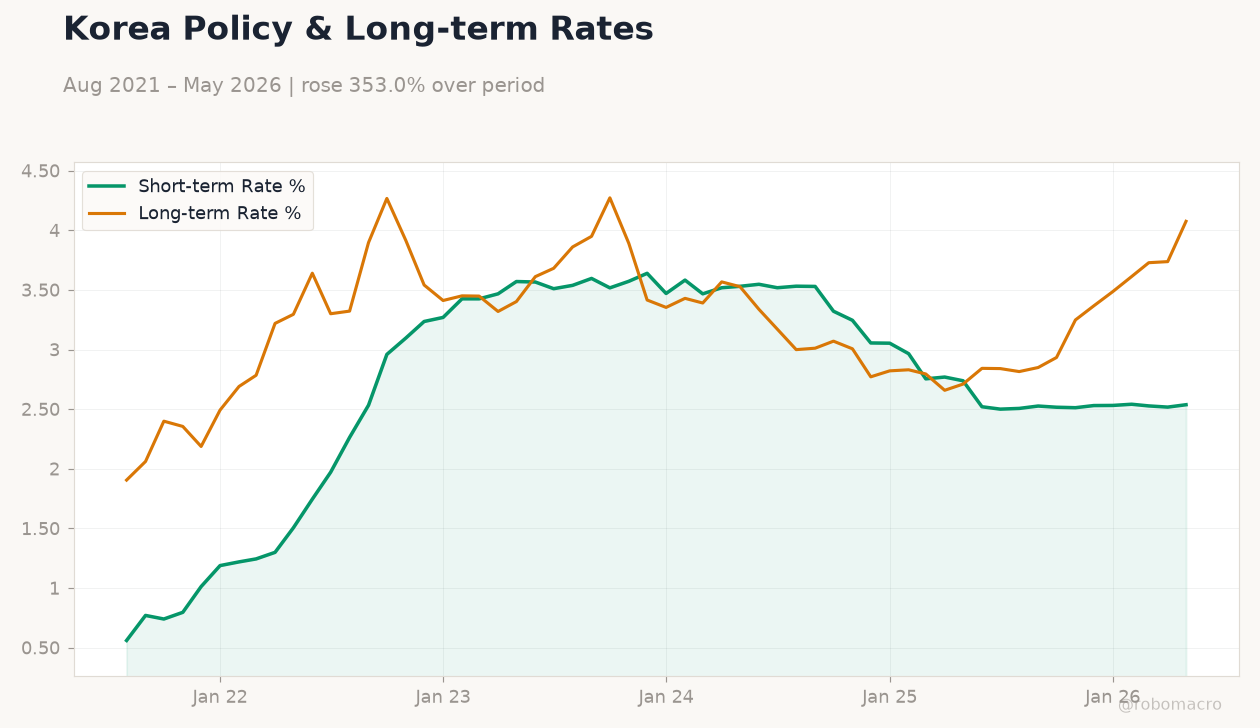
| Korea Short-term Rate | 2.54% | +0.79% |
| Korea Long-term Rate | 4.08% | +9.04% |
Prior Economic Events
| Data | Prior | Cons | Actual |
|---|---|---|---|
| No events available | |||
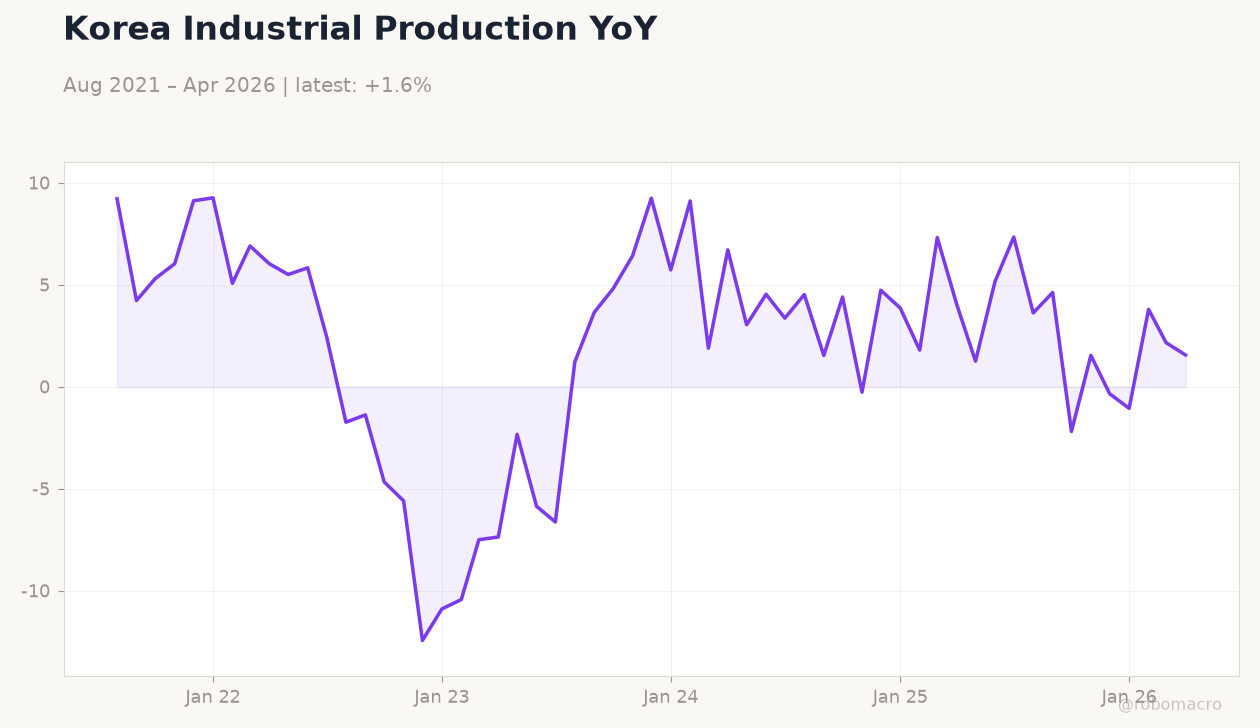
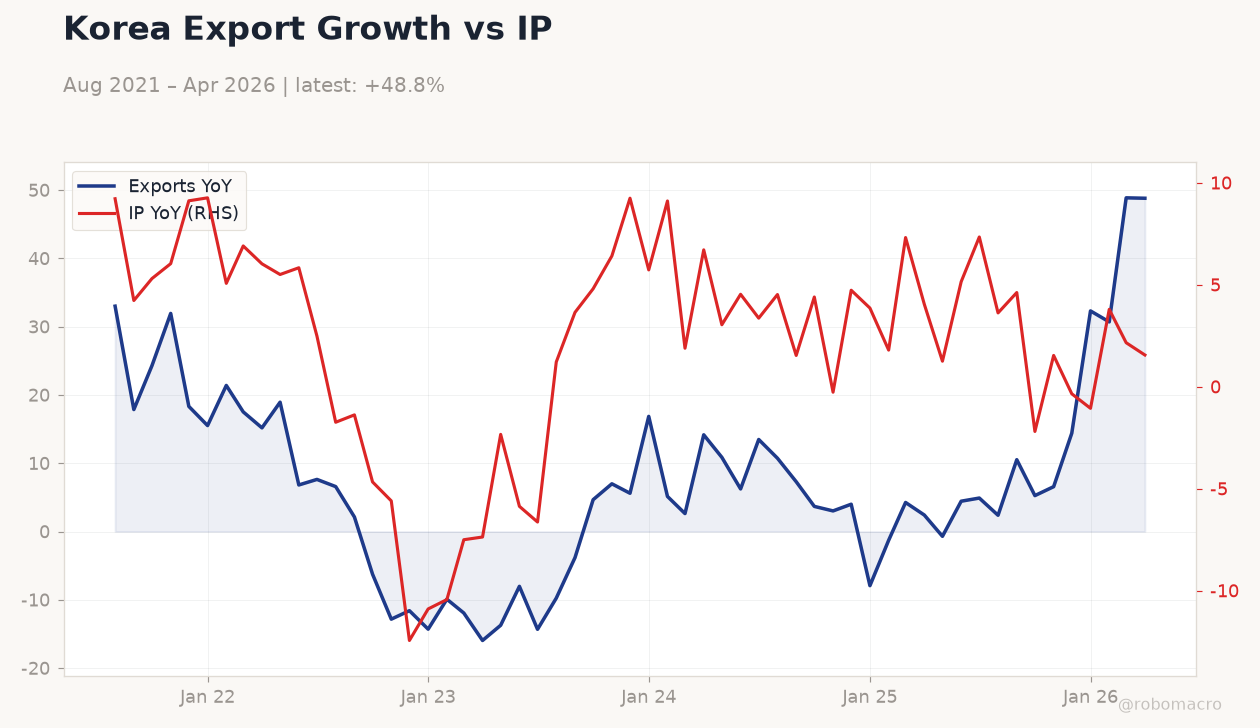 Korea Export Growth vs IP | Type: macro_line | Exports YoY: 48.8 (2026-04-01) | Range: -15.96–48.86 | Trend(5pt): 33,-6.252,5.604,-1.284,48.8 | IP YoY: 1.554 (2026-04-01) | Range: -12.45–9.263 | Trend(5pt): 9.218,-4.67,9.245,1.795,1.554
Today's Economic Events
| Data | Prior | Cons | Time |
|---|---|---|---|
| No events available | |||
- KOSPI falls 0.46% and KOSDAQ drops 2.46% as Samsung and SK Hynix plunge more than 6%
- USD/KRW declines 1.08% to 1,514.43 on debut of 24-hour dollar-won trading
- Korea long-term rate jumps 9.04% to 4.08% while BoK base rate stays at 2.54%
Yesterday's Recap
South Korea launched 24-hour trading of the dollar-won pair, a structural change aimed at boosting market depth ahead of potential MSCI classification upgrades. The won closed steady with USD/KRW at 1,514.43 after initial settlement near 1,530. KOSPI declined 0.46% to 8,051.33 even as Samsung reported record earnings, with the stock falling 6.92% to 296,000.
SK Hynix dropped 6.06% to 2,201,000 amid global memory-chip weakness that pulled sector peers lower. KRX activated a sell-side sidecar to curb the equity slide. Banks highlighted rising FX risk exposures as extended trading hours amplify won volatility.
Short-term rates rose 0.79% to 2.54%, consistent with the prevailing BoK base rate.
The Day Ahead
No major Korean data releases are scheduled for July 7. Market participants will track liquidity and volatility patterns in the new 24-hour won trading session. Industrial production figures due July 9 will provide the next domestic growth signal.
SK Hynix’s planned US$28 billion US secondary listing remains in focus for global investor demand. Equity flows may stay sensitive to semiconductor pricing commentary and external chip-stock moves.
Other Economic Notes
South Korea has overtaken China as the top destination in global beef trade following safeguard tariff adjustments. Upbit’s listing of OpenGradient for won trading expands crypto market access. Export momentum earlier in the month remained supported by chips and shipbuilding orders.
Corporate funding strategies, including SK Hynix’s Nasdaq ADR plan, reflect efforts to tap AI-driven capital inflows while reducing domestic concentration risk.
Global Macro News
Brent crude advanced 5.38% to 75.86 on tighter supply signals that support Korea’s export-linked energy costs. Gold fell 0.93% to 4,116.60 as investors rotated into risk assets. Bitcoin eased 0.82% to 63,472.29.
<i>↓ p.2</i>