Korea Macro Daily(Beta Mode)
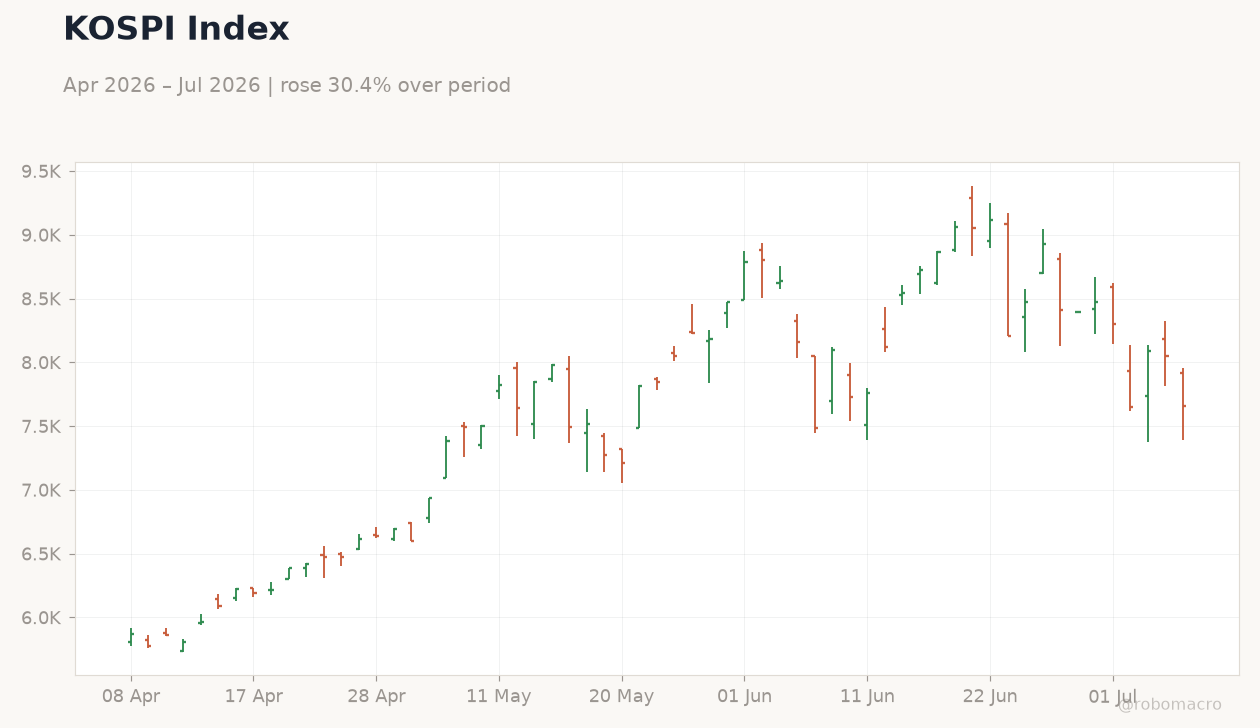
KOSPI Slides 4.9% as Chip Stocks Retreat
Market Snapshot
| Asset | Level | Change |
|---|---|---|
| KOSPI | 7,656.31 | -4.91% |
| KOSDAQ | 831.23 | -1.87% |
| USD/KRW | 1,504.70 | -1.57% |
| Samsung | 277,500.00 | -6.25% |
| SK Hynix | 2,076,000.00 | -5.68% |
| Brent Crude | 79.25 | +6.86% |
| Gold | 4,086.60 | -1.42% |
| Bitcoin | 61,975.85 | -2.09% |
| Korea Short-term Rate | 2.54% | +0.79% |
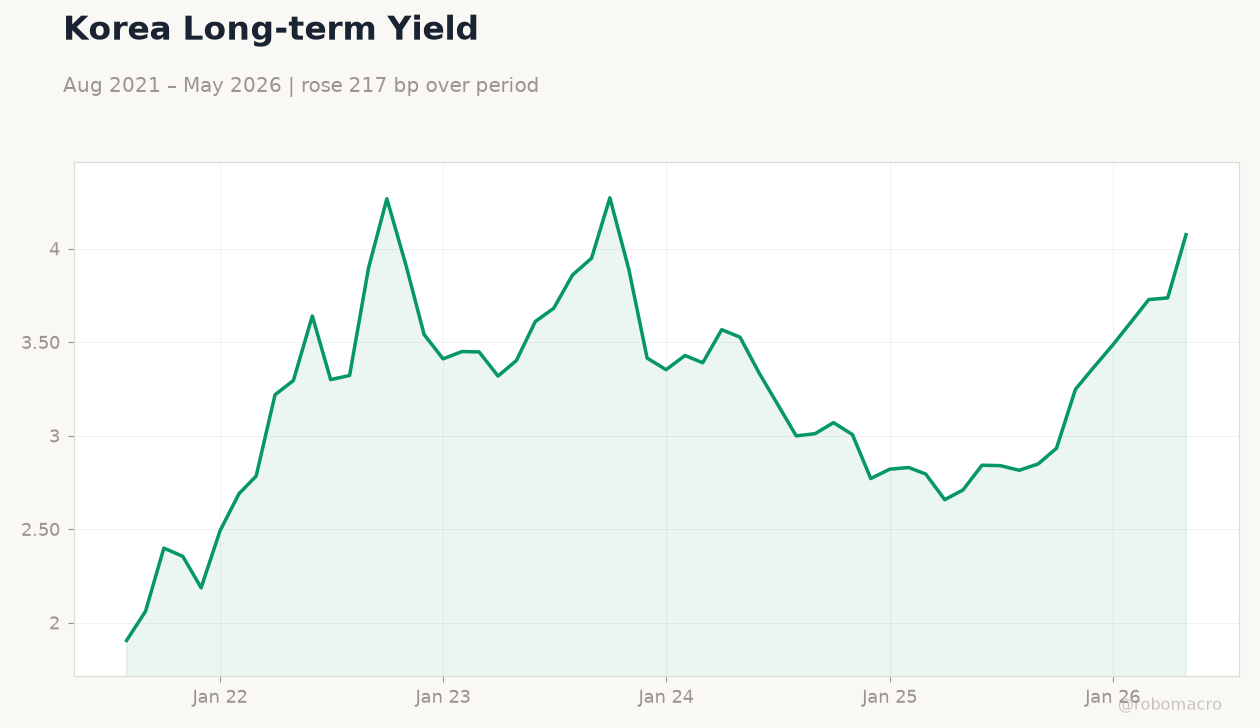
| Korea Long-term Rate | 4.08% | +9.04% |
Prior Economic Events
| Data | Prior | Cons | Actual |
|---|---|---|---|
| No events available | |||
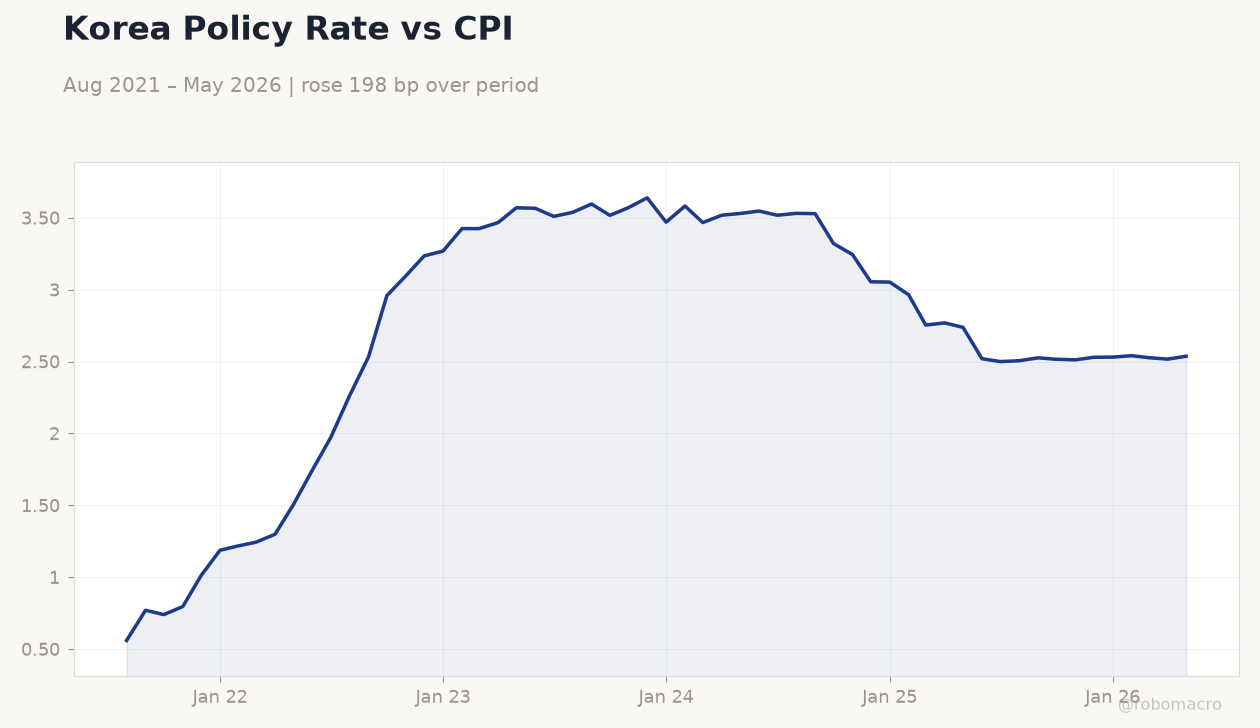 Korea Policy Rate vs CPI | Type: macro_line | Short-term Rate %: 2.537 (2026-05-01) | Range: 0.56–3.639 | Trend(6pt): 0.56,2.959,3.639,2.965,2.517,2.537
Today's Economic Events
| Data | Prior | Cons | Time |
|---|---|---|---|
| No events available | |||
- KOSPI fell 4.91% to 7,656.31 while Samsung and SK Hynix dropped 6.25% and 5.68% respectively despite record semiconductor-driven corporate surpluses.
- USD/KRW eased 1.57% to 1,504.70 as authorities prepare a won internationalization roadmap and launch 24-hour won trading.
- ADB raised 2026 Korea growth and inflation forecasts to 2.6% and 2.7% on chip export strength, yet banks flagged rising FX risks from sustained won weakness.
Yesterday's Recap
Equity markets sold off sharply with KOSPI and KOSDAQ closing down 4.91% and 1.87%. Samsung Electronics and SK Hynix led the decline even after reporting record earnings, reflecting profit-taking in memory names. The won strengthened modestly against the dollar while short-term rates held at 2.54% and long-term yields jumped 9.04%.
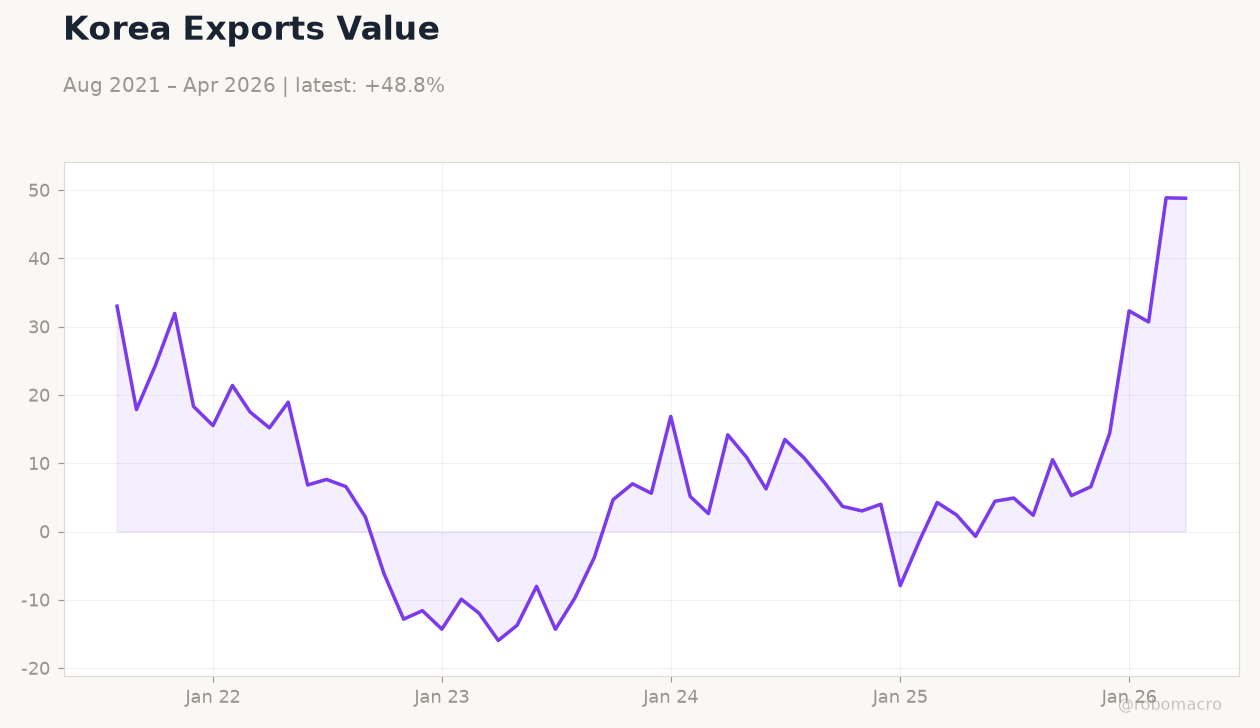
Corporate surplus reached a record 20.8 trillion won, fueled by semiconductor exports that grew faster than imports. No major data releases occurred, leaving market moves driven by positioning ahead of the planned won globalization measures. Banks highlighted mounting FX exposure as the currency remained weak on a trade-weighted basis despite the export surge.
The Day Ahead
Attention centers on the Bank of Korea’s upcoming MPC meeting and the finance ministry’s release of the won internationalization roadmap this month. Officials will also adjust long-term bond issuance schedules to support market liberalization. With no high-frequency indicators scheduled, focus remains on export momentum and corporate earnings season starting next week.
Shipbuilders Hyundai Heavy and Samsung Heavy continue to book record orders, reinforcing the non-chip growth narrative. Markets will monitor any signals on fiscal-monetary coordination amid the compound crisis described by local analysts.
Other Economic Notes
Semiconductor strength continues to widen the trade surplus and lift corporate cash holdings, yet the won has failed to recover, keeping imported inflation risks alive. The push for 24-hour won trading and a formal internationalization plan aims to deepen capital markets and reduce dollar dependence. Fiscal and monetary authorities face pressure to coordinate responses as growth remains export-dependent and domestic demand stays soft.
Long-term bond adjustments signal efforts to manage supply while supporting the roadmap rollout.