Korea Macro Daily(Beta Mode)
KOSPI Falls 5% as Yields Jump, Won Firms
Market Snapshot
| Asset | Level | Change |
|---|---|---|
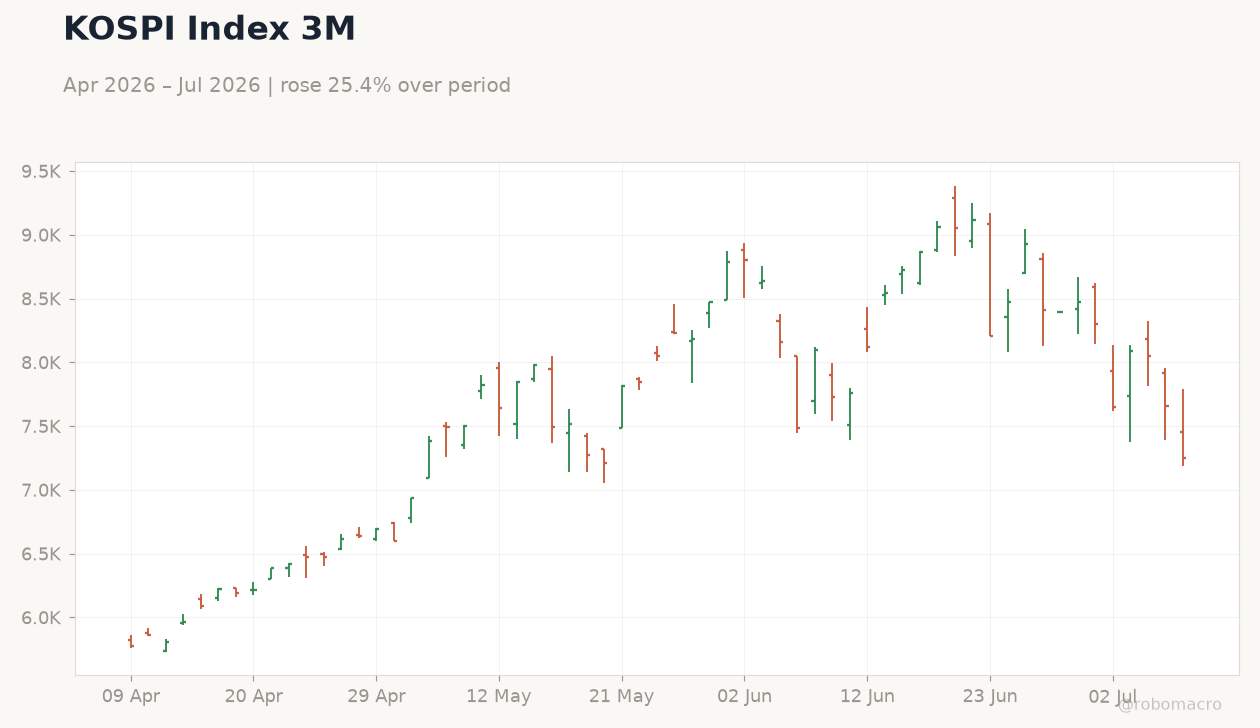
| KOSPI | 7,246.79 | -5.35% |
| KOSDAQ | 785.00 | -5.56% |
| USD/KRW | 1,506.48 | -0.88% |
| Samsung | 278,000.00 | +0.18% |
| SK Hynix | 2,186,000.00 | +5.30% |
| Brent Crude | 76.04 | -2.54% |
| Gold | 4,132.60 | +1.52% |
| Bitcoin | 63,223.70 | +1.55% |
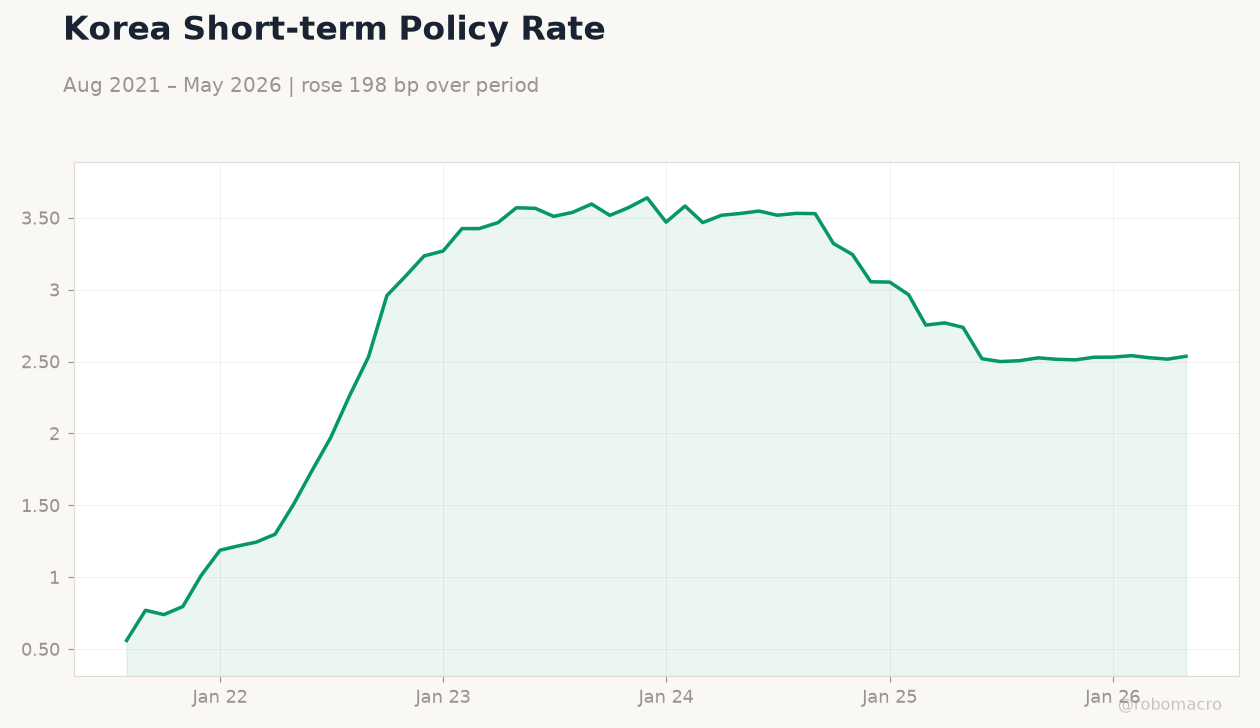
| Korea Short-term Rate | 2.54% | +0.79% |
| Korea Long-term Rate | 4.08% | +9.04% |
Prior Economic Events
| Data | Prior | Cons | Actual |
|---|---|---|---|
| No events available | |||
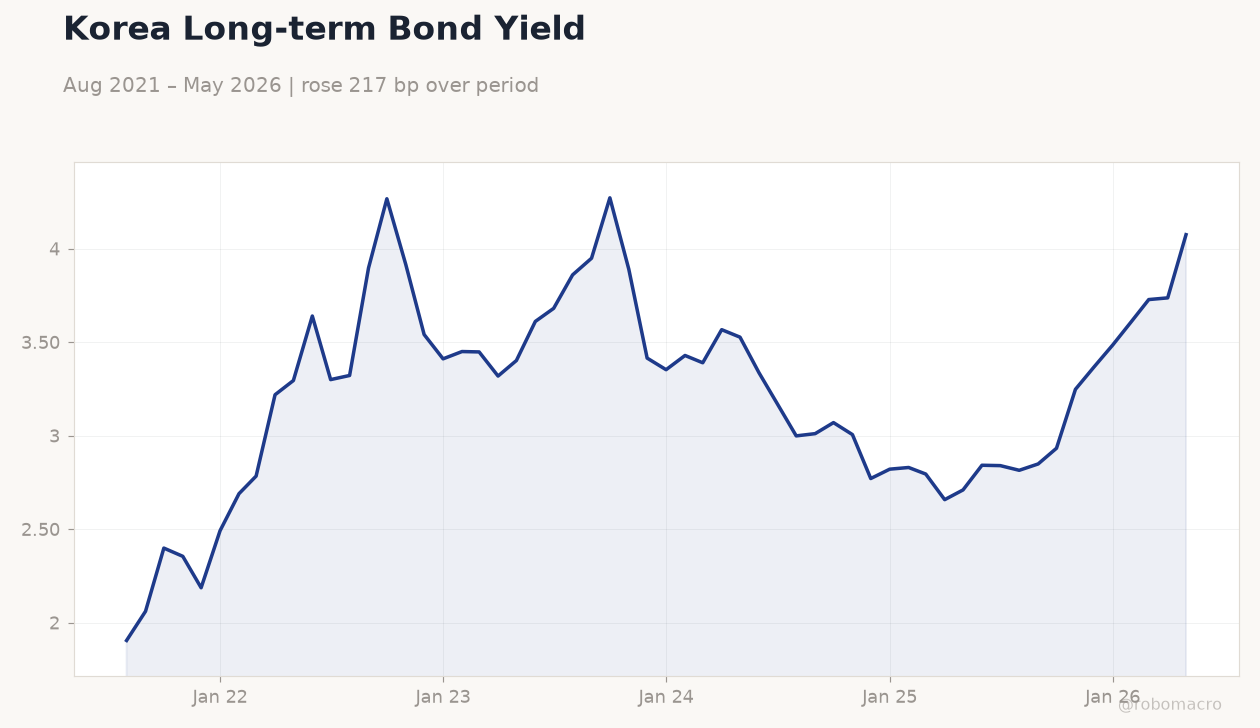 Korea Long-term Bond Yield | Type: macro_line | 10Y Yield %: 4.075 (2026-05-01) | Range: 1.905–4.272 | Trend(6pt): 1.905,4.267,3.415,2.83,3.737,4.075
Today's Economic Events
| Data | Prior | Cons | Time |
|---|---|---|---|
| No events available | |||
- KOSPI plunged 5.35% to 7,246.79 while KOSDAQ fell 5.56% to 785.00 on broad equity selling.
- USD/KRW eased 0.88% to 1,506.48 as the won strengthened on SK Hynix-related dollar sales.
- Korea long-term rates jumped 9.04% to 4.08% while the base rate held at 2.54%.
Yesterday's Recap
Korean equities posted steep losses as KOSPI confirmed bear-market territory and investors rotated out of risk assets. The won gained ground after dollar-selling tied to SK Hynix’s large share placement lifted the currency to a one-month high. Long-term bond yields surged more than 9% while short-term rates edged higher, reflecting tighter liquidity conditions.
News flow highlighted Bank of Korea concerns that year-end bonuses and the prior KOSPI rally would add to price pressures. SK Hynix shares outperformed, rising 5.30% on expectations of strong demand for advanced memory chips. Samsung Electronics posted a modest 0.18% gain, providing limited support to the broader index.
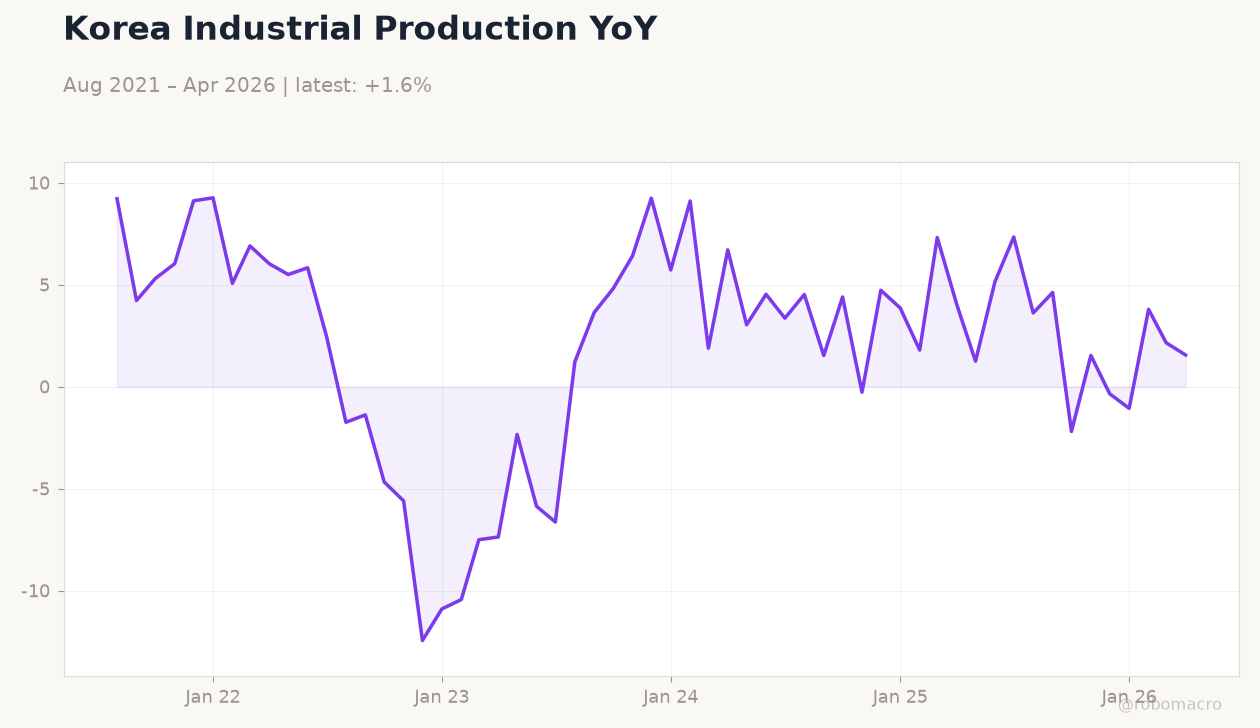
No major economic data releases occurred, leaving market moves driven by positioning and external flows.
The Day Ahead
Markets will monitor any follow-through from SK Hynix’s planned NASDAQ listing and its potential impact on won flows. Attention remains on Middle East tensions that have already pressured the currency in recent sessions. Officials are expected to comment on won internationalization plans aimed at deepening financial markets.
Semiconductor supply-chain updates from chipmakers could influence export forecasts. Global risk sentiment and U.S. dollar direction will dictate near-term won trading ranges.
No domestic data prints are scheduled.
Other Economic Notes
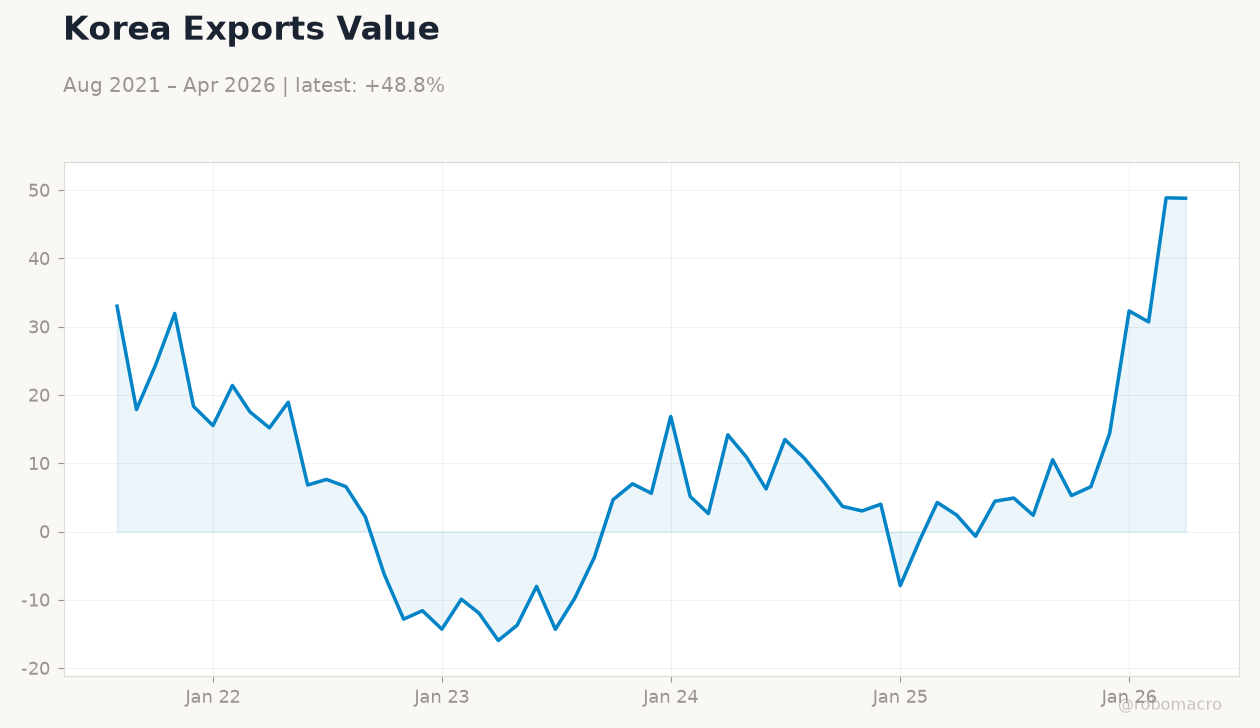
Export-oriented growth continues to hinge on semiconductor demand, with SK Hynix’s capital-raising plans underscoring capacity expansion needs. Minors’ large deposits rising signals persistent household liquidity that could support consumption but also complicate inflation control. Broader policy focus has shifted toward regulatory frameworks for won-backed stablecoins to modernize payment systems.
External shocks, including renewed geopolitical risks, remain the dominant driver of won volatility.