Korea Macro Daily(Beta Mode)
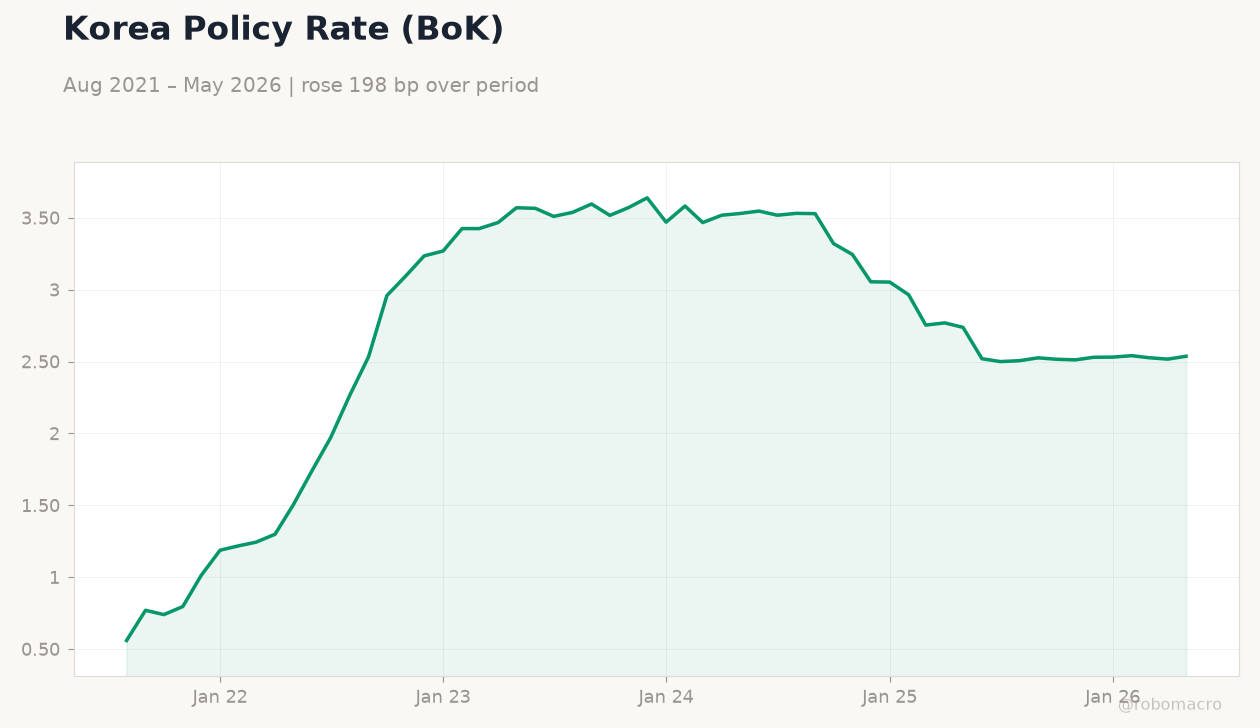
BoK Set to Hike Rates for First Time Since 2023
Market Snapshot
| Asset | Level | Change |
|---|---|---|
| KOSPI | 6,856.83 | +0.73% |
| KOSDAQ | 783.98 | -1.92% |
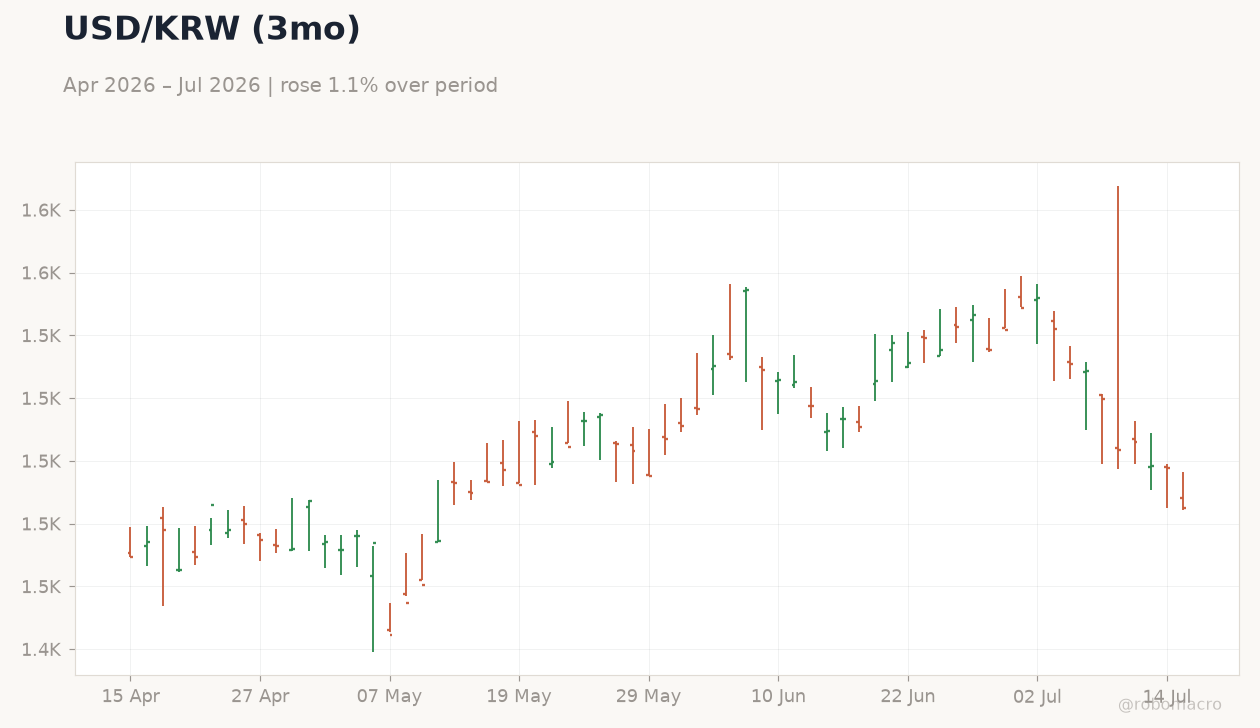
| USD/KRW | 1,484.97 | -0.85% |
| Samsung | 279,500.00 | +6.27% |
| SK Hynix | 2,082,000.00 | +8.83% |
| Brent Crude | 85.64 | +1.07% |
| Gold | 4,067.20 | +0.15% |
| Bitcoin | 64,906.70 | -0.08% |
| Korea Short-term Rate | 2.54% | +0.79% |
| Korea Long-term Rate | 4.08% | +9.04% |
Prior Economic Events
| Data | Prior | Cons | Actual |
|---|---|---|---|
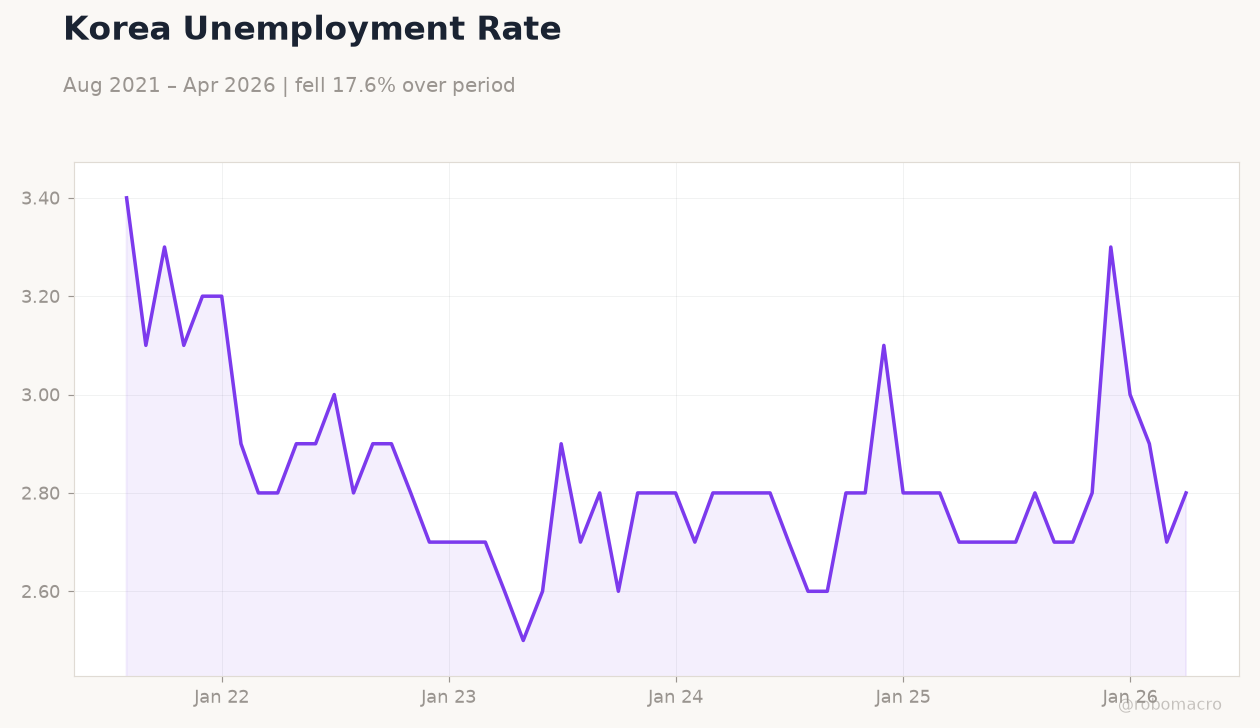
| Headline Unemployment Rate | 2.80 | - | 2.70 |
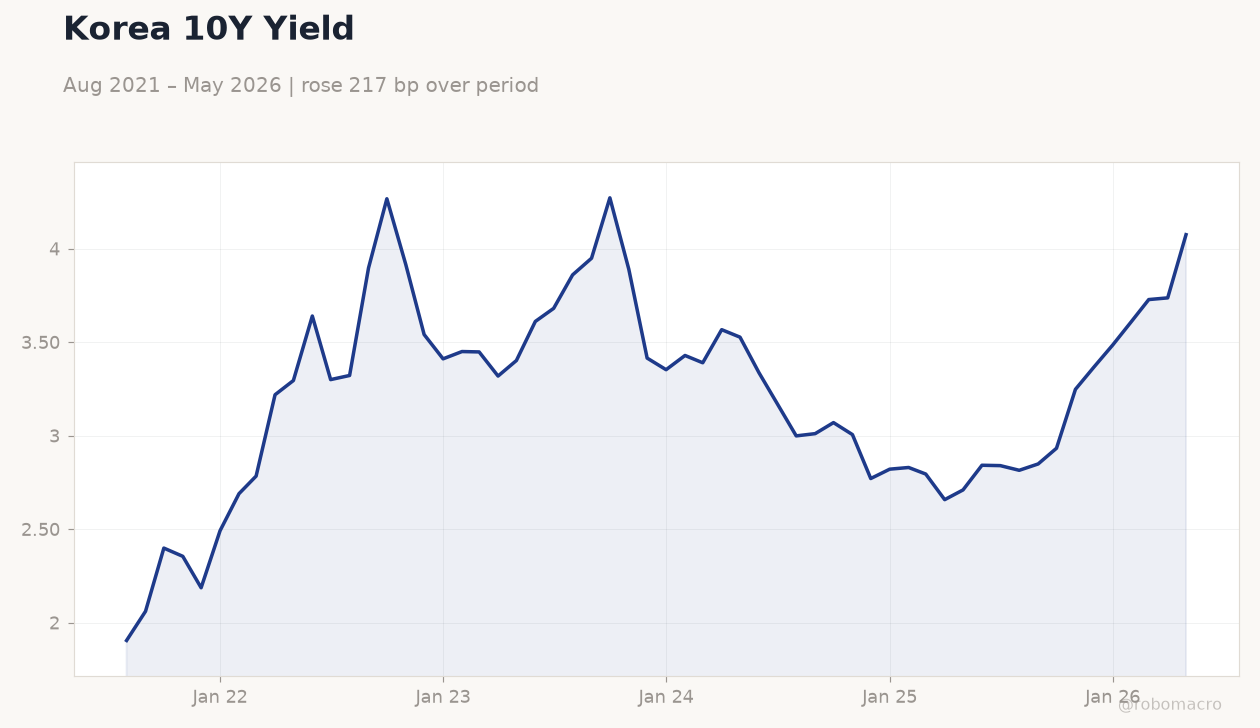 Korea 10Y Yield | Type: macro_line | 10Y Yield (%): 4.075 (2026-05-01) | Range: 1.905–4.272 | Trend(6pt): 1.905,4.267,3.415,2.83,3.737,4.075
Today's Economic Events
| Data | Prior | Cons | Time |
|---|---|---|---|
| Thursday (2026-07-16) | |||
| Central Bank Interest Rate Decision | 2.50 | 2.75 | 21:00 |
| Wednesday (2026-07-22) | |||
| GDP Growth Quarter-over-Quarter Advance Estimate | 1.80 | - | 19:00 |
| GDP Growth Year-over-Year Advance Estimate | 3.80 | - | 19:00 |
- Bank of Korea expected to raise base rate to 2.75% on July 16, ending three-year easing cycle
- Unemployment rate fell to 2.7% in July as semiconductor exports accelerate
- KOSPI rose 0.73% while KOSDAQ fell 1.92% amid divergent chip and small-cap moves
Yesterday's Recap
South Korea’s headline unemployment rate declined to 2.7% from 2.8% in the latest reading, signaling continued labor-market tightness. Equity markets showed divergence, with the KOSPI advancing 0.73% to 6,856.83 while the KOSDAQ dropped 1.92% to 783.98. Samsung Electronics surged 6.27% and SK Hynix jumped 8.83%, reflecting strong memory-chip demand tied to AI infrastructure.
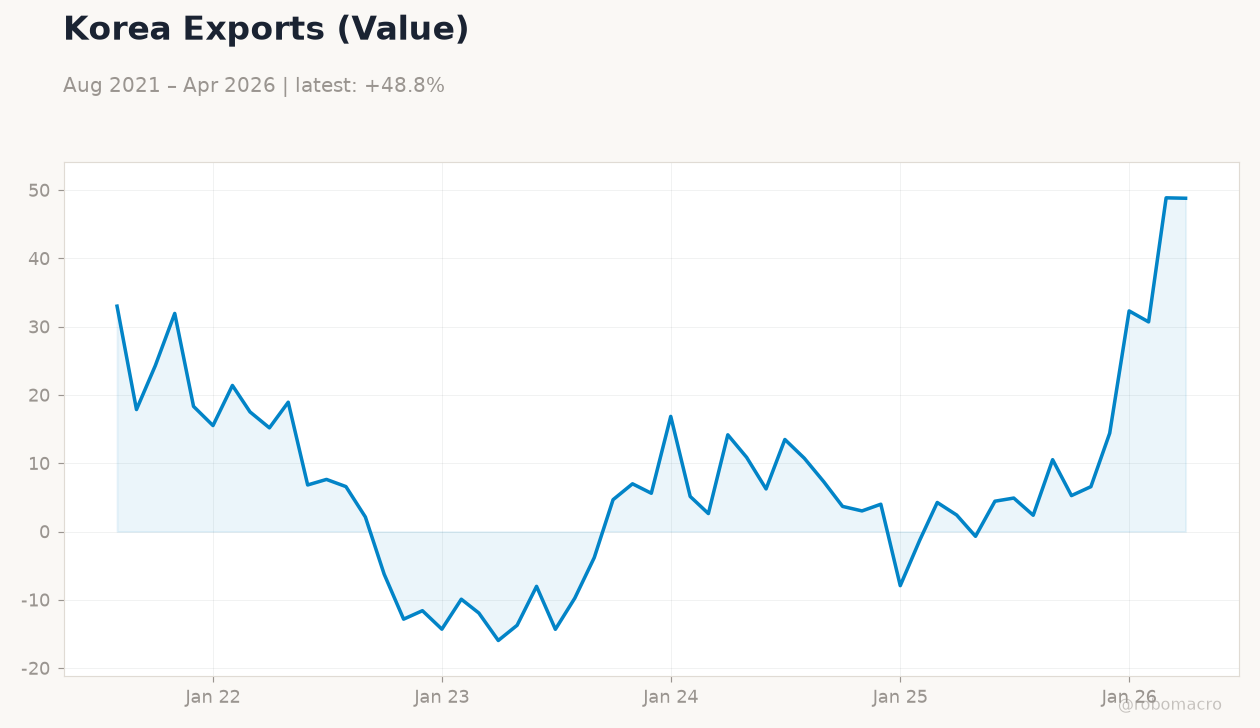
The won strengthened 0.85% to 1,484.97 against the dollar, supported by export inflows. Korea’s short-term rate edged up to 2.54% while the long-term rate climbed 9.04% to 4.08%, narrowing the Korea-U.S. yield gap.
Liquidity remains abundant, with broad money growth reinforcing the case for tighter policy. Government forecasts for 2026 growth and inflation were revised higher, citing the ongoing semiconductor cycle.
The Day Ahead
Markets will focus on the Bank of Korea’s July 16 interest-rate decision, with consensus pointing to a 25-basis-point increase to 2.75%. The move would mark the first tightening since early 2023 and align with stronger inflation and export momentum. Later in the month, advance GDP estimates for the second quarter are scheduled, covering both quarter-over-quarter and year-over-year readings.
Officials will also release updated economic projections that incorporate the revised 2026 growth and inflation outlook. Traders will monitor any forward guidance on the pace of further tightening and the balance between inflation control and financial-stability risks.
Other Economic Notes
The government launched the Korea Strategic Technology Program, committing 10 trillion won to secure semiconductor, battery and biotech supply chains. Officials reiterated the goal of keeping inflation below 3% while accelerating won internationalization to reduce external vulnerabilities. Minimum wage will rise 3.7% to 10,700 won per hour in 2026, though sector-specific rates were again rejected.
Record non-deliverable forward trading volumes have prompted the Bank of Korea to step up monitoring of currency-market leverage. These measures reflect a policy mix that pairs targeted industrial support with gradual monetary normalization.