Korea Macro Daily(Beta Mode)
Chip Exports Drive Q2 GDP Beat, Lifting Won
Market Snapshot
| Asset | Level | Change |
|---|---|---|
| KOSPI | 6,797.70 | +0.74% |
| KOSDAQ | 751.09 | -0.30% |
| USD/KRW | 1,474.39 | -0.36% |
| Samsung | 270,000.00 | +3.65% |
| SK Hynix | 1,919,000.00 | +4.86% |
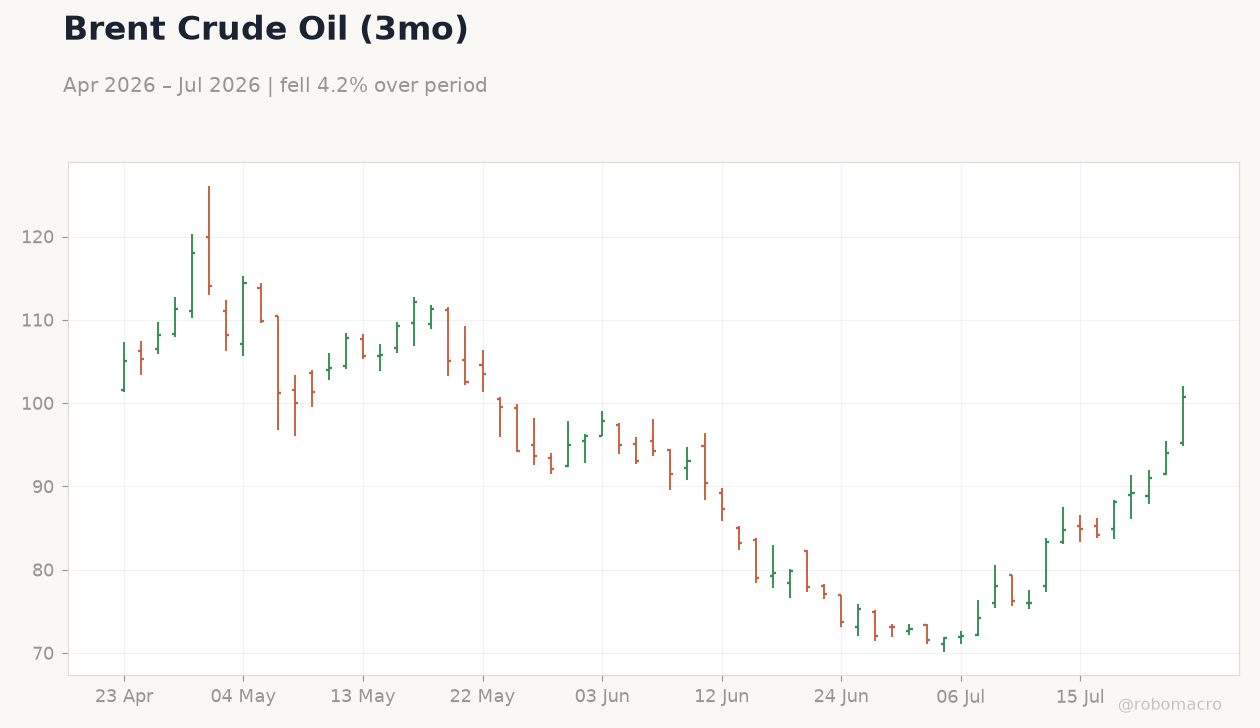
| Brent Crude | 100.66 | +7.01% |
| Gold | 4,051.40 | -2.30% |
| Bitcoin | 65,066.83 | -1.56% |
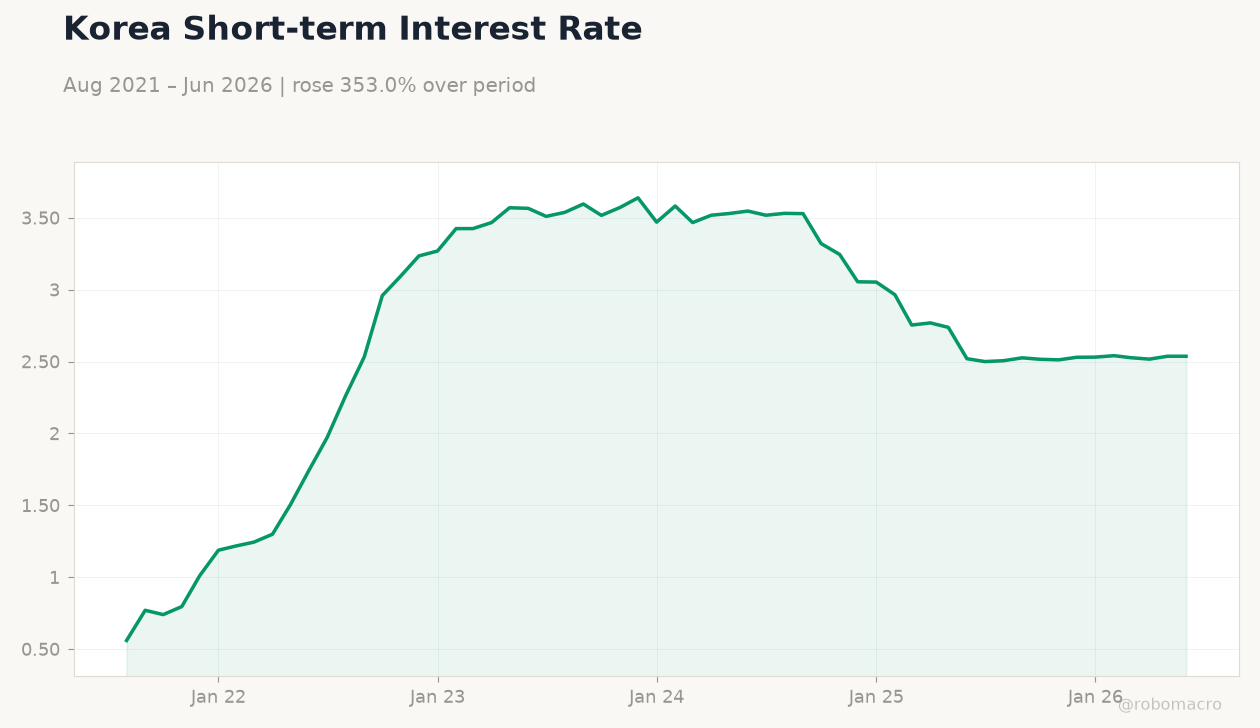
| Korea Short-term Rate | 2.54% | +0.00% |
| Korea Long-term Rate | 4.18% | +2.60% |
Prior Economic Events
| Data | Prior | Cons | Actual |
|---|---|---|---|
| GDP Growth Quarter-over-Quarter Advance Estimate | 1.80 | 0.40 | 0.60 |
| GDP Growth Year-over-Year Advance Estimate | 3.80 | 3.50 | 3.70 |
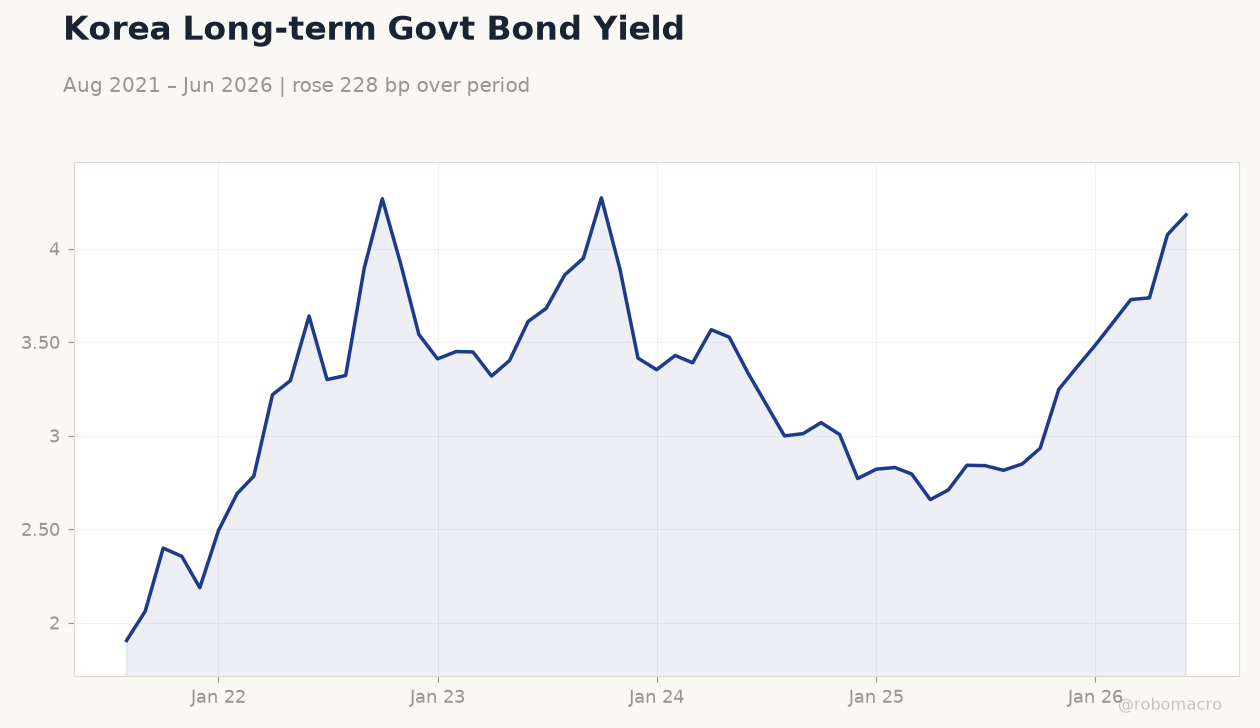 Korea Long-term Govt Bond Yield | Type: macro_line | 10Y Yield %: 4.181 (2026-06-01) | Range: 1.905–4.272 | Trend(6pt): 1.905,4.267,3.415,2.83,3.737,4.181
Today's Economic Events
| Data | Prior | Cons | Time |
|---|---|---|---|
| No events available | |||
- South Korea’s Q2 GDP rose 0.6% QoQ, beating consensus of 0.4% on robust chip exports.
- Korean won advanced to a two-month high as stronger growth lifted BoK rate-hike odds.
- KOSPI gained 0.74% while long-term yields rose amid inflation concerns.
Yesterday's Recap
South Korea reported Q2 GDP growth of 0.6% quarter-over-quarter, exceeding the 0.4% consensus and marking a sharp slowdown from the prior quarter’s 1.8% pace yet still signaling resilience. Year-over-year growth printed at 3.7%, above the 3.5% forecast. The outperformance was driven by semiconductor exports tied to the AI boom, with Samsung shares rising 3.65% and SK Hynix jumping 4.86%.
The KOSPI index advanced 0.74% to 6,797.70 while the KOSDAQ slipped 0.30%. The won strengthened 0.36% to 1,474.39 against the dollar, reaching its strongest level in more than two months. Household wealth increased on the back of housing market gains and equity appreciation.
Korea’s long-term government bond yield rose as markets priced in firmer growth and persistent inflation pressures.
The Day Ahead
With no major data releases scheduled for the next two days, markets will focus on follow-through from the GDP surprise and its implications for monetary policy. Traders will monitor USD/KRW flows for signs of sustained won strength near the 1,470 level. Equity sentiment should remain supported by semiconductor demand, though profit-taking after recent gains in Samsung and SK Hynix is possible.
Bond markets will watch whether the long-term yield extension signals broader repricing of inflation risks. Corporate updates from exporters and any comments from BoK officials on the growth print will also draw attention.
Other Economic Notes
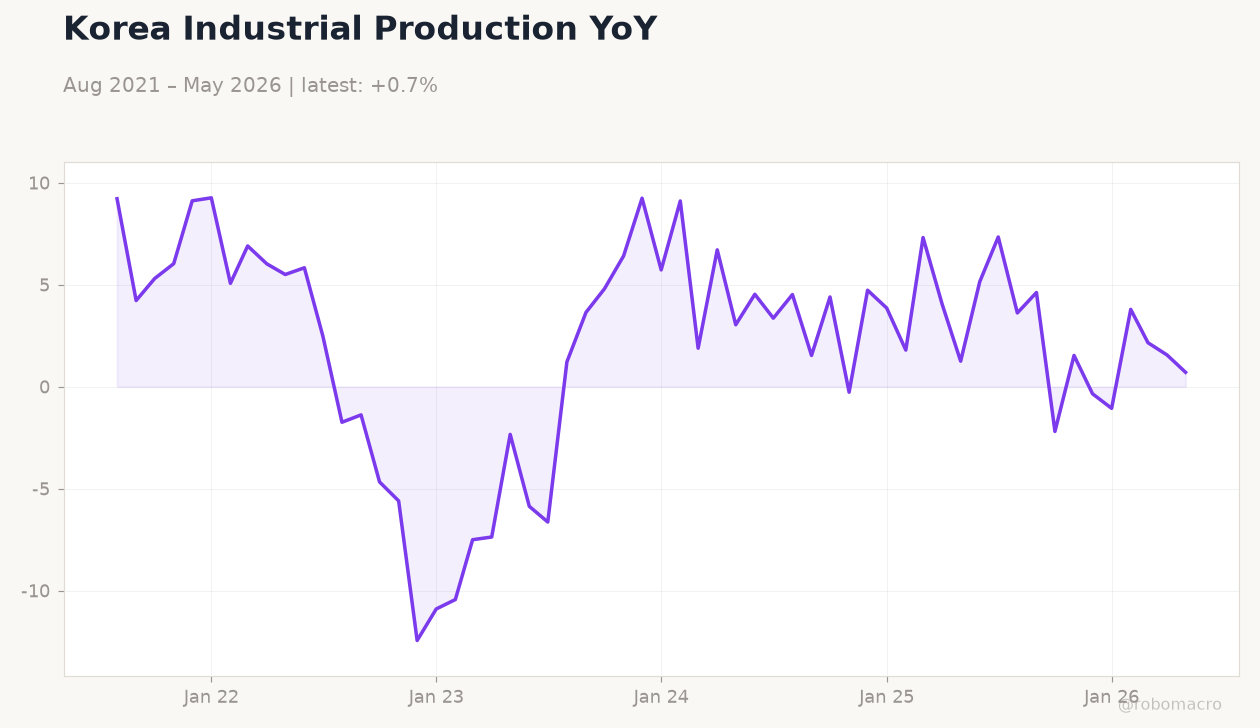
The GDP beat reinforces the export-led recovery narrative centered on AI-related chips, which continues to offset softer domestic demand. Household wealth gains from rising home prices and KOSPI levels may support consumption in coming quarters, though high interest rates still weigh on borrowing costs. The Bank of Korea’s overhaul of its 30 trillion won SME lending program aims to improve credit allocation without adding broad stimulus.
Long-term bond yields reflect markets’ view that inflation, running at 3.16% year-over-year, will remain above target for longer. Export momentum appears durable given global AI investment cycles, but any slowdown in chip demand would quickly pressure both growth and the won.