Korea Macro Daily(Beta Mode)
KOSPI Slides on Chip Weakness Ahead of Jobs Data
Market Snapshot
| Asset | Level | Change |
|---|---|---|
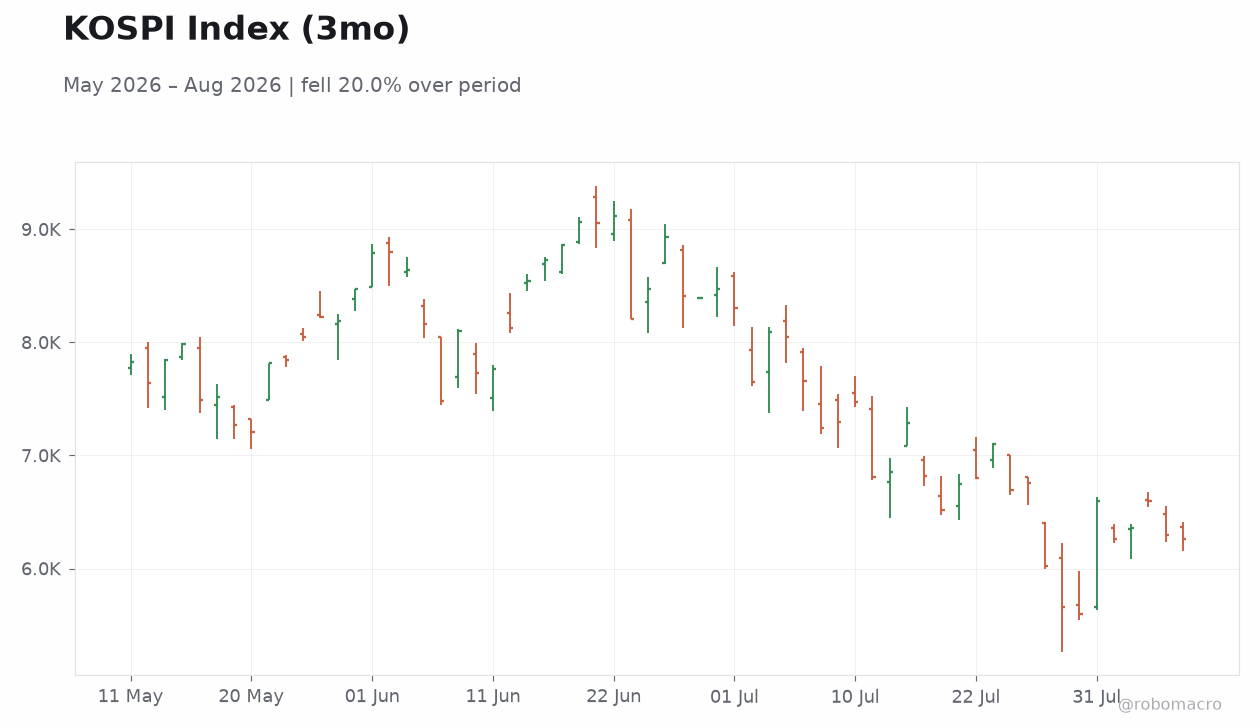
| KOSPI | 6,258.77 | -0.60% |
| KOSDAQ | 798.81 | -0.36% |
| USD/KRW | 1,417.66 | -0.33% |
| Samsung | 231,000.00 | +0.22% |
| SK Hynix | 1,422,000.00 | -4.88% |
| Brent Crude | 87.83 | +5.12% |
| Gold | 4,448.40 | +2.48% |
| Bitcoin | 64,062.91 | -1.21% |
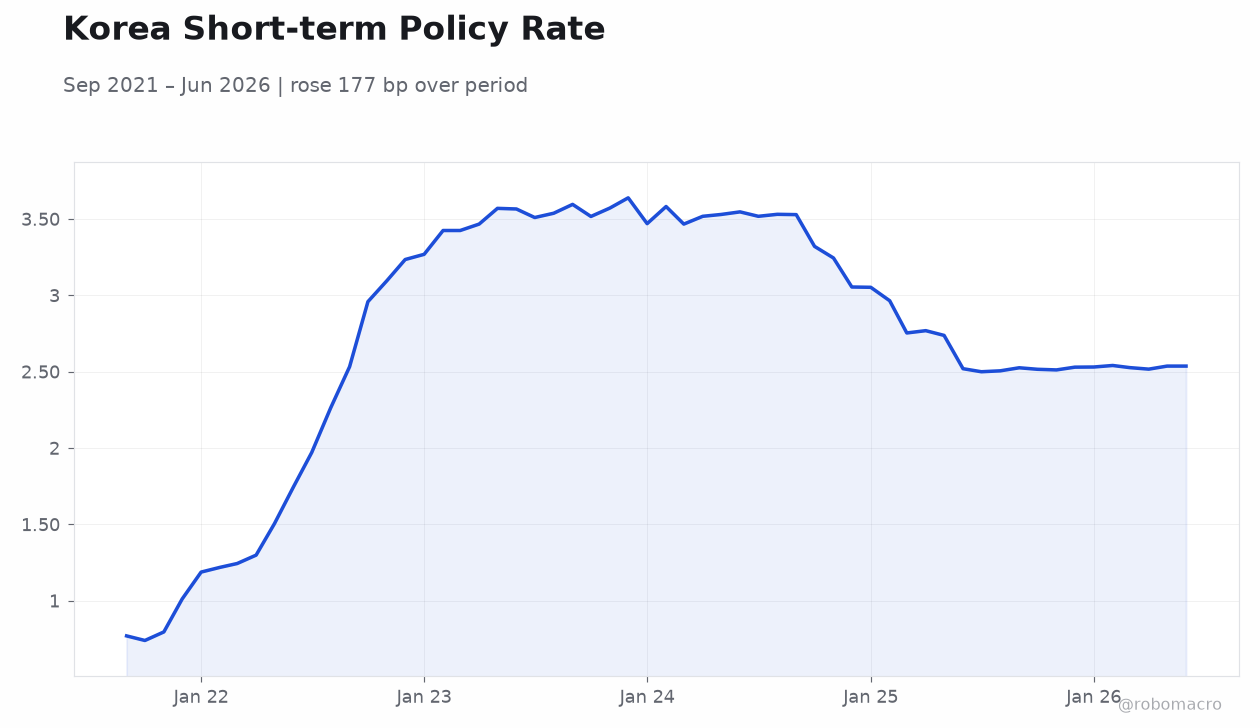
| Korea Short-term Rate | 2.54% | +0.00% |
| Korea Long-term Rate | 4.18% | +2.60% |
Prior Economic Events
| Data | Prior | Cons | Actual |
|---|---|---|---|
| No events available | |||
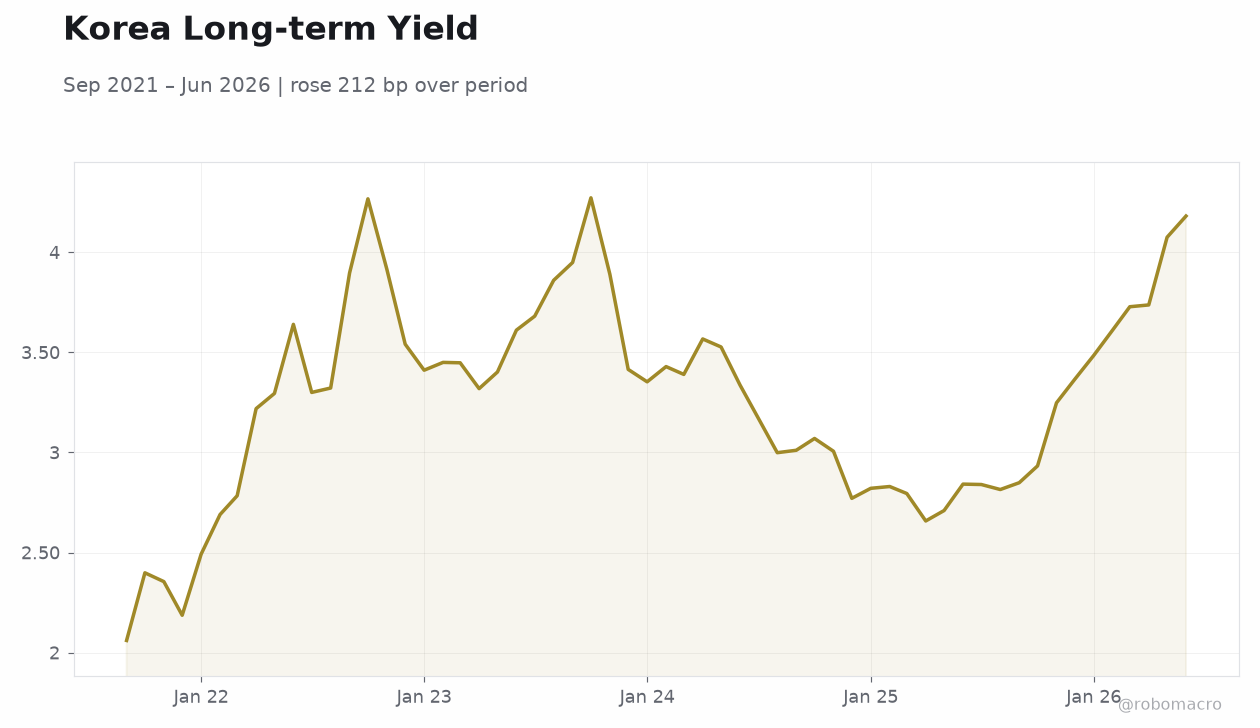 Korea Long-term Yield | Type: macro_line | 10Y Yield (%): 4.181 (2026-06-01) | Range: 2.061–4.272 | Trend(6pt): 2.061,3.915,3.353,2.795,4.075,4.181
Today's Economic Events
| Data | Prior | Cons | Time |
|---|---|---|---|
| Tuesday (2026-08-11) | |||
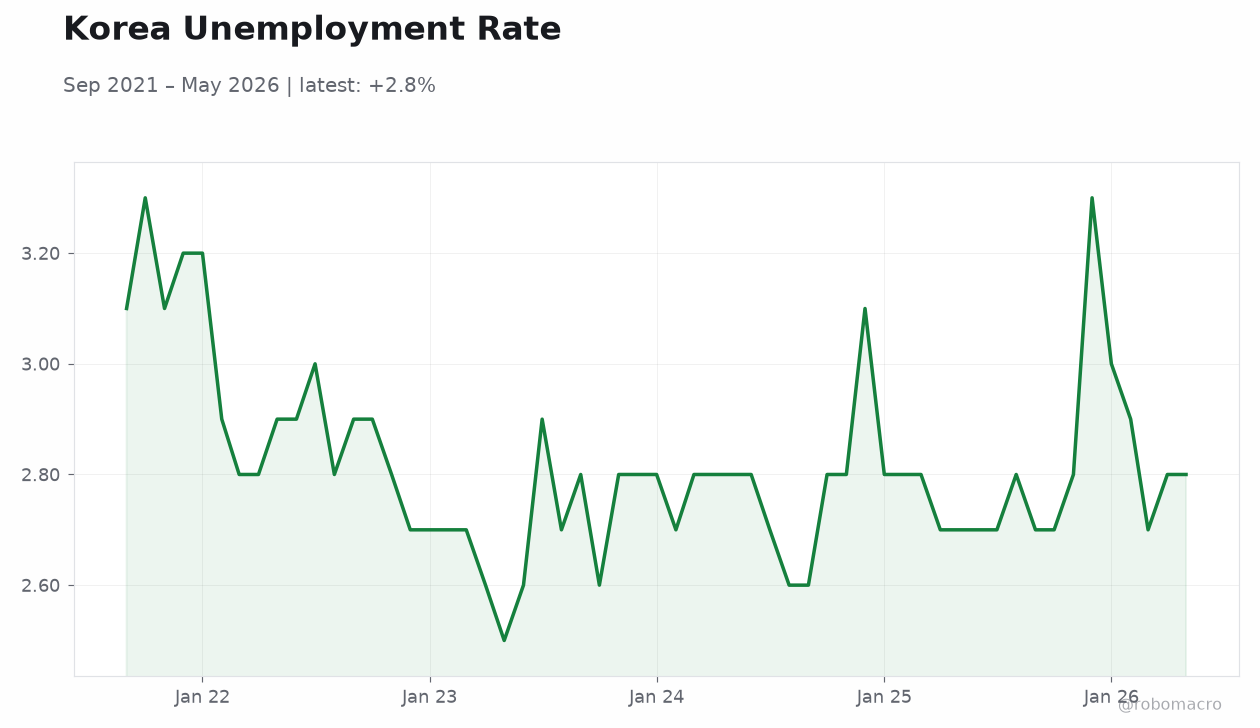
| Unemployment Rate | 2.70 | - | 19:00 |
- KOSPI fell 0.60% to 6,258.77 while SK Hynix dropped 4.88% amid semiconductor volatility.
- USD/KRW eased 0.33% to 1,417.66 as long-term yields rose 2.60% to 4.18%.
- Unemployment rate release tomorrow remains the sole near-term domestic data point.
Yesterday's Recap
South Korean equity markets closed lower with no major economic releases reported. The KOSPI declined 0.60% to 6,258.77 while the KOSDAQ slipped 0.36% to 798.81, pressured by a 4.88% drop in SK Hynix shares. Samsung Electronics edged up 0.22% to 231,000 won, providing limited support.
The won strengthened modestly as USD/KRW fell 0.33% to 1,417.66. Korea’s short-term rate held steady at 2.54% while the long-term rate climbed 2.60% to 4.18%. Brent crude surged 5.12% to 87.83, lifting gold 2.48% to 4,448.40, though bitcoin declined 1.21%.
Overall market tone reflected caution ahead of the unemployment print. Export-oriented firms continue to navigate AI-driven demand alongside global supply-chain pressures that have amplified daily price swings in chip names.
The Day Ahead
Markets will focus on the unemployment rate scheduled for release at 19:00 ET tomorrow, with the prior reading at 2.7%. No other domestic indicators are listed in the calendar. Traders will monitor any revisions to consensus expectations and potential implications for household spending.
Equity flows may remain sensitive to semiconductor sector updates given recent price swings. The absence of additional releases leaves room for external drivers to dominate intraday moves. Rising long-term yields already signal shifting expectations around inflation persistence, which could influence how the labor data is interpreted for consumption trends.
Other Economic Notes
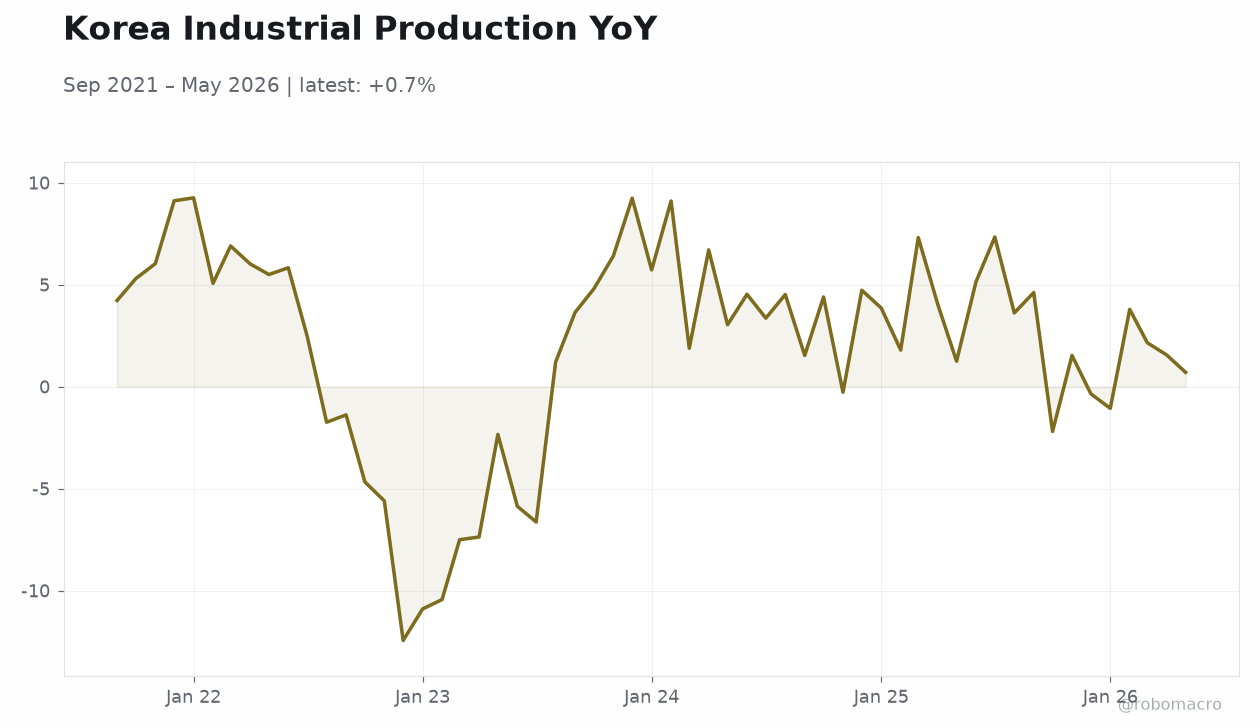
South Korea’s export-driven growth continues to hinge on semiconductor demand tied to global AI investment. Persistent trade imbalances and supply-chain fragmentation are prompting policymakers to emphasize value-chain resilience. Rising long-term yields signal shifting investor expectations around inflation persistence and external financing costs.
Export-oriented firms face ongoing pressure to balance capital expenditure with shareholder returns amid elevated chip prices. Retail participation has grown alongside tech enthusiasm, adding to volatility while July CPI at 2.79% year-over-year stays within the target range.