Korea Macro Daily(Beta Mode)
Chip Rally Lifts KOSDAQ Ahead of Jobs Data
Market Snapshot
| Asset | Level | Change |
|---|---|---|
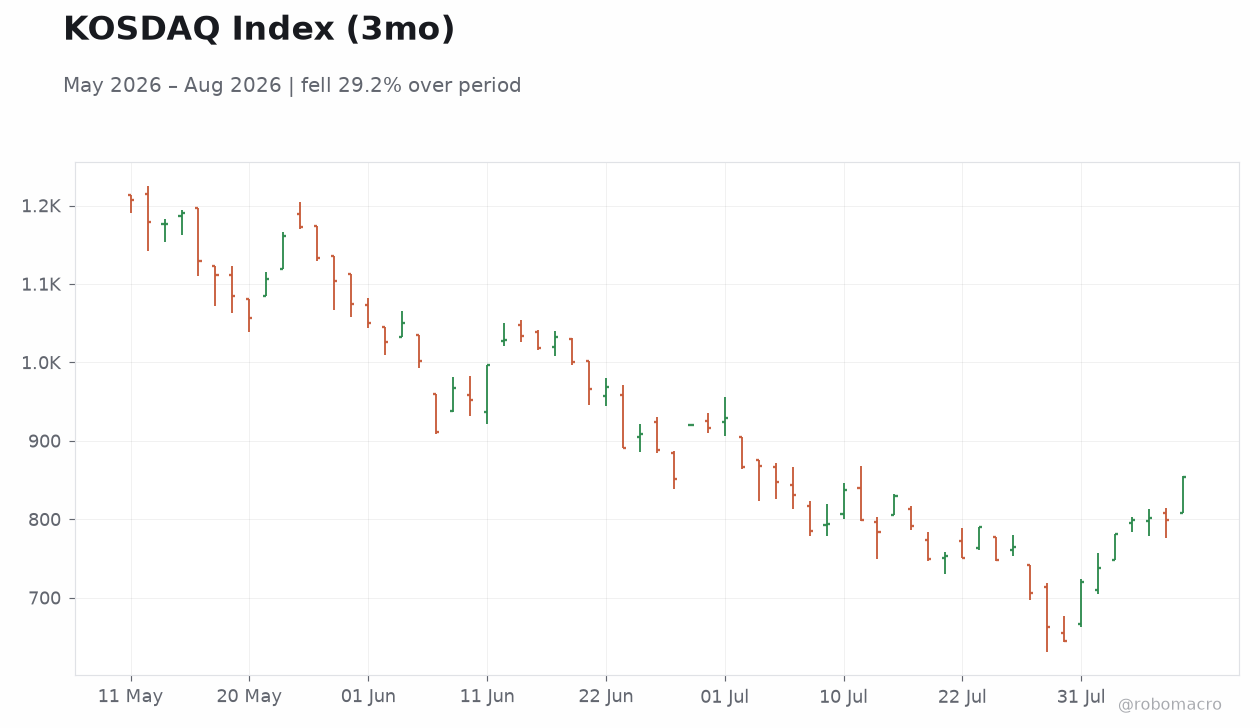
| KOSPI | 6,299.66 | +0.65% |
| KOSDAQ | 854.47 | +6.97% |
| USD/KRW | 1,411.83 | +0.34% |
| Samsung | 239,500.00 | +4.13% |
| SK Hynix | 1,425,000.00 | +0.35% |
| Brent Crude | 88.90 | +1.35% |
| Gold | 4,427.70 | +1.51% |
| Bitcoin | 63,679.16 | -0.36% |
| Korea Short-term Rate | 2.54% | +0.00% |
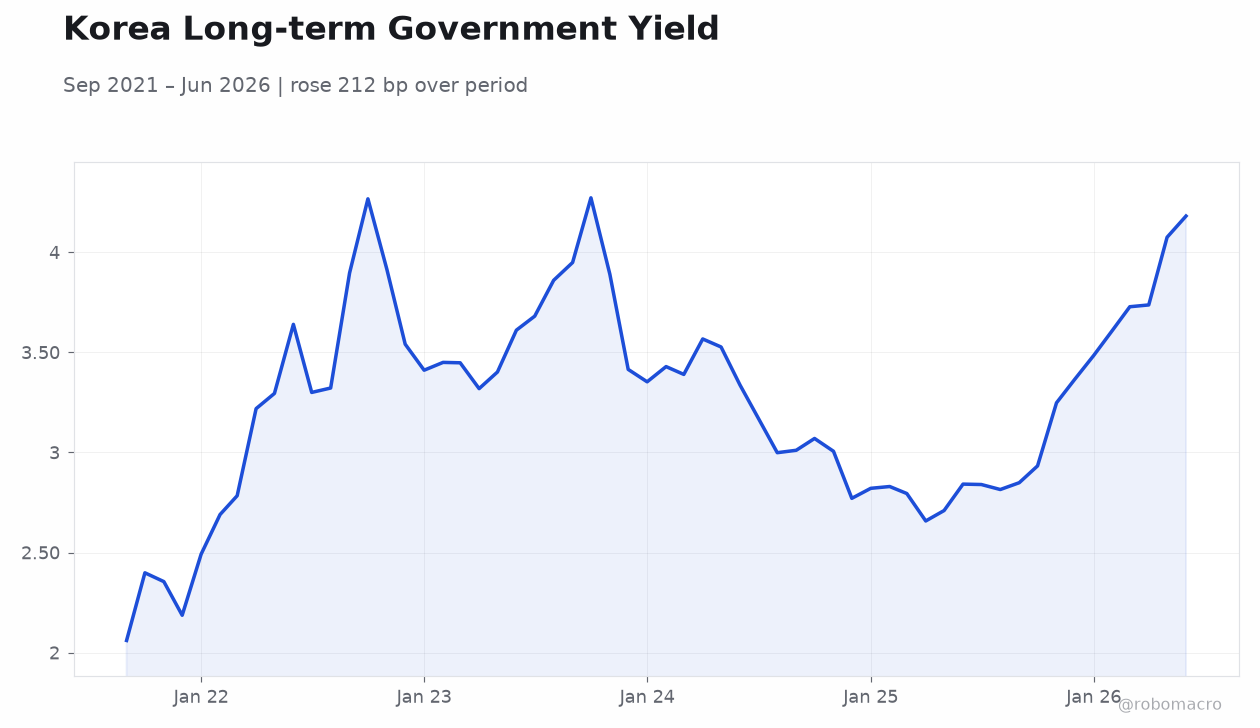
| Korea Long-term Rate | 4.18% | +2.60% |
Prior Economic Events
| Data | Prior | Cons | Actual |
|---|---|---|---|
| No events available | |||
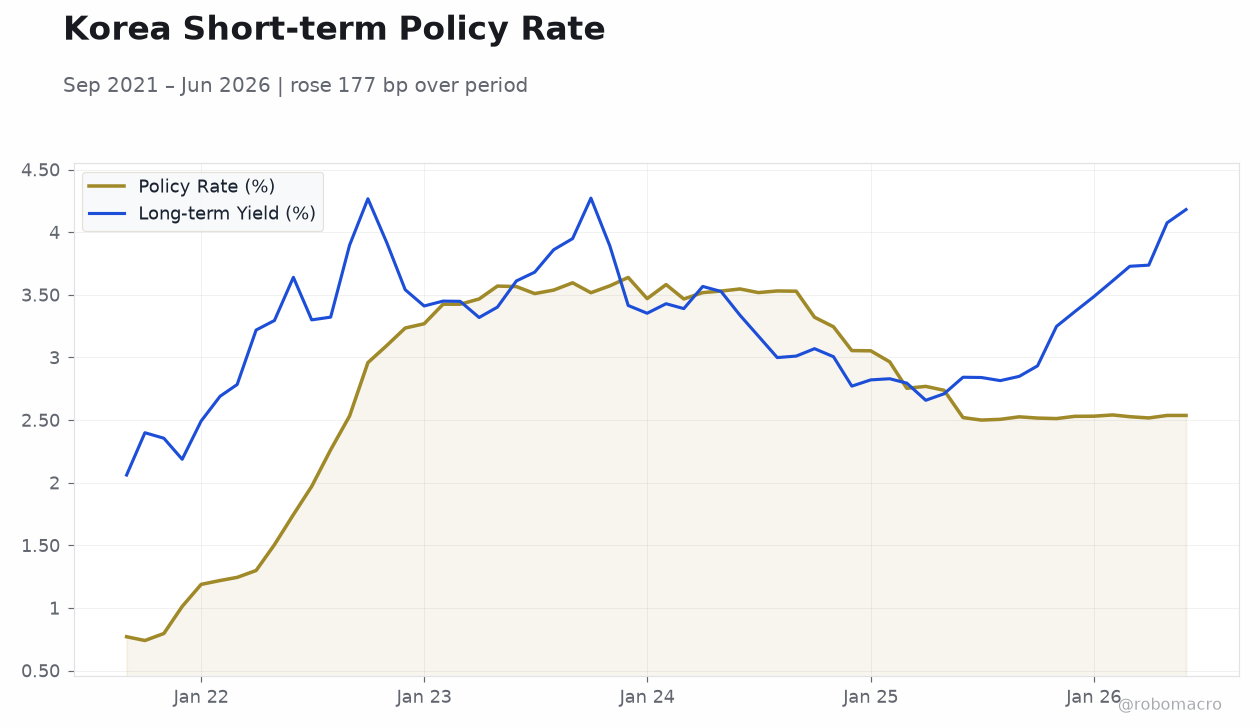 Korea Short-term Policy Rate | Type: macro_line | Policy Rate (%): 2.537 (2026-06-01) | Range: 0.74–3.639 | Trend(5pt): 0.77,3.096,3.47,2.754,2.537 | Long-term Yield (%): 4.181 (2026-06-01) | Range: 2.061–4.272 | Trend(6pt): 2.061,3.915,3.353,2.795,4.075,4.181
Today's Economic Events
| Data | Prior | Cons | Time |
|---|---|---|---|
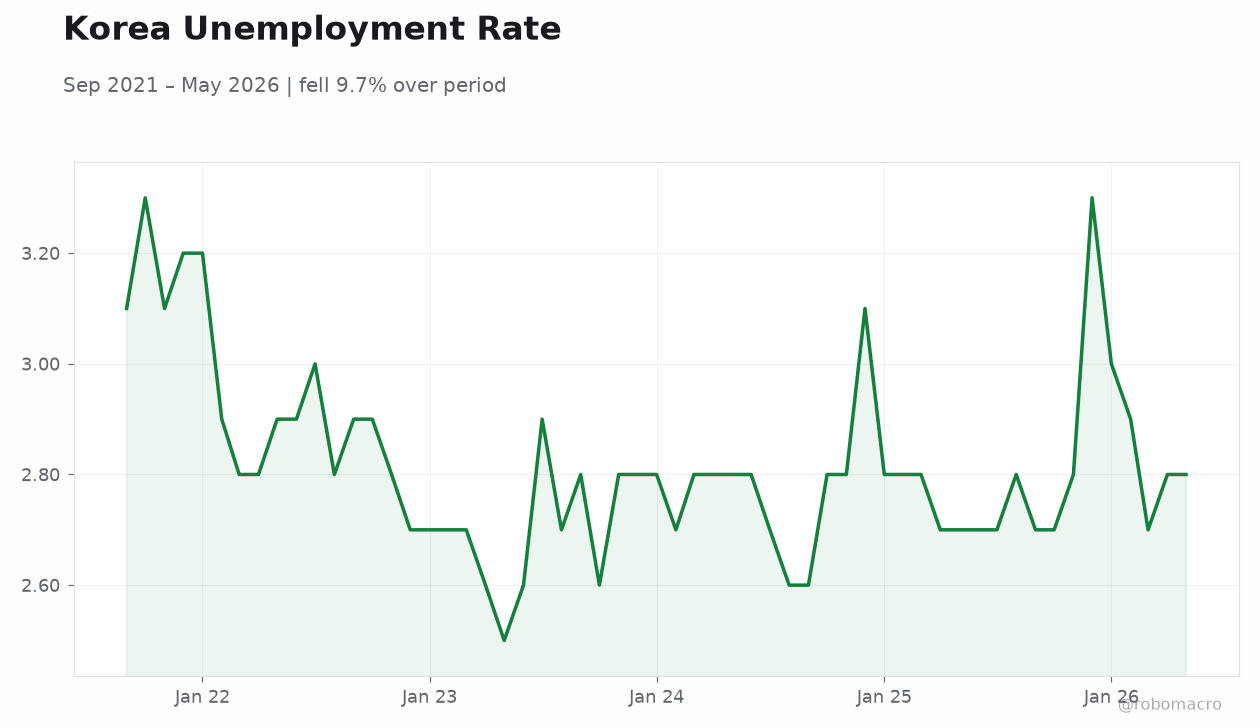
| Unemployment Rate | 2.70 | - | 15:00 |
- KOSDAQ surges 6.97% as Samsung jumps 4.13%
- USD/KRW climbs to 1,411.83 on yield moves
- Unemployment rate release due at 15:00 ET
Yesterday's Recap
Equity markets posted solid gains on August 10 with KOSPI advancing 0.65% to 6,299.66 while KOSDAQ climbed sharply 6.97% to 854.47. Samsung Electronics led the advance, rising 4.13% to 239,500, and SK Hynix added 0.35% to 1,425,000 amid sustained AI-memory demand. The won eased as USD/KRW rose 0.34% to 1,411.83.
Korea's long-term government bond yield increased 2.60% to 4.18% while the short-term rate remained steady at 2.54%. No economic data releases occurred. Brent crude rose 1.35% to 88.90 and gold gained 1.51% to 4,427.70, reflecting broader commodity support.
Market focus stayed on semiconductor export momentum despite mixed global signals. Samsung's $576 billion chip investment program received fresh government backing tied to AI demand, reinforcing export strength in memory chips that underpins Korea's trade position.
The Day Ahead
The Unemployment Rate for July prints at 15:00 ET with the prior reading at 2.7%. Traders will assess any softening in labor conditions that could shape Bank of Korea easing timing. No additional domestic indicators are scheduled.
Semiconductor export trends and global chip demand will continue to drive sentiment. External developments in US data and geopolitical tensions may influence won and equity flows. Investor calls for higher dividends from Samsung and SK Hynix reflect pressure to return cash generated by the current boom, while broader Asian middle powers refine strategies to secure roles in the AI supply chain.
Other Economic Notes
Samsung Electronics advances its $576 billion chip investment program with fresh government support tied to AI demand. Export strength in memory chips underpins Korea's trade position even as equity volatility persists. Broader Asian middle powers refine strategies to secure roles in the AI supply chain.
Investor calls for higher dividends from Samsung and SK Hynix reflect pressure to return cash generated by the current boom. North Korean hacking groups develop AI tools for reconnaissance, raising cybersecurity costs for Korean tech firms.
Global Macro News
The AI-driven rally in emerging-market semiconductors continues to shape flows into Korean equities. <i>↓ p.2</i>