Korea Macro Daily(Beta Mode)
Jobless Rate Edges Up Amid Chip Stock Gains
Market Snapshot
| Asset | Level | Change |
|---|---|---|
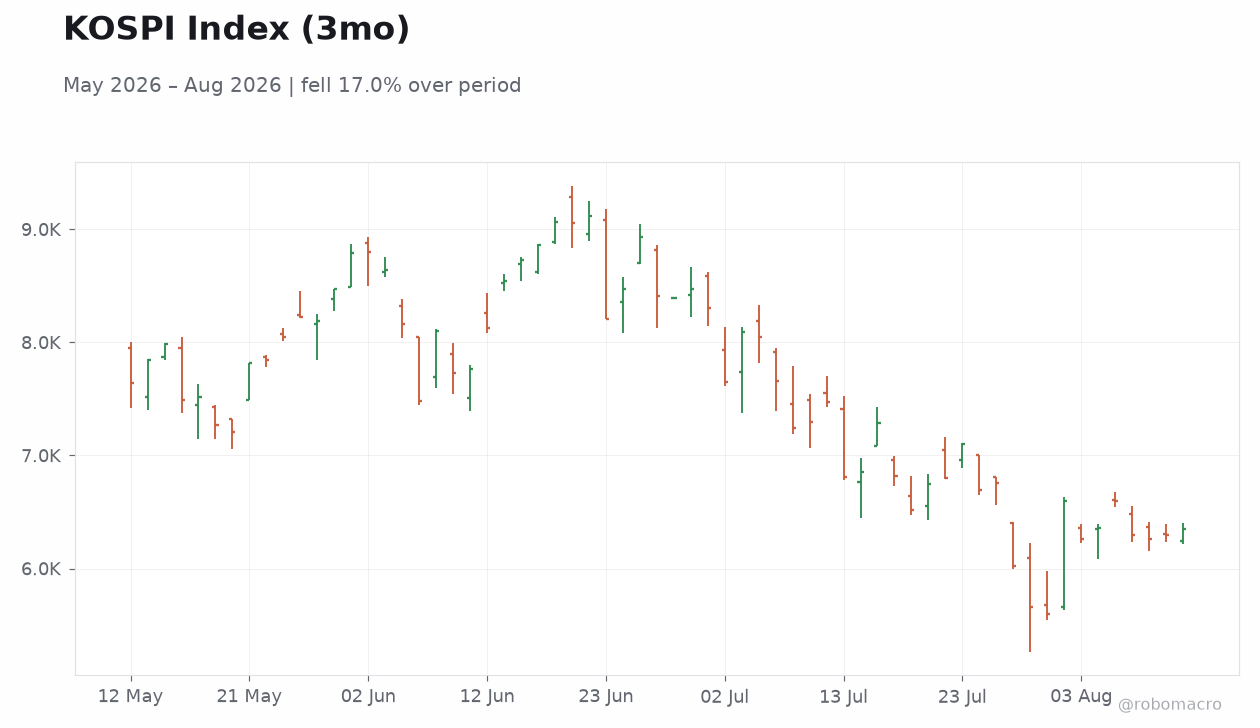
| KOSPI | 6,345.53 | +0.73% |
| KOSDAQ | 857.84 | +0.39% |
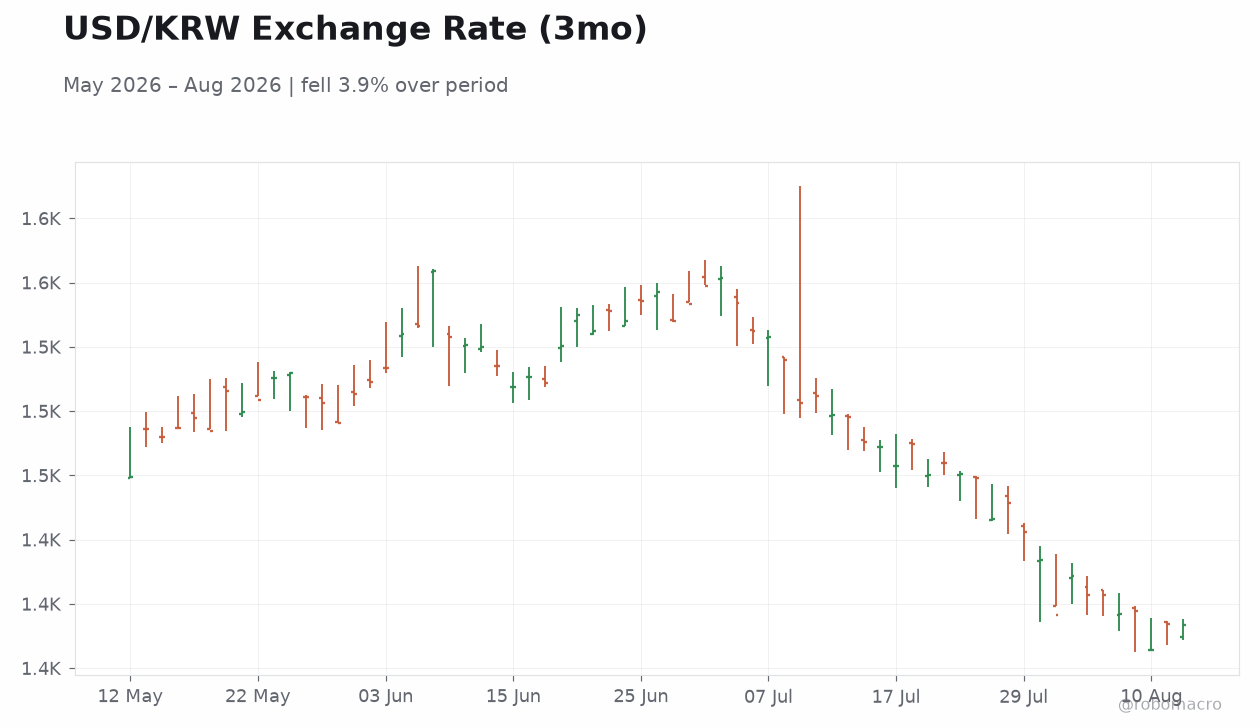
| USD/KRW | 1,417.11 | -0.01% |
| Samsung | 255,500.00 | +6.68% |
| SK Hynix | 1,504,000.00 | +5.54% |
| Brent Crude | 88.40 | -0.57% |
| Gold | 4,468.00 | +1.94% |
| Bitcoin | 63,506.12 | -0.07% |
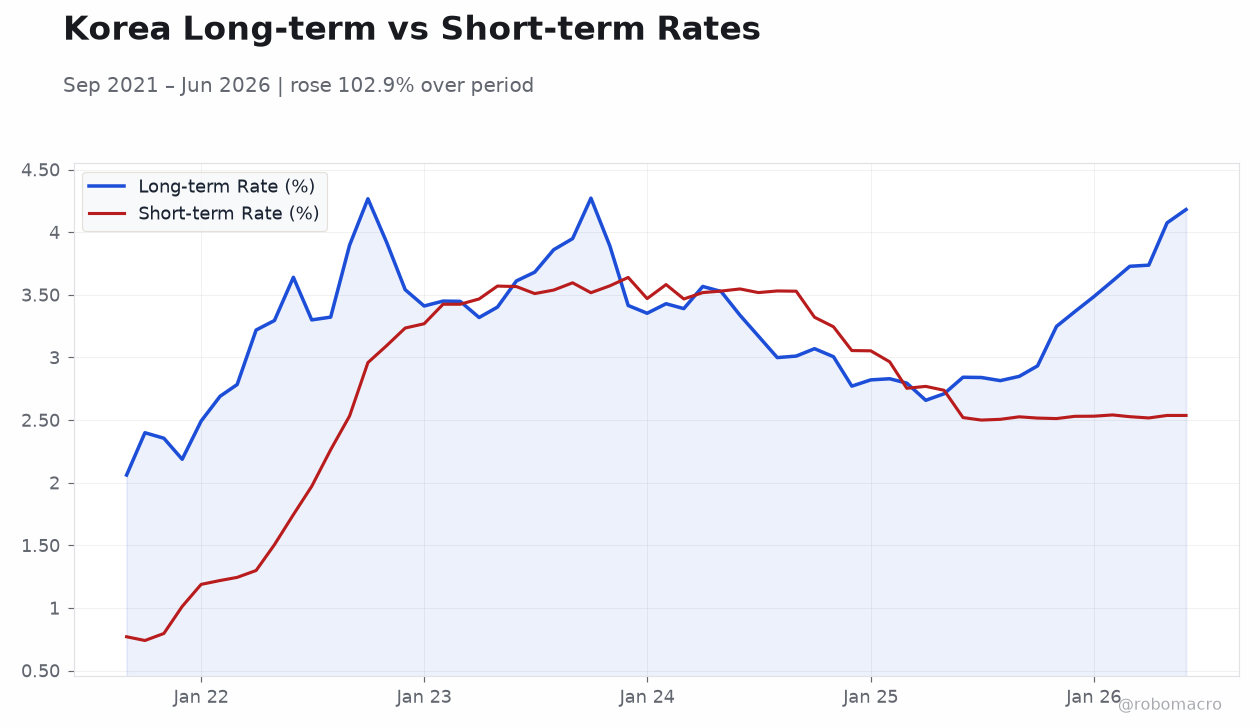
| Korea Short-term Rate | 2.54% | +0.00% |
| Korea Long-term Rate | 4.18% | +2.60% |
Prior Economic Events
| Data | Prior | Cons | Actual |
|---|---|---|---|
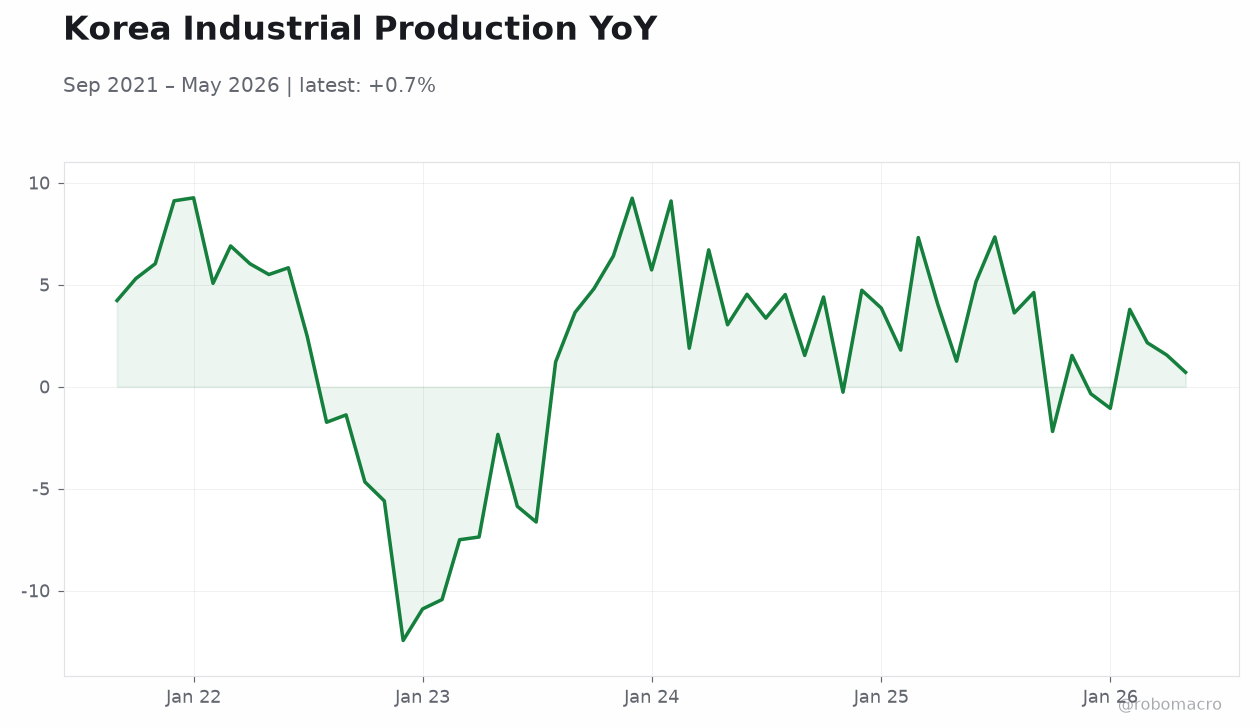
| Unemployment Rate | 2.70 | - | 2.80 |
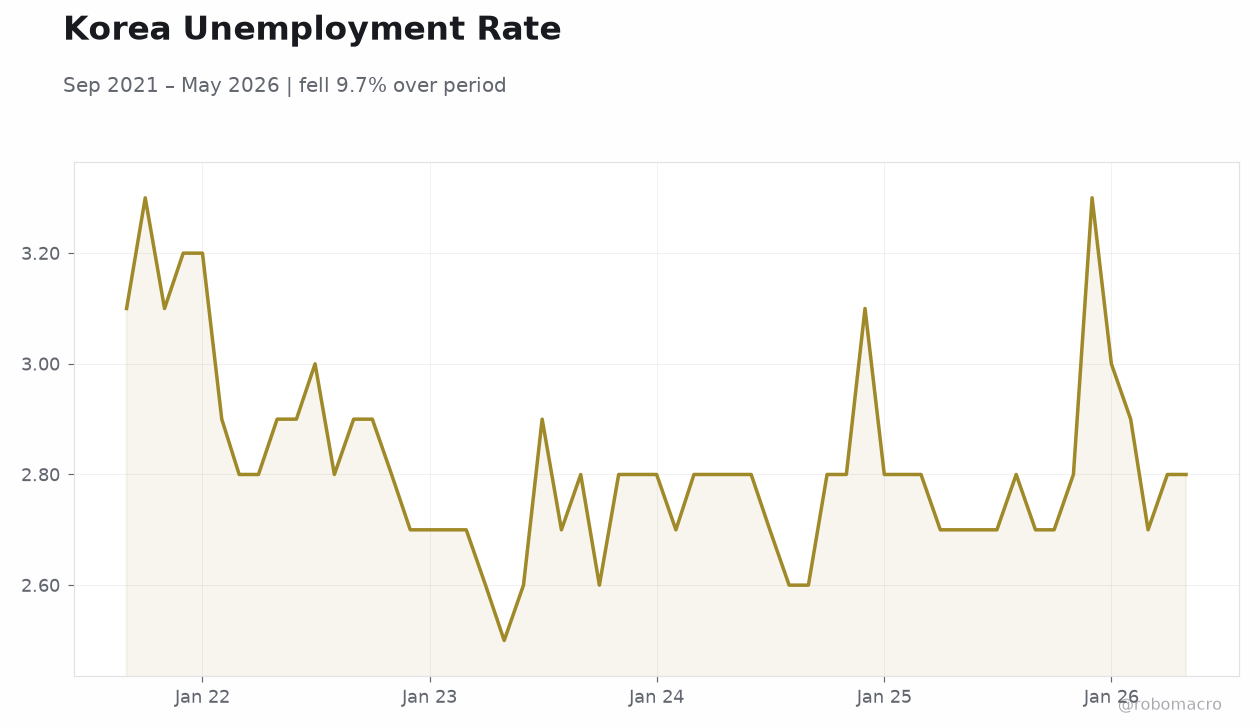 Korea Unemployment Rate | Type: macro_line | Unemployment Rate (%): 2.8 (2026-05-01) | Range: 2.5–3.3 | Trend(5pt): 3.1,2.8,2.8,2.8,2.8
Today's Economic Events
| Data | Prior | Cons | Time |
|---|---|---|---|
| No events available | |||
- Unemployment rate rises to 2.8% from 2.7%
- KOSPI climbs 0.73% on Samsung and SK Hynix gains
- BoK base rate steady at 2.54% with CPI at 2.79%
Yesterday's Recap
South Korea's unemployment rate increased to 2.8% in the latest reading, up from 2.7% previously, reflecting modest labor market softening. Equity benchmarks advanced with the KOSPI rising 0.73% to close at 6,345.53 while the KOSDAQ gained 0.39% to 857.84. Semiconductor names led the move as Samsung jumped 6.68% to 255,500 and SK Hynix added 5.54% to 1,504,000 on sustained AI-related demand.
The won remained nearly unchanged with USD/KRW at 1,417.11. Korea's short-term rate held at 2.54% while the long-term rate climbed 2.60% to 4.18%. Gold advanced 1.94% to 4,468.00 amid broader safe-haven flows, and Brent crude eased 0.57% to 88.40.
Bitcoin traded flat at 63,506.12.
The Day Ahead
Today's domestic calendar contains no scheduled releases after yesterday's unemployment print. Market focus will center on any follow-through momentum in semiconductor exports and equity flows. Global developments in AI infrastructure and chip supply chains are likely to influence KOSPI direction.
The absence of Bank of Korea speakers or minutes leaves attention on incoming trade and inflation indicators. Participants will also track USD/KRW reactions to any shifts in external risk sentiment.
Other Economic Notes
AI-led demand continues to underpin Korea's semiconductor export performance amid elevated global utilization rates. Recent corporate results from Samsung and SK Hynix underscore strong foundry activity above 85% and pressure for higher shareholder returns from cash-rich balance sheets. Broader positioning within the AI value chain positions Korea as a critical supplier of high-bandwidth memory.
Export resilience remains central to growth even as geopolitical frictions and supply-chain fragmentation add volatility.
Global Macro News
The global AI expansion supports emerging-market technology equities, with Korean chipmakers benefiting from data-center semiconductor demand projected to reach over $1 trillion by 2035. Escalating US-Iran tensions contribute to energy price swings and lift gold, indirectly affecting Korea's import costs. Discussions of coordinated currency intervention highlight risks to the won from persistent trade imbalances.
<i>↓ p.2</i>