Korea Macro Daily(Beta Mode)
KOSPI Enters Bull Market on AI Chip Rally
Market Snapshot
| Asset | Level | Change |
|---|---|---|
| KOSPI | 6,579.04 | +3.68% |
| KOSDAQ | 858.91 | +0.12% |
| USD/KRW | 1,417.80 | +0.40% |
| Samsung | 268,000.00 | +4.89% |
| SK Hynix | 1,593,000.00 | +5.92% |
| Brent Crude | 86.87 | -2.37% |
| Gold | 4,406.20 | -0.06% |
| Bitcoin | 63,398.79 | -0.01% |
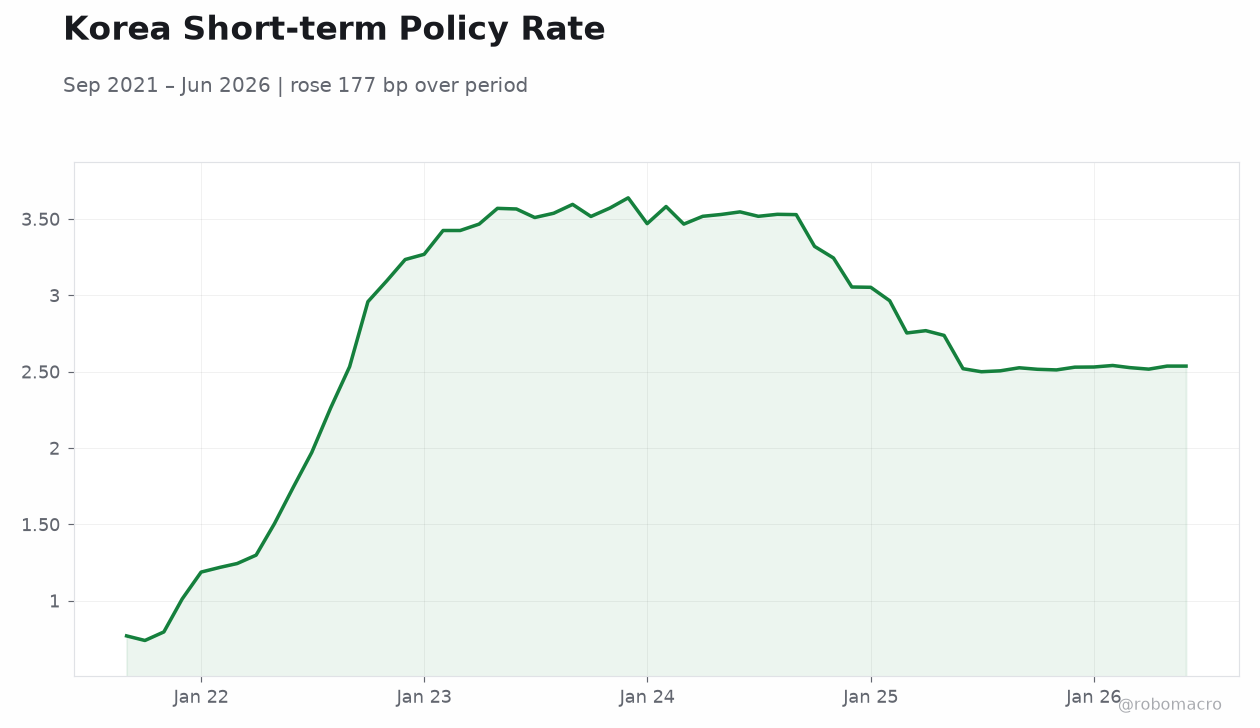
| Korea Short-term Rate | 2.54% | +0.00% |
| Korea Long-term Rate | 4.18% | +2.60% |
Prior Economic Events
| Data | Prior | Cons | Actual |
|---|---|---|---|
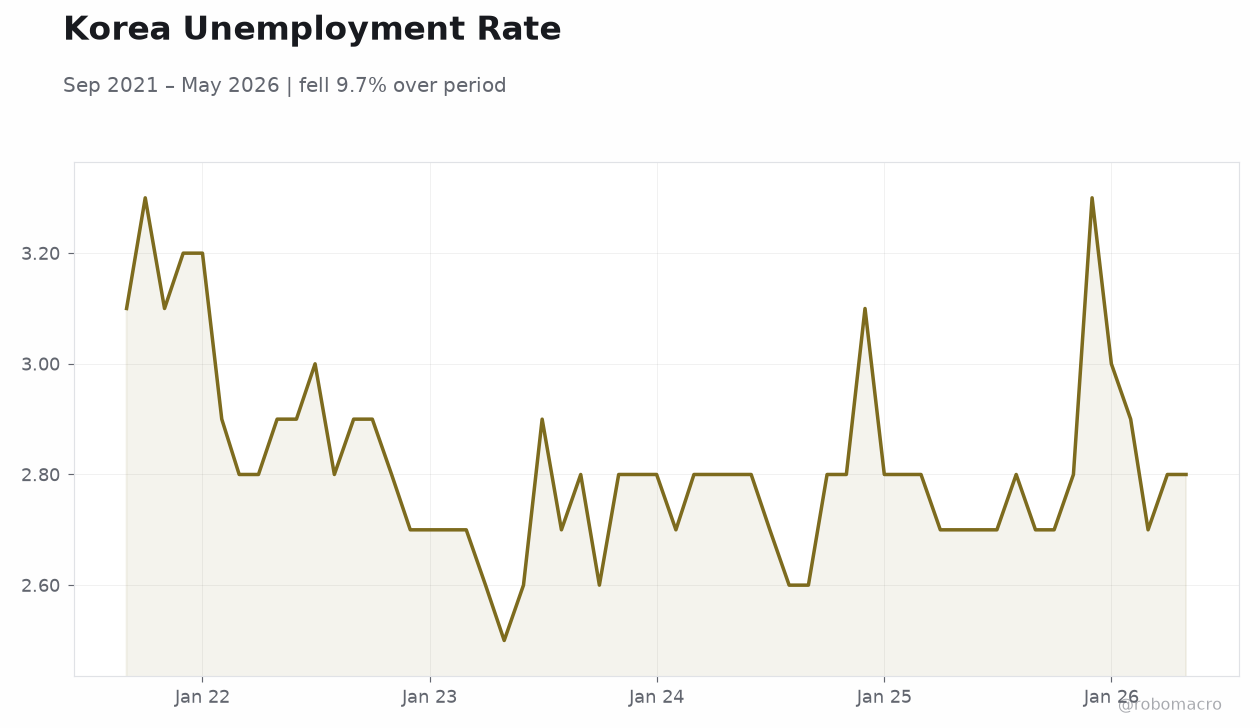
| Unemployment Rate | 2.70 | - | 2.80 |
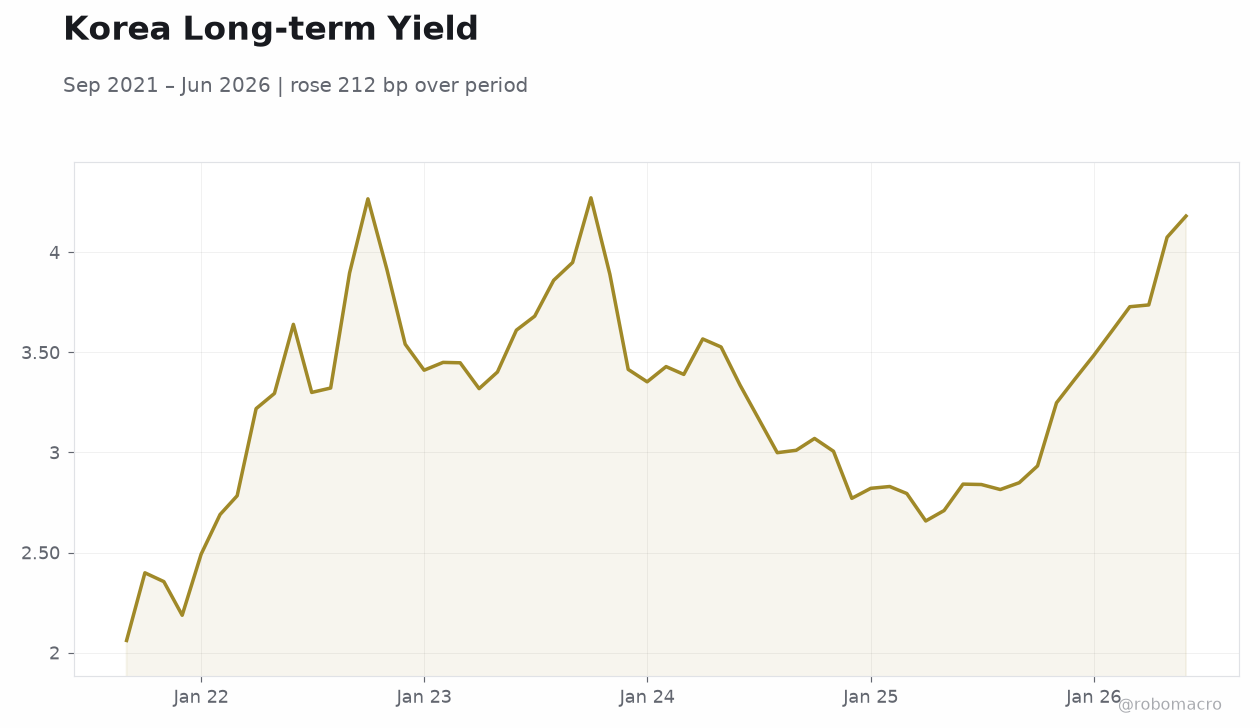 Korea Long-term Yield | Type: macro_line | 10Y Yield (%): 4.181 (2026-06-01) | Range: 2.061–4.272 | Trend(6pt): 2.061,3.915,3.353,2.795,4.075,4.181
Today's Economic Events
| Data | Prior | Cons | Time |
|---|---|---|---|
| No events available | |||
- Unemployment rises to 2.8% from 2.7% in July
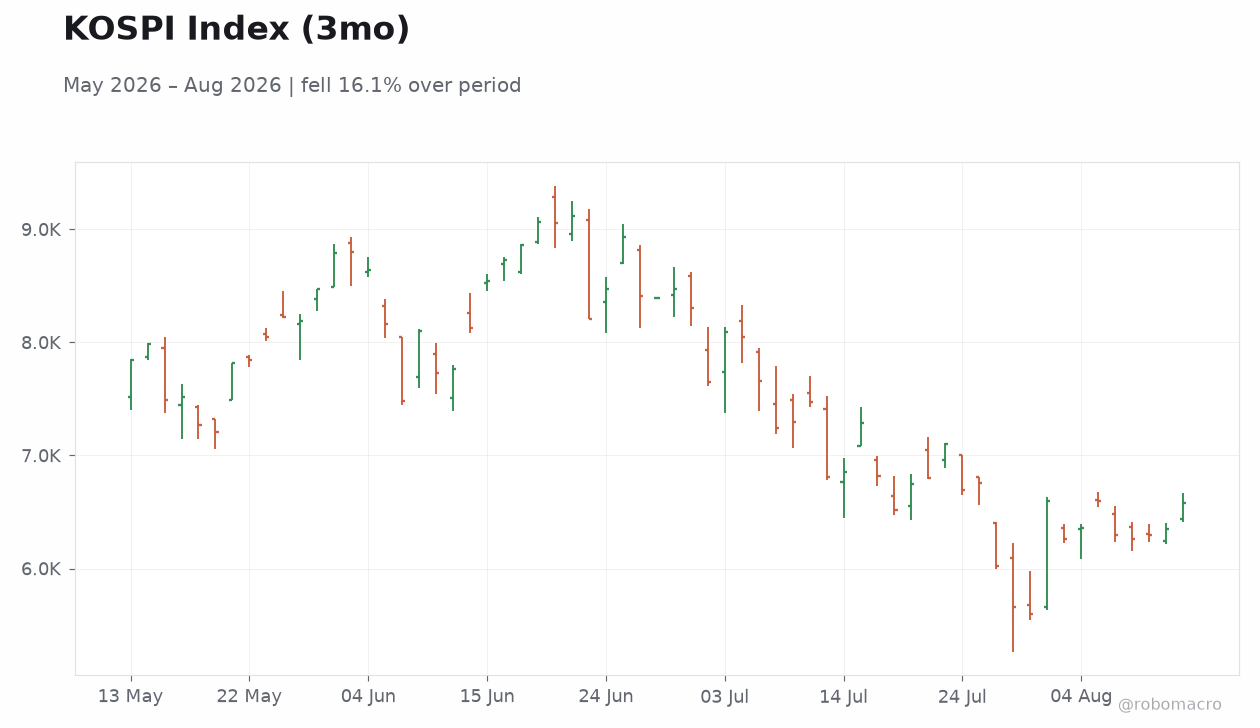
- KOSPI jumps 3.68% to 6,579.04 on semiconductor gains
- BoK holds base rate at 2.54% as CPI prints 2.79% y/y
Yesterday's Recap
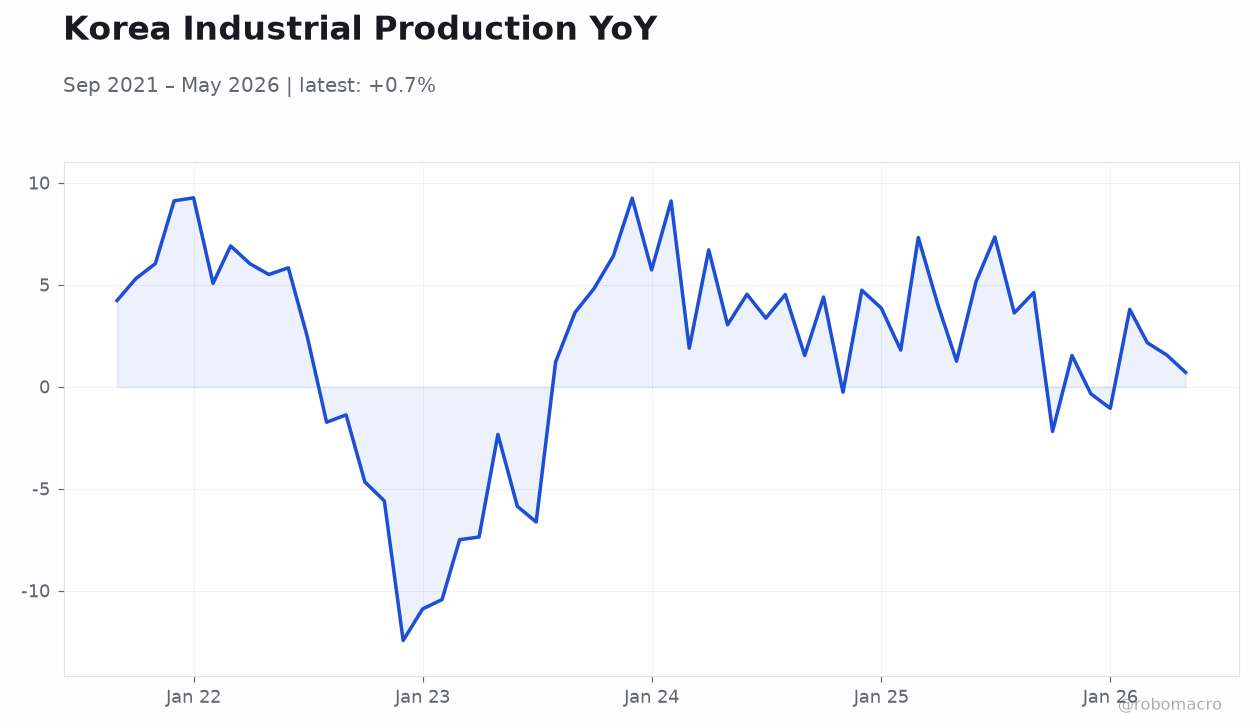
South Korea’s unemployment rate edged higher to 2.8% in July, reflecting modest labor-market softening amid export strength. Equity markets rallied sharply, with the KOSPI advancing 3.68% to 6,579.04 and entering bull-market territory on renewed AI demand. Samsung Electronics climbed 4.89% to 268,000 won while SK Hynix surged 5.92% to 1,593,000 won on robust memory-bit shipment data.
The won weakened 0.40% to 1,417.80 per dollar, and the 10-year Korea Treasury bond yield rose 2.60% to 4.18%. Incheon International Airport recorded 38.39 million international passengers in the first half, becoming the world’s busiest for global traffic as Middle East conflict diverted flights from regional hubs. SK Hynix confirmed a $720 billion multi-year expansion of high-bandwidth memory capacity to meet sustained AI chip demand.
Brent crude fell 2.37% to 86.87 while gold held near 4,406.20.
The Day Ahead
No major data releases or Bank of Korea events are scheduled for August 13. Markets will monitor weekly export flash estimates and any regional branch economic reports for incremental signals on trade momentum. Investor focus remains on semiconductor order flows and global risk sentiment.
The absence of MPC commentary keeps rate expectations anchored to a prolonged hold. Equity positioning will likely track U.S. tech earnings and AI supply-chain updates.
KOSDAQ at 858.91 and short-term rates steady at 2.54% provide a stable backdrop for positioning.
Other Economic Notes
Export-led growth continues to underpin the Korean economy, with July trade data showing double-digit gains in semiconductor shipments. The combination of 2.79% CPI and a 2.54% policy rate leaves real rates slightly negative, supporting corporate investment in capacity expansion. Shipbuilding new orders reached the strongest monthly level since March, adding to the positive external demand picture.
Pressure from shareholders for higher dividends at Samsung and SK Hynix reflects improving free-cash-flow generation from the AI cycle. Short-term rates unchanged at 2.54% reinforce the steady policy environment.