Korea Macro Daily(Beta Mode)
KOSPI Rises as Won Weakens, Testing BoK
Market Snapshot
| Asset | Level | Change |
|---|---|---|
| KOSPI | 6,977.94 | +2.42% |
| KOSDAQ | 864.65 | +0.38% |
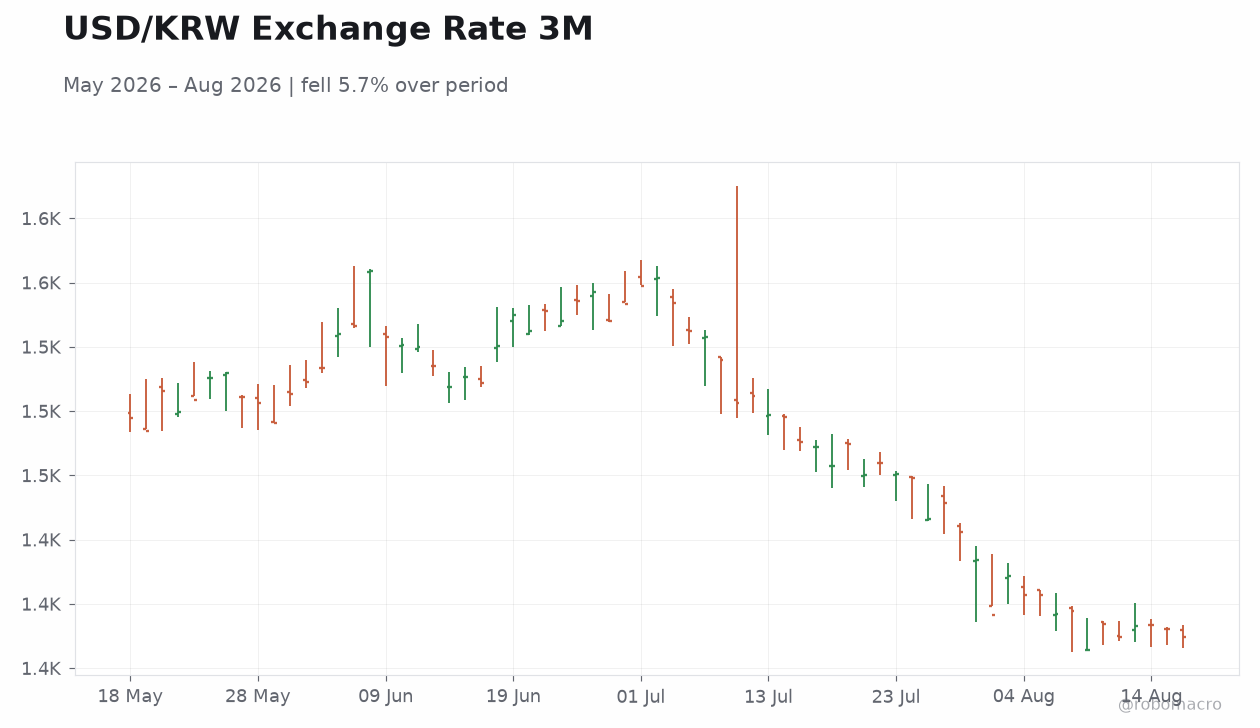
| USD/KRW | 1,412.77 | -0.18% |
| Samsung | 268,500.00 | -2.19% |
| SK Hynix | 1,662,000.00 | +1.03% |
| Brent Crude | 91.26 | +0.43% |
| Gold | 4,388.60 | -0.66% |
| Bitcoin | 64,576.07 | +0.11% |
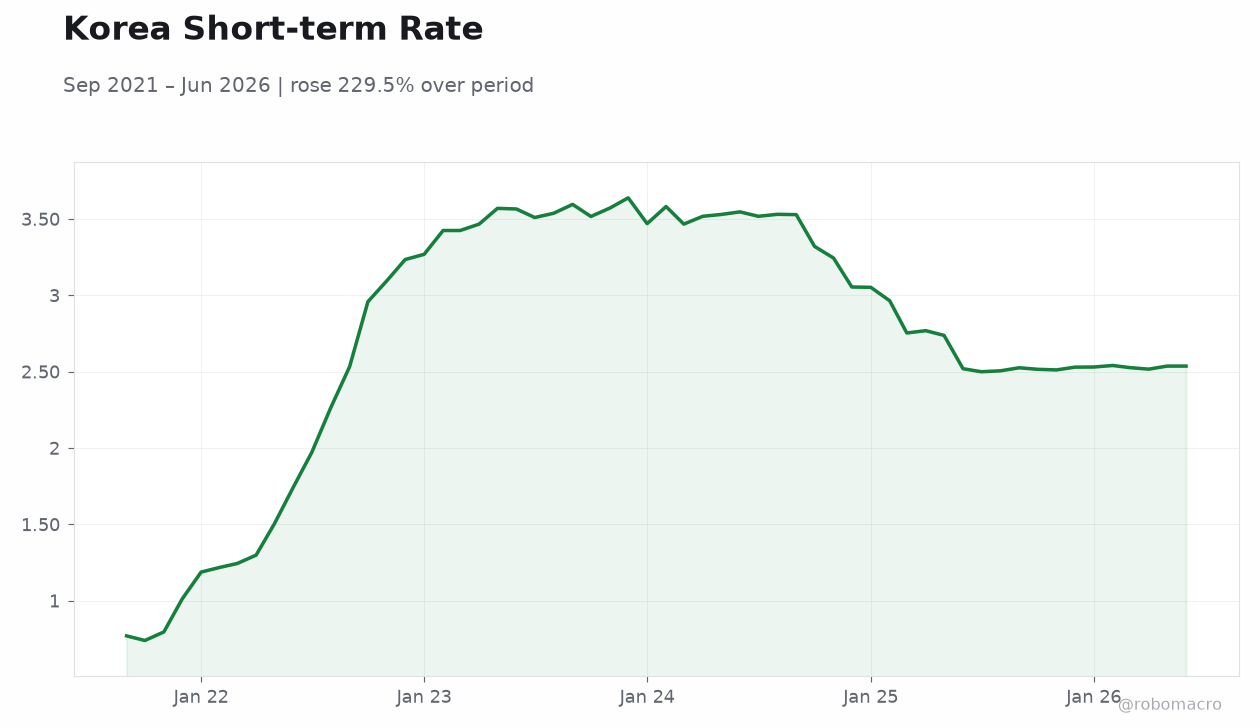
| Korea Short-term Rate | 2.54% | +0.00% |
| Korea Long-term Rate | 4.18% | +2.60% |
Prior Economic Events
| Data | Prior | Cons | Actual |
|---|---|---|---|
| No events available | |||
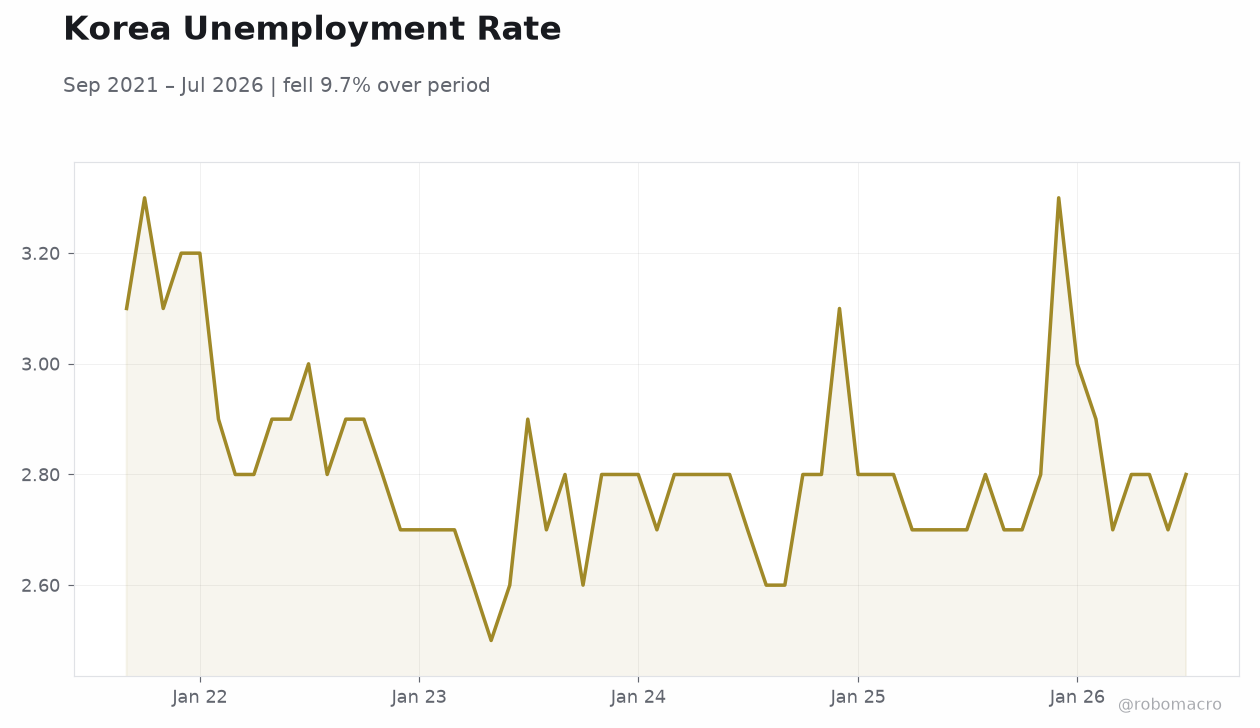 Korea Unemployment Rate | Type: macro_line | Unemployment %: 2.8 (2026-07-01) | Range: 2.5–3.3 | Trend(5pt): 3.1,2.8,2.8,2.8,2.8
Today's Economic Events
| Data | Prior | Cons | Time |
|---|---|---|---|
| No events available | |||
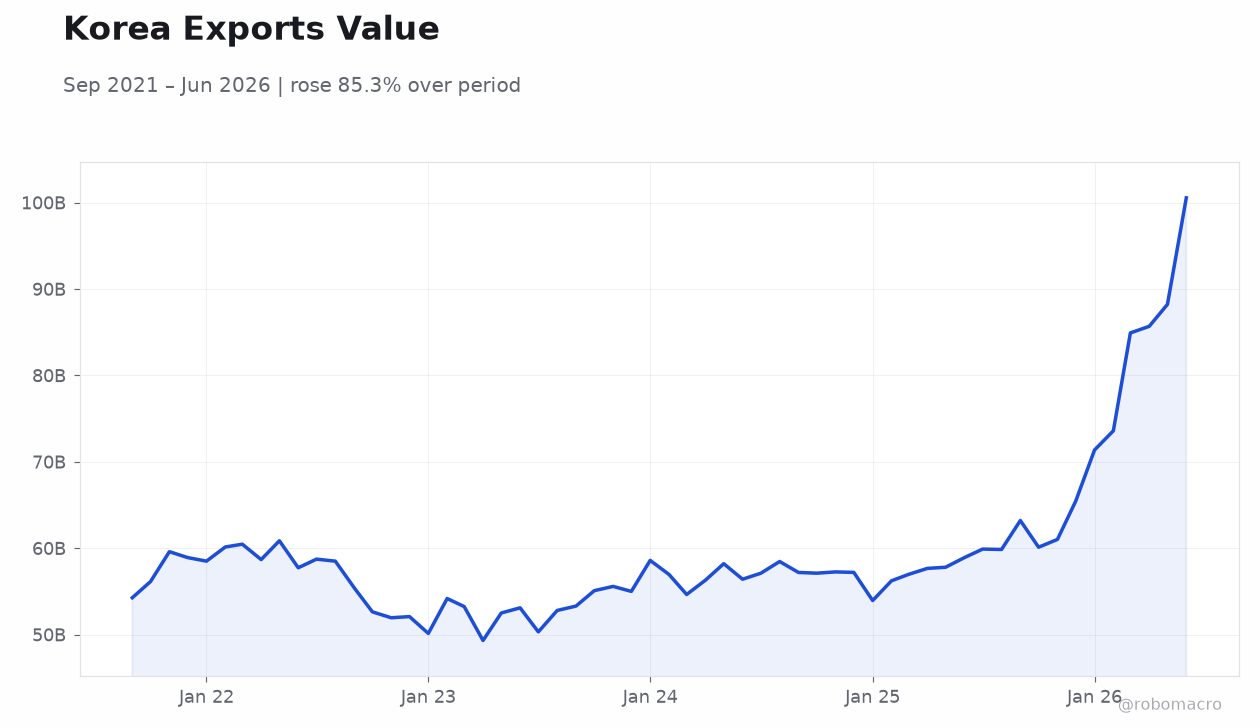
- KOSPI rose 2.42% to 6,977.94 while the won eased to 1,411.80 per dollar, easing export pressures but complicating BoK policy.
- SK Hynix gained 1.03% on AI demand while Samsung fell 2.19%, highlighting semiconductor divergence amid high US yields.
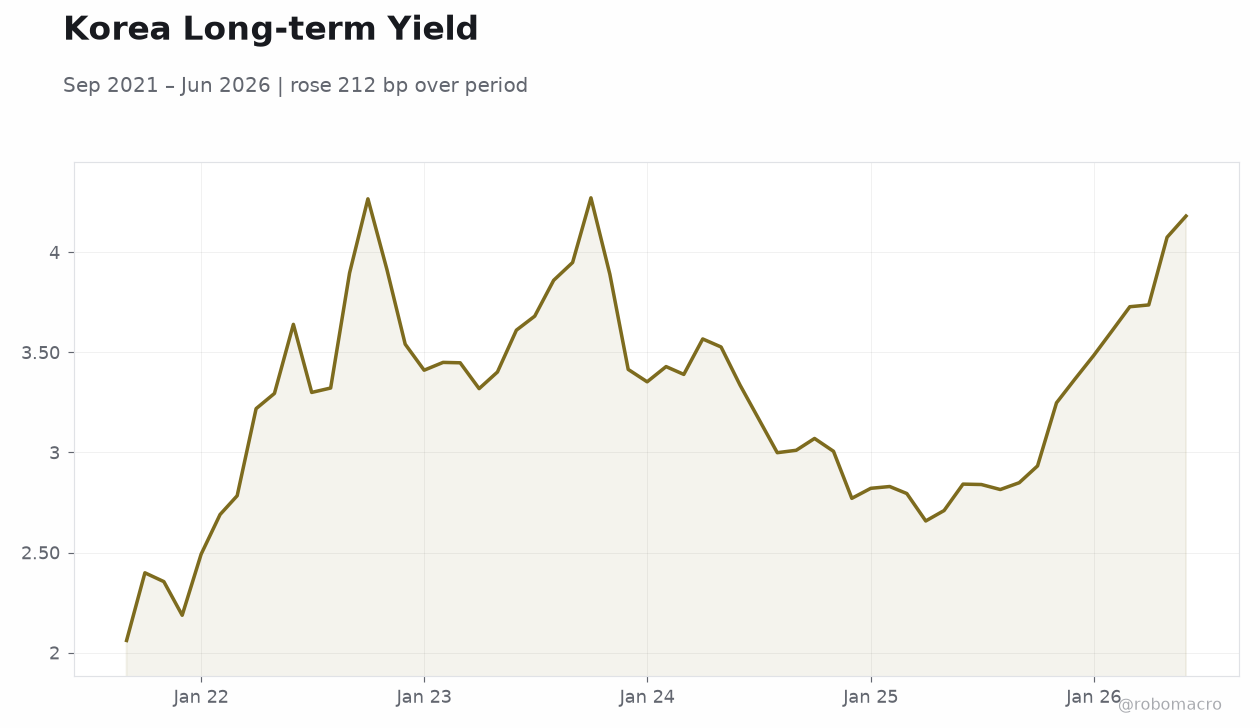
- Long-term Korean yields climbed 2.60% to 4.18% as fixed-rate mortgage costs rose, pressuring household refinancing.
Yesterday's Recap
Korean markets showed mixed equity performance with no major data releases. The KOSPI advanced 2.42% to close at 6,977.94 as institutions and individuals reduced holdings yet broader participation lifted 860 stocks. KOSDAQ edged up 0.38% to 864.65.
The won closed at 1,411.80 per dollar, down 0.18% on the day per market data, after reports highlighted potential GDP and GDI drags from prior strength. SK Hynix rose 1.03% to 1,662,000 won on sustained AI chip momentum while Samsung Electronics declined 2.19% to 268,500 won. Long-term government bond yields increased 2.60% to 4.18%, pushing fixed-rate mortgage renewal costs higher by 0.5 percentage points.
Brent crude edged up 0.43% to 91.26 dollars, adding mild imported inflation pressure.
The Day Ahead
With the economic calendar empty through August 19, attention turns to external drivers and BoK signals. Traders will monitor US Treasury yields and any shifts in Federal Reserve rate expectations that influence won flows. Export-oriented sectors remain sensitive to copper supply developments after the Export-Import Bank extended one billion dollars to Glencore.
Household deposit concentration at major banks and potential 60 trillion won extra tax inflows to the Future Fund could affect liquidity conditions. Mortgage cost increases may weigh on consumption data in coming months. Markets await any BoK commentary on recent won volatility and its implications for inflation targeting.
Other Economic Notes
Korea's export-driven growth model faces headwinds from currency swings and global yield movements. The won's recent path has drawn Barclays warnings that further appreciation could trim both GDP and GDI readings. Domestic bond markets received support from M&G investors questioning whether rate-hike fears are overstated.
State auditor findings on up to 30 billion won wasted on Export-Import Bank FX bond fees highlight governance risks in public financial institutions. Household rolling of 269.7 trillion won in deposits last year underscores liquidity abundance that could fuel further property or equity exposure if mortgage costs stabilize.