Korea Macro Daily(Beta Mode)
BoK Weighs Back-to-Back Rate Hike
Market Snapshot
| Asset | Level | Change |
|---|---|---|
| KOSPI | 6,742.74 | +0.68% |
| KOSDAQ | 827.15 | +1.70% |
| USD/KRW | 1,384.43 | +0.27% |
| Samsung | 261,500.00 | +1.75% |
| SK Hynix | 1,688,000.00 | +0.60% |
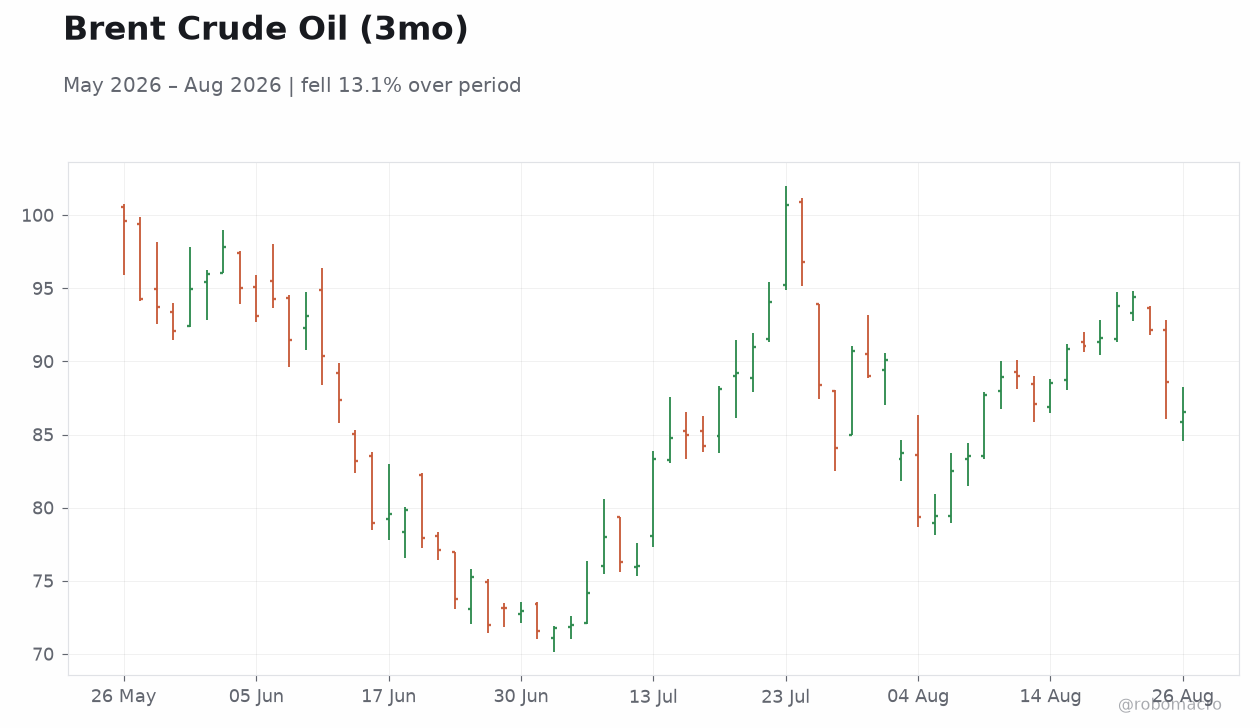
| Brent Crude | 86.52 | -2.33% |
| Gold | 4,648.30 | +0.22% |
| Bitcoin | 78,514.96 | -0.06% |
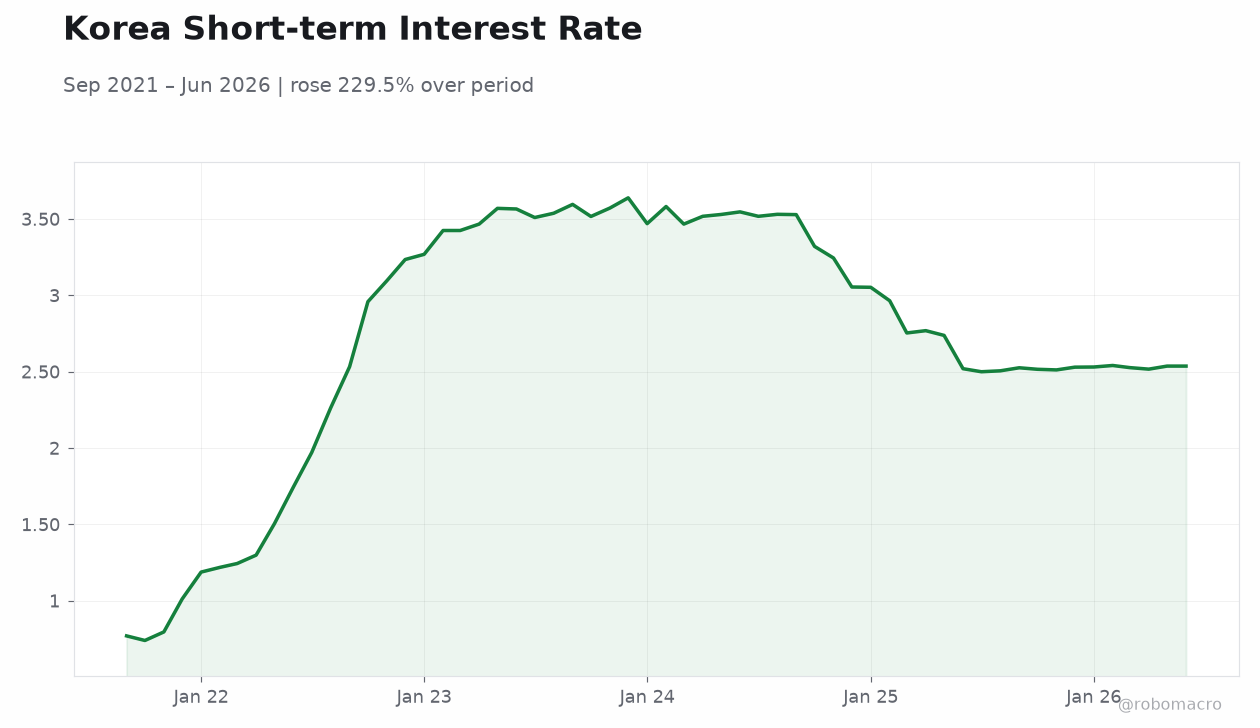
| Korea Short-term Rate | 2.54% | +0.00% |
| Korea Long-term Rate | 4.18% | +2.60% |
Prior Economic Events
| Data | Prior | Cons | Actual |
|---|---|---|---|
| Consumer Confidence Index | 106.80 | - | 104.50 |
| Business Confidence | 82 | - | 81 |
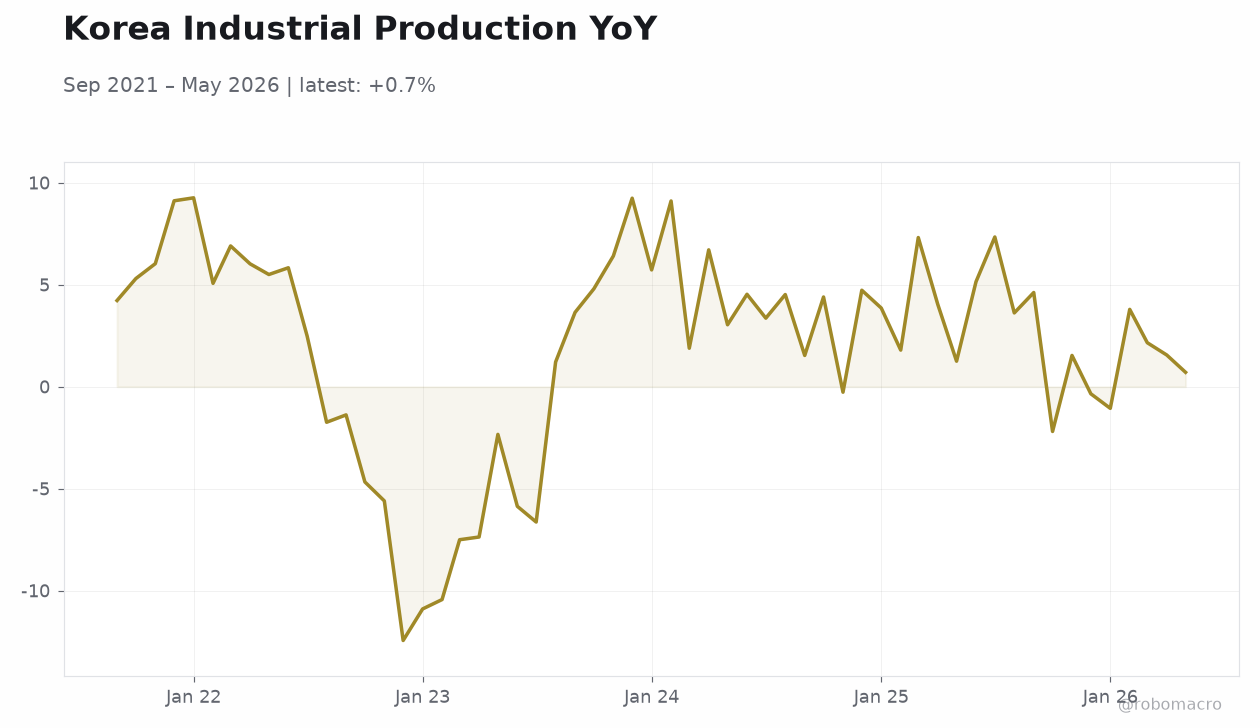 Korea Industrial Production YoY | Type: macro_line | Production YoY %: 0.7061 (2026-05-01) | Range: -12.45–9.263 | Trend(5pt): 4.227,-5.601,5.728,7.315,0.7061
Today's Economic Events
| Data | Prior | Cons | Time |
|---|---|---|---|
| Central Bank Interest Rate Decision | 2.75 | 3 | 17:00 |
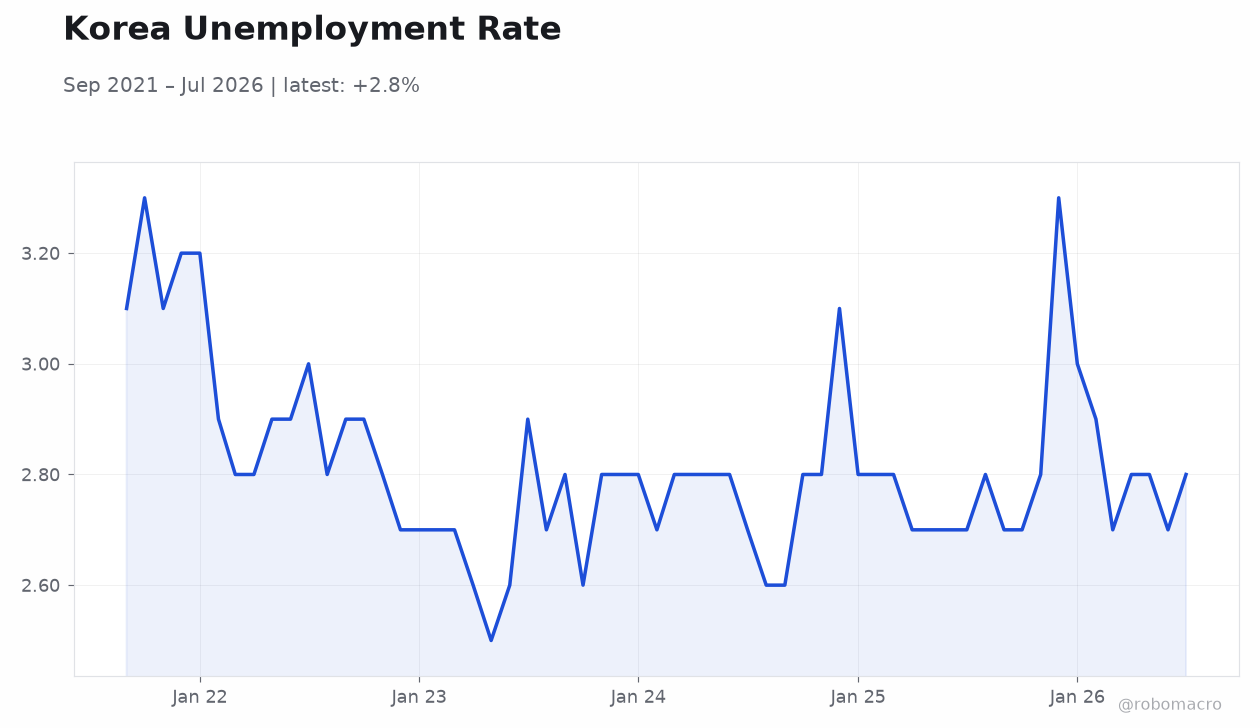
- Consumer confidence slips to 104.5 while business sentiment falls to 81
- KOSPI gains 0.68% and KOSDAQ rises 1.70% on semiconductor strength
- BoK decision today splits economists 18-17 on possible back-to-back hike
Yesterday's Recap
South Korea released weaker-than-expected confidence readings on August 25. The Consumer Confidence Index dropped to 104.5 from 106.8, while Business Confidence eased to 81 from 82. Equity markets advanced despite the soft data, with KOSPI closing at 6,742.74, up 0.68 percent, and KOSDAQ rising 1.70 percent to 827.15.
Samsung shares climbed 1.75 percent to 261,500 won and SK Hynix gained 0.60 percent to 1,688,000 won, supported by corporate buying that offset foreign and retail selling. USD/KRW edged 0.27 percent higher to 1,384.43. The Korea long-term rate increased 2.60 percent to 4.18 percent while the short-term rate held steady at 2.54 percent.
Brent crude fell 2.33 percent to 86.52 dollars per barrel. Gold rose 0.22 percent to 4,648.30 dollars per ounce and Bitcoin slipped 0.06 percent to 78,514.96 dollars.
The Day Ahead
Markets focus on the Bank of Korea’s interest-rate decision scheduled for 17:00 ET today. The committee will weigh incoming inflation data showing CPI at 2.79 percent year-over-year against recent confidence weakness. No other major Korean releases appear on the calendar for August 26.
Traders will monitor any accompanying statement for signals on whether the bank intends to deliver a second consecutive hike. Global cues from US data later in the week may also influence won and KTB pricing. Semiconductor order visibility into 2027 remains a supporting factor for equities.
Other Economic Notes
Korean banks continue to channel capital toward technology sectors. Woori Bank committed 1 trillion won to chips and AI projects, while a separate joint facility targets 720 million dollars for semiconductors, physical AI and data centres. TikTok’s projected contribution of over 40 trillion won to the economy by 2030 adds another growth channel.
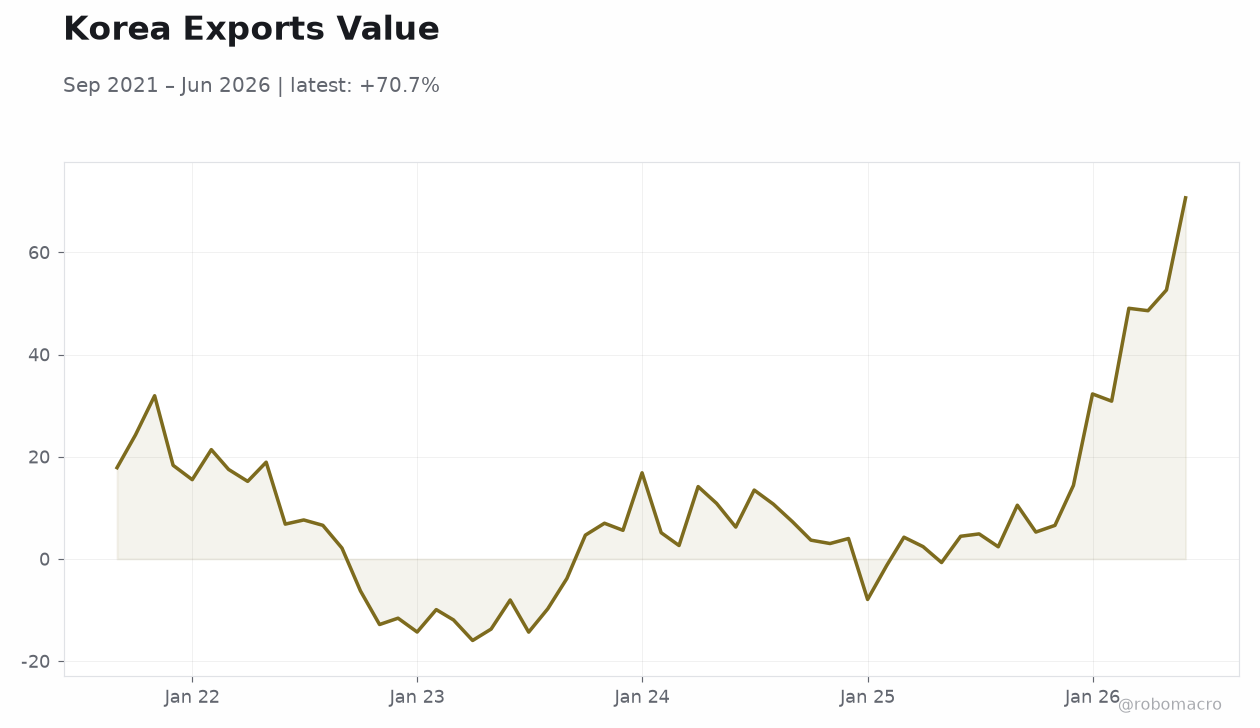
Export-oriented manufacturers still face mixed signals, with semiconductor shipments holding up better than autos. Corporate earnings for KOSPI ex-financials showed solid profit expansion in the latest reporting season.