Korea Macro Daily(Beta Mode)
BoK Hikes Rate to 3% Amid Inflation, Housing Risks
Market Snapshot
| Asset | Level | Change |
|---|---|---|
| KOSPI | 6,808.21 | +0.97% |
| KOSDAQ | 826.87 | -0.03% |
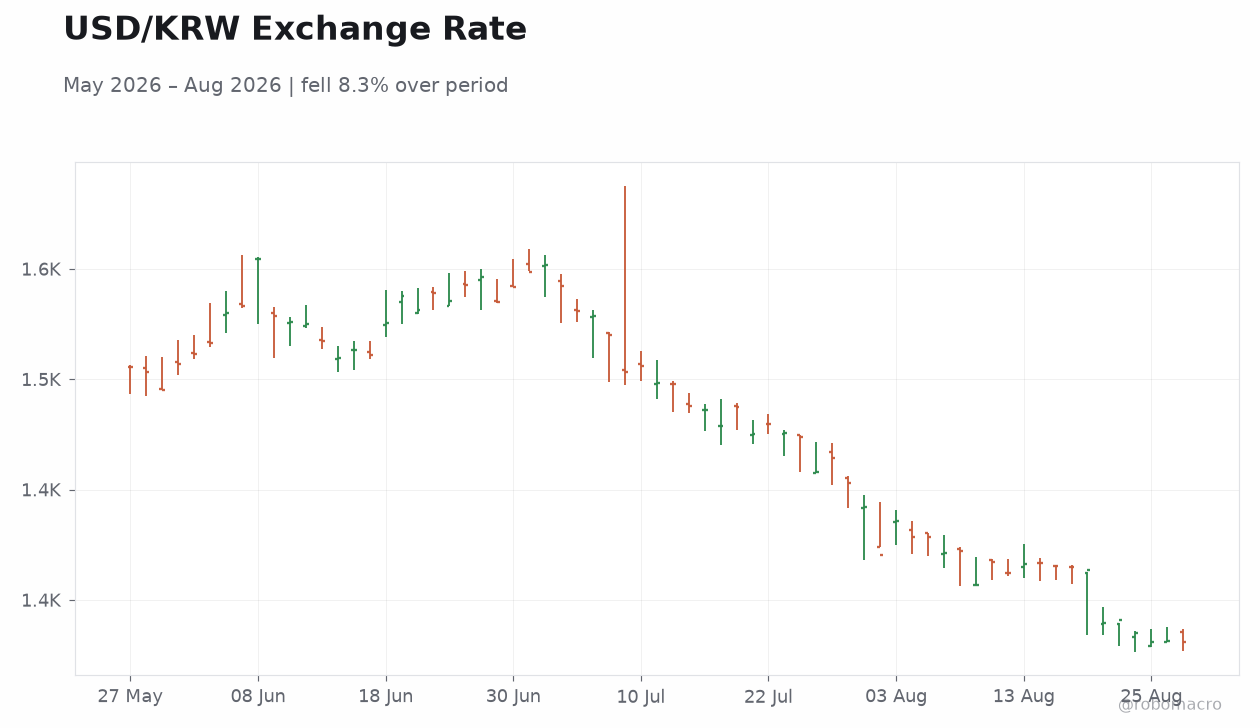
| USD/KRW | 1,381.13 | -0.03% |
| Samsung | 266,000.00 | +1.72% |
| SK Hynix | 1,730,000.00 | +2.49% |
| Brent Crude | 88.54 | +0.80% |
| Gold | 4,654.50 | +1.22% |
| Bitcoin | 80,102.92 | +1.36% |
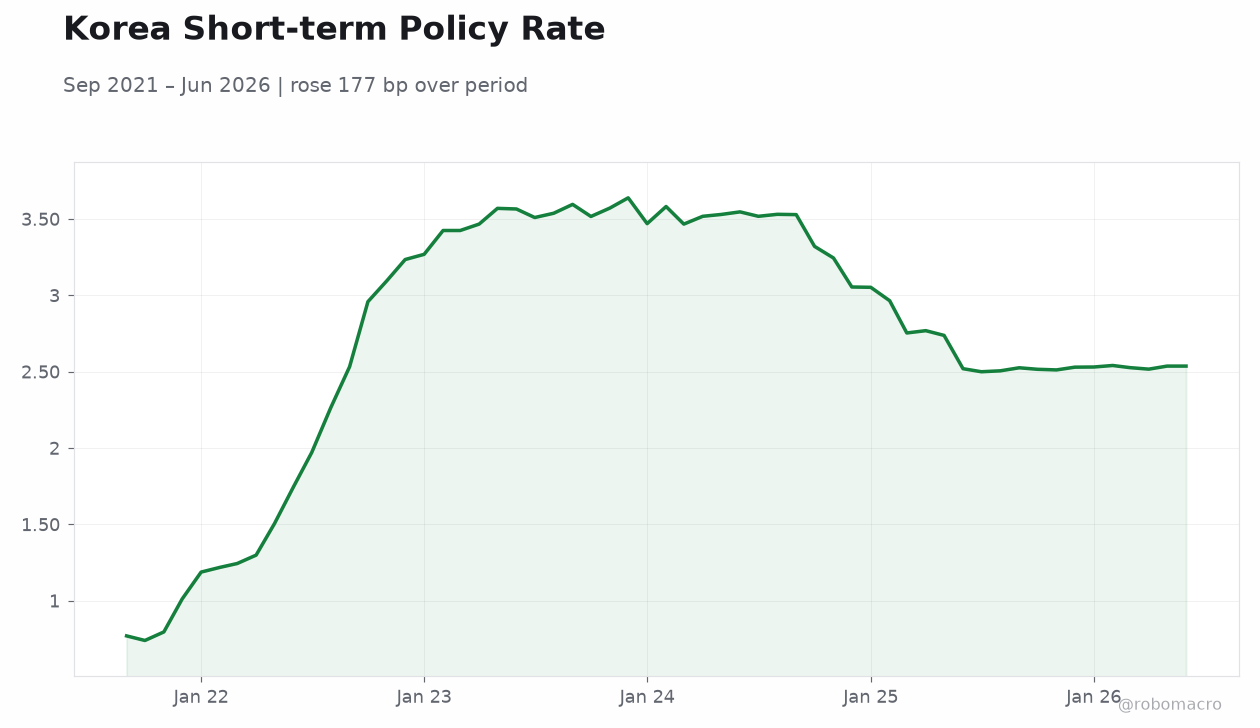
| Korea Short-term Rate | 2.54% | +0.00% |
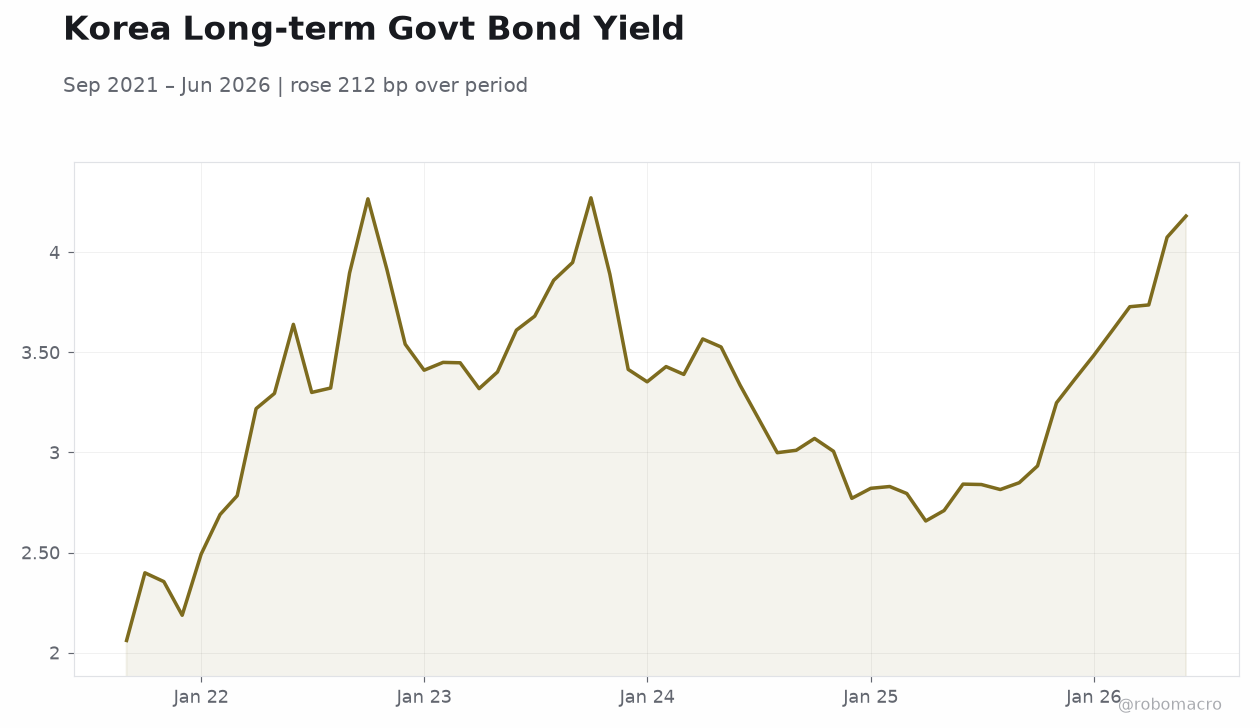
| Korea Long-term Rate | 4.18% | +2.60% |
Prior Economic Events
| Data | Prior | Cons | Actual |
|---|---|---|---|
| Central Bank Interest Rate Decision | 2.75 | 3 | 3 |
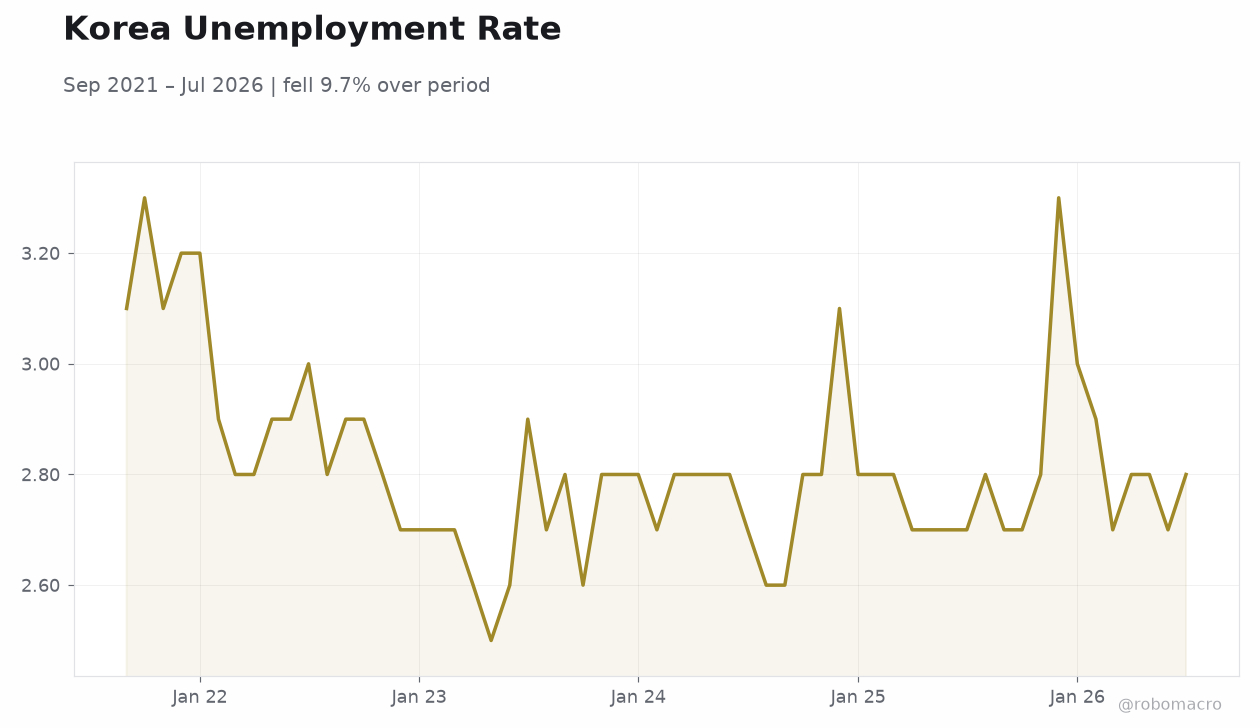 Korea Unemployment Rate | Type: macro_line | Unemp Rate %: 2.8 (2026-07-01) | Range: 2.5–3.3 | Trend(5pt): 3.1,2.8,2.8,2.8,2.8
Today's Economic Events
| Data | Prior | Cons | Time |
|---|---|---|---|
| Tuesday (2026-09-01) | |||
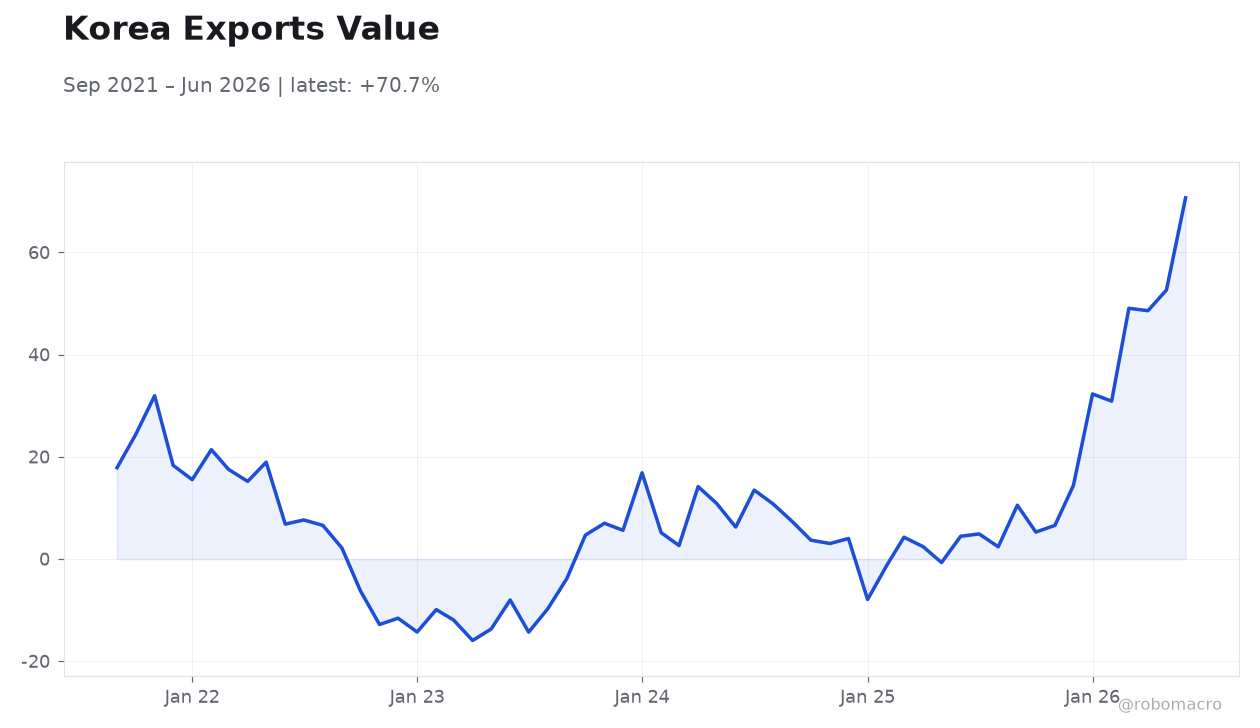
| Exports Year-over-Year | 62.80 | - | 20:00 |
| S&P Global Manufacturing PMI Index | 53.10 | - | 20:30 |
| Inflation Rate Year-over-Year | 2.80 | - | 19:00 |
- Bank of Korea raised the policy rate to 3% from 2.75% to address inflation and housing price pressures.
- KOSPI advanced 0.97% to 6,808.21 while Samsung and SK Hynix shares rose 1.72% and 2.49%.
- USD/KRW eased 0.03% to 1,381.13 as the won gained on the back-to-back tightening.
Yesterday's Recap
The Bank of Korea delivered a 25 basis point rate increase to 3%, marking the second consecutive hike and signaling resolve against persistent inflation and rising home prices. Market participants absorbed the decision without surprise, sending the KOSPI higher by 0.97% to close at 6,808.21 on semiconductor-led buying. Samsung Electronics gained 1.72% to 266,000 won and SK Hynix climbed 2.49% to 1,730,000 won after positive memory demand signals.
The won strengthened modestly, with USD/KRW slipping 0.03% to 1,381.13. Korea’s short-term rate held at 2.54% while the long-term rate rose 2.60% to 4.18%, reflecting tighter policy expectations. Brent crude and gold both advanced, providing a supportive external backdrop for Korean exporters.
Overall equity and currency moves aligned with the central bank’s focus on financial stability.
The Day Ahead
South Korea will release August exports year-over-year data at 20:00 ET on August 31, followed by the S&P Global Manufacturing PMI at 20:30 ET. The September 1 inflation print, due at 19:00 ET, will draw close attention given the recent rate decision and the verified July CPI reading of 2.79% year-over-year. Markets will assess whether export momentum and manufacturing sentiment support the upgraded 2026 growth outlook cited after the hike.
Any softer-than-expected PMI could reinforce expectations that further tightening remains data-dependent. Foreign-reserve figures scheduled alongside will also inform won valuation assessments.
Other Economic Notes
Semiconductor exports continued to expand rapidly in the first 20 days of August, reinforcing the Bank of Korea’s view that chip-driven growth will spread through the broader economy next year. The government’s proposed 800 trillion won budget raises questions about fiscal-monetary coordination after the latest rate increase. TikTok’s projected contribution of over 40 trillion won to the Korean economy by 2030 adds a new digital-services channel to export-led growth.
These developments occur against a backdrop of elevated housing prices that prompted the central bank’s consecutive tightening moves.