Korea Macro Daily(Beta Mode)
BoK Warns Chip Boom Is Fueling Inflation Risk
Market Snapshot
| Asset | Level | Change |
|---|---|---|
| KOSPI | 6,788.88 | -1.79% |
| KOSDAQ | 838.41 | +0.09% |
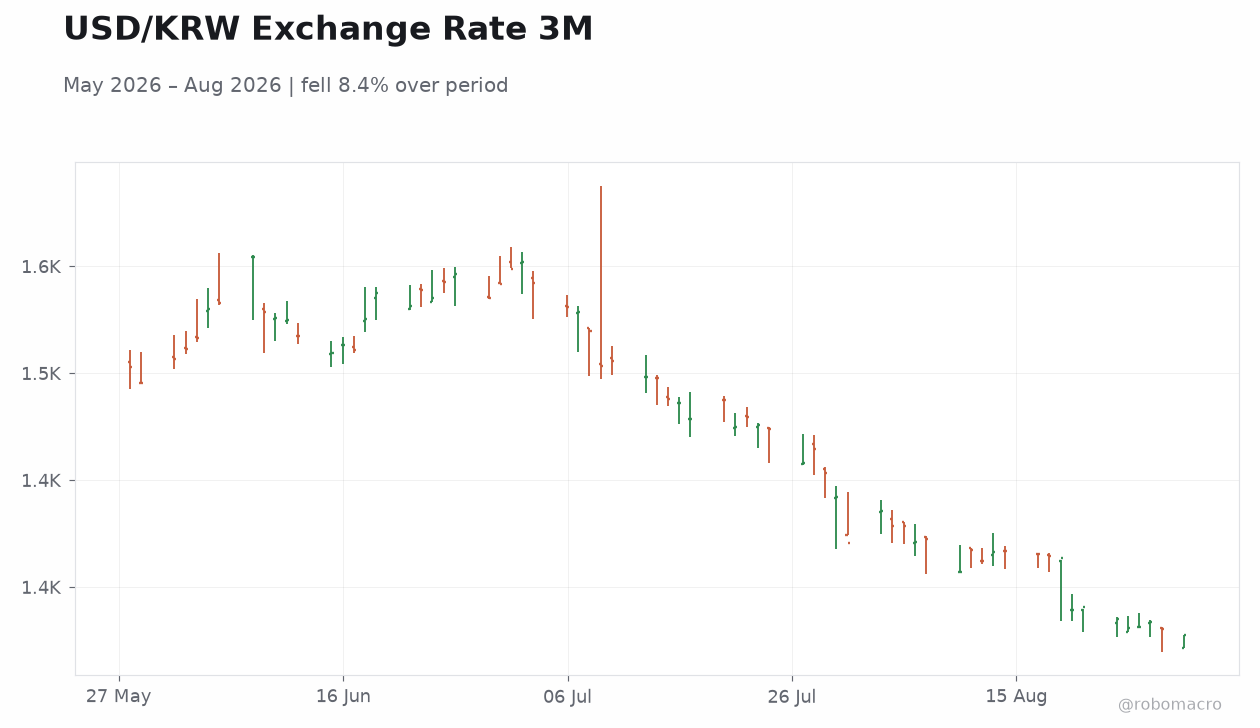
| USD/KRW | 1,376.78 | -0.27% |
| Samsung | 257,000.00 | -3.38% |
| SK Hynix | 1,653,000.00 | -4.45% |
| Brent Crude | 88.10 | -1.78% |
| Gold | 4,529.90 | -1.73% |
| Bitcoin | 78,421.53 | +0.76% |
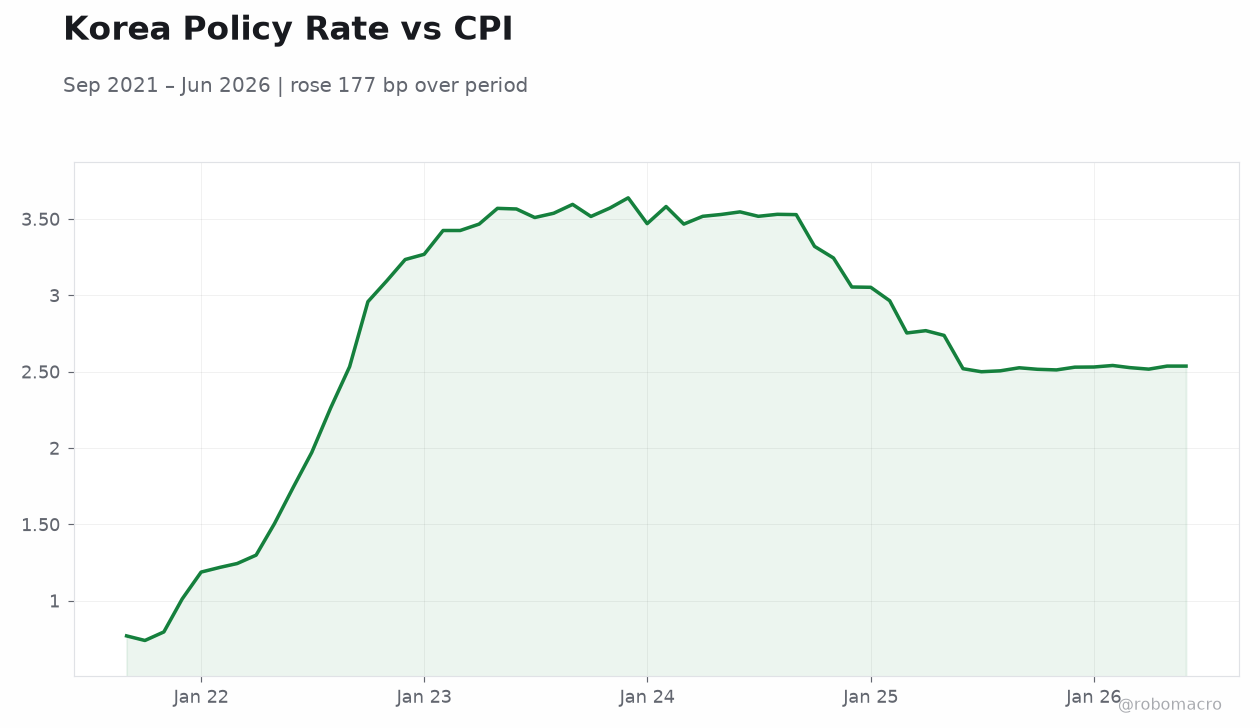
| Korea Short-term Rate | 2.54% | +0.00% |
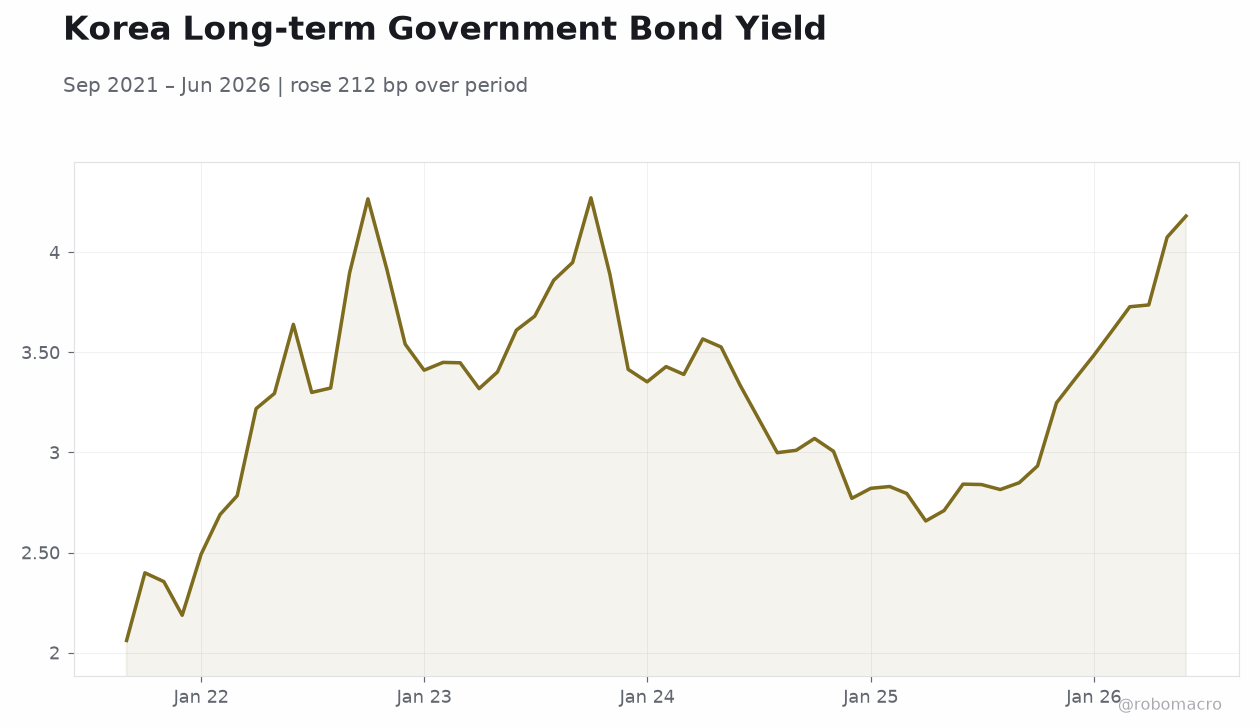
| Korea Long-term Rate | 4.18% | +2.60% |
Prior Economic Events
| Data | Prior | Cons | Actual |
|---|---|---|---|
| No events available | |||
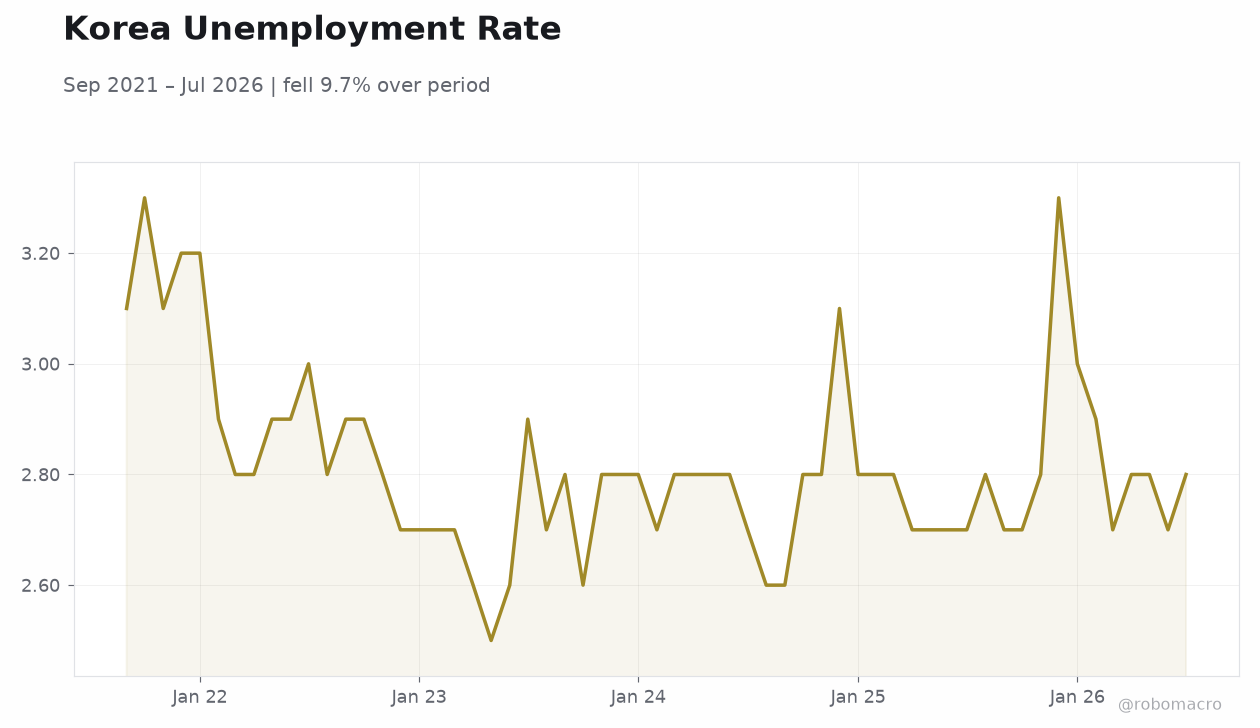 Korea Unemployment Rate | Type: macro_line | Unemployment Rate %: 2.8 (2026-07-01) | Range: 2.5–3.3 | Trend(5pt): 3.1,2.8,2.8,2.8,2.8
Today's Economic Events
| Data | Prior | Cons | Time |
|---|---|---|---|
| Tuesday (2026-09-01) | |||
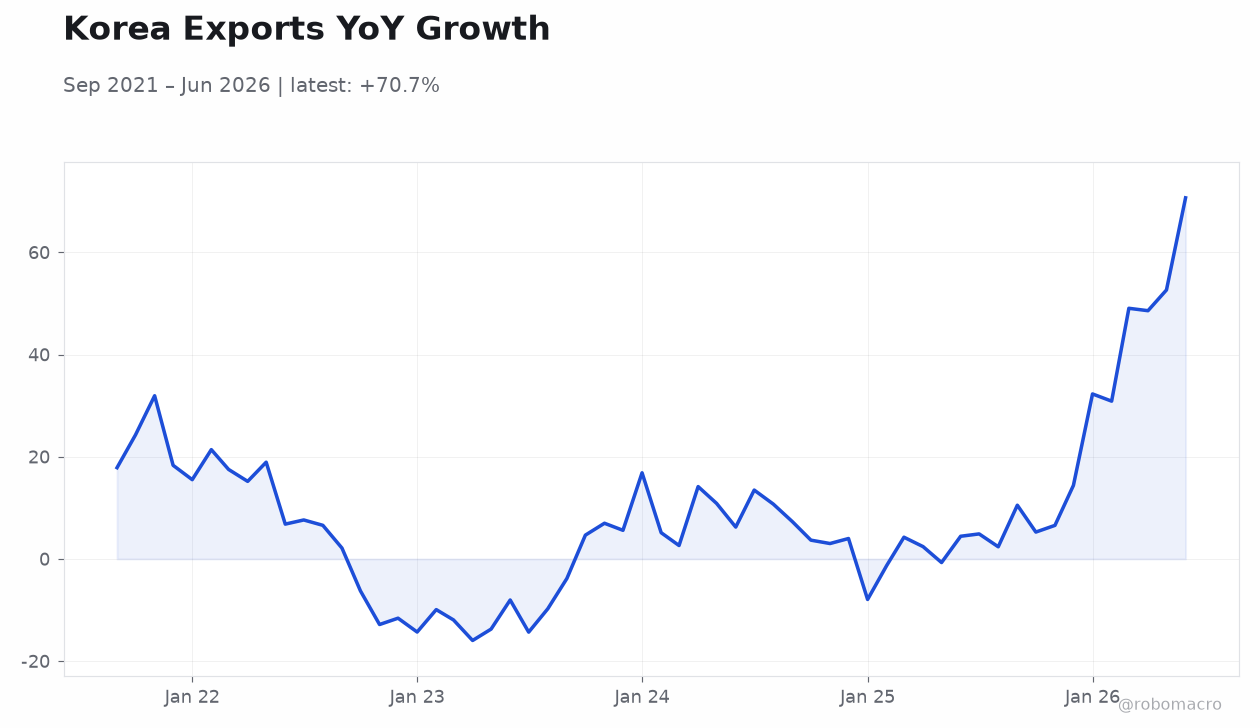
| Exports Year-over-Year | 62.80 | 62.60 | 20:00 |
| S&P Global Manufacturing PMI Index | 53.10 | - | 20:30 |
| Inflation Rate Year-over-Year | 2.80 | - | 19:00 |
- KOSPI drops 1.79% as Samsung and SK Hynix fall over 3%
- USD/KRW eases to 1,376.78 on won strength and BoK tightening
- Exports, PMI and CPI releases due this week
Yesterday's Recap
Korean equities closed lower with KOSPI falling 1.79% to 6,788.88 while KOSDAQ edged up 0.09%. Semiconductor names led the decline as Samsung dropped 3.38% to 257,000 and SK Hynix fell 4.45% to 1,653,000. The won strengthened 0.27% to 1,376.78 against the dollar amid narrower Korea-US rate differentials and rising dollar deposit holdings that reached a record $108.9 billion.
Korea’s short-term rate held at 2.54% while the long-term rate rose 2.60% to 4.18%. Brent crude and gold both declined more than 1.7% while Bitcoin gained 0.76%. No major data prints occurred on 29 August.
Market participants focused on BoK commentary regarding semiconductor-driven demand pressures and the view that the $20 billion US investment pledge is unlikely to pressure the currency. Korean banks gained 2.6 trillion won in lending room though only 310 billion won has been drawn.
The Day Ahead
South Korea will release August exports year-over-year at 20:00 ET with consensus near 62.6%. S&P Global Manufacturing PMI follows at 20:30 ET. Inflation rate year-over-year prints at 19:00 ET on 1 September.
These figures will shape expectations ahead of the next MPC meeting. Export momentum remains critical for the won and equity flows. Traders will also monitor any follow-up statements from BoK Governor on external shock resilience.
Global risk sentiment tied to G20 and Fed Beige Book may influence USD/KRW.
Other Economic Notes
Semiconductor income gains are feeding demand-driven inflation according to recent BoK analysis. Dollar deposits reached a record $108.9 billion as households increased holdings amid won appreciation. The $20 billion US investment pledge is viewed by BoK officials as unlikely to pressure the currency.
Korean banks gained 2.6 trillion won in lending room though only 310 billion won has been drawn. These developments underscore the dual impact of the chip cycle on growth and price stability.