Korea Macro Daily(Beta Mode)
Exports, CPI Loom as Won Strengthens
Market Snapshot
| Asset | Level | Change |
|---|---|---|
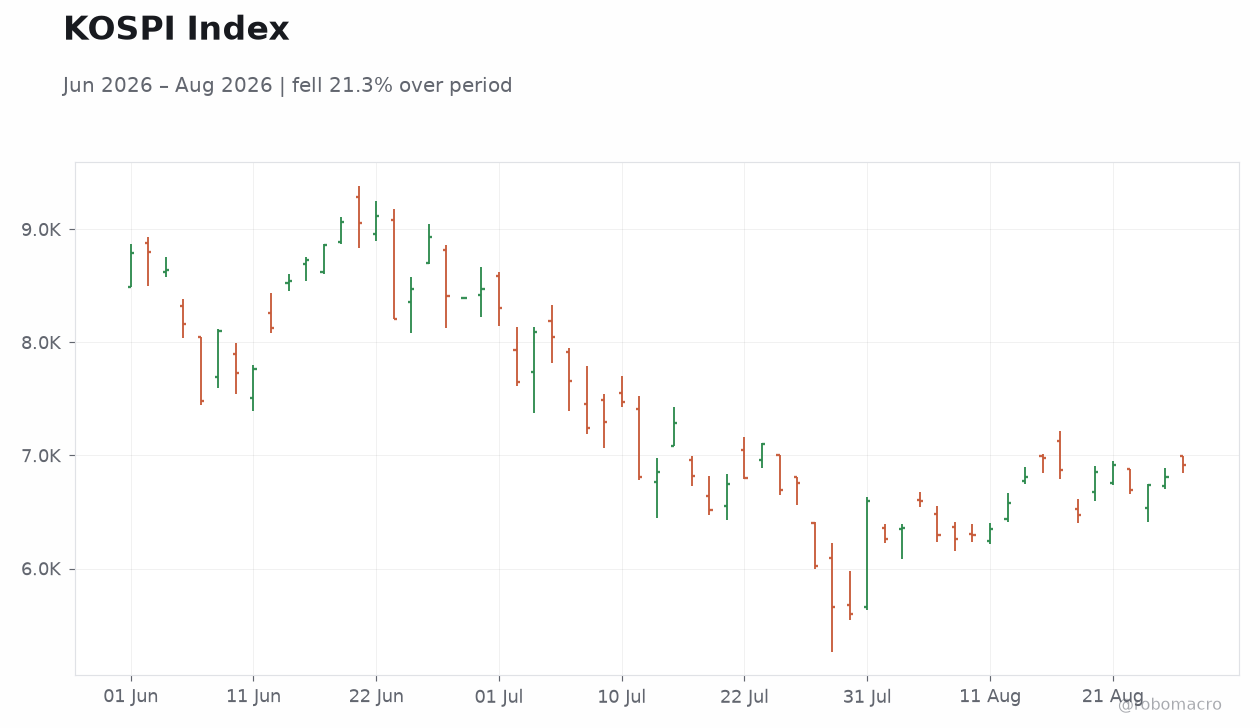
| KOSPI | 6,912.37 | +1.53% |
| KOSDAQ | 837.65 | +1.30% |
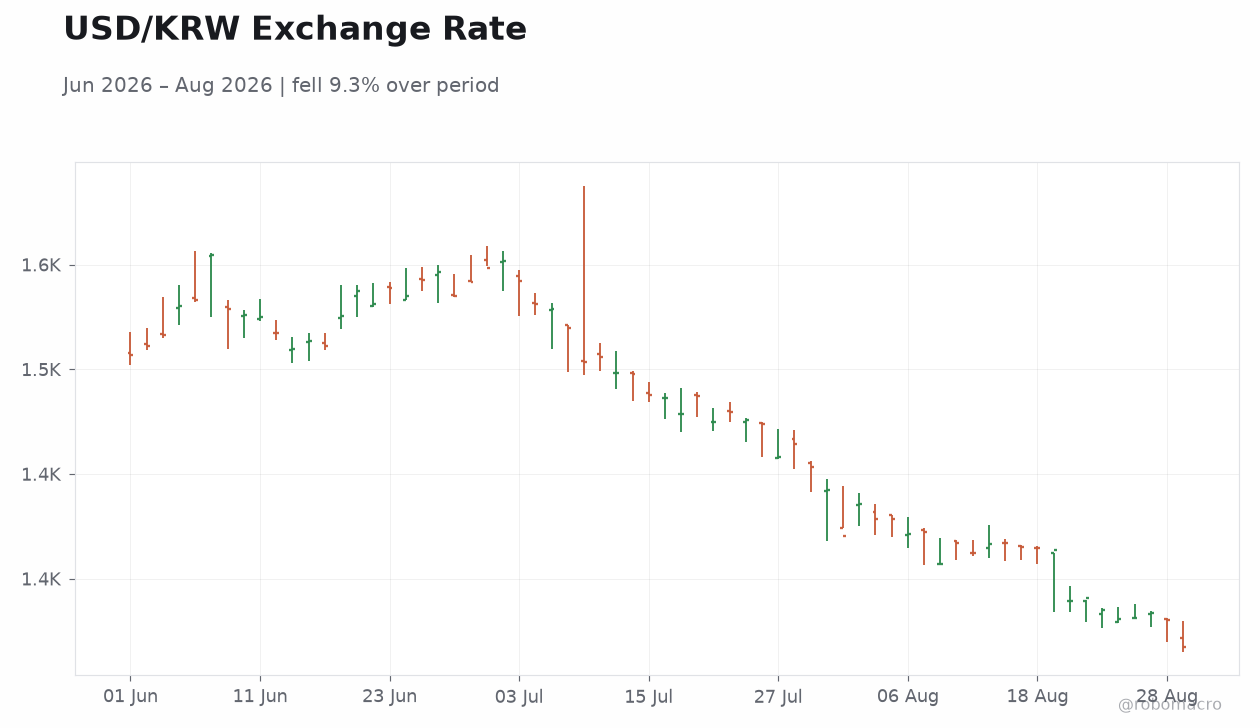
| USD/KRW | 1,367.12 | -0.97% |
| Samsung | 257,000.00 | -3.38% |
| SK Hynix | 1,653,000.00 | -4.45% |
| Brent Crude | 88.53 | -0.87% |
| Gold | 4,497.60 | +0.44% |
| Bitcoin | 78,775.35 | +1.43% |
| Korea Short-term Rate | 3.79% | +4 bp |
| Korea Long-term Rate | 4.28% | +4 bp |
Prior Economic Events
| Data | Prior | Cons | Actual |
|---|---|---|---|
| No events available | |||
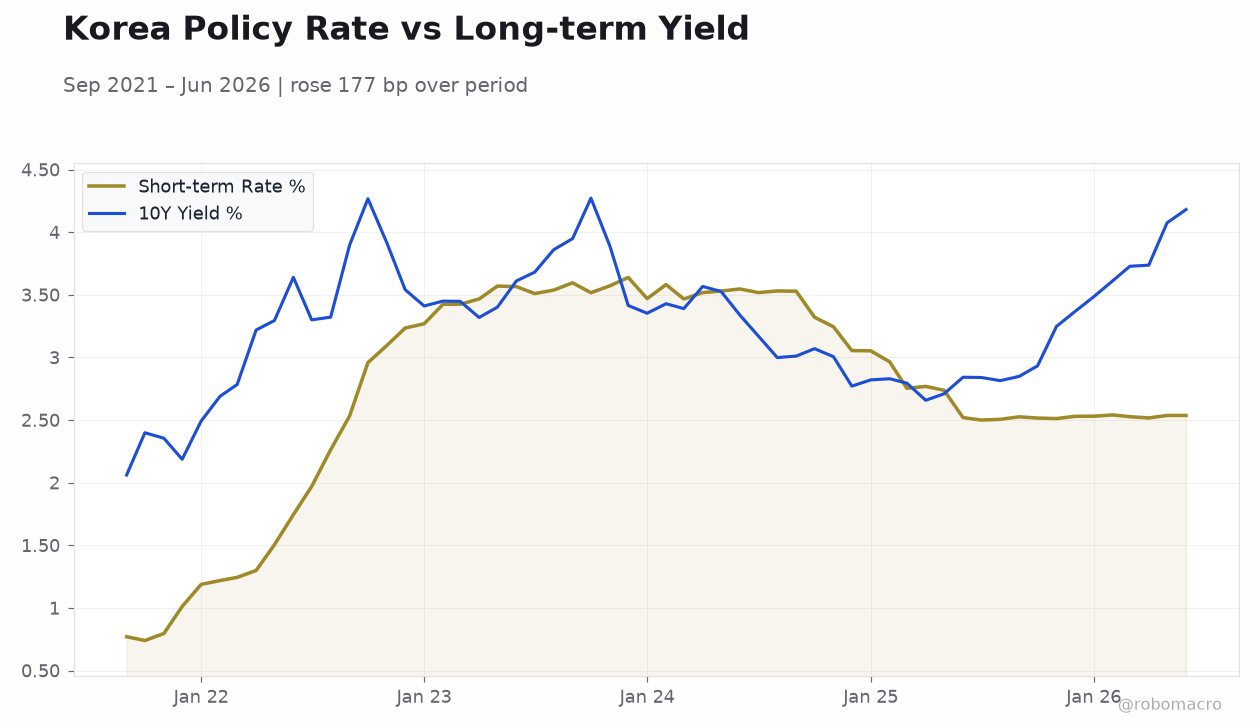 Korea Policy Rate vs Long-term Yield | Type: macro_line | Short-term Rate %: 2.537 (2026-06-01) | Range: 0.74–3.639 | Trend(5pt): 0.77,3.096,3.47,2.754,2.537 | 10Y Yield %: 4.181 (2026-06-01) | Range: 2.061–4.272 | Trend(6pt): 2.061,3.915,3.353,2.795,4.075,4.181
Today's Economic Events
| Data | Prior | Cons | Time |
|---|---|---|---|
| Tuesday (2026-09-01) | |||
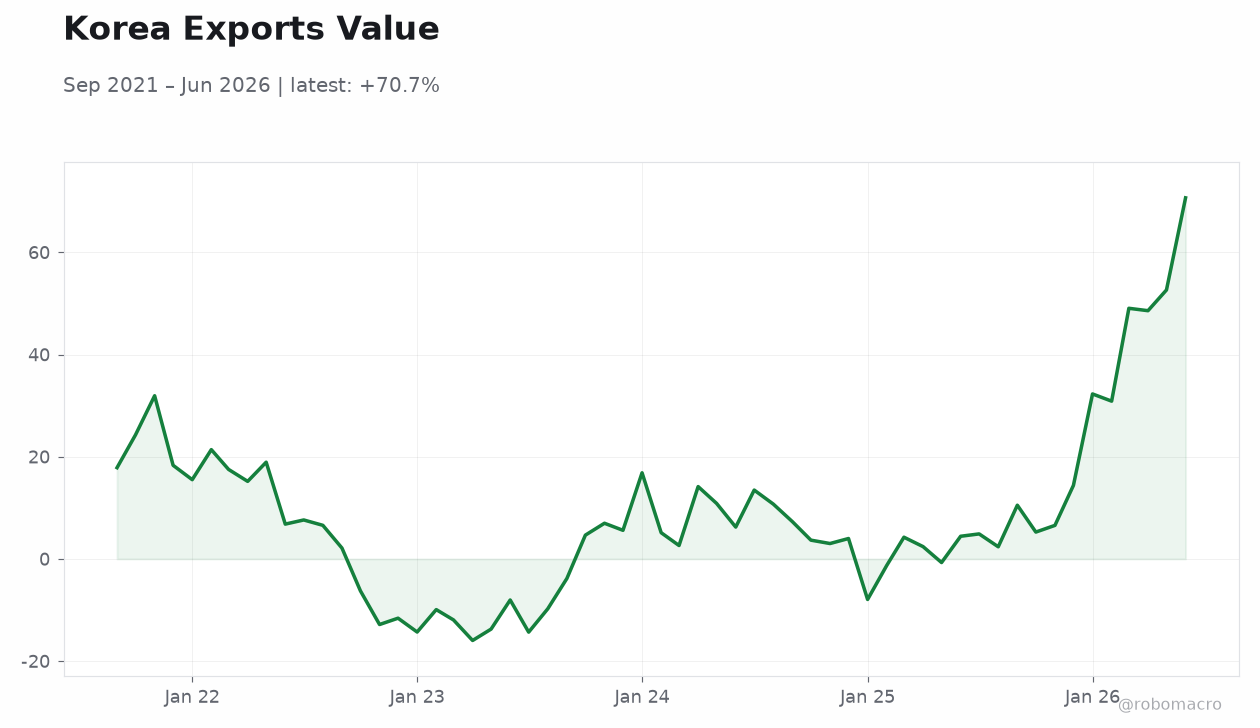
| Exports Year-over-Year | 62.80 | 62.60 | 20:00 |
| S&P Global Manufacturing PMI Index | 53.10 | - | 20:30 |
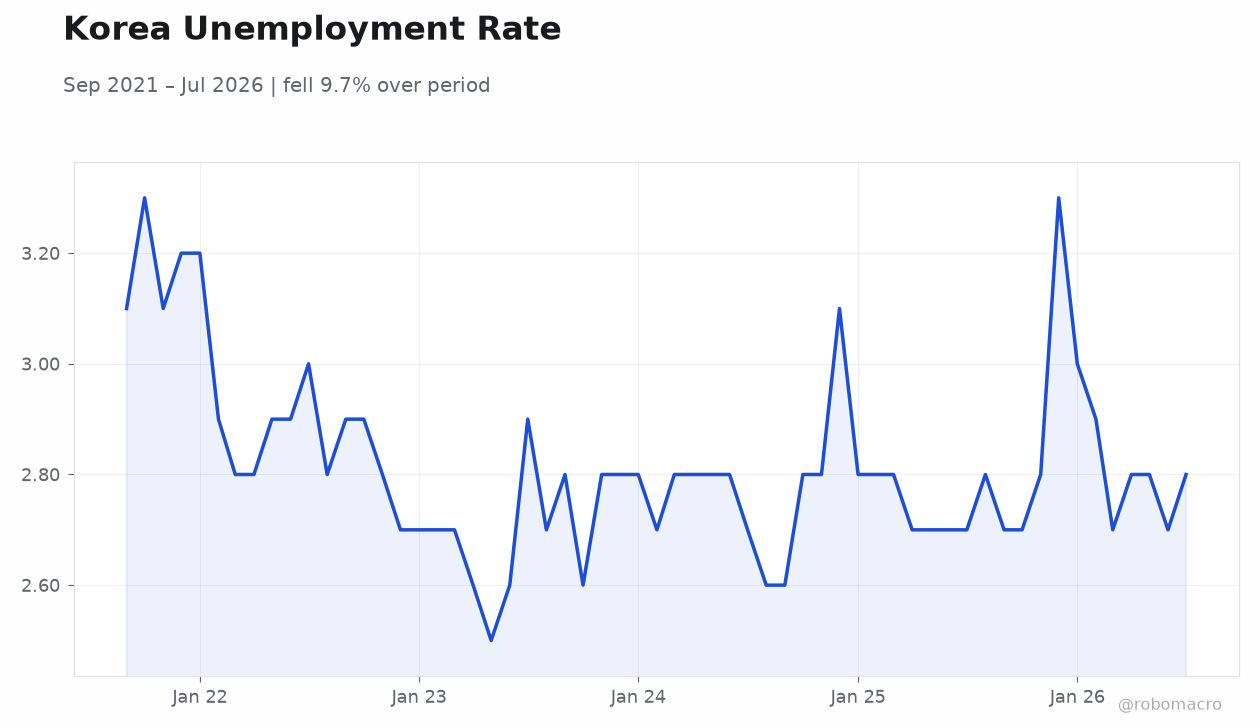
| Inflation Rate Year-over-Year | 2.80 | 3.20 | 19:00 |
- August exports and CPI data will test BoK tightening signals amid AI-driven inflation risks.
- KOSPI rose 1.53% while USD/KRW fell 0.97% as chip inflows supported the won.
- Markets price further BoK rate support near 3.0% with limited near-term easing.
Yesterday's Recap
South Korean equities advanced as KOSPI closed at 6,912.37, up 1.53%, and KOSDAQ gained 1.30% to 837.65 despite Samsung and SK Hynix share declines of 3.38% and 4.45%. The won strengthened sharply, with USD/KRW dropping 0.97% to 1,367.12 on semiconductor export inflows and BoK tightening signals. Korea’s long-term rate rose 4 bp to 4.28% while the short-term yield rose 4 bp to 3.79%.
News that the Bank of Korea views the AI chip boom as an emerging inflation risk reinforced expectations of sustained policy support. Exporters selling dollars and equity inflows helped the won buck broader dollar strength. No major data releases occurred on August 30, leaving markets focused on forward guidance and capital flows.
Dollar deposit holdings reached a record $108.9 billion as households responded to won appreciation, while Samsung and SK Hynix bonuses could add 0.09 points to GDP growth.
The Day Ahead
August exports year-over-year are due at 20:00 ET with consensus at 62.6 after 62.8 prior, followed by the S&P Global Manufacturing PMI at 20:30. September 1 brings the key inflation rate year-over-year print at 19:00 ET, expected at 3.2% versus 2.8% previously. These releases will shape BoK views on whether AI-related price pressures require further tightening.
Markets will also monitor any comments on financial stability and won volatility. A hotter CPI could lift front-end yields and reduce easing odds priced into KTB futures. Exporters and chip firms remain central to the data reaction, with semiconductor shipments already showing +22% y/y growth that offset weaker autos.
Other Economic Notes
The AI semiconductor surge is lifting export values but now registers as a domestic inflation driver according to BoK analysis. Fiscal expansion debates continue alongside BoK tightening, with analysts noting potential tension between government stimulus and rate support near 3.0%. Korea-Japan business initiatives targeting low birth rates signal longer-term structural cooperation without immediate market impact.
Dollar deposit holdings reached a record $108.9 billion as households respond to won appreciation. <i>↓ p.2</i>