Korea Macro Daily(Beta Mode)
Exports Jump as Korea Awaits Inflation Data
Market Snapshot
| Asset | Level | Change |
|---|---|---|
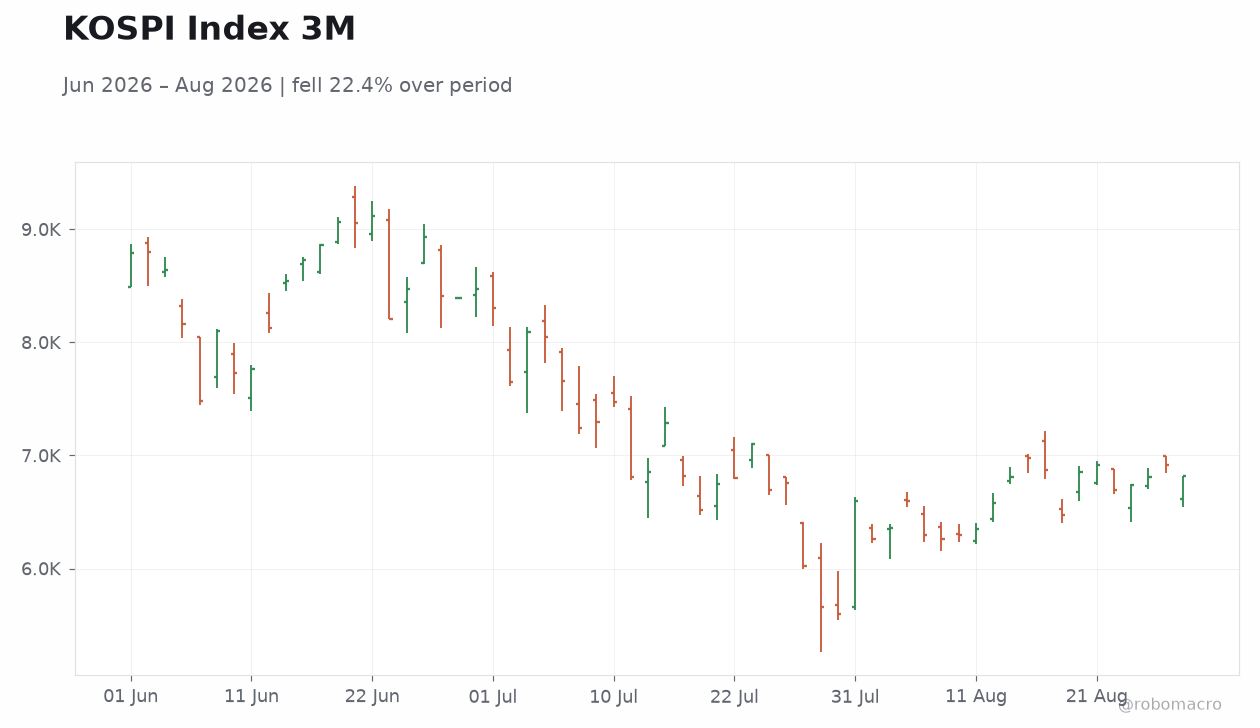
| KOSPI | 6,820.02 | -1.34% |
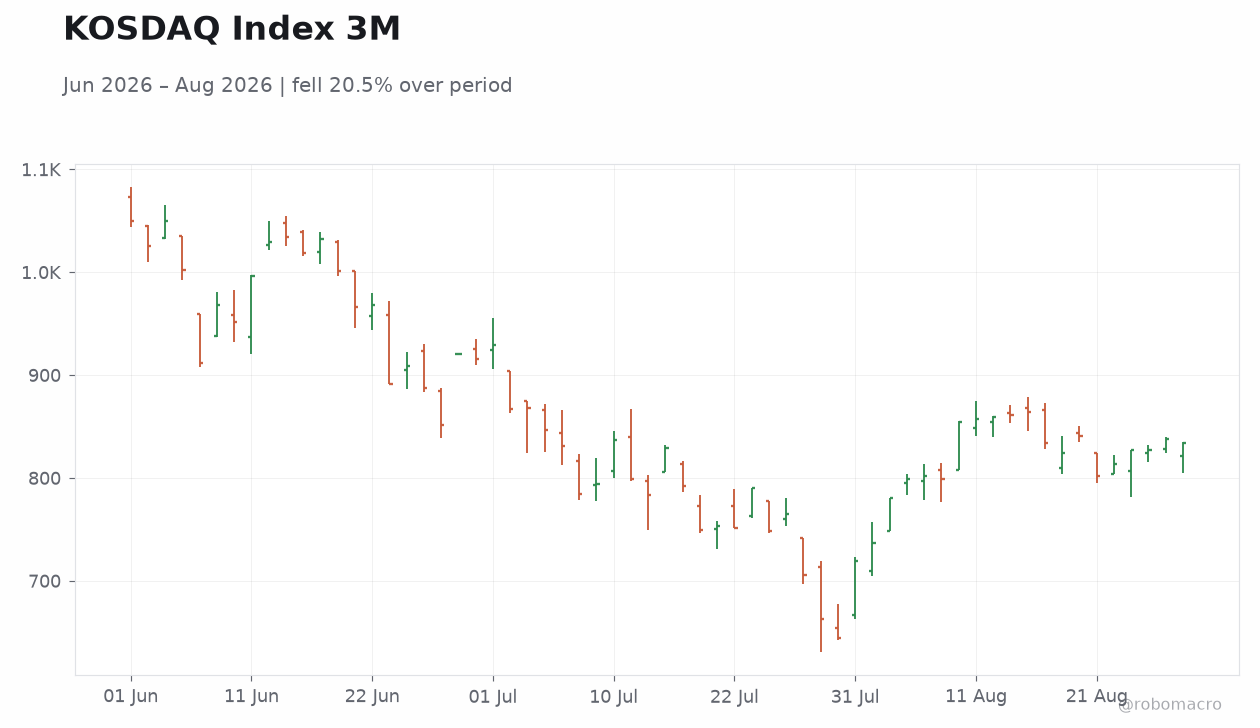
| KOSDAQ | 834.29 | -0.40% |
| USD/KRW | 1,373.04 | -0.30% |
| Samsung | 261,000.00 | +0.38% |
| SK Hynix | 1,693,000.00 | +1.14% |
| Brent Crude | 95.19 | +5.19% |
| Gold | 4,375.90 | -1.25% |
| Bitcoin | 77,229.78 | -1.68% |
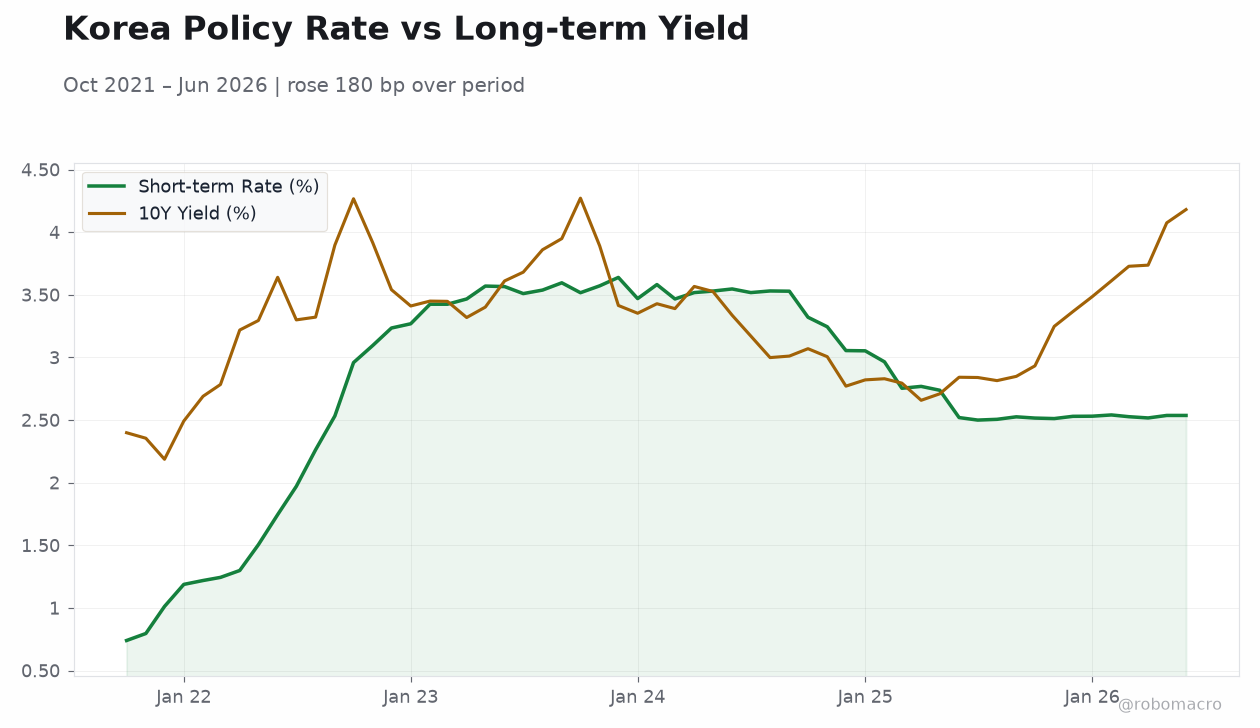
| Korea Short-term Rate | 3.84% | +5 bp |
| Korea Long-term Rate | 4.31% | +3 bp |
Prior Economic Events
| Data | Prior | Cons | Actual |
|---|---|---|---|
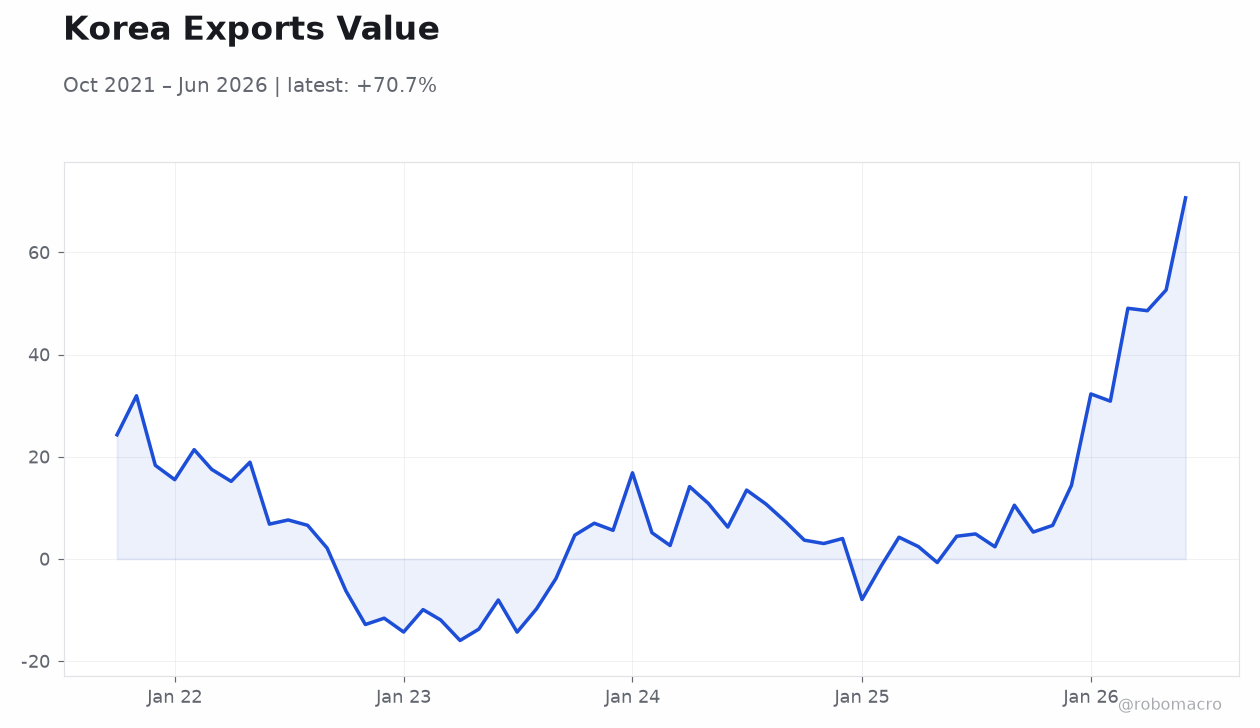
| Exports Year-over-Year | 63 | 62.60 | 68.70 |
| S&P Global Manufacturing PMI Index | 53.10 | - | 52.30 |
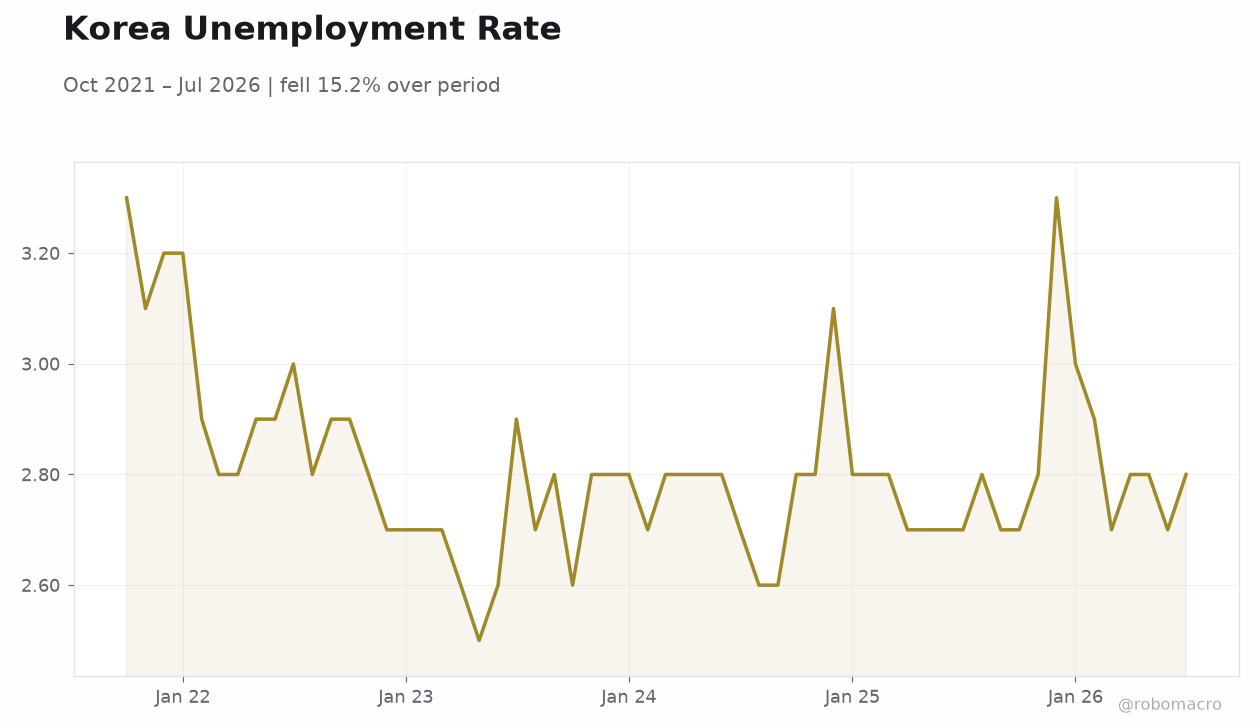 Korea Unemployment Rate | Type: macro_line | Unemployment Rate (%): 2.8 (2026-07-01) | Range: 2.5–3.3 | Trend(6pt): 3.3,2.7,2.7,2.7,2.7,2.8
Today's Economic Events
| Data | Prior | Cons | Time |
|---|---|---|---|
| Inflation Rate Year-over-Year | 2.80 | 3.20 | 15:00 |
- Exports jump to 68.7% y/y, beating consensus
- Manufacturing PMI slips to 52.3 from 53.1
- KOSPI falls 1.34% with inflation data due
Yesterday's Recap
South Korea's exports rose 68.7% year-over-year, exceeding the 62.6% consensus and prior 63% reading, signaling robust semiconductor and auto shipments. The S&P Global Manufacturing PMI declined to 52.3 from 53.1, indicating a modest slowdown in factory activity. KOSPI dropped 1.34% to close at 6,820.02 while KOSDAQ eased 0.40% to 834.29 amid broad equity selling.
USD/KRW fell 0.30% to 1,373.04 as corporate flows supported the won near its 13-month high. Samsung gained 0.38% to 261,000 and SK Hynix advanced 1.14% to 1,693,000 on buyback announcements. Korea's long-term rate rose 3 bp to 4.31% while the short-term yield rose 5 bp to 3.84%.
Brent crude surged 5.19% to 95.19, adding to imported inflation risks.
The Day Ahead
August inflation data releases at 15:00 ET with consensus pointing to a 3.2% year-over-year rise from the prior 2.8% print. Markets will assess whether price pressures justify holding rates or open room for later easing. No major releases appear tomorrow.
Attention turns to 2027 budget proposals targeting record AI spending and up to 222.8 trillion won in planned bond issuance. Corporate buybacks from Samsung and SK Hynix continue to underpin sentiment despite foreign outflows. Yen and dollar moves will shape won trading ranges.
Other Economic Notes
The government outlined a record 597 billion dollar 2027 budget to accelerate AI investment and export competitiveness. State-run enterprise debt is projected to approach 1 quadrillion won by 2030, raising fiscal sustainability questions. A new Japan-South Korea business panel will address shared demographic challenges including low birth rates.
Critical minerals cooperation with Australia offers potential to diversify supply chains beyond regulatory hurdles. Won strength reflects corporate hedging and US rate differentials more than domestic policy shifts.
Global Macro News
The Korean won holds near its 13-month high driven by corporate flows, US rates and Japanese debt dynamics. AI-led chip demand lifted semiconductor exports and supported KOSPI gains in recent sessions. <i>↓ p.2</i>