Korea Macro Daily(Beta Mode)
KOSPI Slides as Won Strengthens, Yields Rise
Market Snapshot
| Asset | Level | Change |
|---|---|---|
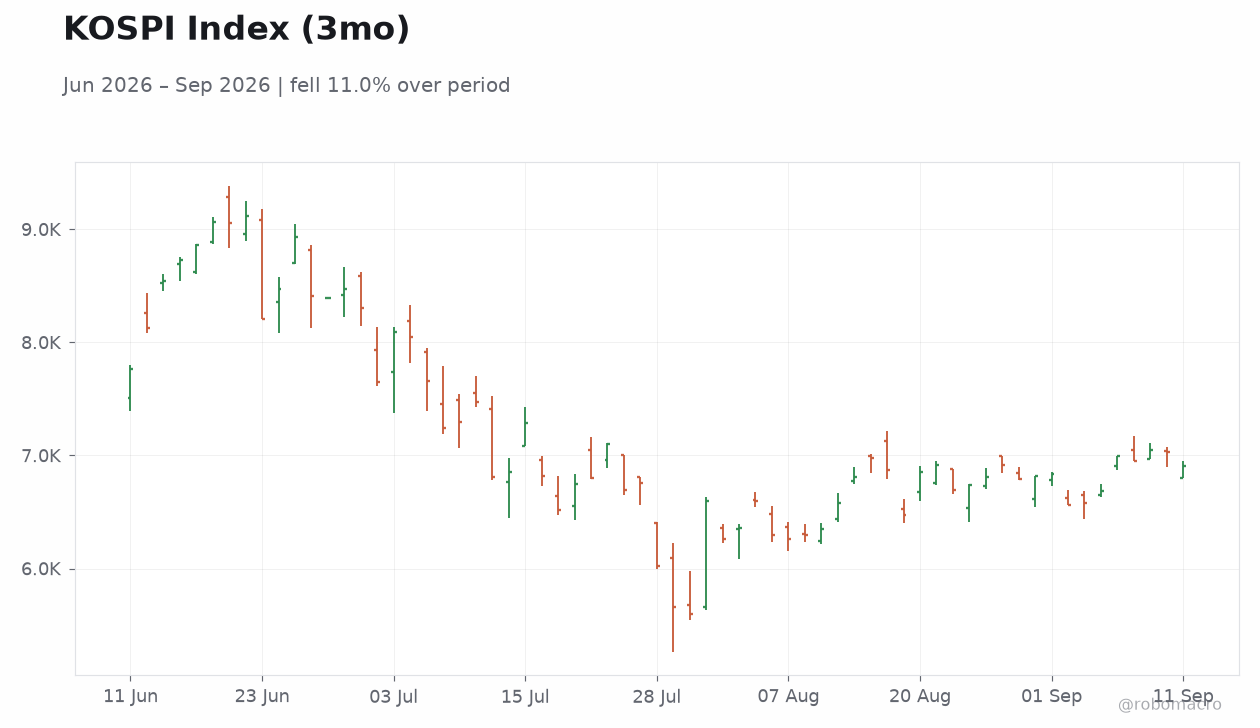
| KOSPI | 6,909.91 | -1.76% |
| KOSDAQ | 820.64 | -1.95% |
| USD/KRW | 1,344.15 | -0.30% |
| Samsung | 259,500.00 | -3.53% |
| SK Hynix | 1,812,000.00 | -2.21% |
| Brent Crude | 104.61 | -2.81% |
| Gold | 4,408.90 | +1.02% |
| Bitcoin | 77,277.03 | +0.01% |
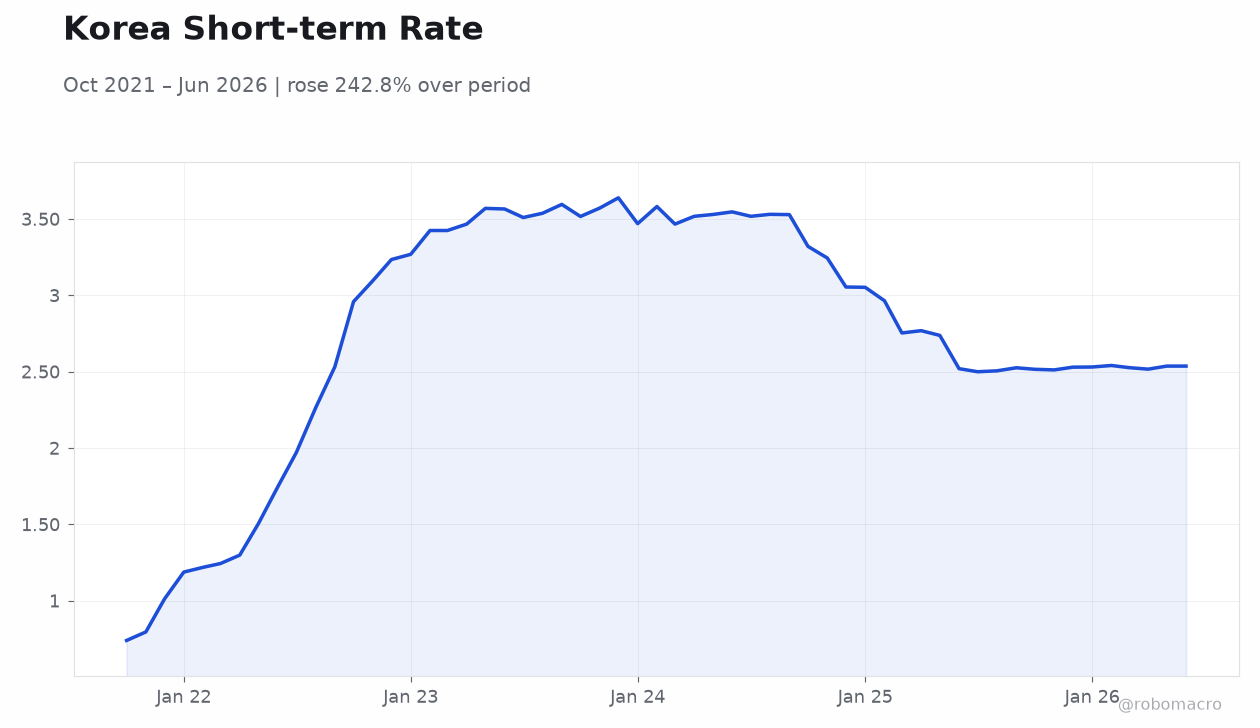
| Korea Short-term Rate | 2.54% | +0.00% |
| Korea Long-term Rate | 4.18% | +2.60% |
Prior Economic Events
| Data | Prior | Cons | Actual |
|---|---|---|---|
| No events available | |||
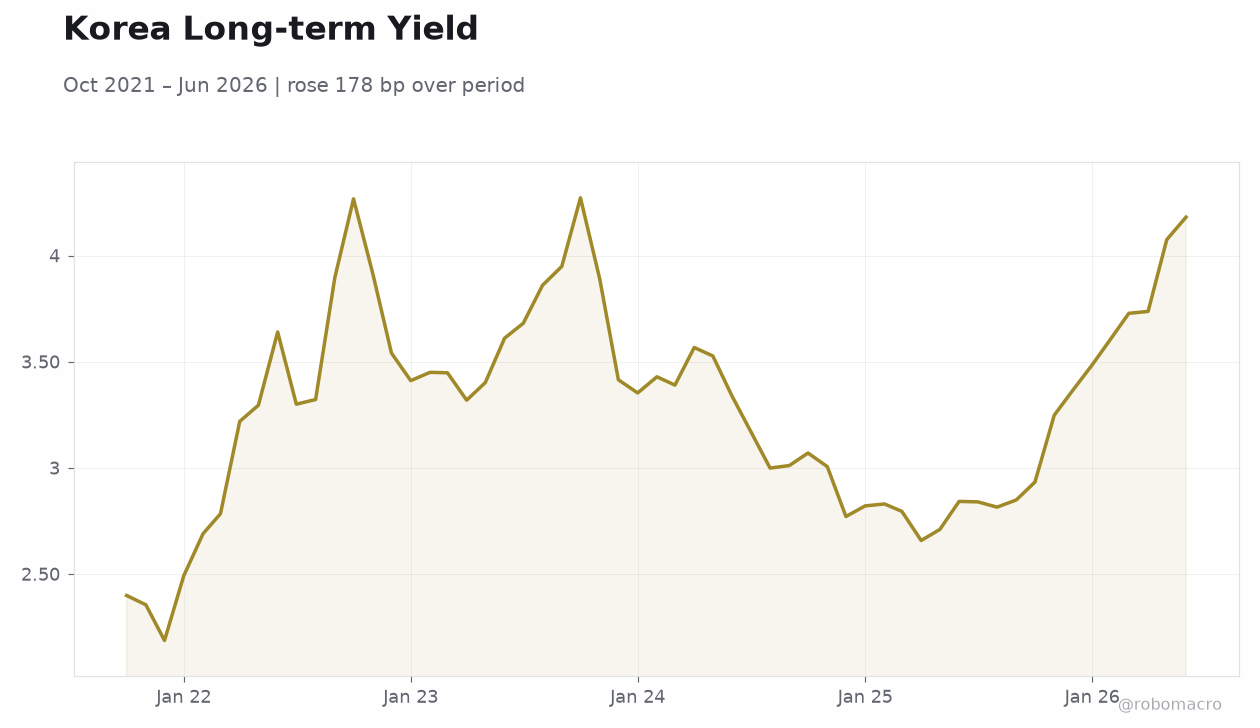 Korea Long-term Yield | Type: macro_line | 10Y Yield %: 4.181 (2026-06-01) | Range: 2.187–4.272 | Trend(5pt): 2.399,3.541,3.429,2.658,4.181
Today's Economic Events
| Data | Prior | Cons | Time |
|---|---|---|---|
| No events available | |||
- KOSPI fell 1.76% to 6,909.91 while the won strengthened 0.30% to 1,344.15 per dollar, pressuring exporters.
- Long-term Korean rates rose 2.60% to 4.18% amid higher global yields and oil prices.
- Bank of Korea and Korean Statistical Society advanced AI applications for economic data reliability.
Yesterday's Recap
Equity markets declined sharply as KOSPI dropped 1.76% to 6,909.91 and KOSDAQ fell 1.95% to 820.64 on higher oil prices and rising global bond yields. Samsung Electronics declined 3.53% to 259,500 while SK Hynix fell 2.21% to 1,812,000 amid the stronger won. USD/KRW closed at 1,344.15, reflecting a 0.30% appreciation of the won that hurt Korean retail investors holding US stocks.
Korea’s long-term rate climbed 2.60% to 4.18% while the short-term rate held steady at 2.54%. No economic data releases occurred and the calendar remained empty. Tax revenue through July surged 41 trillion won, and banks prepared to supply 103 trillion won for the Chuseok holiday period.
The Bank of Korea highlighted South Korea’s growing role as an ASEAN transit hub amid US-China supply-chain shifts.
The Day Ahead
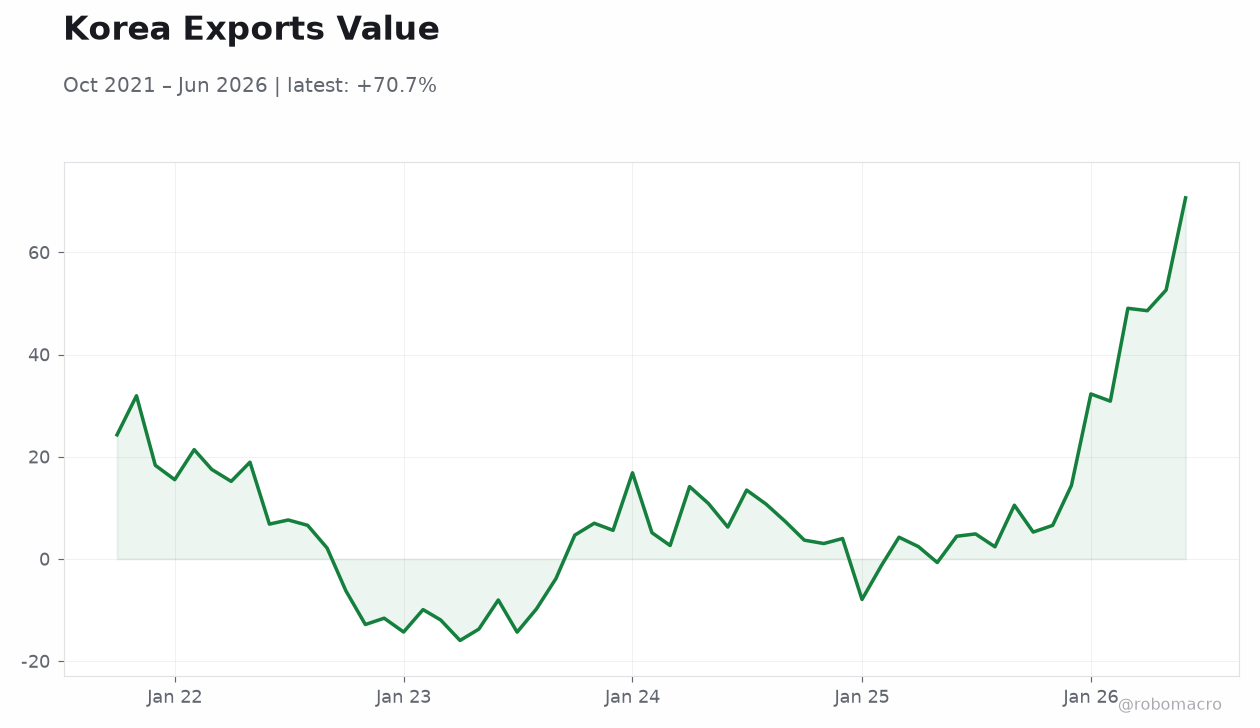
Markets face a quiet session with no scheduled data releases or Bank of Korea events. Attention will remain on the stronger won’s impact on semiconductor earnings and export competitiveness. Investors will monitor global bond yields and oil prices for further equity pressure.
The CEPA momentum with Bangladesh offers potential for joint-venture manufacturing inflows. Retail flows into US stocks may stay subdued while the won holds near current levels. Focus stays on any follow-up comments from the Korean Statistical Society AI discussions.
Other Economic Notes
Korea’s tax collections jumped 41 trillion won through July, signaling resilient domestic activity despite external headwinds. Banks will channel 103 trillion won into the economy ahead of Chuseok to support household liquidity. The South Korean envoy to Bangladesh stressed converting CEPA momentum into concrete joint-venture manufacturing projects.
A BOK note underscored expanding ASEAN transit volumes as firms reroute supply chains away from direct US-China exposure. These developments point to steady fiscal support and gradual trade diversification.