Korea Macro Daily(Beta Mode)
KOSPI Slides on AI Concerns as Won Strengthens
Market Snapshot
| Asset | Level | Change |
|---|---|---|
| KOSPI | 6,909.91 | -1.76% |
| KOSDAQ | 820.64 | -1.95% |
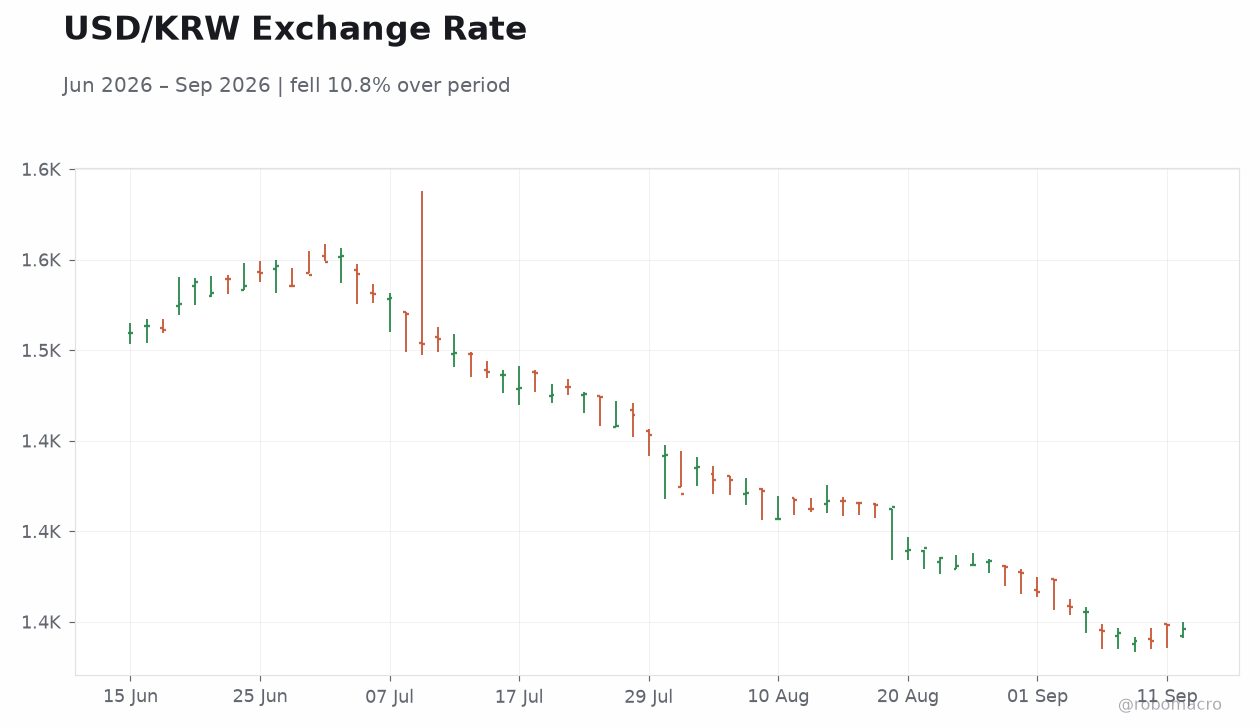
| USD/KRW | 1,345.90 | -0.17% |
| Samsung | 259,500.00 | -3.53% |
| SK Hynix | 1,812,000.00 | -2.21% |
| Brent Crude | 106.24 | +1.56% |
| Gold | 4,338.90 | -1.59% |
| Bitcoin | 78,953.16 | +2.75% |
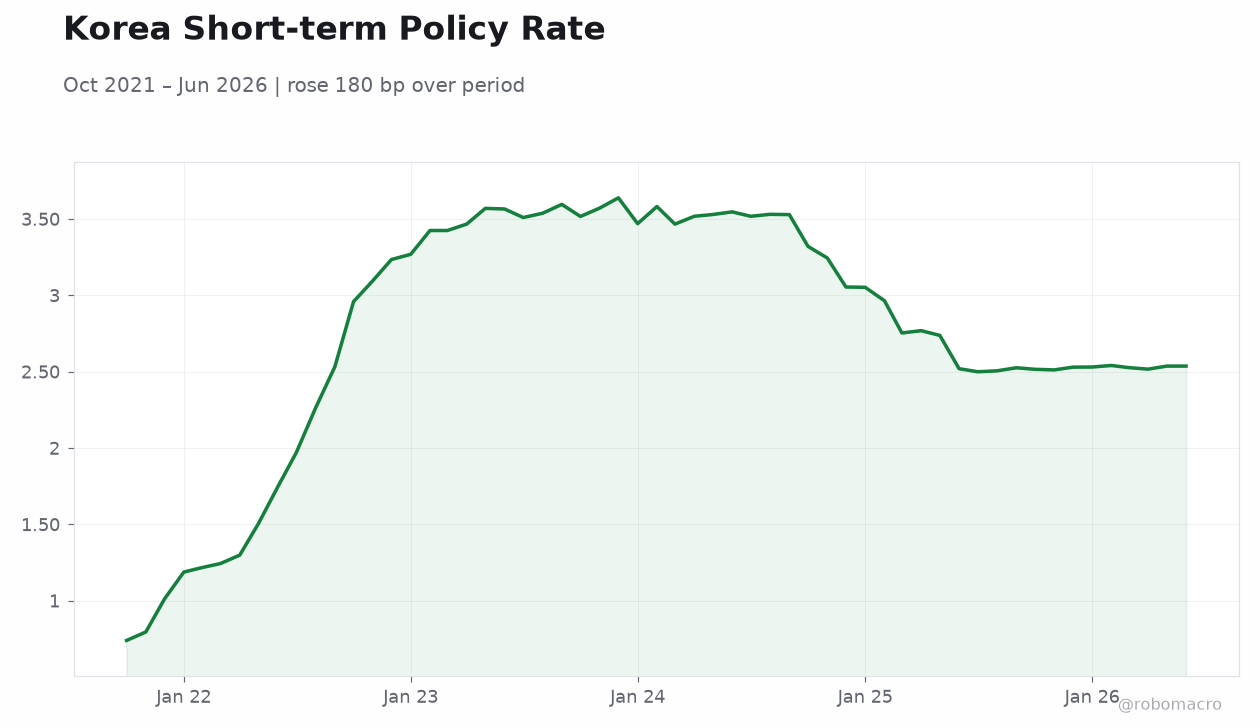
| Korea Short-term Rate | 2.54% | +0.00% |
| Korea Long-term Rate | 4.18% | +2.60% |
Prior Economic Events
| Data | Prior | Cons | Actual |
|---|---|---|---|
| No events available | |||
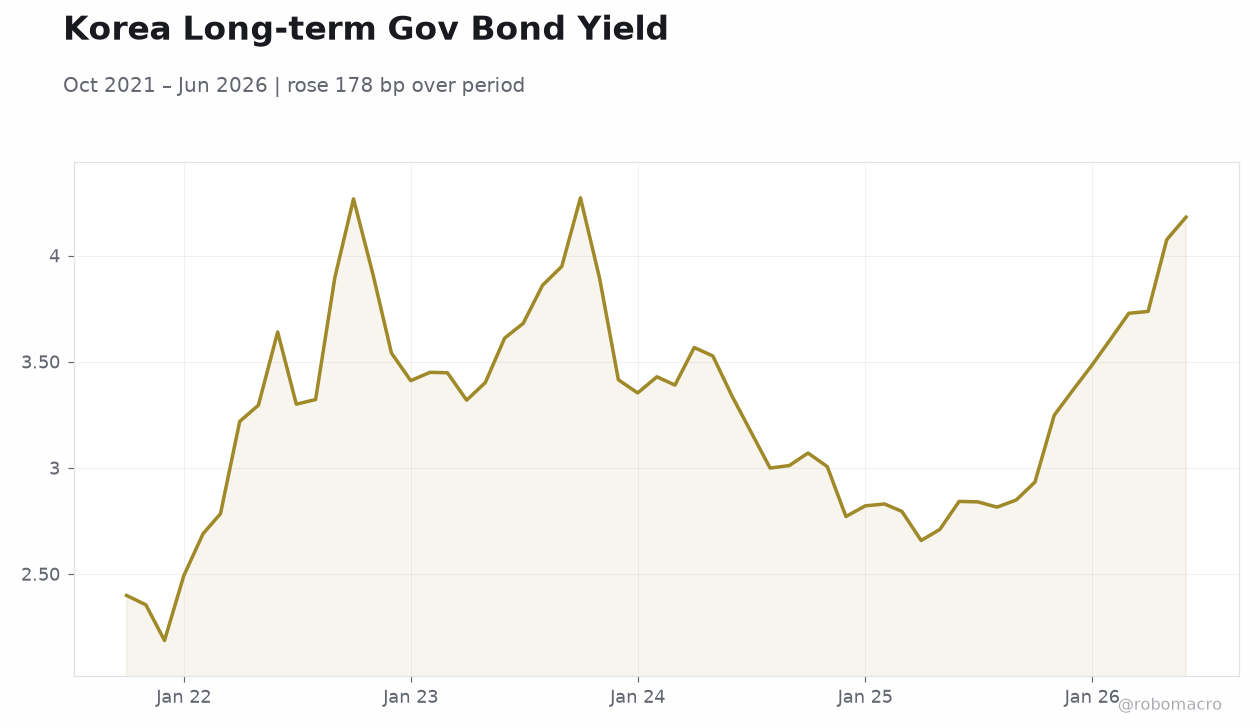 Korea Long-term Gov Bond Yield | Type: macro_line | 10Y Yield (%): 4.181 (2026-06-01) | Range: 2.187–4.272 | Trend(5pt): 2.399,3.541,3.429,2.658,4.181
Today's Economic Events
| Data | Prior | Cons | Time |
|---|---|---|---|
| No events available | |||
- KOSPI fell 1.76% to 6,909.91 while KOSDAQ dropped 1.95% as AI-related worries hit semiconductor names.
- USD/KRW eased 0.17% to 1,345.90, lifting the won and pressuring exporters alongside retail holdings of US equities.
- Bank of Korea highlighted leverage risks in AI chips and advanced work on AI tools for economic statistics.
Yesterday's Recap
South Korean equities declined sharply on September 13 as concerns over AI valuations weighed on chipmakers. The KOSPI closed at 6,909.91, down 1.76%, while the KOSDAQ fell 1.95% to 820.64. Samsung Electronics dropped 3.53% to 259,500 and SK Hynix declined 2.21% to 1,812,000.
The won strengthened, with USD/KRW finishing at 1,345.90. Korea’s long-term government bond yield rose 2.60% to 4.18% while the short-term rate held steady at 2.54%. No major economic data releases occurred.
Korean banks prepared to supply 103 trillion won in liquidity ahead of the Chuseok holiday. The stronger won also reduced the local-currency value of US equity holdings for retail investors, amplifying pressure on semiconductor exporters already facing valuation scrutiny.
The Day Ahead
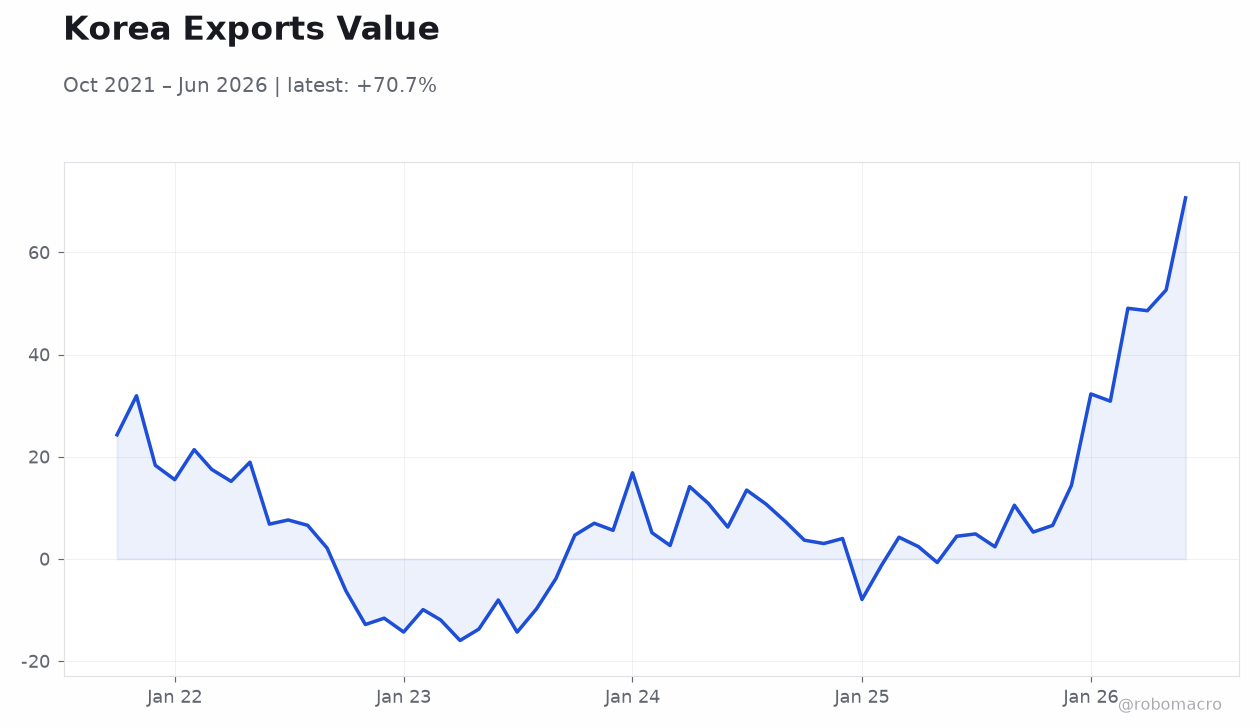
No scheduled economic data releases or Bank of Korea policy events are set for September 14. Markets will continue to monitor the impact of the stronger won on semiconductor earnings and retail investor flows into US equities. Attention remains on supply-chain adjustments as South Korea expands ASEAN transit routes amid US-China reconfiguration.
Traders will also track any follow-through from the BOK’s recent warnings on AI-chip leverage. Holiday liquidity measures from domestic banks may support short-term funding conditions through the week, while Brent crude at 106.24 and gold at 4,338.90 offer mixed signals for importers.
Other Economic Notes
Korea’s tax revenue rose 41 trillion won through July, reflecting stronger corporate collections. The government secured a final victory in a 264.1 billion won investor-state dispute against a Chinese claimant. The South Korean envoy to Bangladesh urged faster conversion of the CEPA into joint-venture manufacturing projects.
These developments underscore improving fiscal inflows and continued efforts to diversify export markets beyond traditional partners, even as the won’s appreciation creates headwinds for earnings translation at major chip firms.