Korea Macro Daily(Beta Mode)
Won Internationalization Drive Intensifies
Market Snapshot
| Asset | Level | Change |
|---|---|---|
| KOSPI | 6,627.26 | -0.85% |
| KOSDAQ | 812.41 | +0.70% |
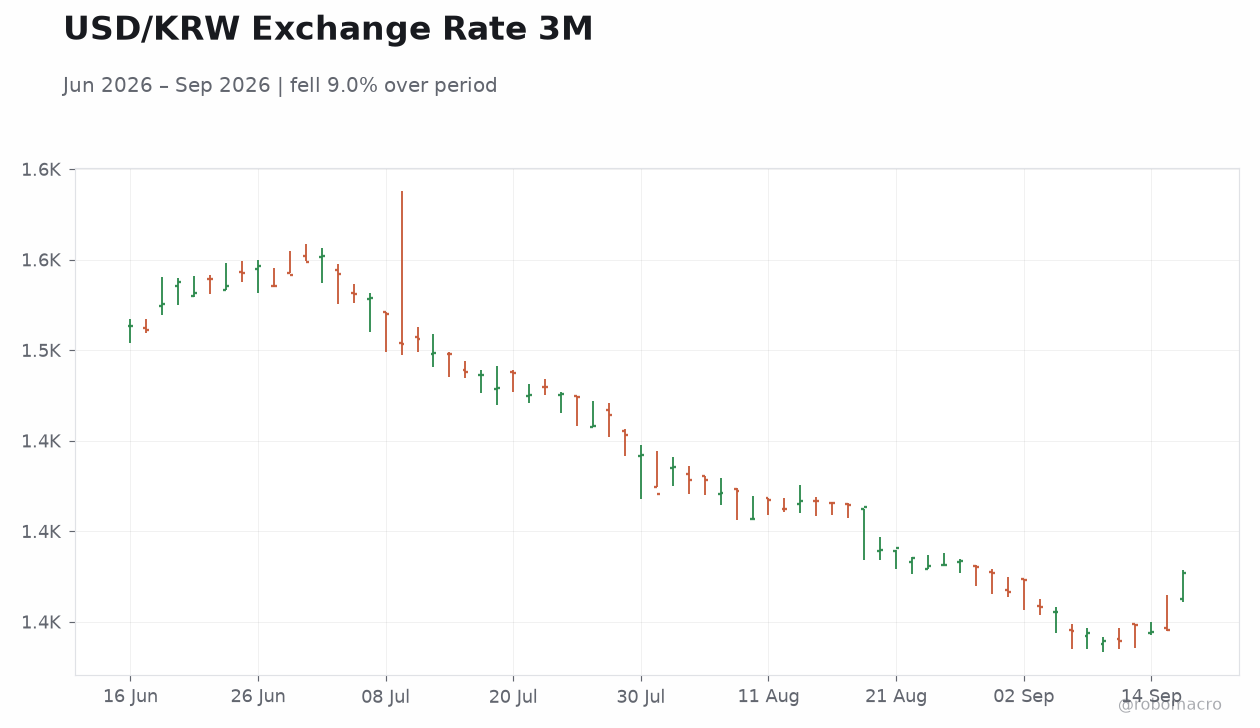
| USD/KRW | 1,377.07 | +2.34% |
| Samsung | 253,500.00 | +2.01% |
| SK Hynix | 1,759,000.00 | +4.08% |
| Brent Crude | 105.50 | -2.99% |
| Gold | 4,302.00 | -0.71% |
| Bitcoin | 76,128.50 | +0.68% |
| Korea 3Y Govt Yield | 4.03% | +2 bp |
| Korea 10Y Govt Yield | 4.54% | 0 bp |
Prior Economic Events
| Data | Prior | Cons | Actual |
|---|---|---|---|
| No events available | |||
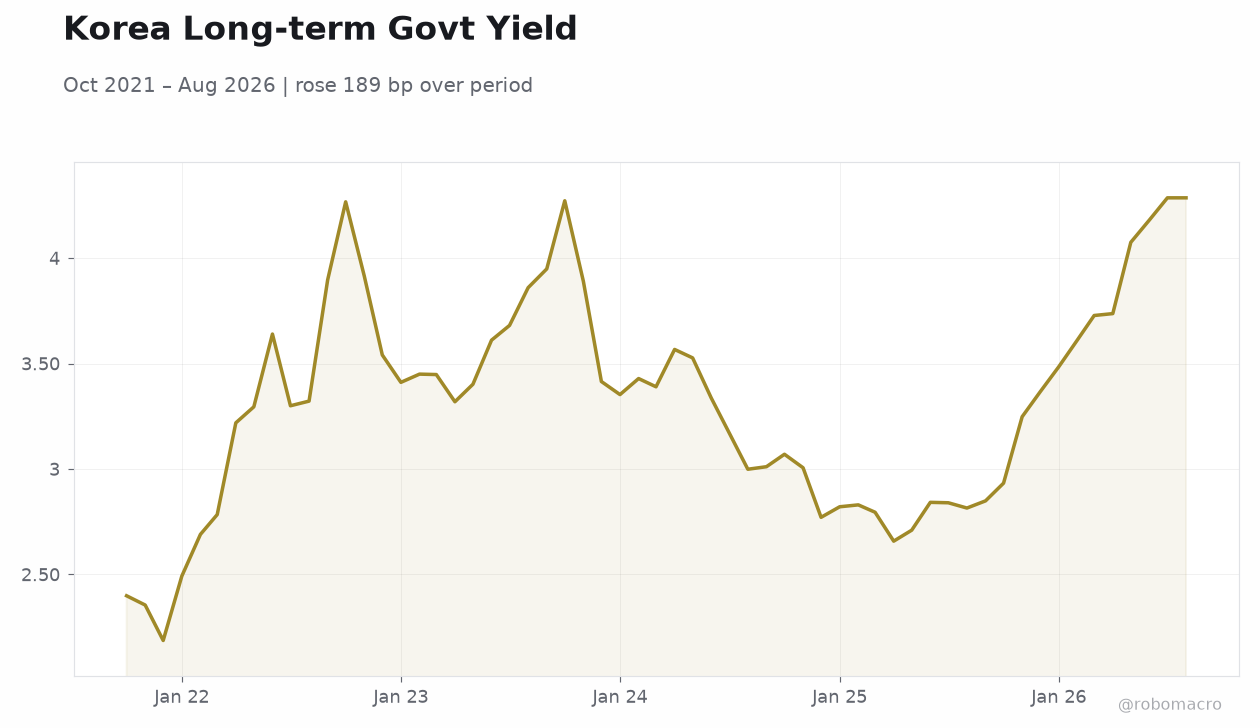 Korea Long-term Govt Yield | Type: macro_line | Percent: 4.286 (2026-08-01) | Range: 2.187–4.286 | Trend(6pt): 2.399,3.541,3.429,2.658,4.181,4.286
Today's Economic Events
| Data | Prior | Cons | Time |
|---|---|---|---|
| No events available | |||
- Authorities released RFI-K guidelines to expand won trading abroad and ease convertibility rules.
- August export prices dropped 3.7 percent amid a stronger won while BoK shifted to active overseas bond management.
- KOSPI fell 0.85 percent to 6,627.26 as USD/KRW jumped 2.34 percent to 1,377.07; SK Hynix rose 4.08 percent.
Yesterday's Recap
Markets digested the latest steps in Seoul’s won internationalization strategy with no scheduled data releases on 15 September. The government issued detailed RFI-K operating guidelines and relaxed foreign-exchange rules to boost currency convertibility, directly supporting the Bank of Korea’s parallel move toward more active overseas bond management. August export prices fell 3.7 percent year-on-year, reflecting the stronger won’s impact on competitiveness.
Korean Air finalized its $44.8 billion U.S. investment package, underscoring corporate capital outflows. Equities finished mixed: KOSPI declined 0.85 percent to 6,627.26 while KOSDAQ advanced 0.70 percent to 812.41, led by SK Hynix’s 4.08 percent gain to 1,759,000.
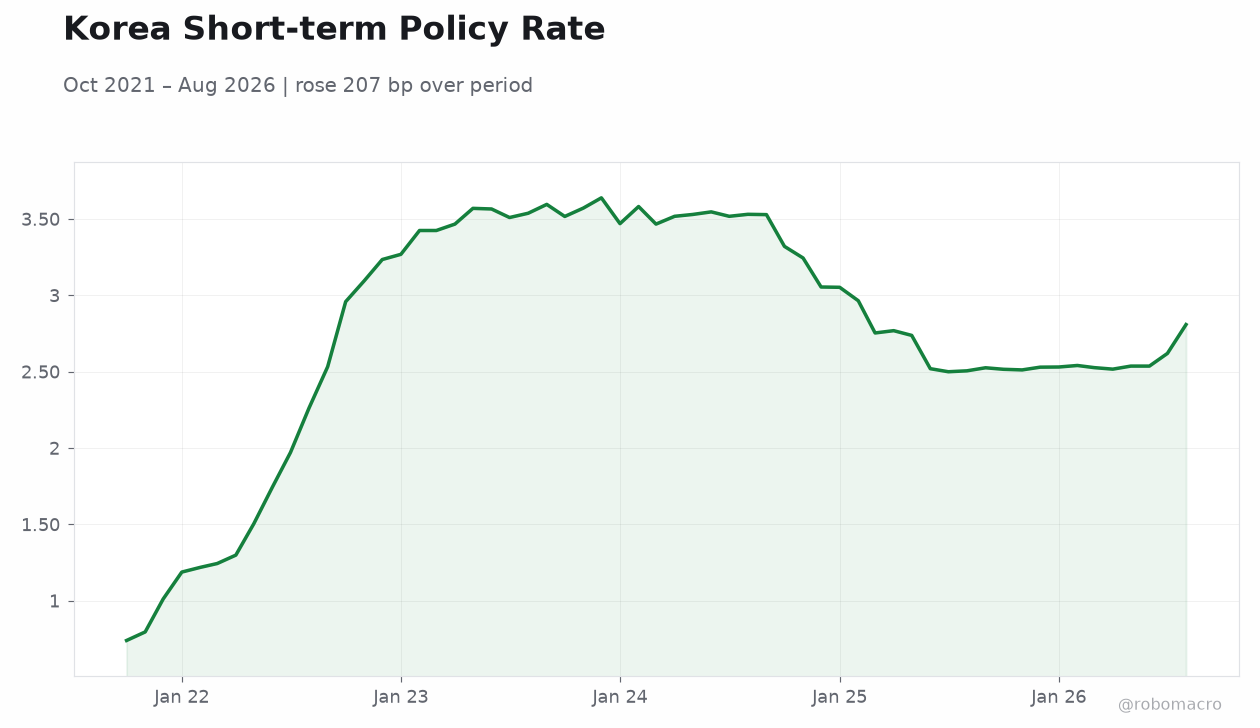
Samsung rose 2.01 percent to 253,500. The 3-year government yield climbed 2 basis points to 4.03 percent and the 10-year yield held steady at 4.54 percent. USD/KRW surged 2.34 percent to 1,377.07, widening the gap between domestic yields and the BoK’s 2.81 percent base rate.
The Day Ahead
No macroeconomic releases, Bank of Korea speeches or policy minutes are scheduled for 16 September. Market participants will monitor follow-through on RFI-K implementation and any further regulatory easing tied to won internationalization. Attention will also focus on corporate flows after Korean Air’s large U.S.
commitment and the BoK’s new overseas bond mandate. Semiconductor names remain sensitive to global chip demand signals, while USD/KRW volatility could influence equity rotation between KOSPI and KOSDAQ. The absence of domestic data leaves external drivers—U.S.
yields, Brent crude at 105.50 and gold at 4,302—dominant for local asset pricing.
Other Economic Notes
The won internationalization initiative combines regulatory liberalization with operational tools such as RFI-K to lift foreign participation in won markets. Export-price weakness in August highlights the tension between currency appreciation and Korea’s trade-dependent growth model. ↓ p.2