Korea Macro Daily(Beta Mode)
BoK Weighs October Hike Amid Wider US-Korea Gap
Market Snapshot
| Asset | Level | Change |
|---|---|---|
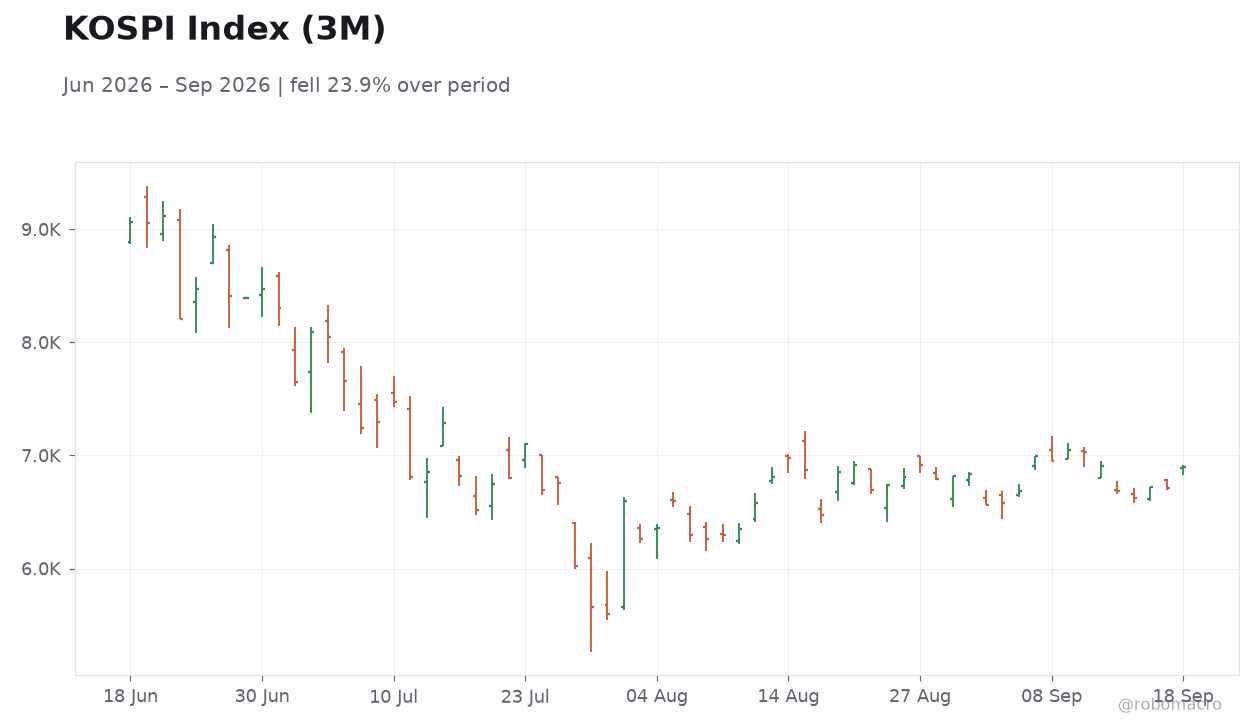
| KOSPI | 6,894.23 | +2.66% |
| KOSDAQ | 827.12 | +0.60% |
| USD/KRW | 1,384.61 | +0.37% |
| Samsung | 261,000.00 | +3.37% |
| SK Hynix | 1,857,000.00 | +6.42% |
| Brent Crude | 99.29 | -5.28% |
| Gold | 4,424.90 | +0.57% |
| Bitcoin | 80,839.49 | -0.49% |
| Korea 3Y Govt Yield | 4.04% | -2 bp |
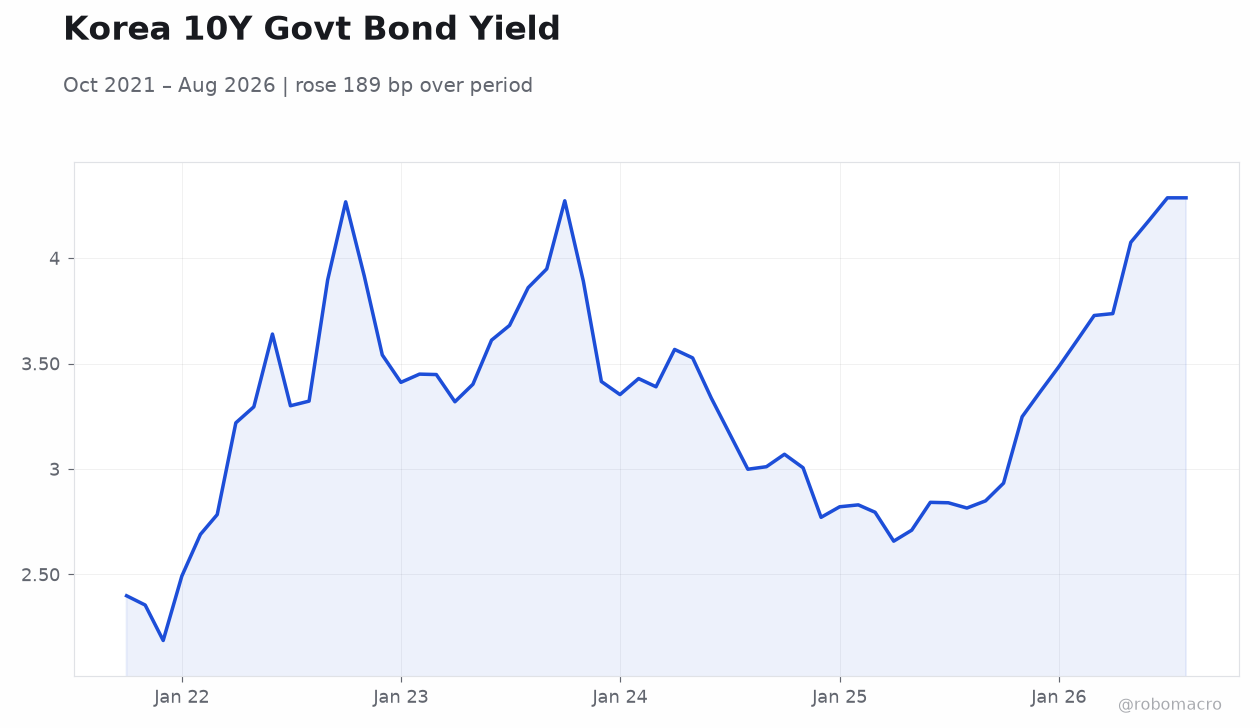
| Korea 10Y Govt Yield | 4.47% | -4 bp |
Prior Economic Events
| Data | Prior | Cons | Actual |
|---|---|---|---|
| No events available | |||
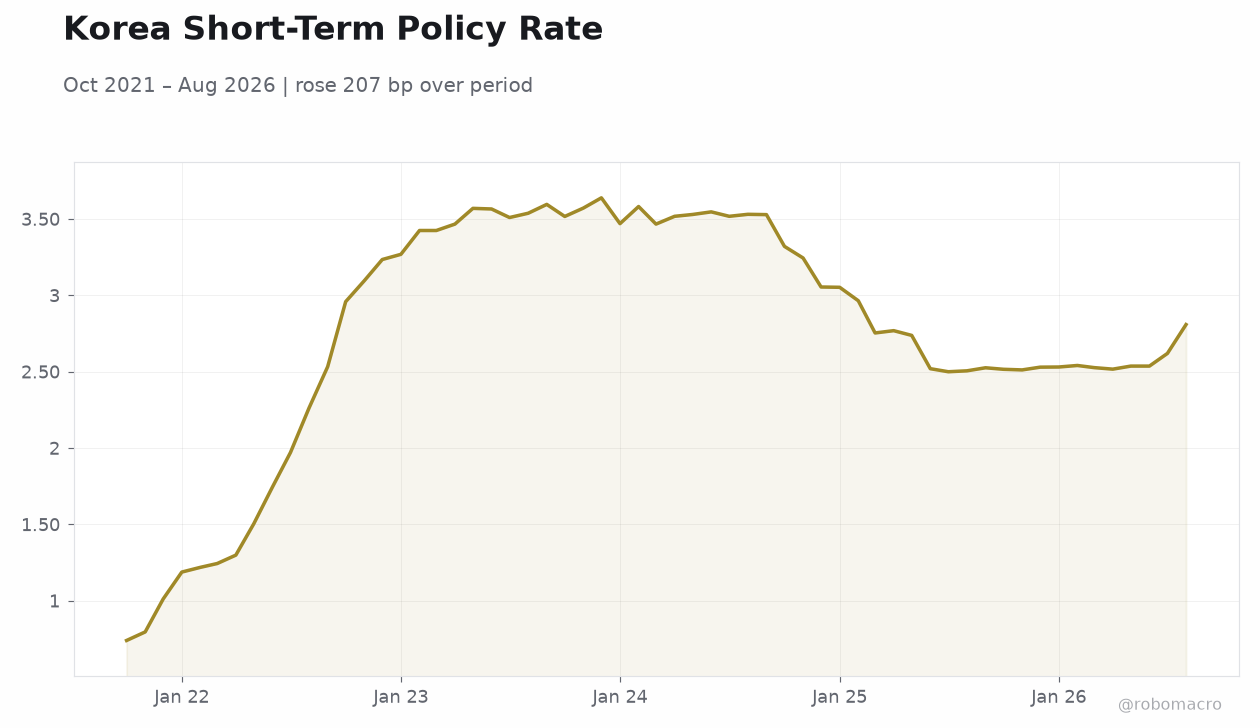 Korea Short-Term Policy Rate | Type: macro_line | Policy Rate %: 2.809 (2026-08-01) | Range: 0.74–3.639 | Trend(6pt): 0.74,3.235,3.582,2.769,2.537,2.809
Today's Economic Events
| Data | Prior | Cons | Time |
|---|---|---|---|
| Tuesday (2026-09-22) | |||
| Consumer Confidence Index | 104.50 | - | 17:00 |
- KOSPI surges 2.66% to 6,894.23 on foreign buying and Wall Street rally
- SK Hynix jumps 6.42% as chip stocks react to Bank of Japan signals
- BoK eyes October tightening amid widening US-Korea rate differential
Yesterday's Recap
No economic data releases occurred on September 19. Equity markets advanced sharply as KOSPI climbed 2.66 percent to 6,894.23 on foreign inflows and Wall Street gains while KOSDAQ rose 0.60 percent to 827.12. Semiconductor leaders drove the move with Samsung gaining 3.37 percent to 261,000 and SK Hynix surging 6.42 percent to 1,857,000.
The won weakened 0.37 percent to 1,384.61 against the dollar. Government bond yields eased with the three-year yield declining two basis points to 4.04 percent and the ten-year yield falling four basis points to 4.47 percent. Brent crude prices dropped 5.28 percent to 99.29.
Gold edged up 0.57 percent to 4,424.90 while Bitcoin fell 0.49 percent to 80,839.49.
The Day Ahead
No high-impact releases are scheduled for September 20. Attention turns to the Consumer Confidence Index due September 22, which last printed at 104.5. Markets will monitor any fresh signals on US monetary policy that could widen the rate differential with Korea.
Equity flows and semiconductor sector sentiment remain key drivers. Traders also watch developments around the Bank of Japan for further impact on chip names. The won and yields are expected to stay sensitive to external rate signals.
Other Economic Notes
Reports indicate the Bank of Korea is assessing an October rate hike with current account trends, inflation and consumer sentiment as primary variables. US inflation shocks accounted for 41 percent of long-term rate synchronization between the two countries. Plans for a Korean won-only blockchain with embedded compliance features were announced alongside the Industrial Bank of Korea forming an AI Transformation Committee.
Prolonged inflation continues to pressure Korean American households. Samsung and SK Hynix near completion of share buybacks, reducing a key source of KOSPI support. Experts view the low 1,300-won range as Korea’s ideal exchange rate level.
Global Macro News
US inflation remains the dominant force linking Korean and US long-term yields, according to Bank of Korea analysis. The wider US-Korea rate gap has increased the probability of further Bank of Korea tightening. ↓ p.2