Korea Macro Daily(Beta Mode)
Semis Lift KOSPI as BoK Eyes October Hike
Market Snapshot
| Asset | Level | Change |
|---|---|---|
| KOSPI | 6,894.23 | +2.66% |
| KOSDAQ | 827.12 | +0.60% |
| USD/KRW | 1,375.34 | -0.30% |
| Samsung | 261,000.00 | +3.37% |
| SK Hynix | 1,857,000.00 | +6.42% |
| Brent Crude | 95.96 | -7.62% |
| Gold | 4,381.00 | -0.99% |
| Bitcoin | 86,635.50 | +6.77% |
| Korea 3Y Govt Yield | 4.06% | +2 bp |
| Korea 10Y Govt Yield | 4.46% | -1 bp |
Prior Economic Events
| Data | Prior | Cons | Actual |
|---|---|---|---|
| No events available | |||
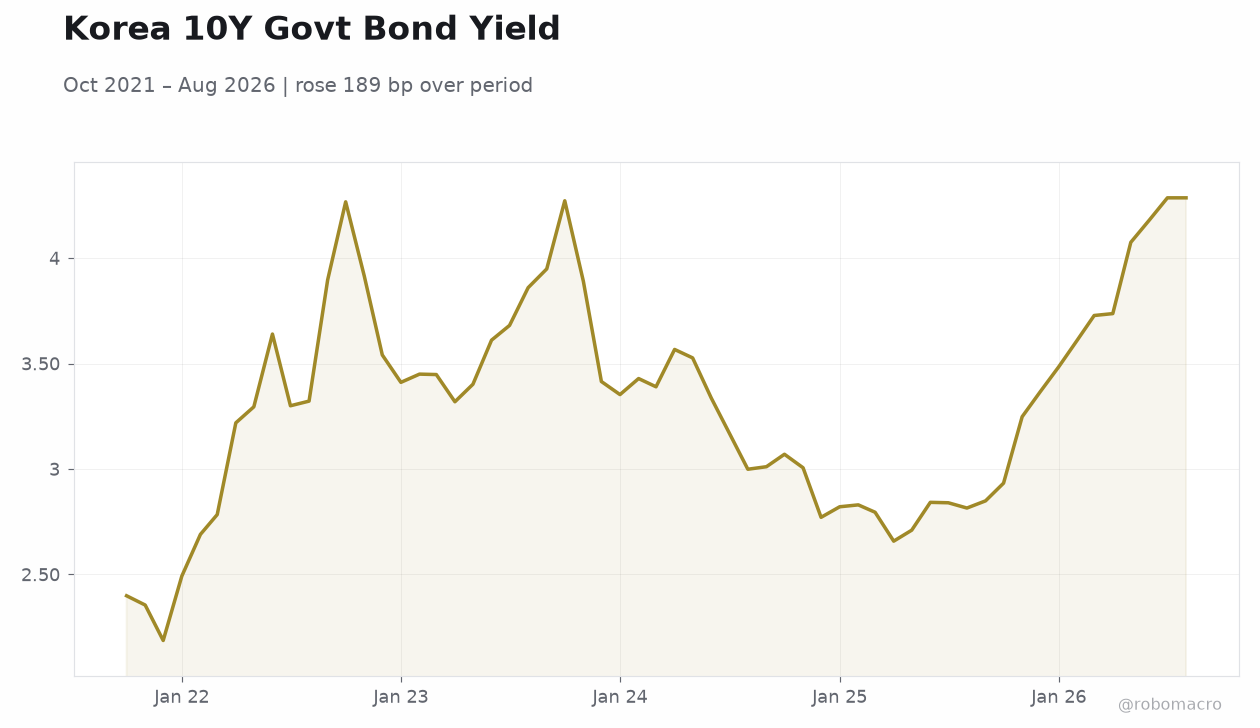 Korea 10Y Govt Bond Yield | Type: macro_line | 10Y Yield %: 4.286 (2026-08-01) | Range: 2.187–4.286 | Trend(6pt): 2.399,3.541,3.429,2.658,4.181,4.286
Today's Economic Events
| Data | Prior | Cons | Time |
|---|---|---|---|
| Tuesday (2026-09-22) | |||
| Consumer Confidence Index | 104.50 | - | 13:00 |
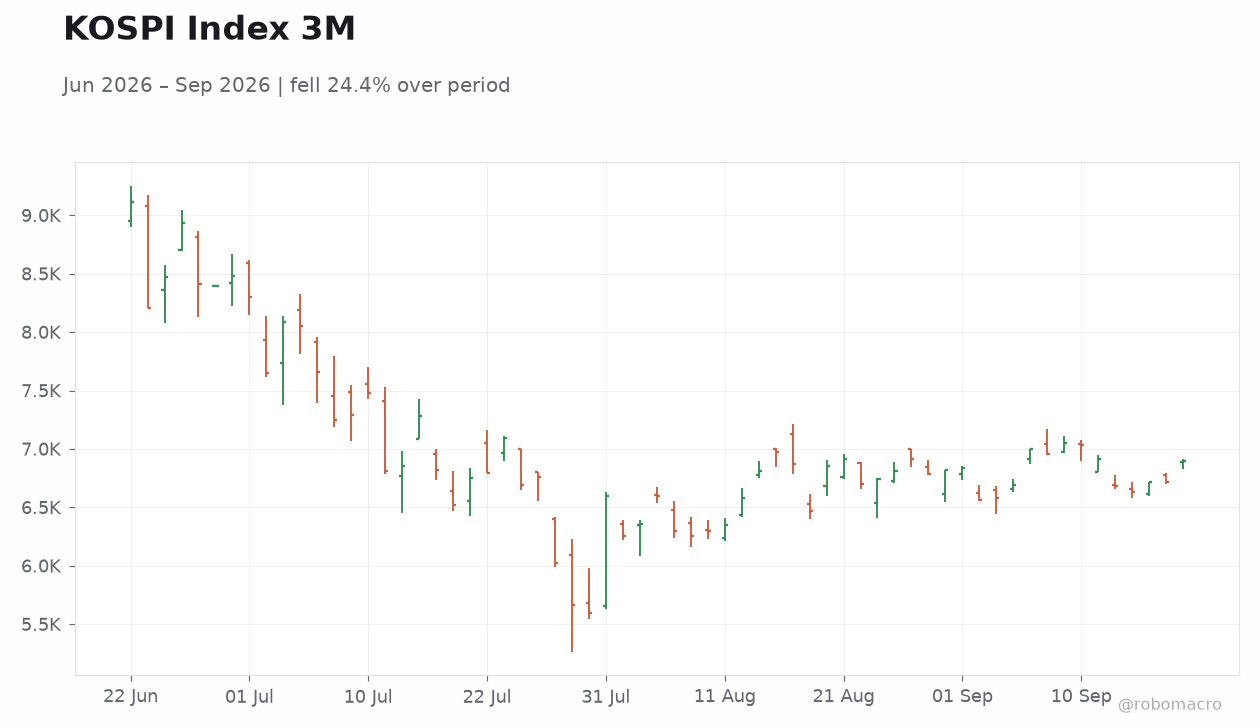
- KOSPI surged 2.66% to 6,894.23 on semiconductor gains while USD/KRW eased 0.30% to 1,375.34.
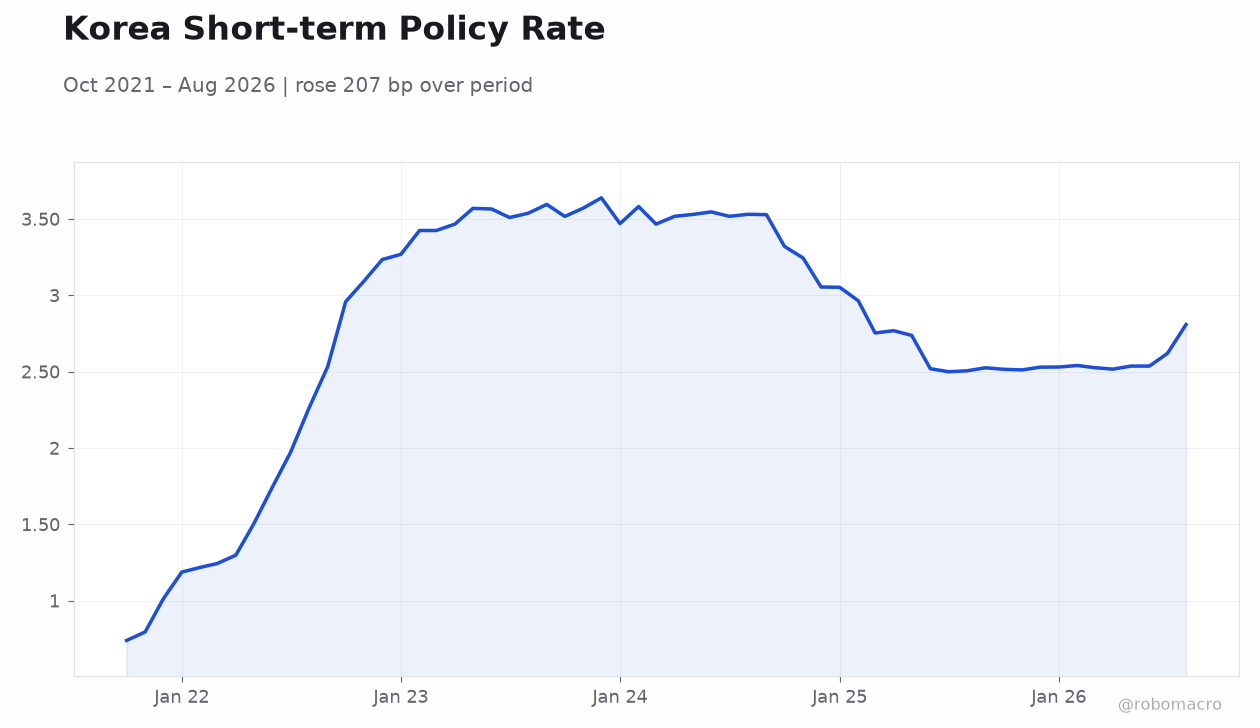
- Bank of Korea weighs October tightening amid wider US rate gap and persistent 3.09% CPI.
- Consumer Confidence Index release tomorrow offers first read on sentiment ahead of potential policy shift.
Yesterday's Recap
Equity markets advanced sharply on September 20 as Samsung rose 3.37% to 261,000 and SK Hynix jumped 6.42% to 1,857,000, lifting KOSPI 2.66% to 6,894.23 and KOSDAQ 0.60% to 827.12. The won firmed 0.30% to 1,375.34 against the dollar. Korea 3-year government yield rose 2 bp to 4.06% while the 10-year yield eased 1 bp to 4.46%, producing modest curve flattening.
No data releases occurred. Market participants focused on semiconductor outperformance and the absence of fresh policy signals. Bitcoin gained 6.77% while Brent crude fell 7.62% and gold slipped 0.99%.
Equity strength remained concentrated in chip names, with traders monitoring Bank of Japan signals that supported rotation into Korean semiconductor stocks.
The Day Ahead
The Consumer Confidence Index for September prints at 13:00 KST on September 22 with the prior reading at 104.5. Markets will parse any deviation for clues on household resilience ahead of the October policy meeting. A softer print could temper expectations for near-term tightening while a firmer outcome would reinforce the case for action.
The release carries medium impact and remains the sole scheduled item. Traders will also monitor cross-border flows into Korean assets following the trial launch of 24-hour won settlement. Any surprise reading could shift near-term BoK expectations and influence KTB yields and the won.
Other Economic Notes
South Korea is expanding jet-fuel exports to address Europe’s fourth-quarter supply shortfall. Plans advanced for a won-only blockchain that embeds compliance features to support domestic digital-asset infrastructure. Industrial Bank of Korea established an AI transformation committee to accelerate internal efficiency.
Samsung and SK Hynix are nearing completion of share buybacks, removing a key source of equity demand. These developments underscore export orientation and technology-sector adaptation. The 24-hour won settlement trial supports greater foreign participation and could ease external financing conditions even if rates rise.