Korea Macro Daily(Beta Mode)
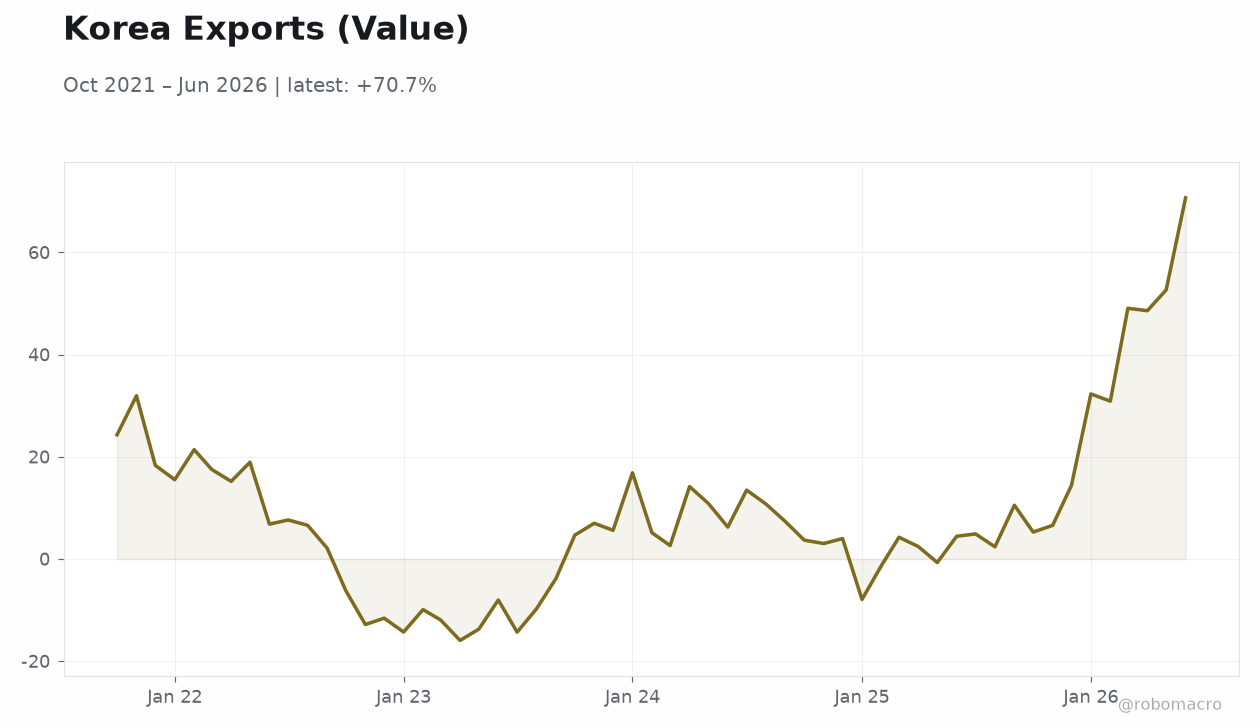
Export Surge Bolsters Won, Supports BoK Stance
Market Snapshot
| Asset | Level | Change |
|---|---|---|
| KOSPI | 7,007.72 | +1.65% |
| KOSDAQ | 836.27 | +1.11% |
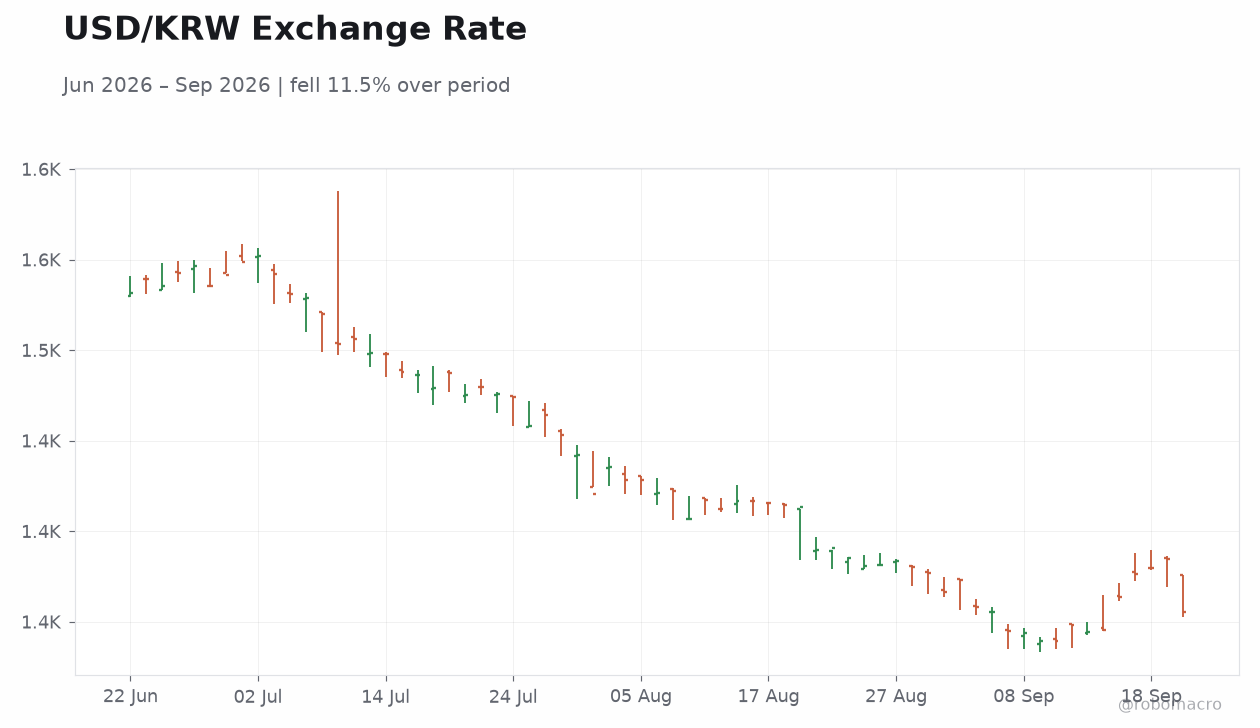
| USD/KRW | 1,355.10 | -2.15% |
| Samsung | 276,500.00 | +0.91% |
| SK Hynix | 1,840,000.00 | -1.50% |
| Brent Crude | 98.65 | -1.68% |
| Gold | 4,396.20 | +0.28% |
| Bitcoin | 86,233.77 | -0.43% |
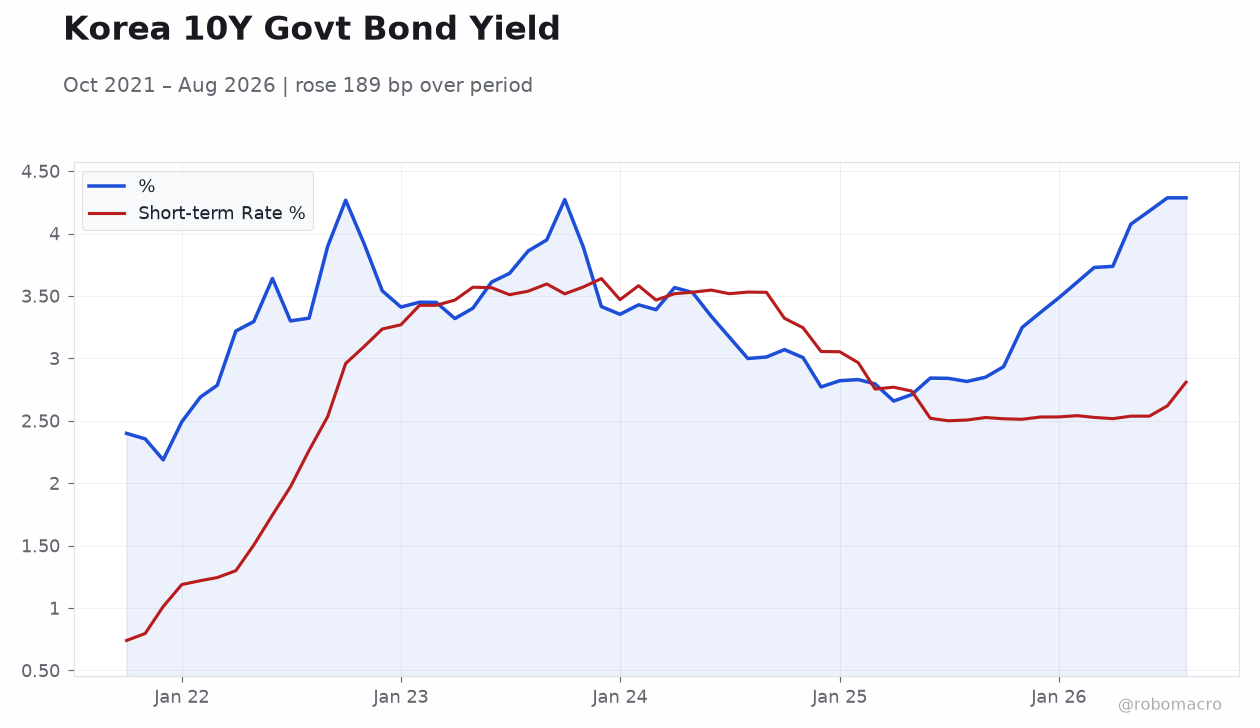
| Korea 3Y Govt Yield | 4.04% | -2 bp |
| Korea 10Y Govt Yield | 4.46% | 0 bp |
Prior Economic Events
| Data | Prior | Cons | Actual |
|---|---|---|---|
| No events available | |||
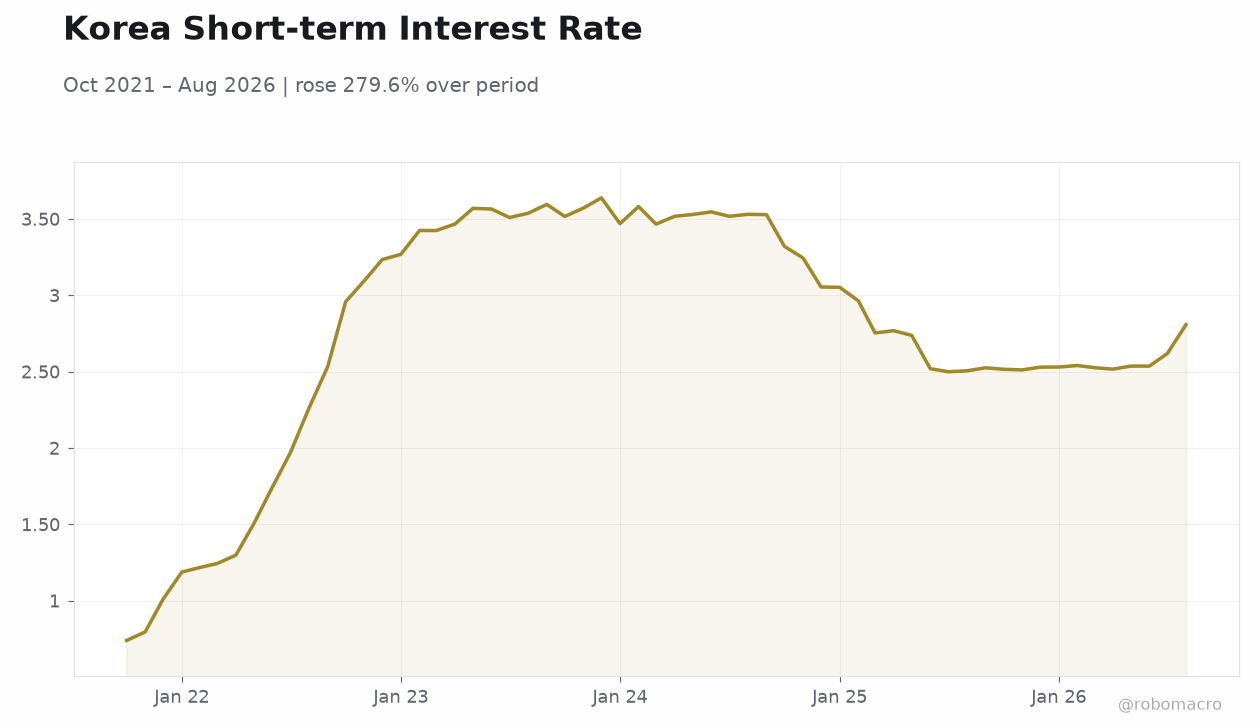 Korea Short-term Interest Rate | Type: macro_line | %: 2.809 (2026-08-01) | Range: 0.74–3.639 | Trend(6pt): 0.74,3.235,3.582,2.769,2.537,2.809
Today's Economic Events
| Data | Prior | Cons | Time |
|---|---|---|---|
| No events available | |||
- KOSPI gains 1.65% to 7,007.72 as USD/KRW falls 2.15% to 1,355.10 on export strength
- BoK tests 24-hour won settlement system to improve foreign investor access
- No rate move priced in; 3Y yield eases 2 bp to 4.04% while 10Y holds at 4.46%
Yesterday's Recap
Equity markets advanced with KOSPI climbing 1.65% to close at 7,007.72 and KOSDAQ rising 1.11% to 836.27. Samsung Electronics gained 0.91% to 276,500 while SK Hynix declined 1.50% to 1,840,000. The won strengthened sharply as USD/KRW dropped 2.15% to 1,355.10.
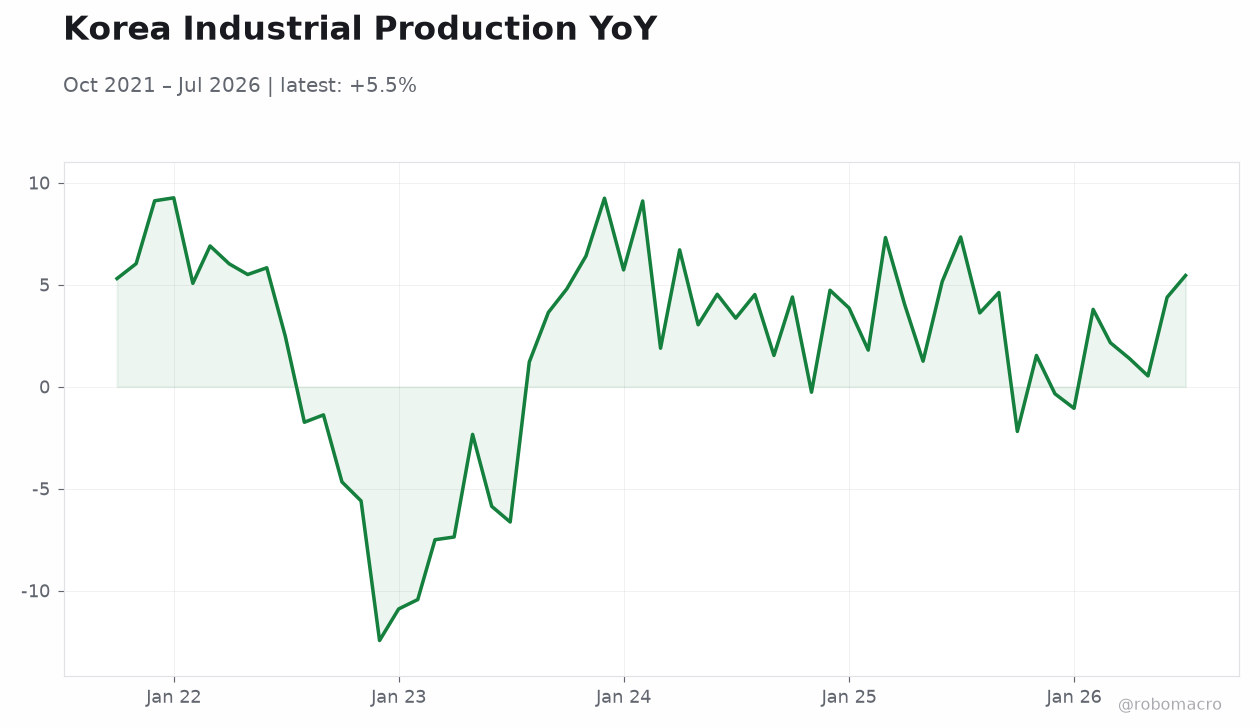
Korea 3Y government yield fell 2 bp to 4.04% and the 10Y yield stayed unchanged at 4.46%. No economic data releases occurred. News highlighted an export surge that Commerzbank said supports the BoK’s current policy stance.
The central bank noted the won’s appreciation is fast but not excessive. Brent crude declined 1.68% to 98.65 while gold edged 0.28% higher to 4,396.20. Bitcoin slipped 0.43% to 86,233.77.
The absence of fresh indicators left markets focused on external demand signals and the BoK’s measured tone on currency moves.
The Day Ahead
No scheduled data releases or Bank of Korea speeches are set for 22 September. Markets will monitor ongoing Chuseok holiday fuel-price cap extensions amid Brent crude at 98.65. Attention remains on won volatility near the 1,400 level and any follow-up comments from BoK officials on settlement system trials.
Equity flows may stay supported by semiconductor sector positioning ahead of global tech earnings. The absence of new indicators leaves focus on external drivers such as US policy signals and regional supply developments. Traders will also track any updates on delayed payments owed to Korean firms by Iraq and potential refining margin support from Europe’s jet-fuel shortfall.
Other Economic Notes
Korean defense and construction firms face 565 billion won in delayed payments from Iraq, adding pressure on corporate cash flows. The government extended fuel subsidies to cushion households during the holiday period despite Brent prices near 98.65. Europe’s Q4 jet-fuel shortfall has positioned South Korea as an emerging supplier, supporting refining margins.
Export momentum continues to underpin the won and reduce near-term easing pressure on policy. ↓ p.2