Korea Macro Daily(Beta Mode)
Chip Windfall Lifts Sentiment, Yields Ease
Market Snapshot
| Asset | Level | Change |
|---|---|---|
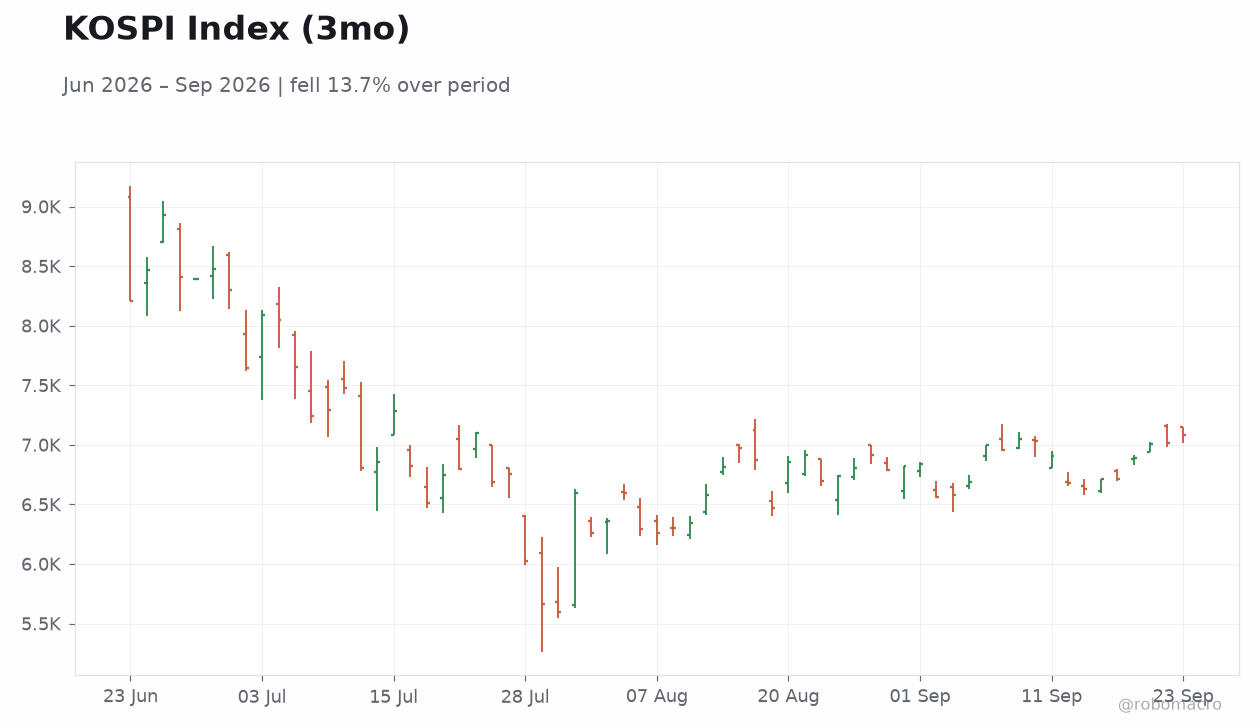
| KOSPI | 7,080.92 | +0.90% |
| KOSDAQ | 844.48 | +1.21% |
| USD/KRW | 1,354.99 | -0.90% |
| Samsung | 285,500.00 | +3.25% |
| SK Hynix | 1,862,000.00 | +1.20% |
| Brent Crude | 97.44 | -8.59% |
| Gold | 4,321.20 | +0.54% |
| Bitcoin | 84,602.37 | +0.23% |
| Korea 3Y Govt Yield | 4.01% | -3 bp |
| Korea 10Y Govt Yield | 4.39% | -7 bp |
Prior Economic Events
| Data | Prior | Cons | Actual |
|---|---|---|---|
| Consumer Confidence Index | 104.50 | - | 106.60 |
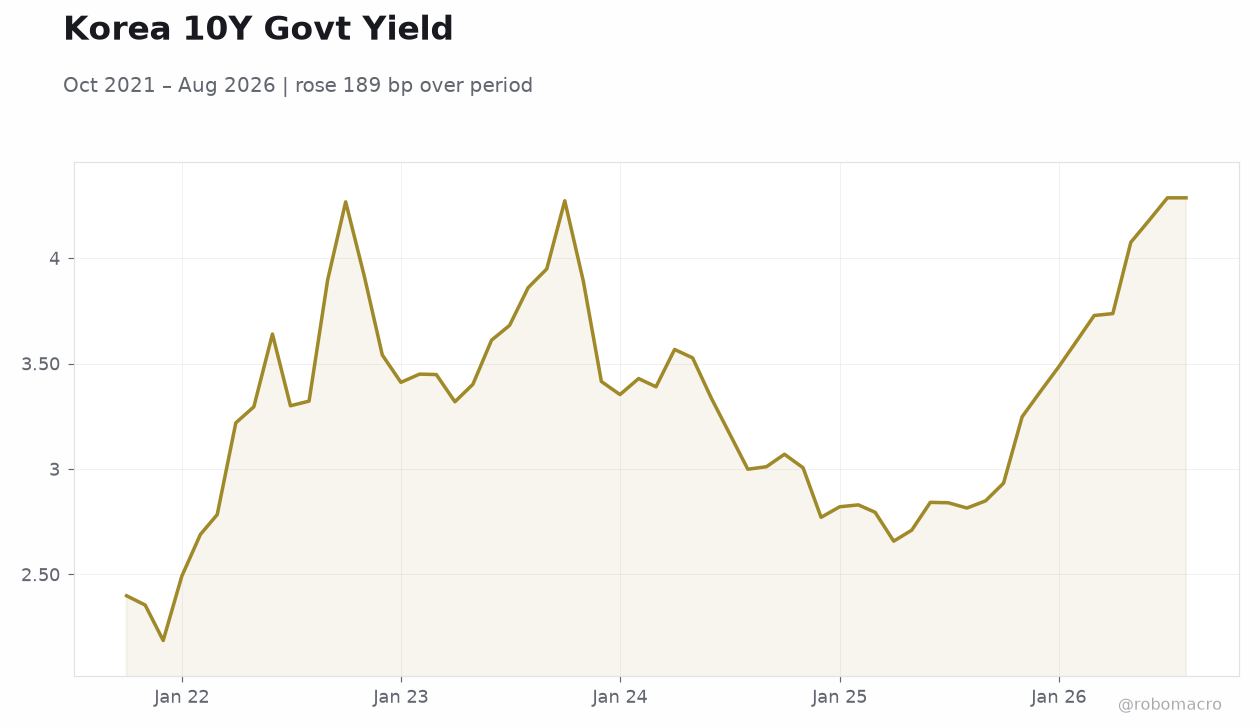 Korea 10Y Govt Yield | Type: macro_line | 10Y Yield %: 4.286 (2026-08-01) | Range: 2.187–4.286 | Trend(6pt): 2.399,3.541,3.429,2.658,4.181,4.286
Today's Economic Events
| Data | Prior | Cons | Time |
|---|---|---|---|
| No events available | |||
- Excess tax revenue may exceed 50 trillion won on semiconductor strength.
- KOSPI rises 0.9 percent while Samsung gains 3.25 percent and the won strengthens.
- Consumer confidence climbs to 106.6, supporting domestic demand outlook.
Yesterday's Recap
South Korea’s Consumer Confidence Index rose to 106.6 in September from 104.5, marking the sole data release and aligning with improved equity performance. The KOSPI advanced 0.90 percent to 7,080.92 while the KOSDAQ gained 1.21 percent to 844.48. Samsung Electronics climbed 3.25 percent to 285,500 won and SK Hynix added 1.20 percent to 1,862,000 won.
The won strengthened 0.90 percent to 1,354.99 against the dollar. Korea’s three-year government yield eased 3 bp to 4.01 percent and the ten-year yield eased 7 bp to 4.39 percent. Brent crude dropped 8.59 percent to 97.44 dollars per barrel amid broader commodity moves.
The Day Ahead
No economic releases are scheduled for 27 September, leaving markets to digest the prior day’s consumer confidence improvement and equity gains. Attention will remain on follow-through from the semiconductor-led tax windfall estimates and any updates on property-finance exposure. Investors may monitor foreign flows into names such as SK Square and Korean Air after recent large bets.
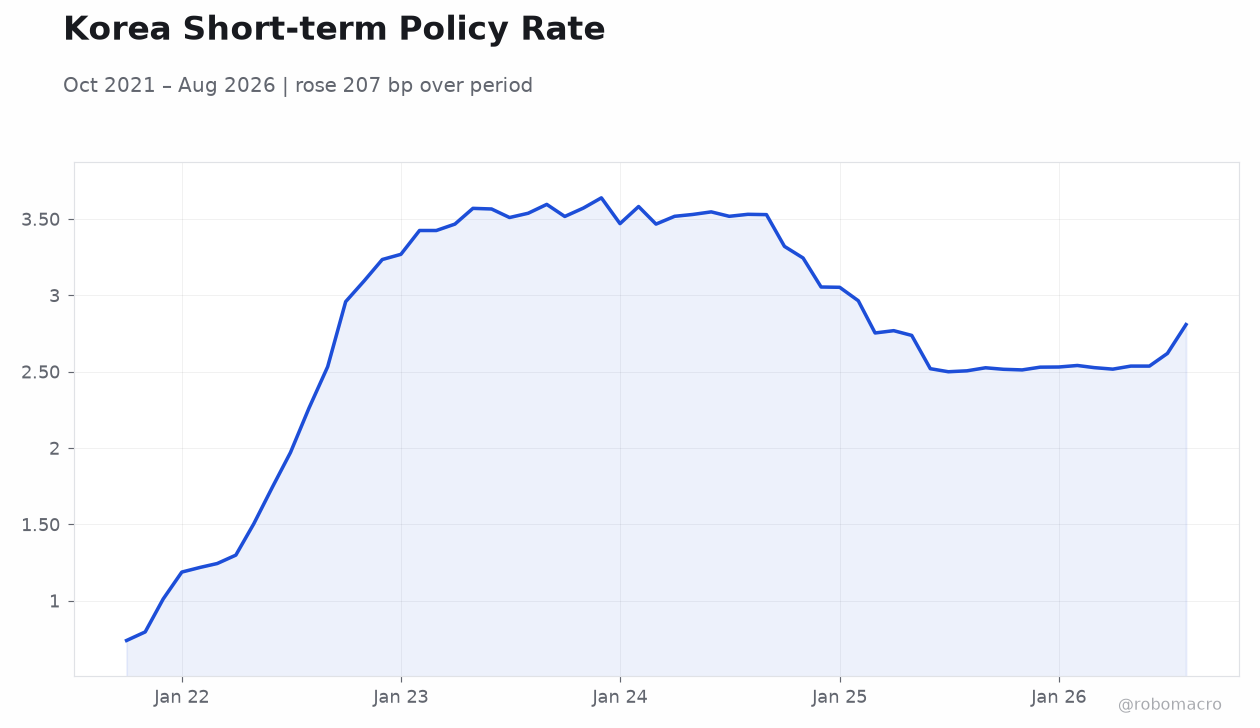
The absence of Bank of Korea events keeps focus on existing forward guidance and inflation data at 3.09 percent year-over-year. Market participants will also track global chip demand signals that could reinforce the revenue outlook.
Other Economic Notes
Reports indicate South Korea’s excess tax revenue could surpass 50 trillion won this year, driven primarily by the semiconductor cycle. Property-finance exposure has reached 4,300 trillion won, highlighting ongoing balance-sheet risks for lenders. The new Bank of Korea governor has voiced support for central-bank digital currencies while ruling out stablecoins.
An impersonation scheme targeting Governor Lee Chang-yong for illegal stock tips was reported, though it does not alter policy signals. These developments underscore the interplay between chip-driven fiscal gains and financial-stability considerations.
Global Macro News
The sharp decline in Brent crude to 97.44 dollars benefits Korea as a net energy importer and supports corporate margins. ↓ p.2