Korea Macro Daily(Beta Mode)
Won Firms on Export Outlook, Intervention
Market Snapshot
| Asset | Level | Change |
|---|---|---|
| KOSPI | 6,870.81 | -0.27% |
| KOSDAQ | 849.80 | +0.38% |
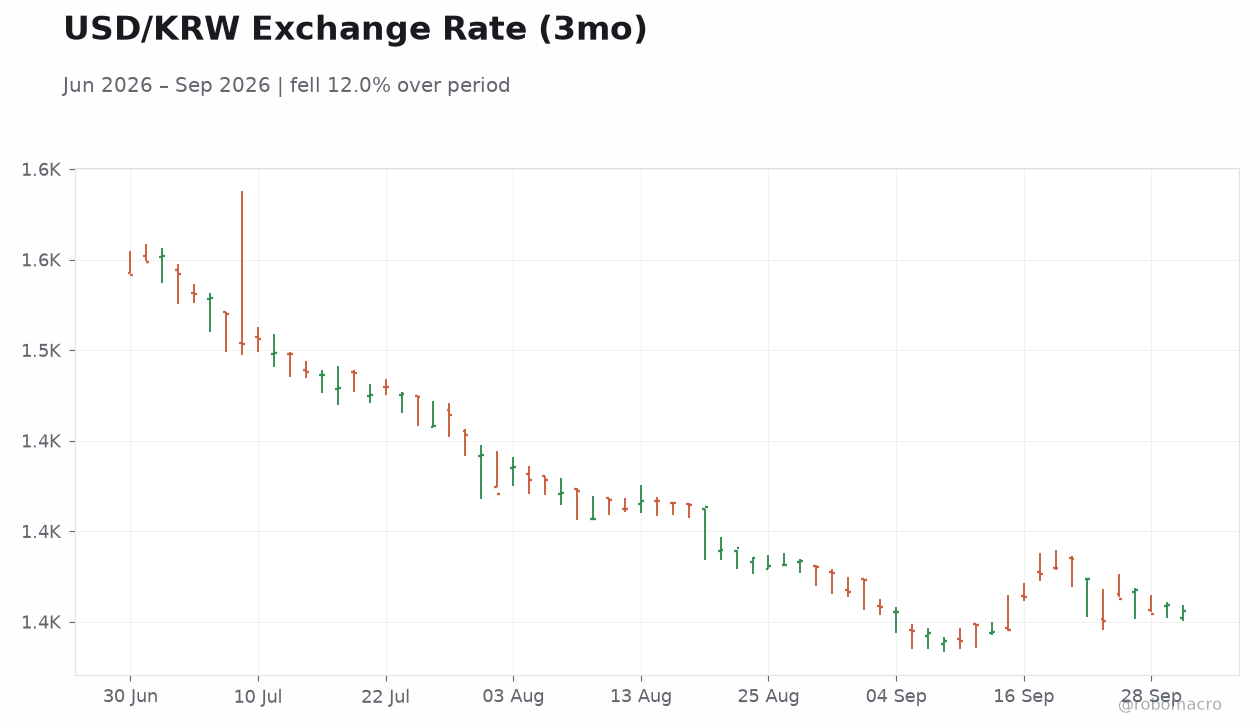
| USD/KRW | 1,356.19 | -0.25% |
| Samsung | 268,500.00 | -1.47% |
| SK Hynix | 1,776,000.00 | +0.62% |
| Brent Crude | 97.94 | -4.53% |
| Gold | 4,190.70 | +0.26% |
| Bitcoin | 83,696.25 | +0.09% |
| Korea 3Y Govt Yield | 4.08% | -4 bp |
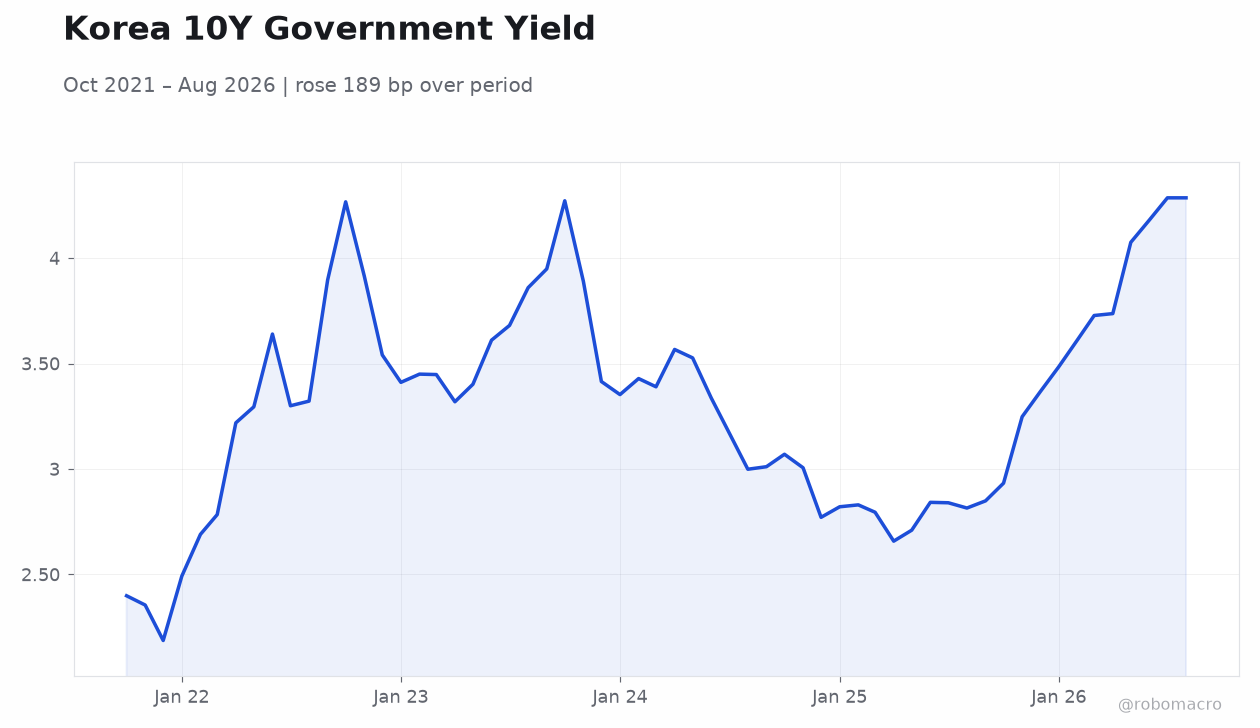
| Korea 10Y Govt Yield | 4.48% | +9 bp |
Prior Economic Events
| Data | Prior | Cons | Actual |
|---|---|---|---|
| Business Confidence Index | 81 | - | 79 |
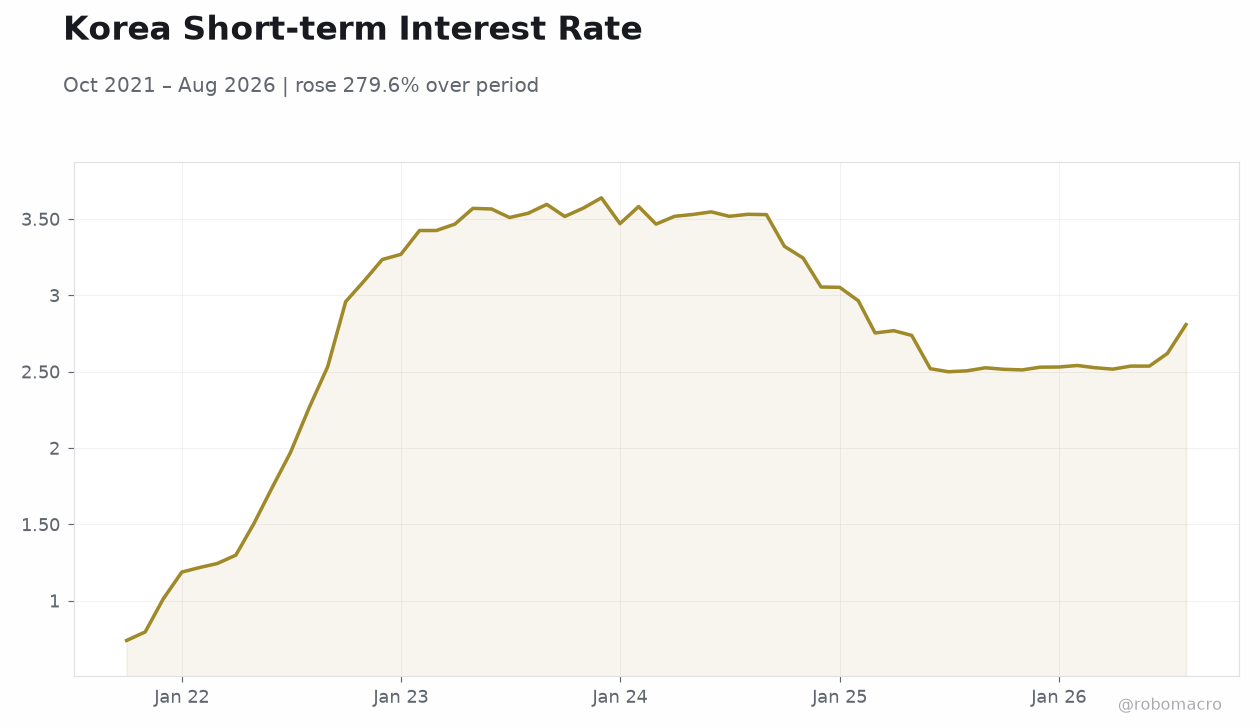 Korea Short-term Interest Rate | Type: macro_line | Rate %: 2.809 (2026-08-01) | Range: 0.74–3.639 | Trend(6pt): 0.74,3.235,3.582,2.769,2.537,2.809
Today's Economic Events
| Data | Prior | Cons | Time |
|---|---|---|---|
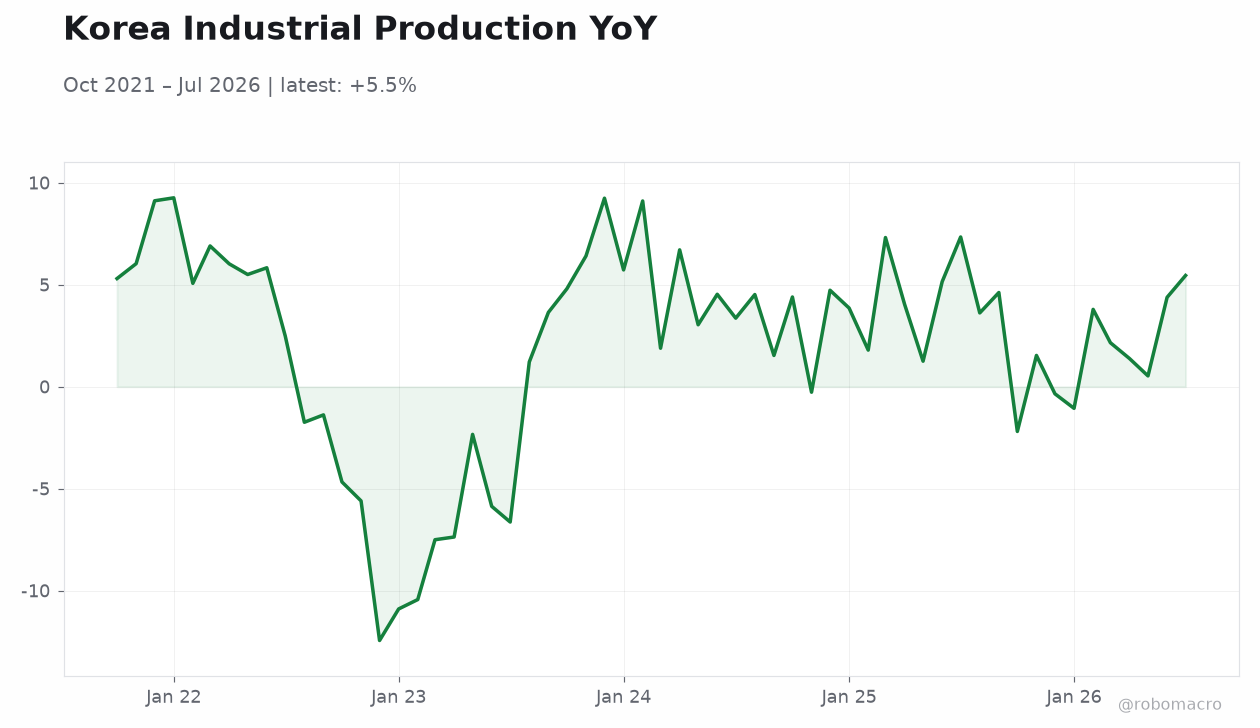
| Exports Year-over-Year | 68.70 | 61.70 | 16:00 |
| S&P Global Manufacturing PMI Index | 52.30 | - | 16:30 |
| Thursday (2026-10-01) | |||
| Inflation Rate Year-over-Year | 3.10 | 2.90 | 15:00 |
- Business confidence falls to 79 from 81 as export data loom
- Won strengthens 0.25% to 1,356.19 amid $23 billion intervention
- KOSPI drops 0.27% to 6,870.81 while 10-year yield rises 9 bp
Yesterday's Recap
South Korea’s Business Confidence Index declined to 79 in September from 81 the prior month, signaling softer domestic sentiment amid ongoing external pressures. Markets digested reports that the Bank of Korea sold a net $9.612 billion in the second quarter to support the won, with total intervention spending reaching $23 billion year-to-date. The Korean won rose 0.25% to 1,356.19 on dollar selling and an improved export outlook, while KOSPI fell 0.27% to 6,870.81 and KOSDAQ gained 0.38% to 849.80.
Samsung Electronics declined 1.47% to 268,500 won, offsetting a 0.62% gain in SK Hynix to 1,776,000 won. The Korea 3-year government yield eased 4 bp to 4.08% while the 10-year yield climbed 9 bp to 4.48%, reflecting divergent rate expectations. Brent crude dropped 4.53% to 97.94, and gold edged 0.26% higher to 4,190.70.
Fiscal, monetary and financial authorities agreed to emergency bond buybacks should yields surge sharply, underscoring coordinated efforts to stabilize borrowing costs.
The Day Ahead
South Korea will release September exports year-over-year at 16:00 ET, with consensus at 61.7% versus 68.7% previously, providing a direct read on semiconductor and manufacturing demand. The S&P Global Manufacturing PMI for September follows at 16:30 ET, following 52.3 in August. Thursday’s inflation rate year-over-year print at 15:00 ET carries the highest market sensitivity, with consensus at 2.9% against 3.1% prior; the outcome will shape expectations ahead of the October MPC meeting.
Stablecoin legislation developments and any further FSC-Bank of Korea coordination on the interagency consultative body may also surface. Traders will monitor USD/KRW reaction to the export figure for signs of sustained intervention support.
Other Economic Notes
Authorities signaled readiness for emergency government bond purchases to ease pressure on borrowers as yields climb, highlighting fiscal-monetary coordination. The FSC is advancing won-stablecoin rules that will formally include Bank of Korea participation through a joint consultative body, aiming to manage financial stability risks. KOSPI remains on track for its steepest quarterly decline since 2020 despite the won’s recent firming.
↓ p.2