Korea Macro Daily(Beta Mode)
Exports Beat Forecasts as Yields Fall 7bp
Market Snapshot
| Asset | Level | Change |
|---|---|---|
| KOSPI | 6,838.04 | -0.48% |
| KOSDAQ | 855.91 | +0.72% |
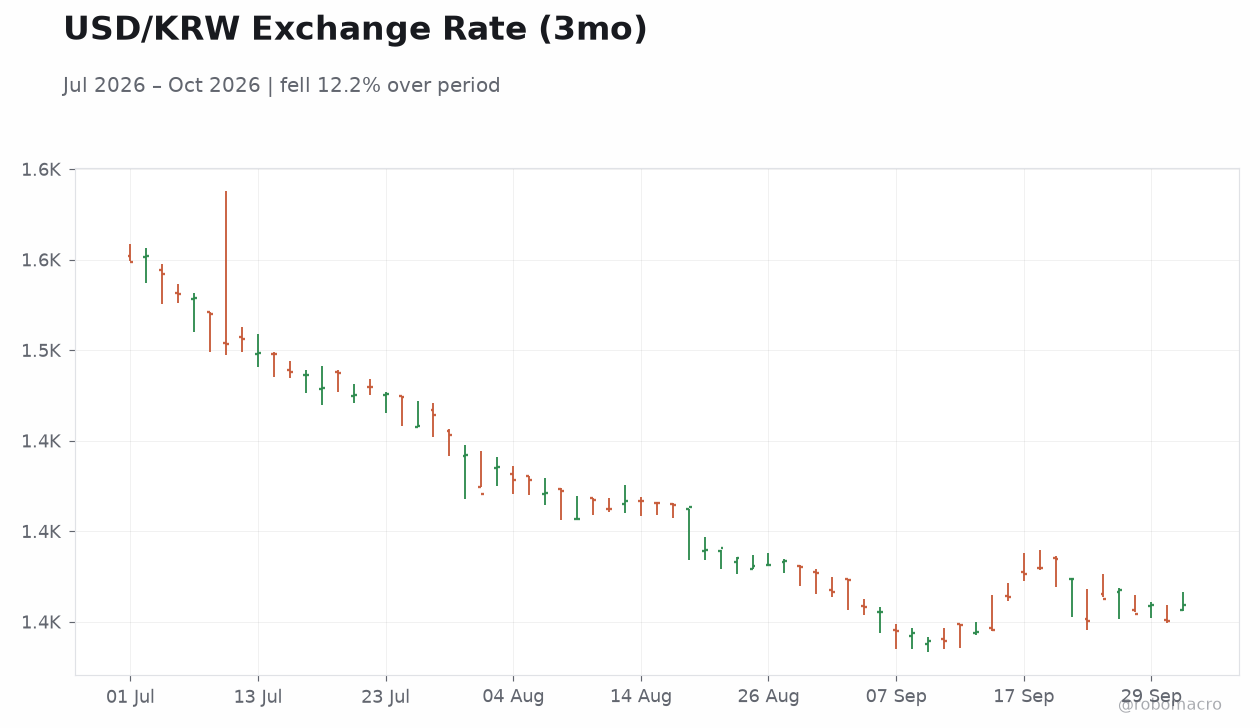
| USD/KRW | 1,359.53 | +0.67% |
| Samsung | 276,000.00 | +2.79% |
| SK Hynix | 1,833,000.00 | +3.21% |
| Brent Crude | 102.30 | -1.19% |
| Gold | 4,206.80 | +0.48% |
| Bitcoin | 84,621.33 | +1.28% |
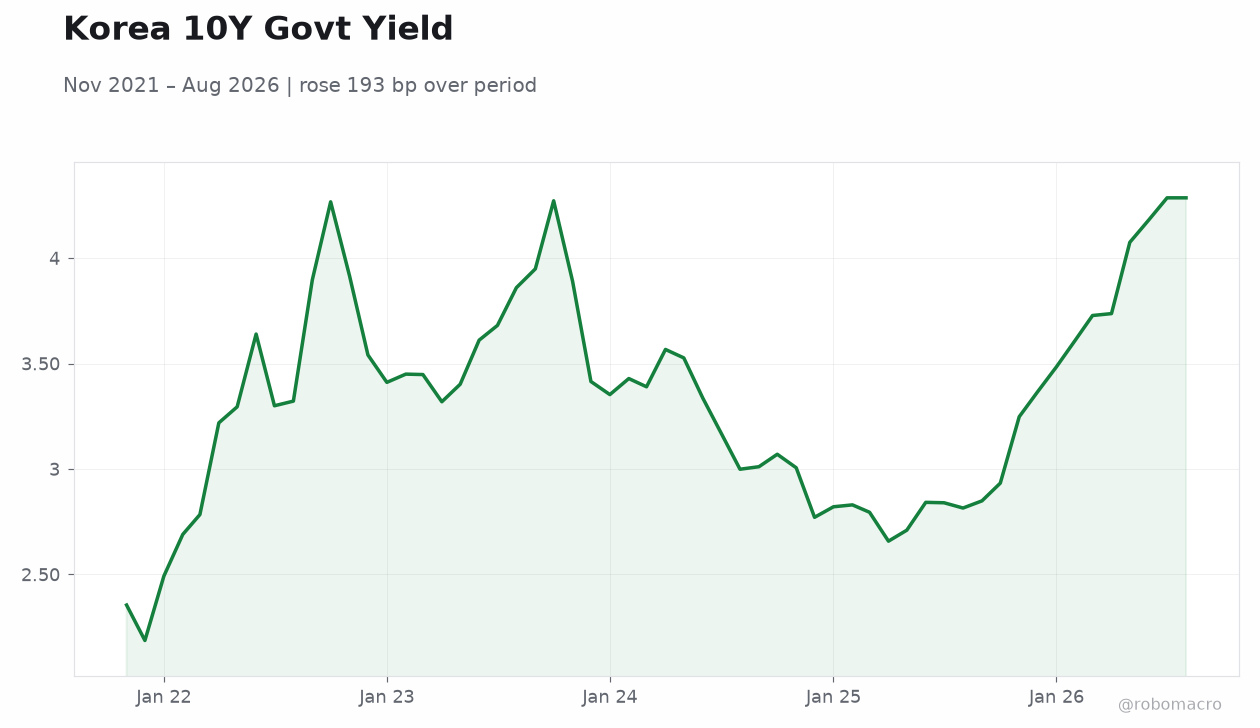
| Korea 3Y Govt Yield | 4.01% | -7 bp |
| Korea 10Y Govt Yield | 4.41% | -7 bp |
Prior Economic Events
| Data | Prior | Cons | Actual |
|---|---|---|---|
| Business Confidence Index | 81 | - | 79 |
| Exports Year-over-Year | 68.70 | 61.70 | 83.50 |
| S&P Global Manufacturing PMI Index | 52.30 | - | 53.90 |
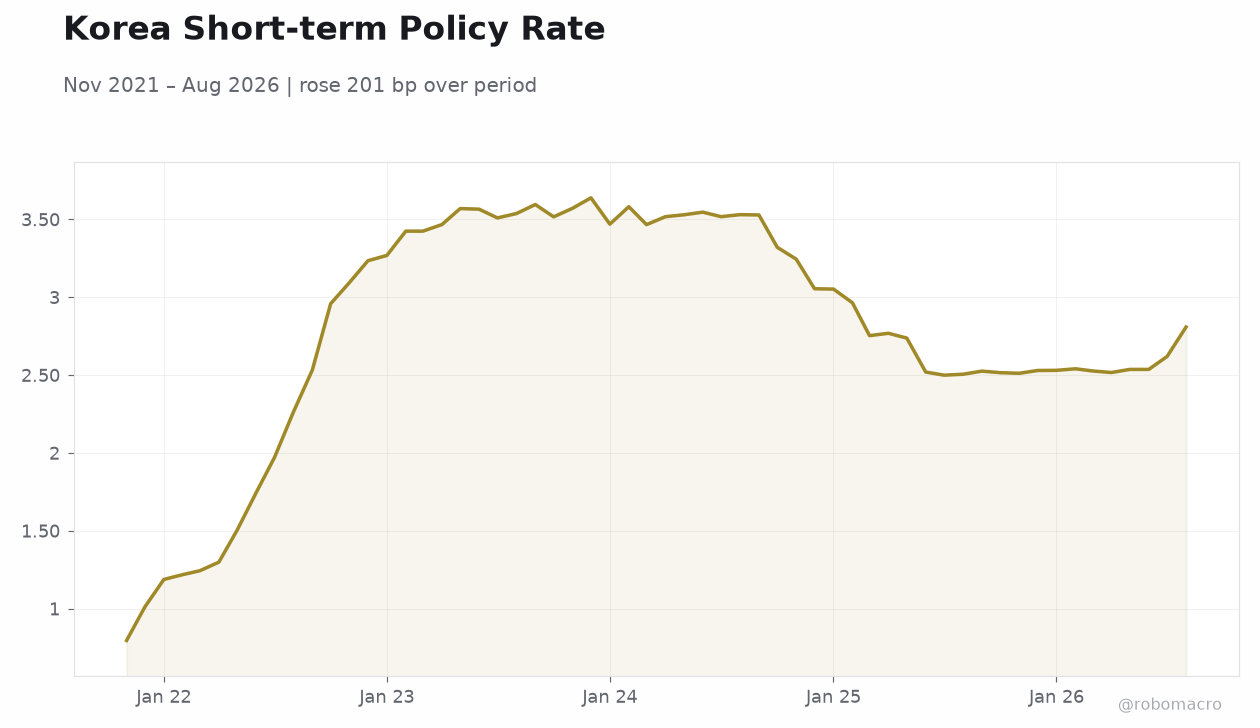 Korea Short-term Policy Rate | Type: macro_line | Policy Rate %: 2.809 (2026-08-01) | Range: 0.796–3.639 | Trend(6pt): 0.796,3.269,3.467,2.738,2.62,2.809
Today's Economic Events
| Data | Prior | Cons | Time |
|---|---|---|---|
| Inflation Rate Year-over-Year | 3.10 | 2.90 | 15:00 |
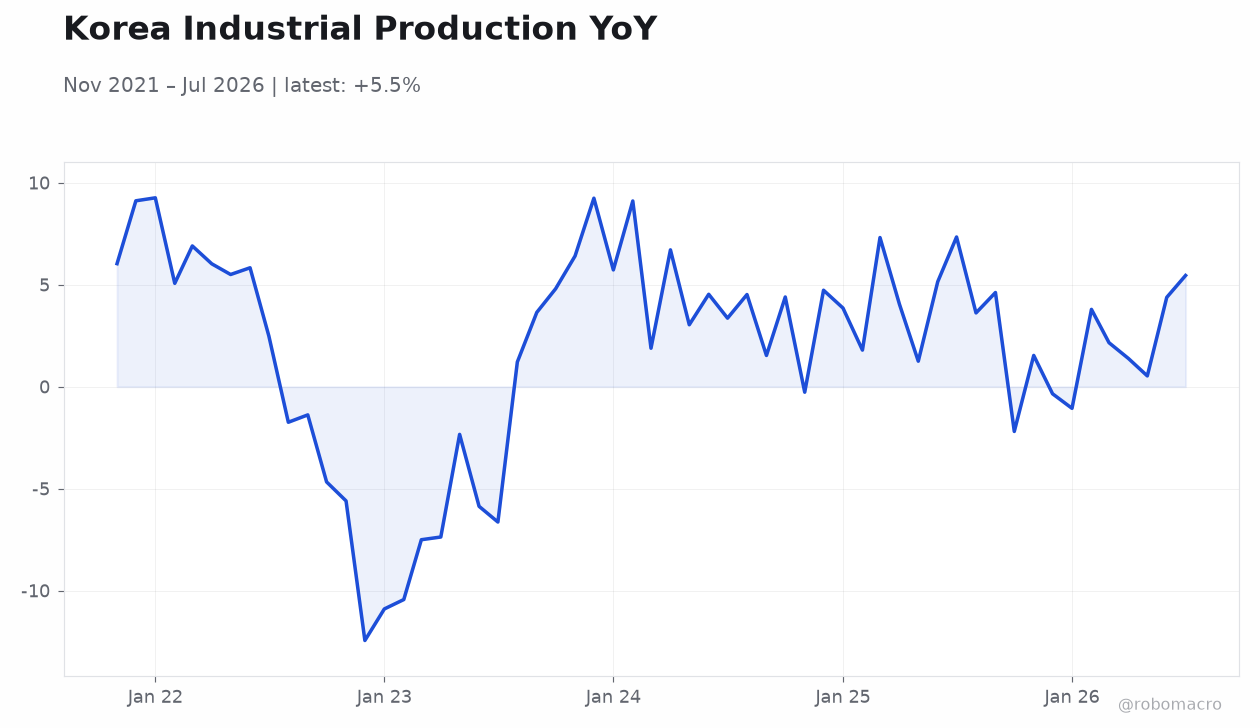
- Exports jumped 83.5% y/y, beating forecasts and underscoring semiconductor strength.
- KOSPI fell 0.48% while KOSDAQ rose 0.72%; 3-year and 10-year yields each dropped 7 bp.
- Inflation print due today will shape near-term BoK rate expectations.
Yesterday's Recap
South Korea’s exports rose 83.5% y/y on September 30, far above the 61.7% consensus and prior 68.7%, driven by continued semiconductor demand. The S&P Global Manufacturing PMI climbed to 53.9 from 52.3, signaling broader factory resilience. Business confidence slipped to 79 from 81.
KOSPI declined 0.48% to 6,838.04 while KOSDAQ advanced 0.72% to 855.91, with Samsung and SK Hynix gaining 2.79% and 3.21%. The Korea 3-year yield fell 7 bp to 4.01% and the 10-year yield eased 7 bp to 4.41%. USD/KRW rose 0.67% to 1,359.53 amid higher-yield concerns.
Brent crude declined 1.19% to 102.30. Equity moves occurred against a backdrop of KOSPI erasing quarterly gains and eyeing its steepest quarterly decline since 2020.
The Day Ahead
South Korea’s September CPI y/y is scheduled for release at 15:00, with consensus at 2.9% versus the prior 3.1%. The outcome will directly influence BoK policy pricing and prompt immediate moves in KTB yields and the won. No MPC members are slated to speak.
Equity traders will monitor semiconductor names for follow-through after yesterday’s gains. FX desks expect continued sensitivity to U.S. yield differentials.
Markets will also track any follow-up comments on the FSC’s expanded backstops and the 5 trillion won reduction in October bond supply, both aimed at containing rate volatility.
Other Economic Notes
The Bank of Korea observed that semiconductor-boom gains remain concentrated yet expect eventual spillovers to other sectors. The FSC expanded bond and money-market backstops to counter rate volatility. The government reduced October bond issuance by 5 trillion won to help contain yields.
A second public growth fund raised 214 billion won on debut. Households are displaying a learning effect, with repeated won spikes now denting consumption less than earlier episodes. Korea Development Bank venture funding has halved over four years while large enterprises received over 20 trillion won.