Korea Macro Daily(Beta Mode)
KOSPI Slides 2.6% as Yields Firm; Won Steady
Market Snapshot
| Asset | Level | Change |
|---|---|---|
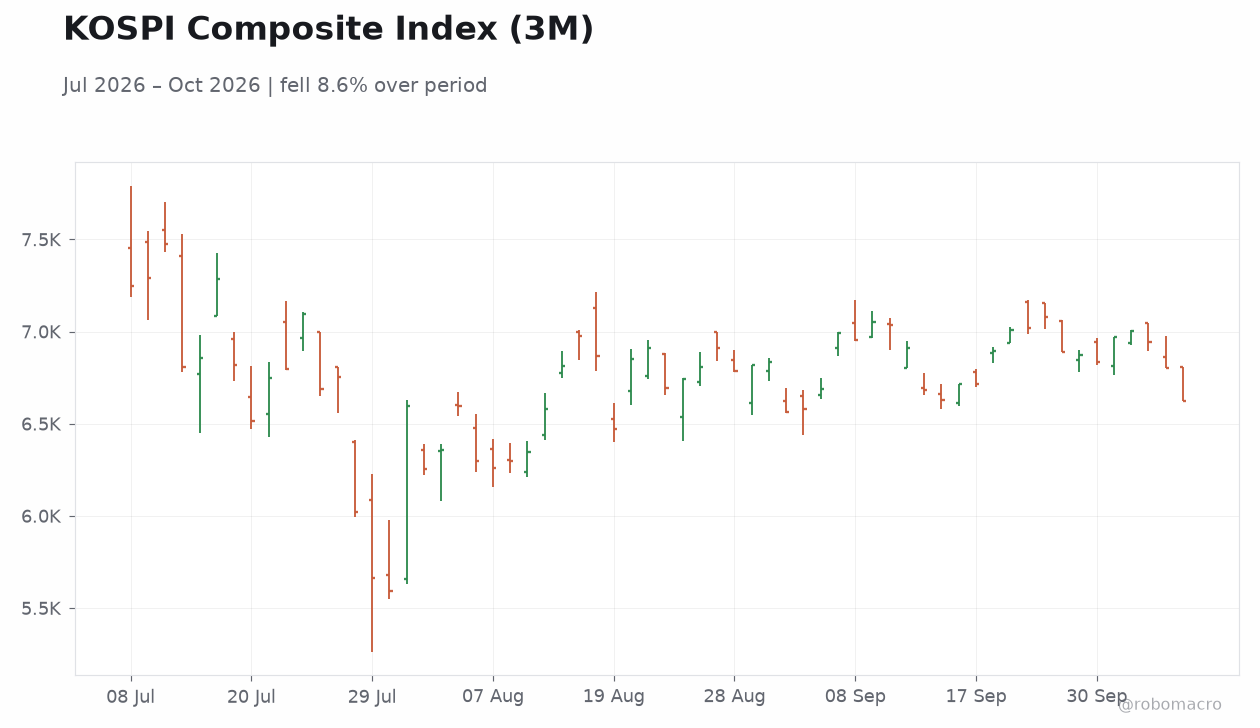
| KOSPI | 6,625.93 | -2.62% |
| KOSDAQ | 892.27 | -0.69% |
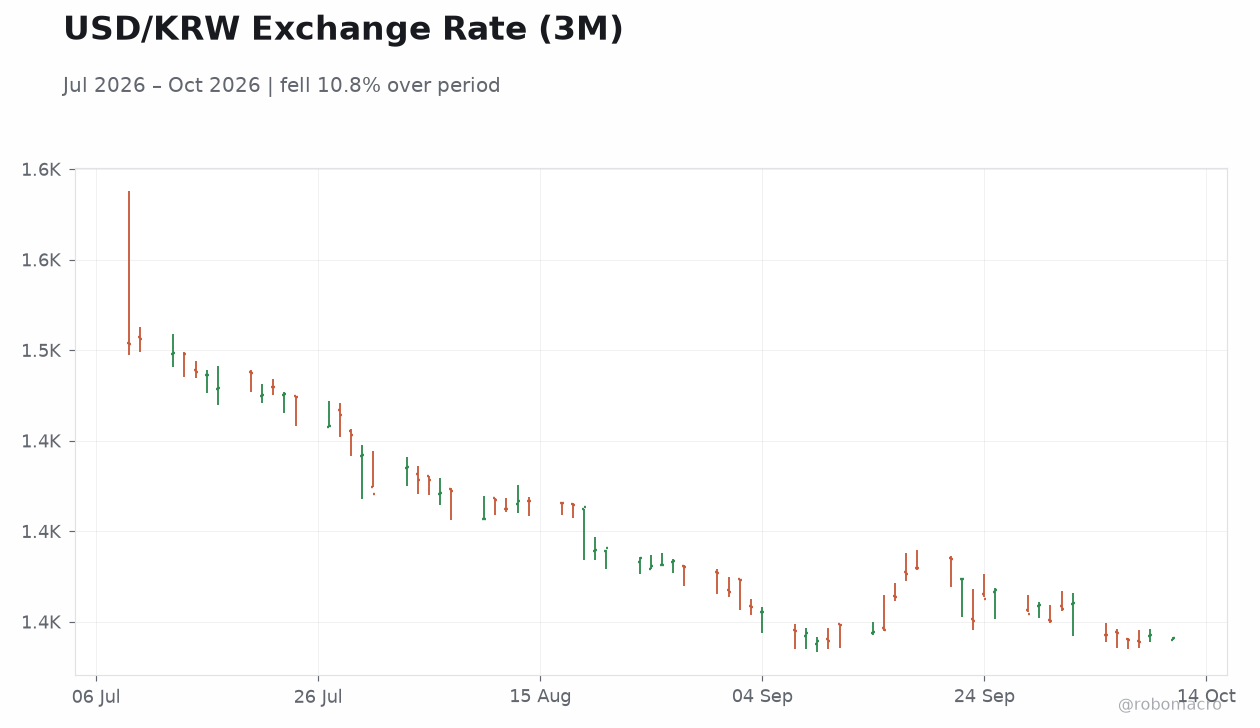
| USD/KRW | 1,341.25 | -0.13% |
| Samsung | 262,000.00 | -2.42% |
| SK Hynix | 1,681,000.00 | -2.44% |
| Brent Crude | 104.72 | +0.42% |
| Gold | 4,216.30 | +1.43% |
| Bitcoin | 83,505.77 | +0.72% |
| Korea 3Y Govt Yield | 3.98% | +2 bp |
| Korea 10Y Govt Yield | 4.39% | +1 bp |
Prior Economic Events
| Data | Prior | Cons | Actual |
|---|---|---|---|
| No events available | |||
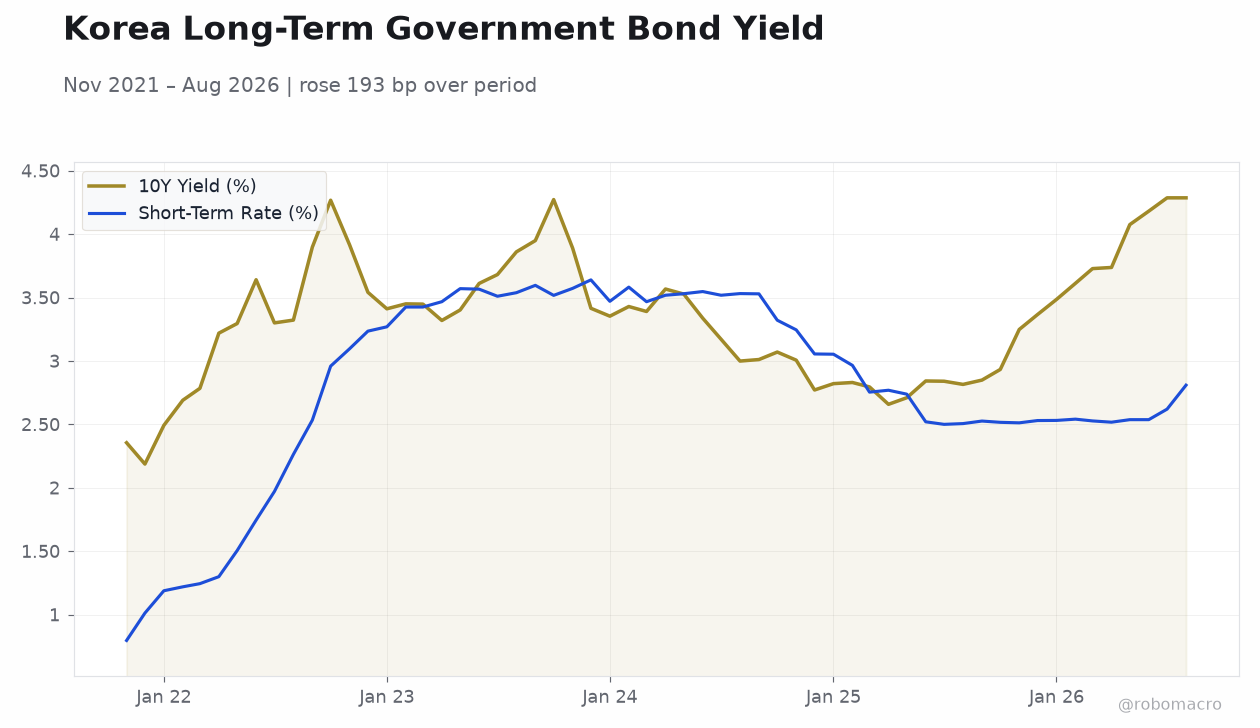 Korea Long-Term Government Bond Yield | Type: macro_line | 10Y Yield (%): 4.286 (2026-08-01) | Range: 2.187–4.286 | Trend(5pt): 2.355,3.411,3.39,2.71,4.286 | Short-Term Rate (%): 2.809 (2026-08-01) | Range: 0.796–3.639 | Trend(6pt): 0.796,3.269,3.467,2.738,2.62,2.809
Today's Economic Events
| Data | Prior | Cons | Time |
|---|---|---|---|
| No events available | |||
- KOSPI fell 2.62% to 6,625.93, with Samsung (-2.42%) and SK Hynix (-2.44%) dragging the index lower despite record AI-driven earnings expectations.
- Korea 3Y yield rose 2 bp to 3.98% and the 10Y gained 1 bp to 4.39%, while USD/KRW eased 0.13% to 1,341.25.
- BoK foreign asset returns near $12.5bn in 2025; over 1 million hacking attempts targeted the central bank and state lenders, sharpening financial-stability scrutiny.
Yesterday's Recap
Korean equities sold off sharply on Friday, with the KOSPI down 2.62% to 6,625.93 and the KOSDAQ slipping a milder 0.69% to 892.27. Samsung Electronics fell 2.42% to 262,000 won and SK Hynix dropped 2.44% to 1,681,000 won, reversing some of the momentum from their record quarterly results driven by AI chip demand. The won was comparatively resilient, with USD/KRW easing 0.13% to 1,341.25, suggesting the equity weakness was largely domestic positioning rather than a broad risk-off FX move.
Government bonds firmed modestly in yield terms: the 3-year rose 2 bp to 3.98% and the 10-year added 1 bp to 4.39%, a curve-flattening pattern consistent with reduced near-term policy easing expectations. Brent crude climbed 0.42% to $104.72, keeping imported-energy cost pressures on the radar for Korea's resource-poor economy. Gold advanced 1.43% to $4,216.30 and Bitcoin gained 0.72% to $83,505.77, with safe-haven demand persisting into the weekend.
No scheduled macro releases printed, leaving the price action to flow and earnings-driven positioning.
The Day Ahead
The calendar is quiet to start the week, with no scheduled Korean data releases on Monday, October 12. Attention will turn to the IMF's revised growth forecast for Korea, flagged by Seoul Economic Daily, which could recalibrate consensus around the export outlook amid US tariff and AI capex crosscurrents. Markets will also watch for follow-through on Samsung and SK Hynix earnings guidance, given their outsized weight in the KOSPI and their role in the AI supply chain.
Any BoK communication or commentary on financial stability will be scrutinised after reports of over 1 million hacking attempts on the central bank and state-run lenders. With a light data docket, regional leads from China and the US CPI print later in the week will shape sentiment into Korean markets. Liquidity may be thinner than usual, amplifying single-stock and sector moves.
Other Economic Notes
Corporate loan delinquencies at domestic banks exceeded 10 trillion won for the first time, a signal that credit quality is normalising as higher-for-longer rates bite. ↓ p.2