Korea Macro Daily(Beta Mode)
"KOSPI Slides on Chip Selloff; BoK Flags Hikes"
Market Snapshot
| Asset | Level | Change |
|---|---|---|
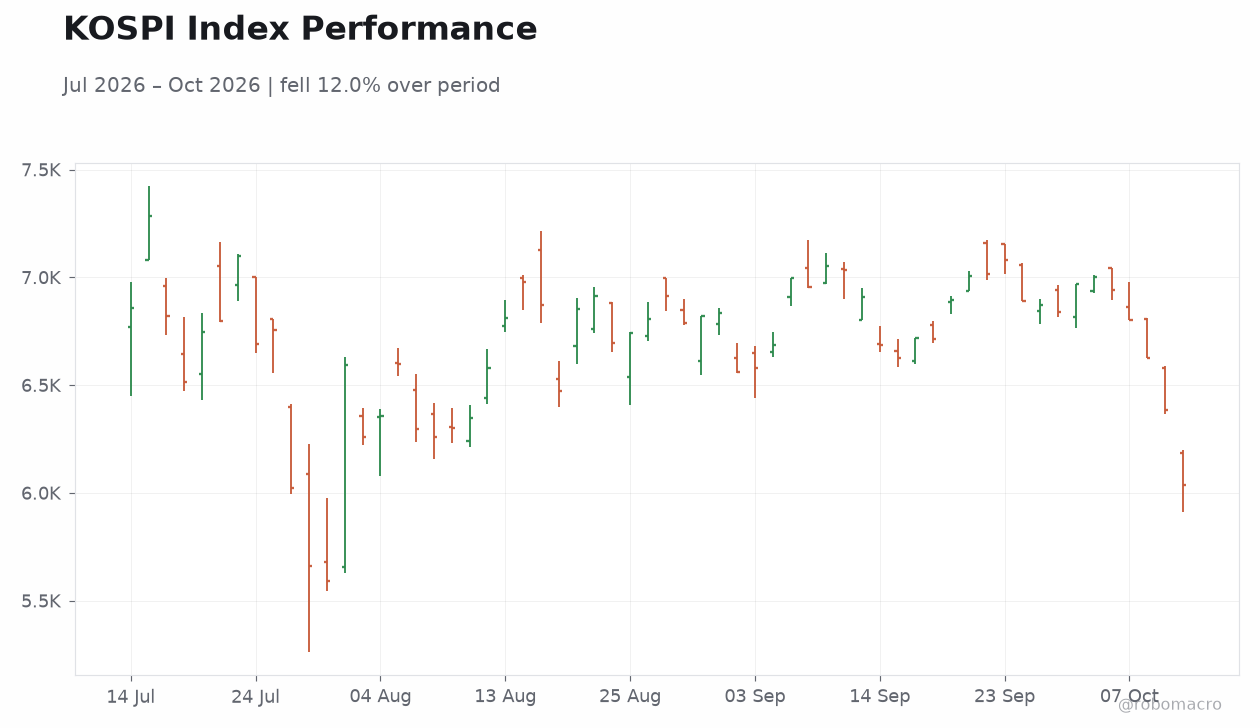
| KOSPI | 6,035.35 | -5.46% |
| KOSDAQ | 837.03 | -1.43% |
| USD/KRW | 1,341.12 | +0.52% |
| Samsung | 232,000.00 | +0.00% |
| SK Hynix | 1,419,000.00 | -1.66% |
| Brent Crude | 106.02 | +0.31% |
| Gold | 4,125.90 | -1.23% |
| Bitcoin | 81,600.81 | -1.80% |
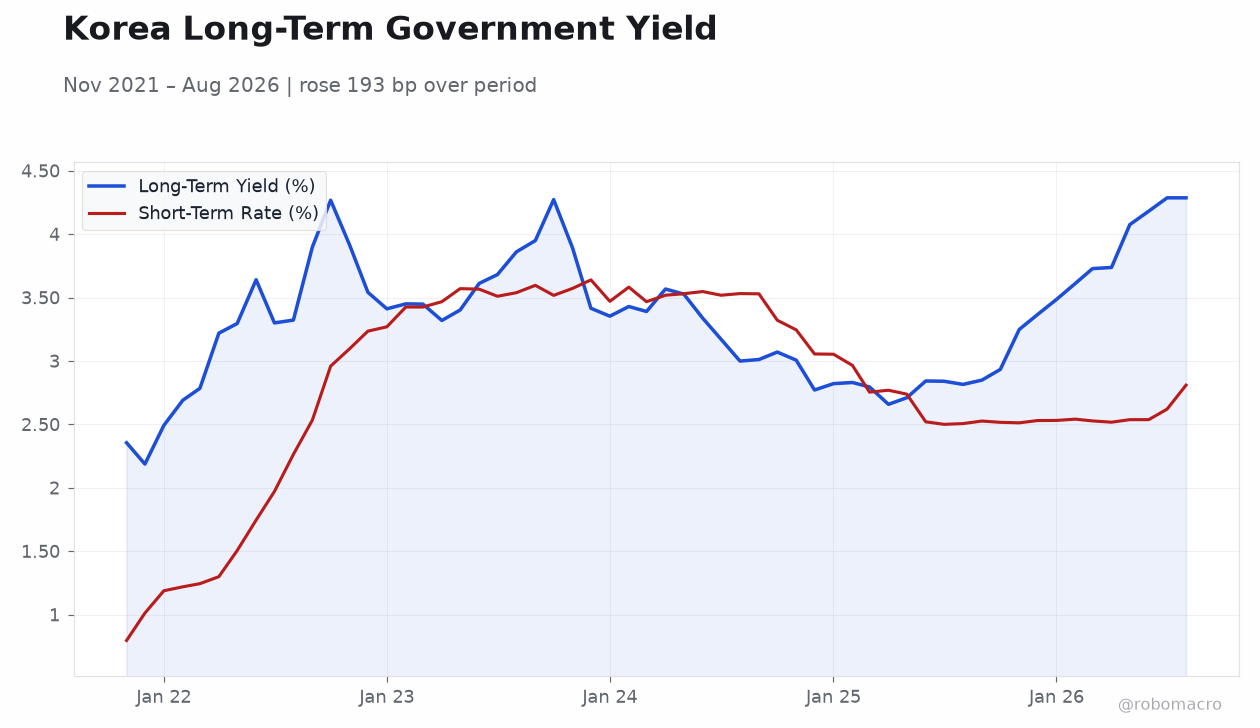
| Korea 3Y Govt Yield | 3.86% | -6 bp |
| Korea 10Y Govt Yield | 4.26% | +3 bp |
Prior Economic Events
| Data | Prior | Cons | Actual |
|---|---|---|---|
| No events available | |||
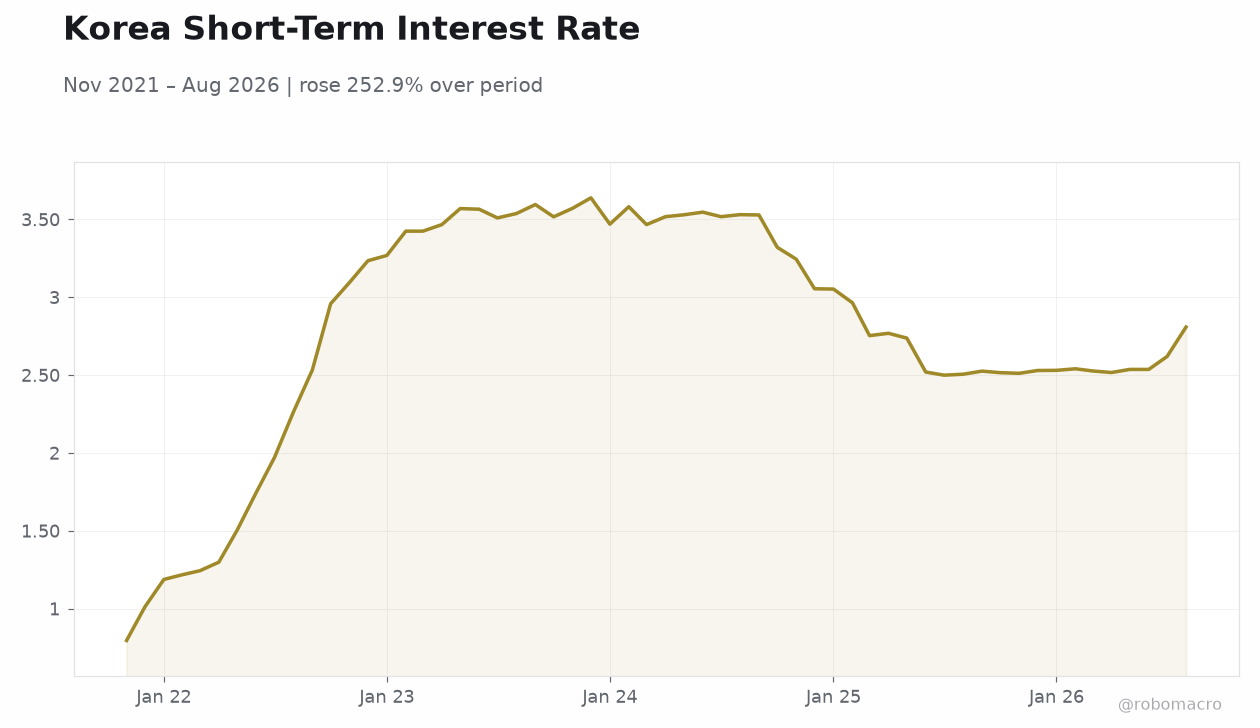 Korea Short-Term Interest Rate | Type: macro_line | Short-Term Rate (%): 2.809 (2026-08-01) | Range: 0.796–3.639 | Trend(6pt): 0.796,3.269,3.467,2.738,2.62,2.809
Today's Economic Events
| Data | Prior | Cons | Time |
|---|---|---|---|
| Thursday (2026-10-15) | |||
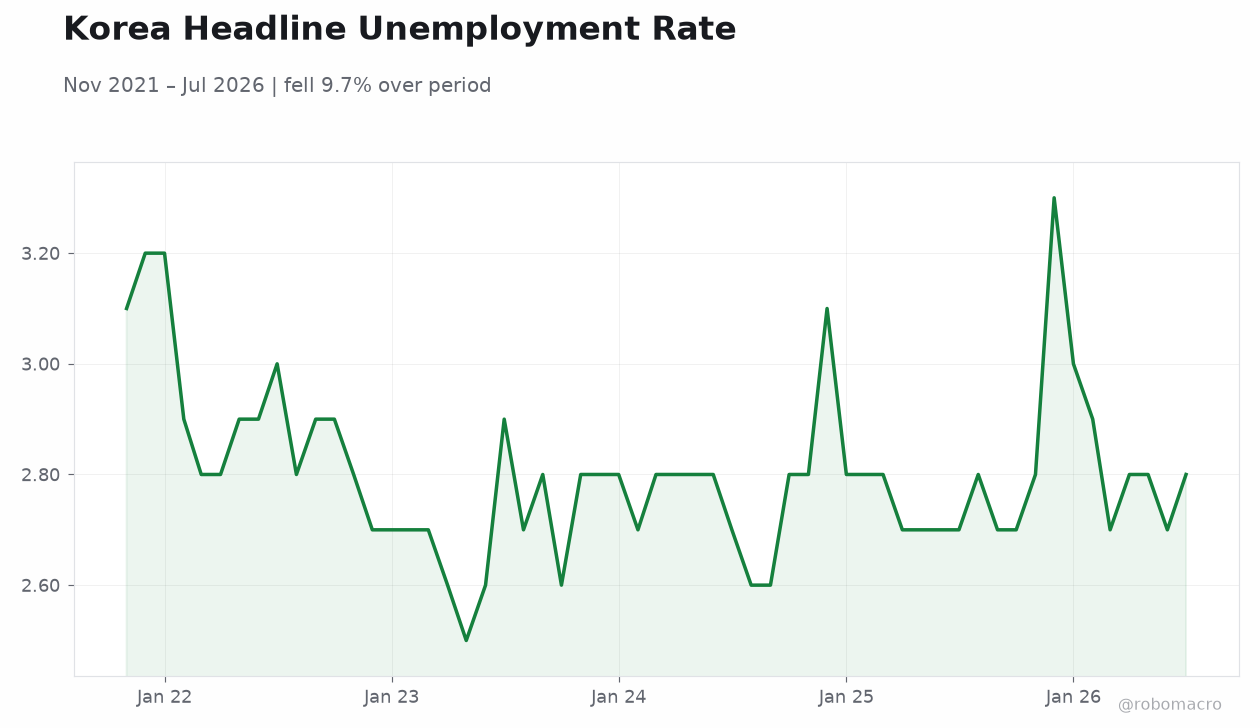
| Headline Unemployment Rate | 2.70 | - | 19:00 |
- KOSPI fell for a sixth session, shedding 5.46% to 6,035.35 as semiconductor heavyweights sold off on AI-valuation worries; KRX triggered the sell-side sidecar.
- Governor Shin Hyun-song flagged a clear K-shaped recovery and signalled possible rate hikes amid AI-driven and war-related inflation pressures.
- Korea's 10-year yield rose 3 bp to 4.26% while the 3-year eased 6 bp to 3.86%; USD/KRW firmed 0.52% to 1,341.12.
Yesterday's Recap
Korean equities endured a bruising session on Tuesday, October 13, with the KOSPI tumbling 5.46% to 6,035.35 and barely holding the 6,000 level for a sixth consecutive decline. The KOSDAQ held up better, slipping 1.43% to 837.03. The selloff was concentrated in semiconductors: SK Hynix dropped 1.66% to 1,419,000 won, while Samsung Electronics closed flat at 232,000 won as traders rotated out of memory names on worries the AI capex boom has outrun fundamentals.
The volatility was sharp enough for KRX to activate the sell-side sidecar mechanism, a sign of orderly-but-stressed conditions. The won weakened 0.52% to 1,341.12 per dollar, pressured by the equity outflow narrative. In rates, the curve flattened from both ends: the 3-year yield eased 6 bp to 3.86% on flight-to-quality demand, while the 10-year rose 3 bp to 4.26% as inflation-hedging and supply dynamics offset the equity gloom.
Brent crude added 0.31% to $106.02, keeping imported-energy inflation a live concern for policymakers.
The Day Ahead
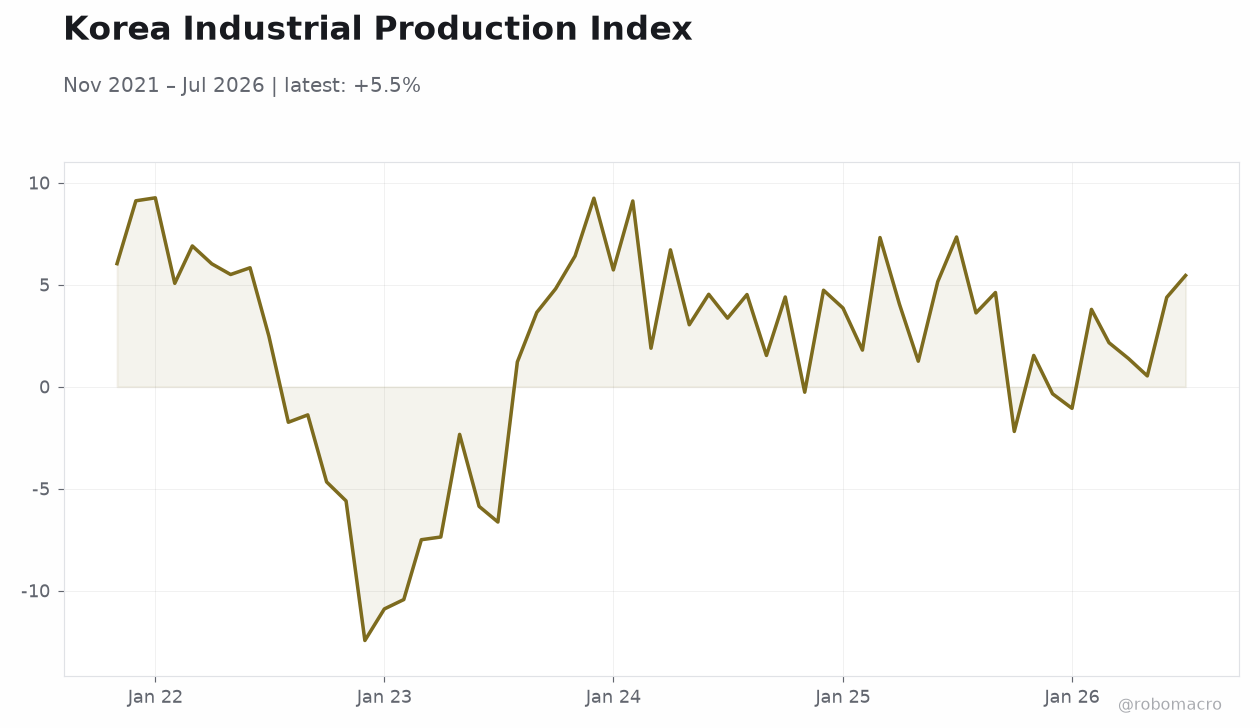
Thursday's calendar carries Korea's headline unemployment rate, due at 19:00 ET, with the prior print at 2.7% and no consensus yet published. After a run of labour-market resilience, attention will focus on whether services-sector hiring has begun to soften alongside the manufacturing slowdown. A stable print near 2.7% would reinforce the Bank of Korea's narrative that the labour market remains the resilient leg of the K-shaped economy, giving Shin's committee room to prioritise inflation over growth.
A weaker outcome, by contrast, would complicate the governor's freshly signalled hawkish tilt. Markets will also parse any follow-through from Wednesday's global chip-sector repricing into Thursday's Asian session, with KOSPI futures likely to set the tone before the data hit.
Other Economic Notes
Seoul moved to liberalise the foreign-exchange regime, easing rules to broaden won usage and raising reporting thresholds — a structural step aimed at deepening onshore FX markets and reducing dollar dependence. ↓ p.2