Won Rallies as KOSPI Rebounds From AI Selloff
2.60 Headline Unemployment Rate
KOSPI5,668.05+2.05%
KOSDAQ794.78+4.46%
USD/KRW1,335.17-0.43%
Samsung215,500.00+2.62%
Market Snapshot
| Asset | Level | Change |
|---|
| KOSPI | 5,668.05 | +2.05% |
| KOSDAQ | 794.78 | +4.46% |
| USD/KRW | 1,335.17 | -0.43% |
| Samsung | 215,500.00 | +2.62% |
| SK Hynix | 1,272,000.00 | +0.79% |
| Brent Crude | 109.86 | +3.72% |
| Gold | 4,181.10 | +0.26% |
| Bitcoin | 80,856.85 | -0.65% |
| Korea 3Y Govt Yield | 3.85% | -2 bp |
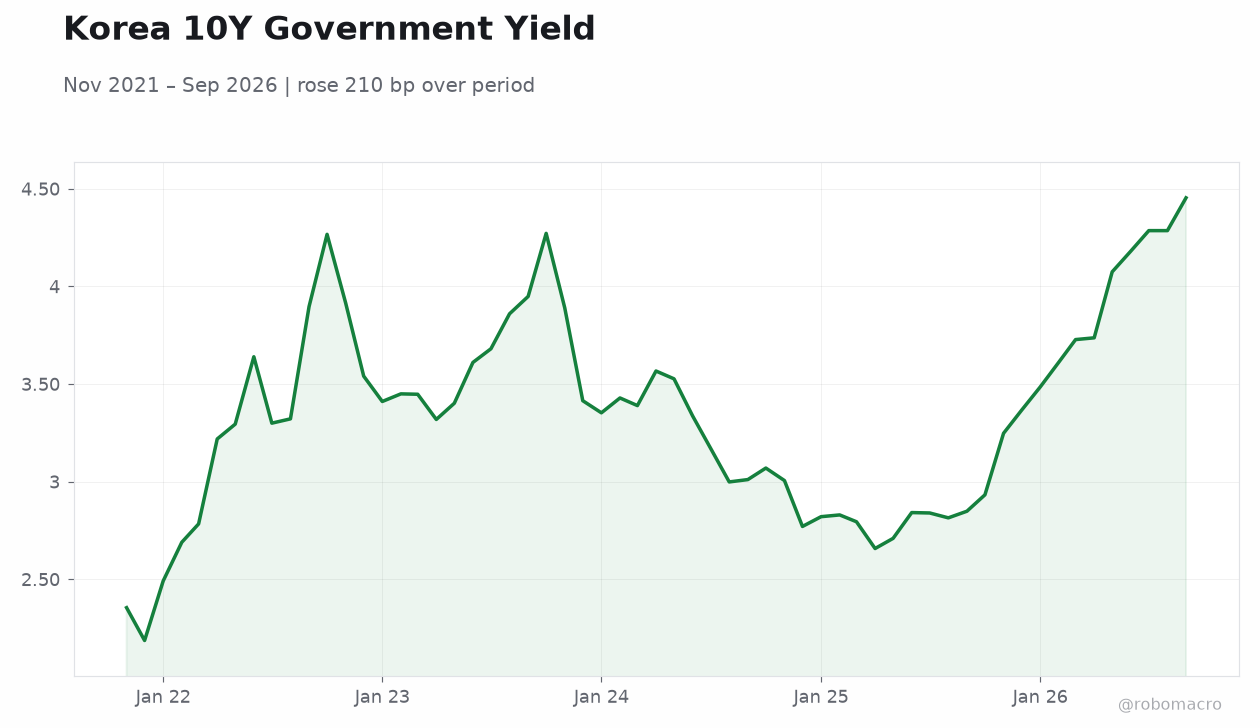
| Korea 10Y Govt Yield | 4.18% | -1 bp |
Prior Economic Events
| Data |
Prior |
Cons |
Actual |
| Headline Unemployment Rate | 2.70 | - | 2.60 |
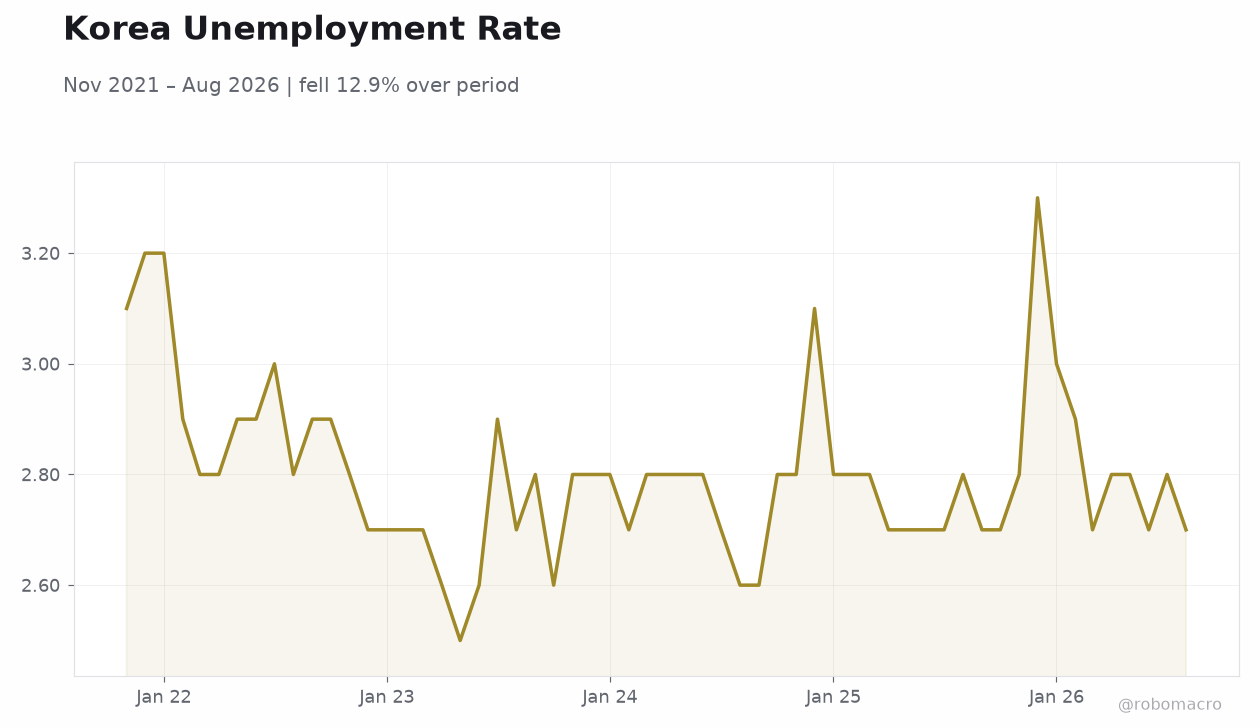 Korea Unemployment Rate | Type: macro_line | Unemployment Rate (%): 2.7 (2026-08-01) | Range: 2.5–3.3 | Trend(6pt): 3.1,2.7,2.8,2.7,2.8,2.7
Today's Economic Events
| Data |
Prior |
Cons |
Time |
| No events available |
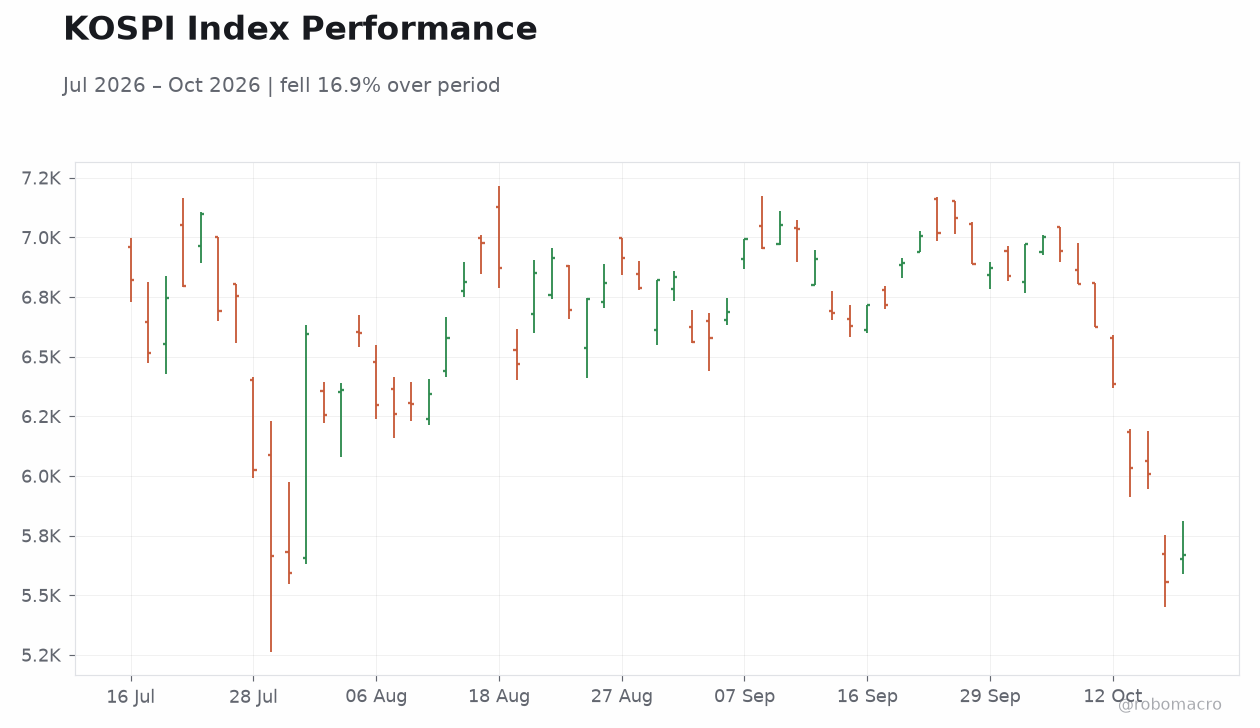
- KOSPI rebounded 2.05% to 5,668.05 and KOSDAQ surged 4.46% after a stretch that saw the index shed 21% over seven sessions and break below 6,000 on AI semiconductor concerns.
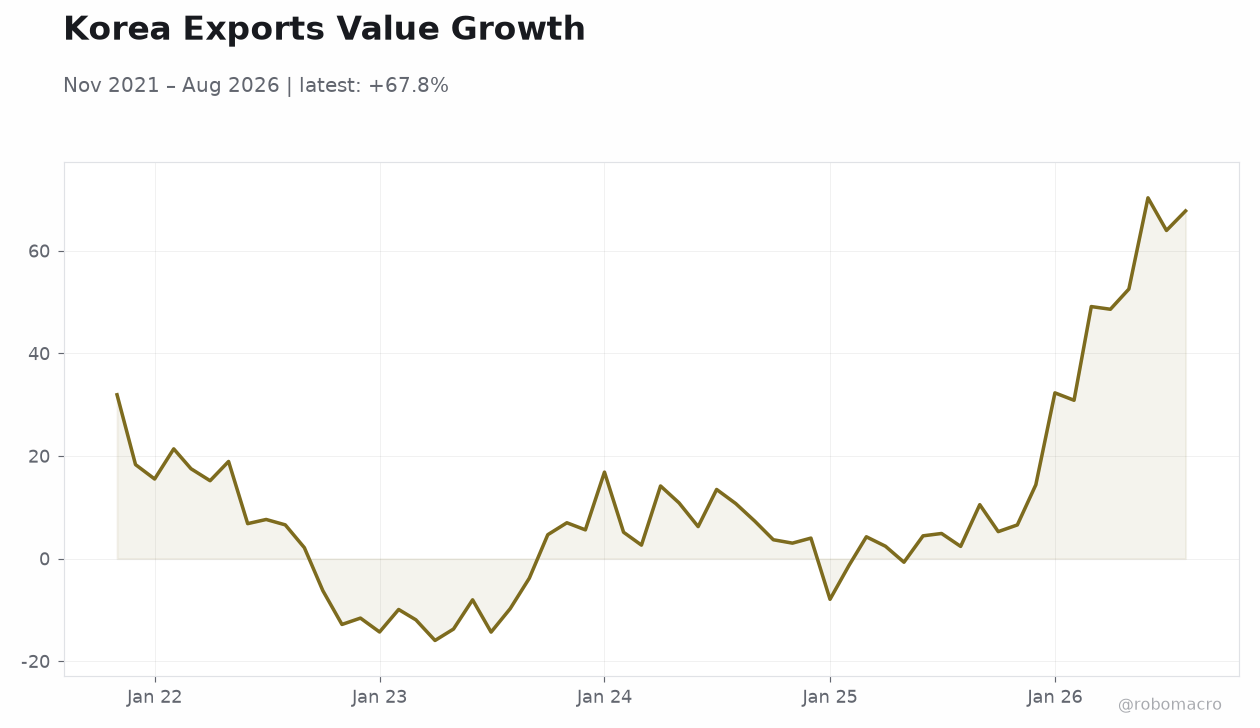
- The won strengthened to 1,335.17 per dollar, down 0.43%, as semiconductor exports surged and dollar supply increased, though exporters now face margin pressure.
- Korea's unemployment rate printed at 2.6% in September, down from 2.7%, underscoring labor market resilience even as equity volatility intensifies.
Yesterday's Recap
Korean equities staged a sharp recovery on Friday after a punishing week, with the KOSPI climbing 2.05% to 5,668.05 and the KOSDAQ outperforming with a 4.46% surge to 794.78. The rebound followed a 7.57% single-session plunge earlier in the week driven by concerns over AI semiconductor valuations, which had erased 21% from the index over just seven sessions. Samsung Electronics gained 2.62% to 215,500 won, while SK Hynix added a more modest 0.79% to 1,272,000 won, reflecting mixed sentiment toward memory names after the volatility.
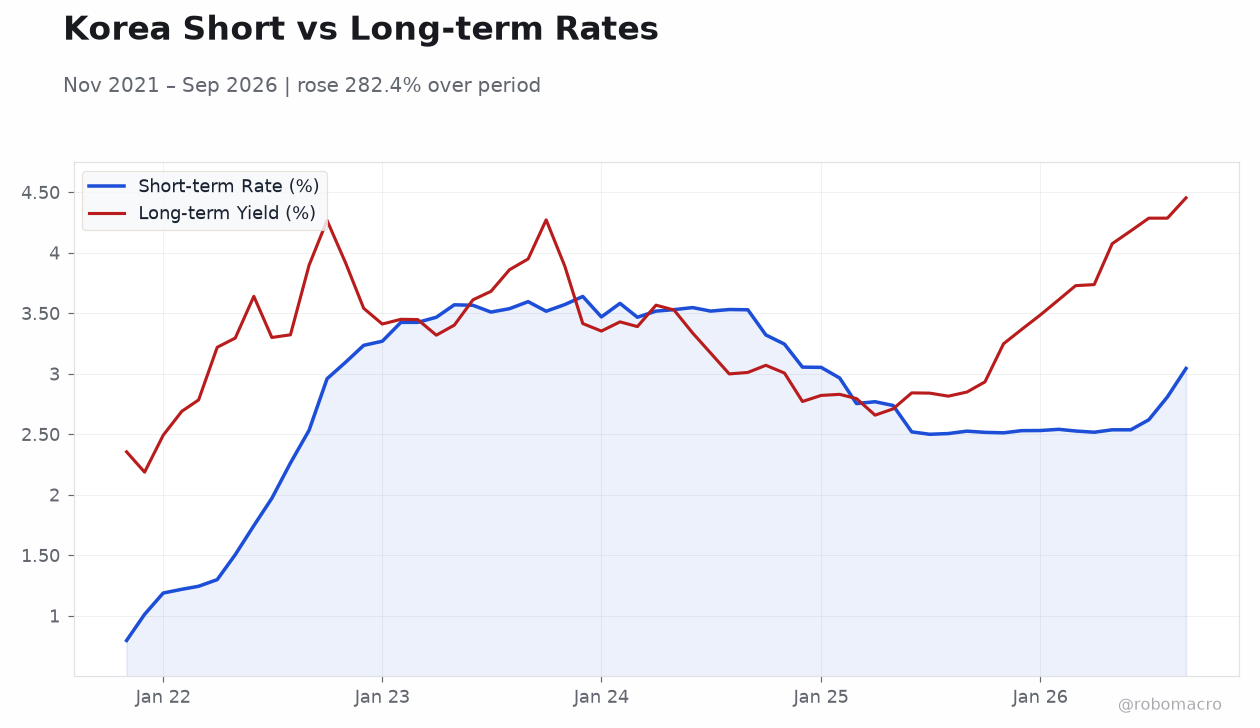
The currency market told a different story: the won appreciated 0.43% to 1,335.17 per dollar, supported by robust exports and increased dollar supply. Government bonds caught a mild bid, with the 3-year yield easing 2 bp to 3.85% and the 10-year slipping 1 bp to 4.18%. On the data front, the headline unemployment rate came in at 2.6%, down from the prior 2.7% reading and signaling labor market tightness persists despite equity market turbulence.
Regulators also moved to calm markets, with Seoul vowing a crackdown on unfair trading practices amid the heightened volatility.
The Day Ahead
The calendar is quiet into the new week, with no scheduled Korean economic releases on Saturday or Sunday, giving markets a weekend to digest the week's dramatic swings. Attention now shifts to next week's data flow, where traders will look for any follow-through on the labor market strength and further clarity on export momentum heading into Q4. The policy landscape remains active: Korea and the US held their first finance ministry-central bank 2+2 talks, though currency swap arrangements were notably not discussed, leaving that question open for future engagement.
Officials will likely face continued questions on stabilizing equity markets after the sharp correction, particularly given the concentration of AI-linked names in the KOSPI. Watch for any additional regulatory announcements on market fairness measures following Seoul's pledge to crack down on unfair trading. The won's trajectory will remain a key barometer, with Goldman Sachs joining the chorus expecting further appreciation.
Page 1
Never miss an issue
Subscribe to Korea Macro Daily and get each new issue delivered to your inbox.
Already a member? Visit robomacro.com
to log in and manage subscriptions, or use Forgot Password to set a password.