Korea Macro Daily(Beta Mode)
BoK Holds, Signals Hikes as Won Surges
Market Snapshot
| Asset | Level | Change |
|---|---|---|
| KOSPI | 5,552.74 | -3.73% |
| KOSDAQ | 781.97 | -3.33% |
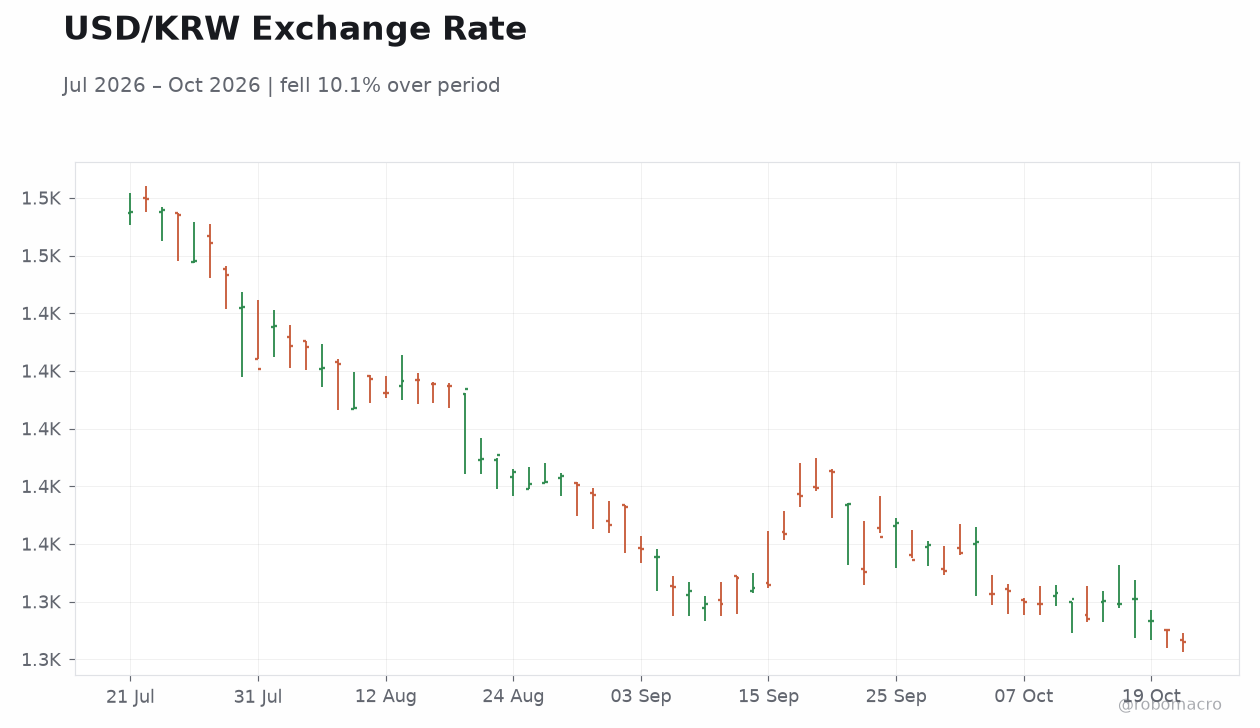
| USD/KRW | 1,325.82 | -0.31% |
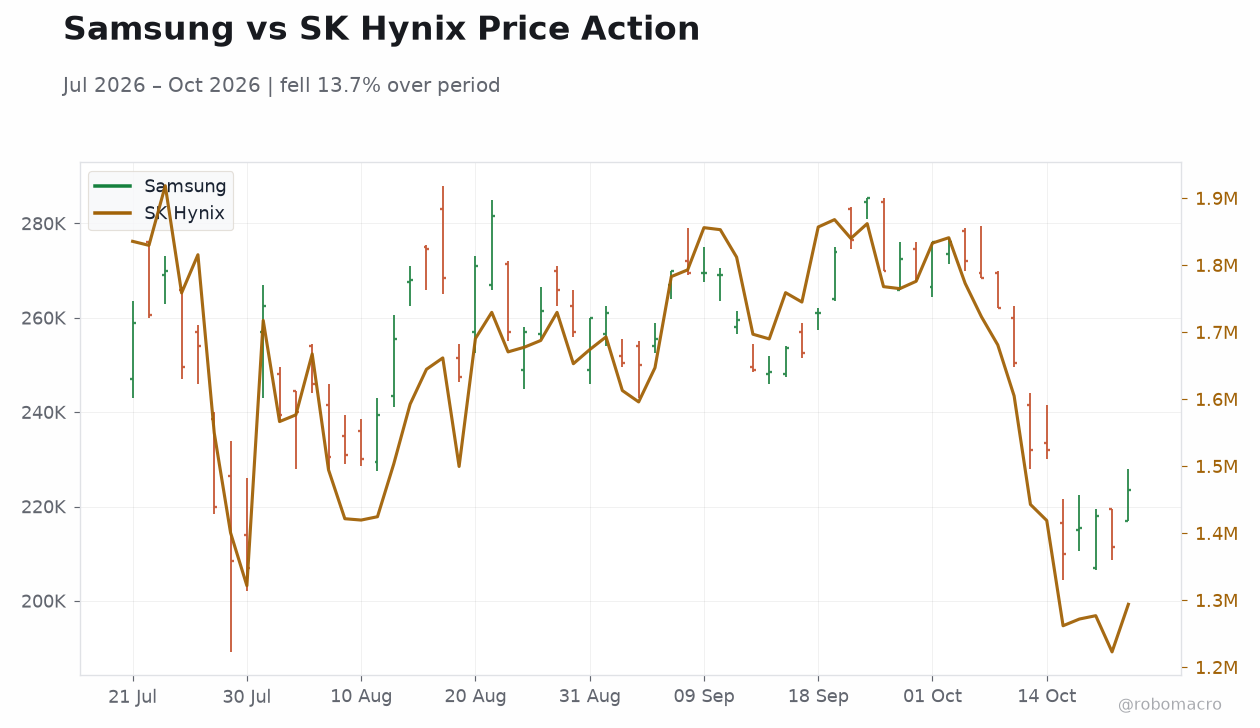
| Samsung | 221,500.00 | +4.73% |
| SK Hynix | 1,274,000.00 | +4.17% |
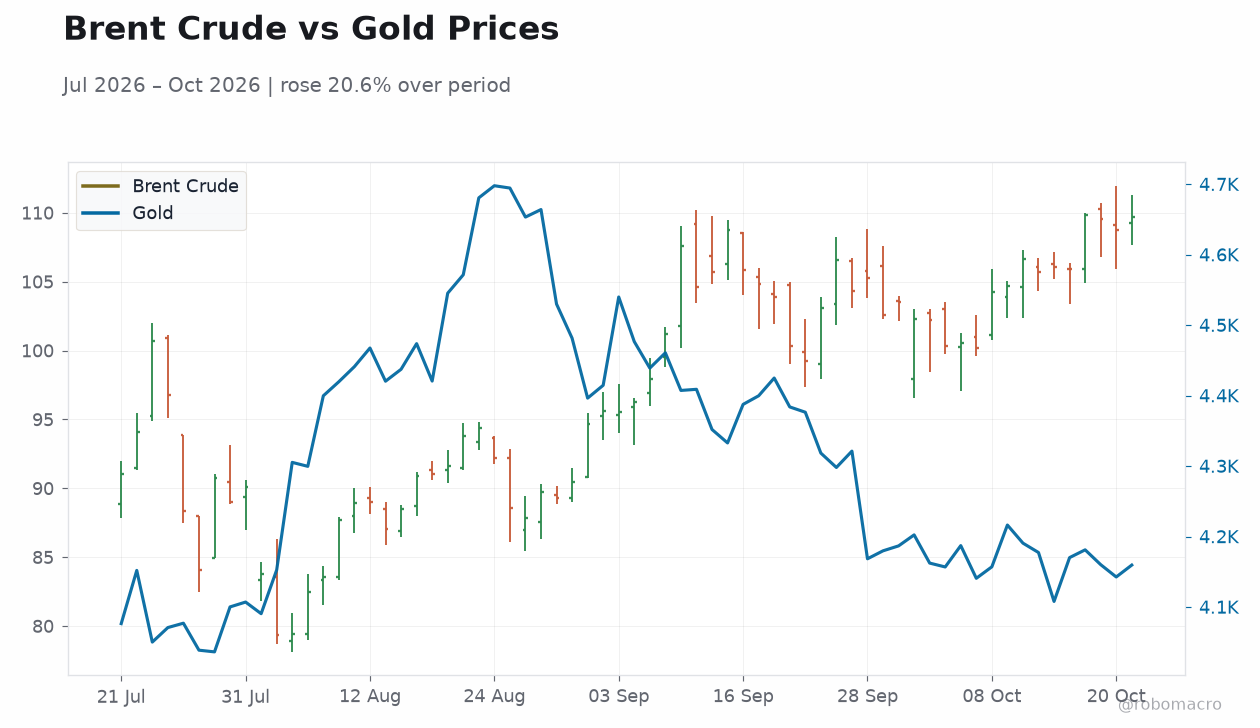
| Brent Crude | 109.73 | +0.86% |
| Gold | 4,159.50 | +0.41% |
| Bitcoin | 84,627.32 | +2.03% |
| Korea 3Y Govt Yield | 3.84% | -4 bp |
| Korea 10Y Govt Yield | 4.18% | -3 bp |
Prior Economic Events
| Data | Prior | Cons | Actual |
|---|---|---|---|
| No events available | |||
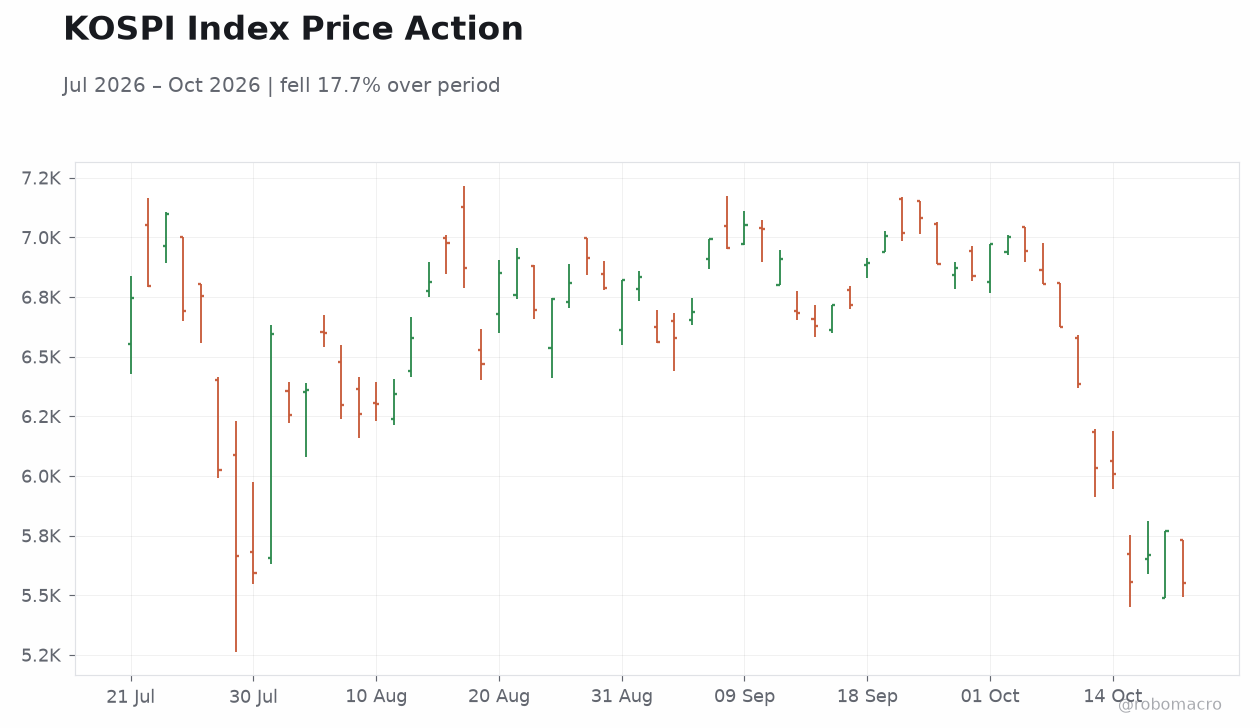 KOSPI Index Price Action | Type: market_hloc | KOSPI: 5553 (2026-10-20) | Range: 5553–7097 | Trend(5pt): 6748,6346,6563,7081,5553
Today's Economic Events
| Data | Prior | Cons | Time |
|---|---|---|---|
| No events available | |||
- Bank of Korea froze the policy rate but explicitly flagged future hikes, a hawkish hold that contrasts with the KOSPI's 3.73% slide.
- Export momentum remains strong on AI-chip demand, yet the won hit a two-year high against the dollar, complicating the inflation outlook.
- KRX activated a buy-side sidecar on KOSPI amid extreme two-way volatility; bond yields eased 3-4 bp despite the hawkish tone.
Yesterday's Recap
The Bank of Korea held its policy rate steady but signaled future hikes, a hawkish hold that markets read as a tightening bias rather than a pause. The KOSPI fell 3.73% to 5,552.74 and the KOSDAQ dropped 3.33% to 781.97, with the index-level decline occurring alongside chip strength — Samsung rose 4.73% to 221,500 and SK Hynix gained 4.17% to 1,274,000 — pointing to broad profit-taking outside semiconductors. The KRX reportedly activated a buy-side sidecar on the KOSPI during a sharp rise earlier in the session, underscoring extreme two-way volatility.
The won strengthened to 1,325.82 per dollar, a two-year high, with the BoK Governor signaling further gains. Despite the hawkish hold, Korea 3Y yields eased 4 bp to 3.84% and 10Y yields fell 3 bp to 4.18%, suggesting the market had priced a more aggressive tightening path. Brent crude rose 0.86% to $109.73, keeping imported inflation risk elevated.
The Day Ahead
No major Korea data releases are scheduled for today, leaving markets to digest the BoK's hawkish hold and the won's two-year high. Attention turns to export data later this week, with AI-chip demand expected to sustain the export boom. Traders will watch whether the KOSPI stabilizes after the sidecar-triggered volatility and whether foreign flows rotate back into semiconductors.
The won's trajectory remains the key variable, as further appreciation could pressure exporter margins while easing imported inflation. Bond markets will assess whether the yield decline reflects genuine easing expectations or a positioning squeeze after the hawkish guidance.
Other Economic Notes
Corporate profits and debt metrics improved in 2025, according to BoK data, supporting the case for a gradual normalization path. Four Korean banks will provide 2 trillion won to SK hynix suppliers, reinforcing the chip sector's role as the economy's growth engine. Variable-rate loans remain a vulnerability, with repayment risk amplified if the BoK follows through on hikes.
The delay in institutionalizing won stablecoins has drawn U.S. government attention, a reminder that Korea's digital-asset framework lags peers. Health insurance income audits will bill 3.3 trillion won more nationwide, a fiscal tightening that could weigh on household disposable income.