Korea Macro Daily(Beta Mode)
BoK Governor Backs Stronger Won, Flags AI Turn
Market Snapshot
| Asset | Level | Change |
|---|---|---|
| KOSPI | nan | +nan% |
| KOSDAQ | nan | +nan% |
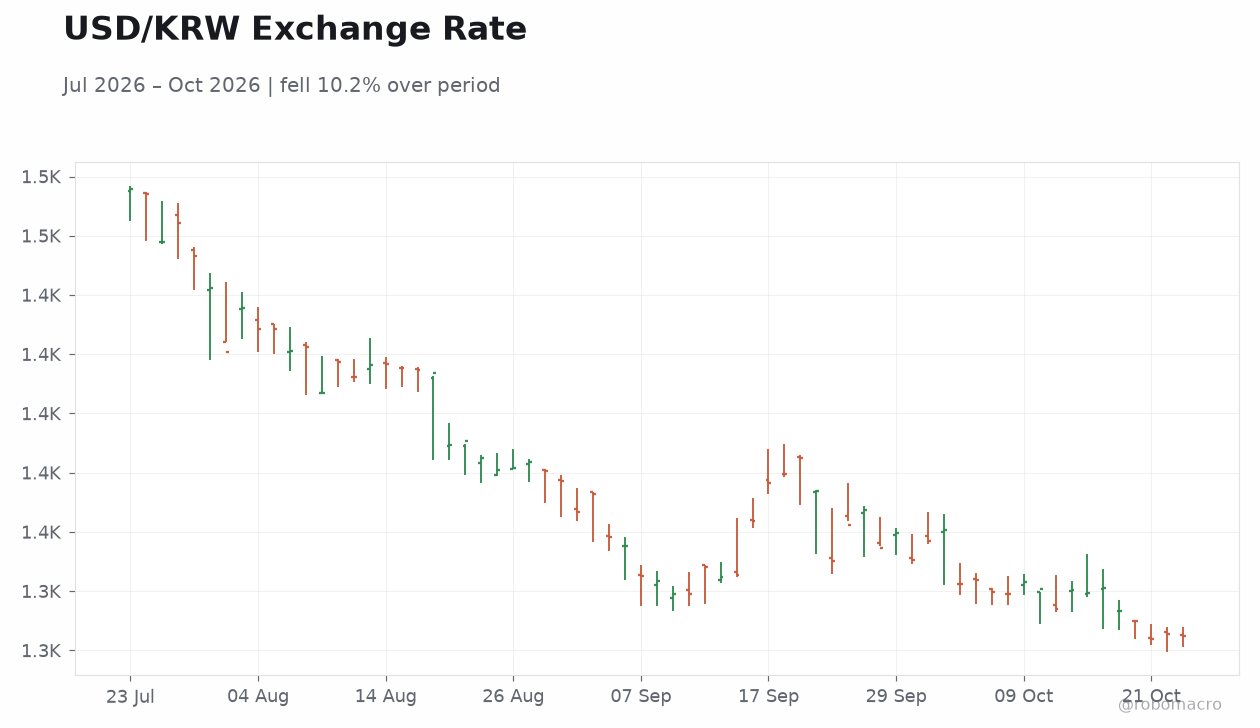
| USD/KRW | 1,325.02 | -0.04% |
| Samsung | 212,500.00 | -0.93% |
| SK Hynix | 1,250,000.00 | +2.21% |
| Brent Crude | 111.41 | -1.56% |
| Gold | 4,012.70 | -1.17% |
| Bitcoin | 81,454.80 | +0.18% |
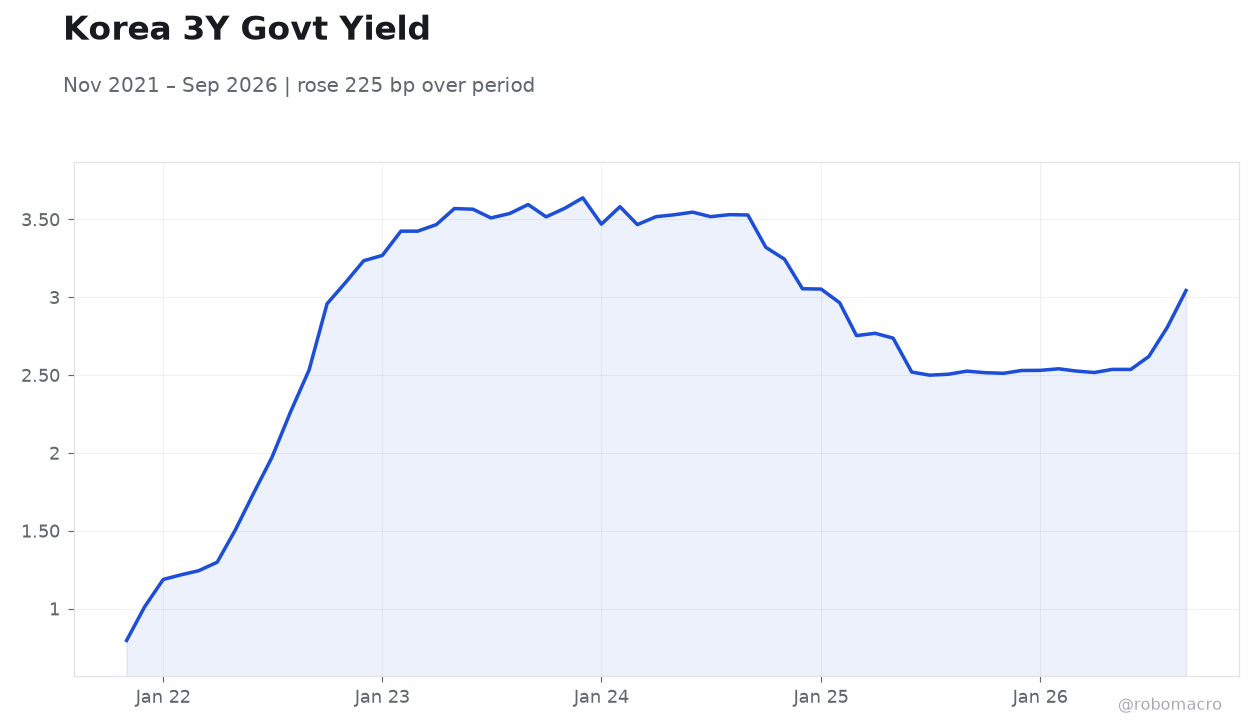
| Korea 3Y Govt Yield | 3.82% | -2 bp |
| Korea 10Y Govt Yield | 4.15% | -3 bp |
Prior Economic Events
| Data | Prior | Cons | Actual |
|---|---|---|---|
| No events available | |||
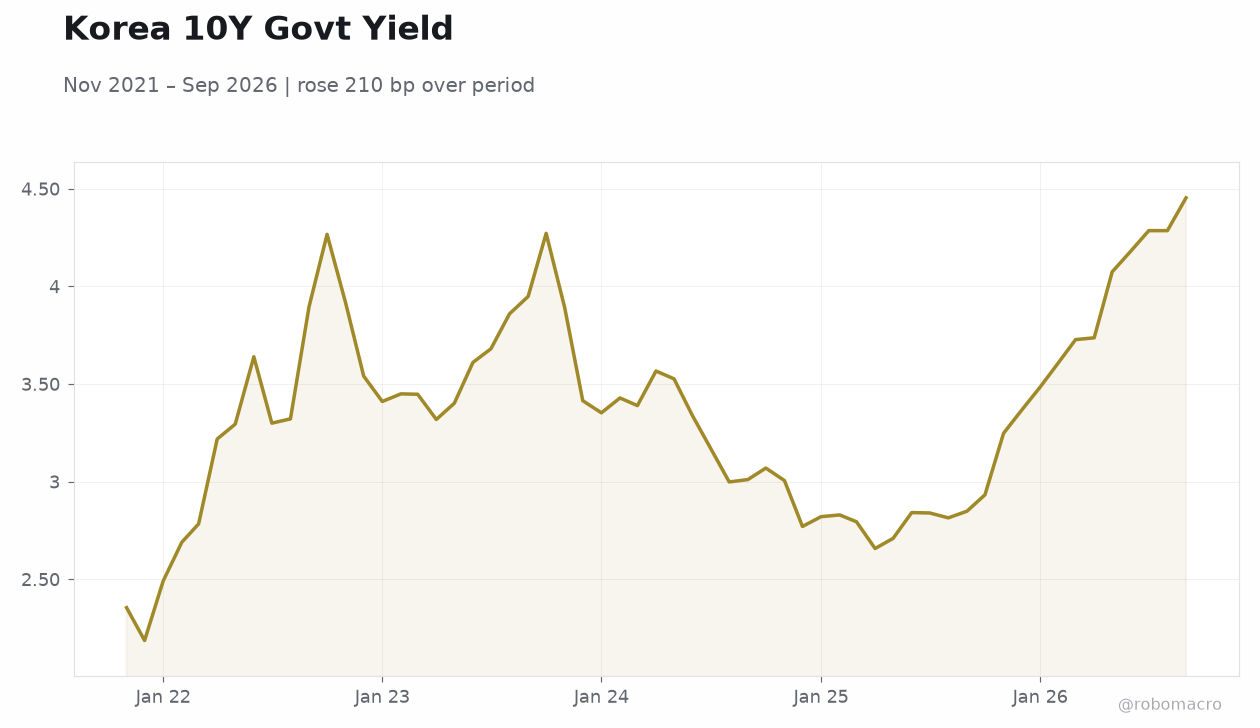 Korea 10Y Govt Yield | Type: macro_line | Yield %: 4.454 (2026-09-01) | Range: 2.187–4.454 | Trend(6pt): 2.355,3.411,3.39,2.71,4.286,4.454
Today's Economic Events
| Data | Prior | Cons | Time |
|---|---|---|---|
| No events available | |||
- BoK holds base rate at 3.04% with inflation at 2.88% YoY.
- Governor backs stronger won and flags AI as growth turning point.
- Yields ease while SK Hynix gains offset Samsung decline.
Yesterday's Recap
South Korean markets recorded modest moves with the 10-year government yield falling 3 basis points to 4.15 percent and the three-year yield declining 2 basis points to 3.82 percent. The won traded little changed near 1,325.02 against the dollar. SK Hynix shares advanced 2.21 percent on continued semiconductor strength while Samsung Electronics declined 0.93 percent.
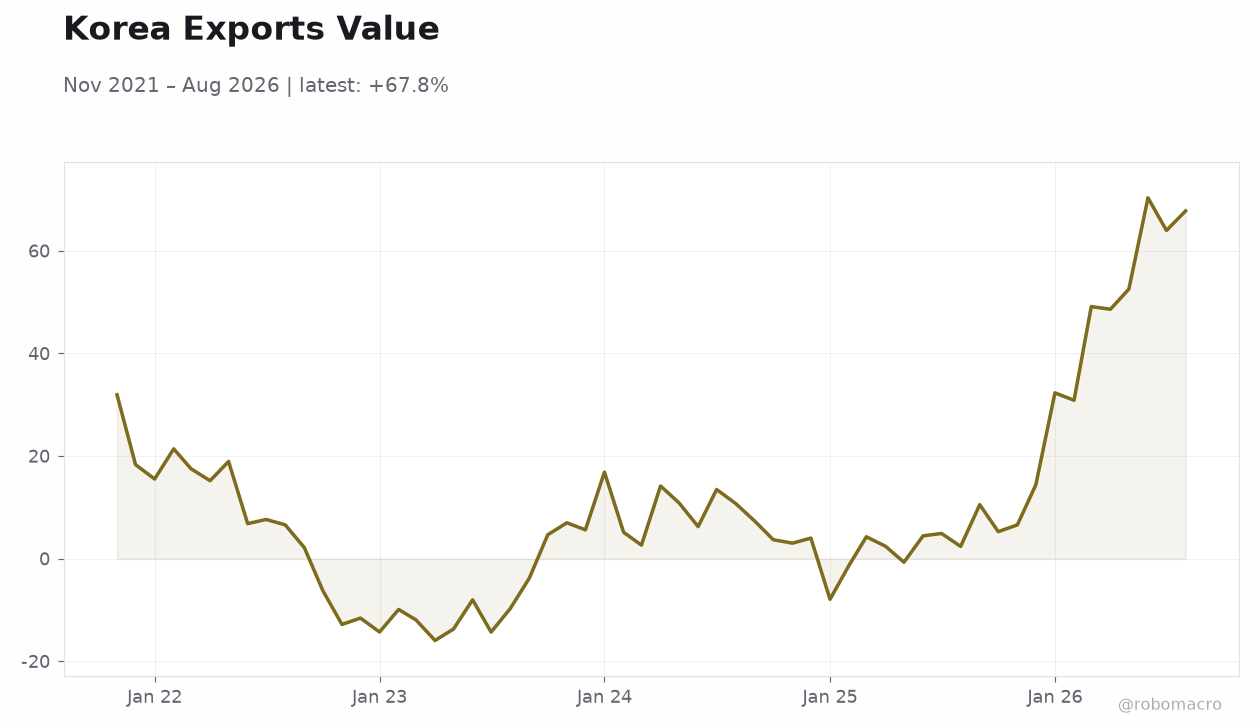
Bank of Korea Governor Shin Hyun-song stated that recent won appreciation reflects confidence in the Korean economy and remains appropriate on a trade-weighted basis. He also warned that an oil price cap would impose a growing fiscal burden if maintained for an extended period. Chip prices are expected to rise further, supporting export momentum according to central bank assessments.
Equity valuations compressed relative to regional peers after recent tech-led selling, leaving the market trading at a discount to Indonesia.
The Day Ahead
Market participants await further details on the Bank of Korea’s planned year-end release of updated potential growth estimates. Comments from Governor Shin on artificial intelligence investment as a structural turning point are expected to shape growth outlook discussions. No major data releases are scheduled for the immediate session.
Attention will remain on any additional remarks regarding the sustainability of the current policy rate amid resilient growth. Equity flows into semiconductor names may stay sensitive to global chip demand signals. Export-oriented manufacturers face mixed signals from global demand while domestic consumption shows resilience tied to labor market stability.
Other Economic Notes
The semiconductor sector continues to underpin Korean export performance as memory chip prices trend higher. Fiscal authorities and the central bank both highlighted risks from prolonged energy subsidies that could strain public finances. Broader Asian equity weakness has amplified pressure on valuations in Seoul, particularly in memory chip producers exposed to global cycles.
Central banks in the region, including the Bank of Japan, face policy decisions that could affect capital flows into Korean assets. Taiwan and Korean data calendars later in the week may provide incremental visibility on electronics supply chains.