Korea Macro Daily(Beta Mode)
BoK Hawkish Hold Supports Won as KOSPI Drops
Market Snapshot
| Asset | Level | Change |
|---|---|---|
| KOSPI | 5,469.47 | -1.46% |
| KOSDAQ | 727.21 | -3.26% |
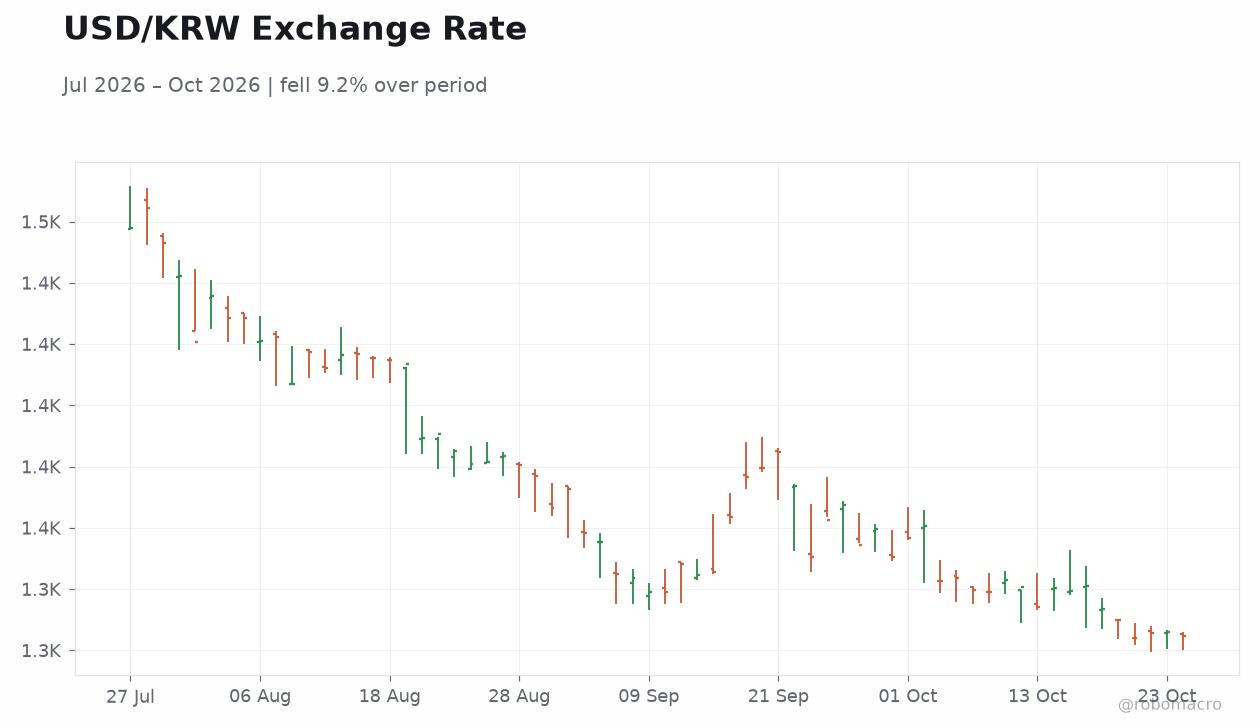
| USD/KRW | 1,325.13 | -0.06% |
| Samsung | 215,500.00 | +0.47% |
| SK Hynix | 1,277,000.00 | +4.42% |
| Brent Crude | 110.17 | -5.61% |
| Gold | 4,033.40 | +0.64% |
| Bitcoin | 80,173.76 | +0.19% |
| Korea 3Y Govt Yield | 3.80% | -4 bp |
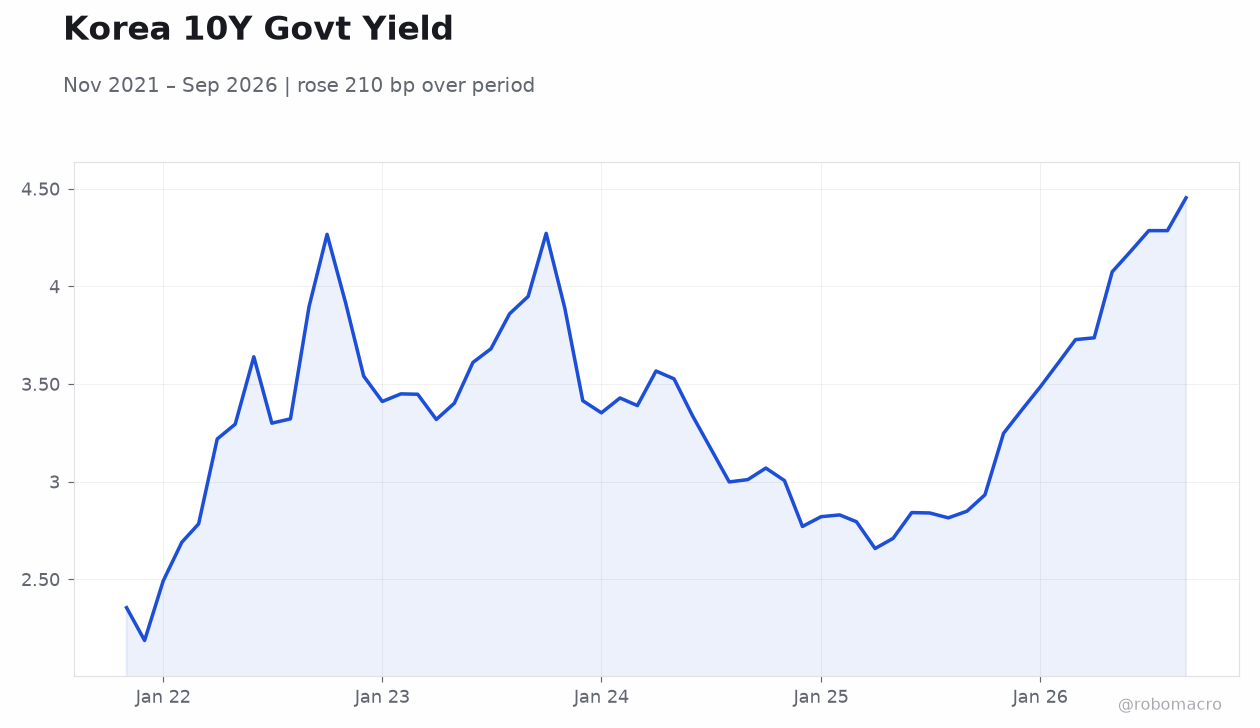
| Korea 10Y Govt Yield | 4.10% | -5 bp |
Prior Economic Events
| Data | Prior | Cons | Actual |
|---|---|---|---|
| No events available | |||
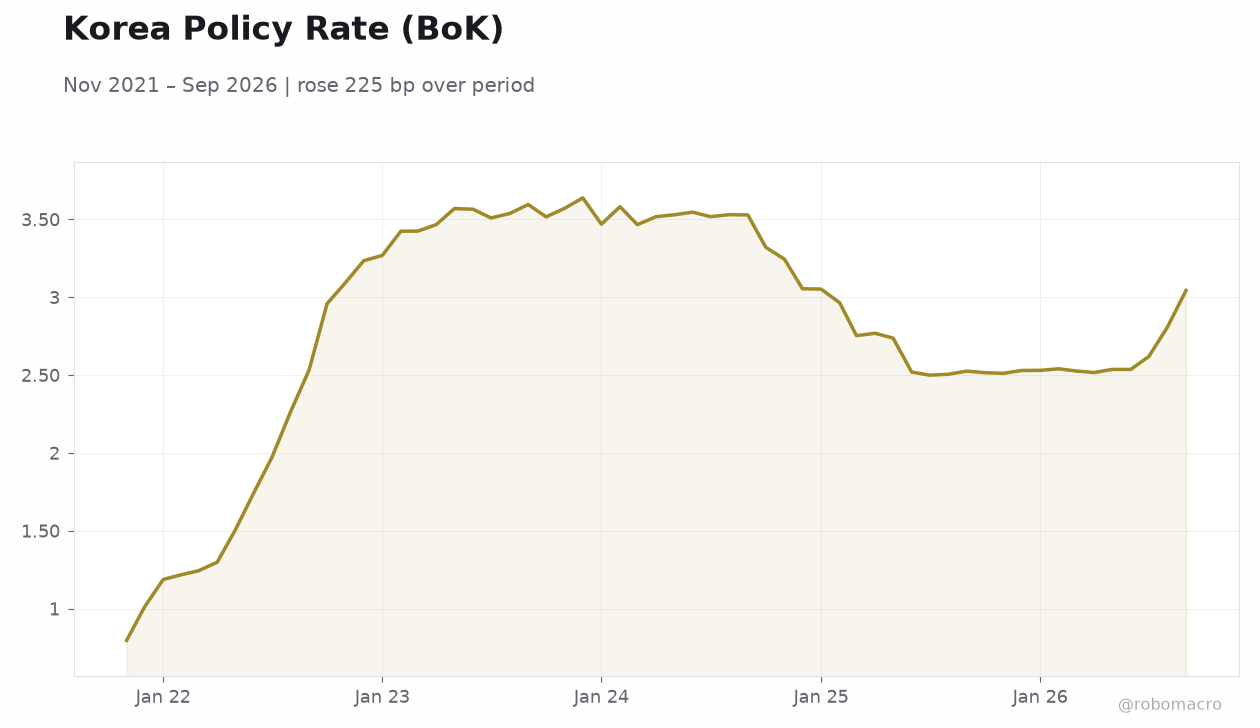 Korea Policy Rate (BoK) | Type: macro_line | Percent: 3.044 (2026-09-01) | Range: 0.796–3.639 | Trend(6pt): 0.796,3.269,3.467,2.738,2.62,3.044
Today's Economic Events
| Data | Prior | Cons | Time |
|---|---|---|---|
| Consumer Confidence Index | 106.60 | - | 17:00 |
| GDP Growth Quarter-over-Quarter Advance Estimate | 0.60 | 0.70 | 19:00 |
| GDP Growth Year-over-Year Advance Estimate | 3.70 | 3 | 19:00 |
| Wednesday (2026-10-28) | |||
| Business Confidence Index | 79 | - | 17:00 |
| Saturday (2026-10-31) | |||
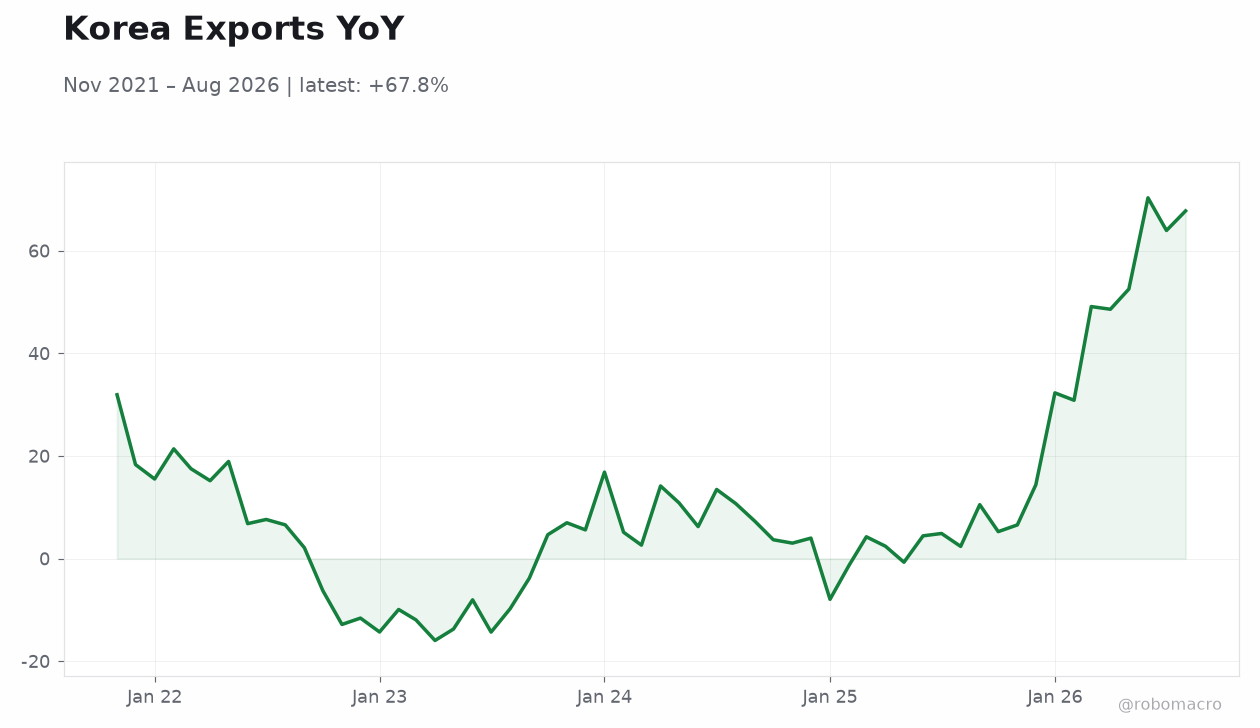
| Exports Year-over-Year | 83.70 | - | 20:00 |
- Bank of Korea maintained its 3.04% base rate with hawkish forward guidance, supporting the won despite renewed risk aversion.
- KOSPI fell 1.46% to 5,469.47 while SK Hynix rose 4.42% on semiconductor resilience; 10-year yield eased 5 bp to 4.10%.
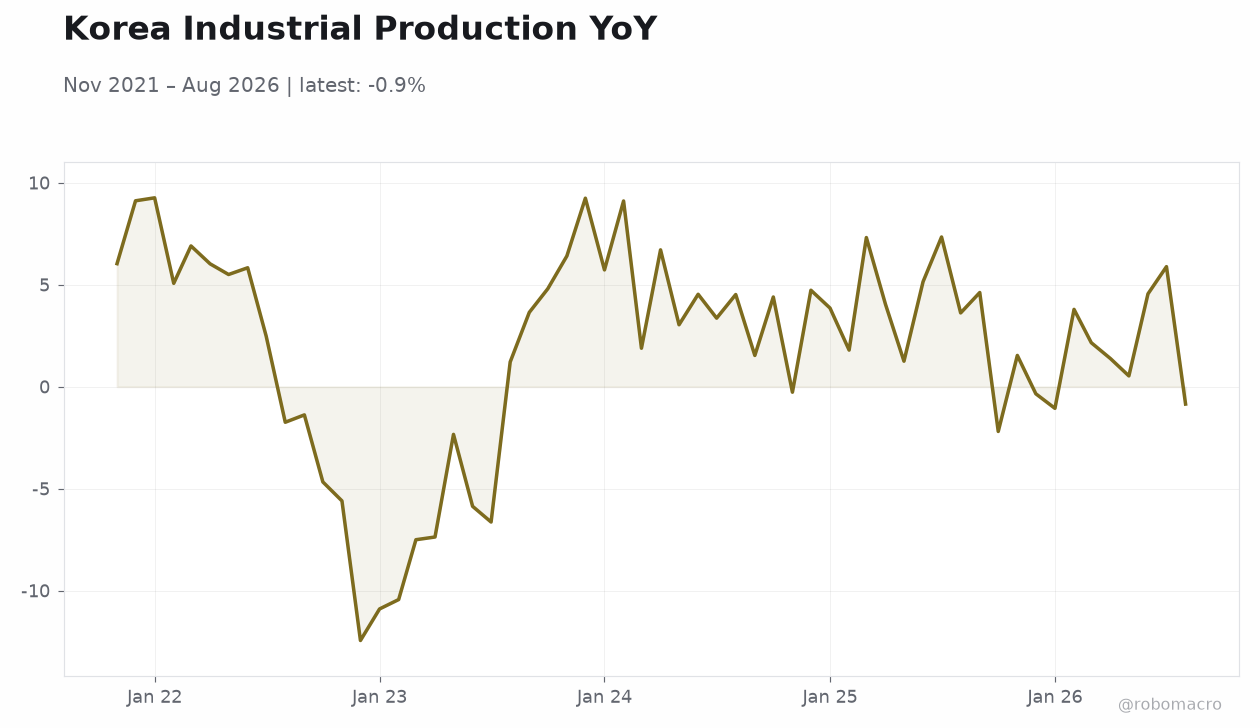
- Advance GDP estimates due today point to 0.7% QoQ and 3.0% YoY growth, below prior 3.7% YoY pace.
Yesterday's Recap
South Korean markets closed lower on 25 October as global risk aversion returned despite the Bank of Korea’s recent hawkish hold. The KOSPI dropped 1.46% to 5,469.47 while the KOSDAQ fell 3.26% to 727.21, reflecting broad tech-sector pressure. The won held steady near 1,325.13 against the dollar after earlier gains, supported by the central bank’s signal that rates would stay elevated.
Korea’s 3-year government yield declined 4 bp to 3.80% and the 10-year yield fell 5 bp to 4.10%, indicating modest demand for duration. SK Hynix advanced 4.42% to 1,277,000 won, offsetting some of Samsung’s modest 0.47% gain. Brent crude’s 5.61% drop to 110.17 provided limited relief to import costs.
Overall equity volume remained elevated amid continued foreign selling.
The Day Ahead
Markets will focus on the 17:00 release of the Consumer Confidence Index, which follows last month’s 106.6 reading. At 19:00 the Bank of Korea publishes advance GDP estimates for the third quarter, with consensus forecasts of 0.7% quarter-over-quarter and 3.0% year-over-year. Any material deviation from the 0.6% prior QoQ pace could shift expectations for the growth outlook.
The data will also inform whether the recent hawkish tone remains consistent with softening external demand. Traders will monitor the won’s reaction for clues on whether the Bank of Korea’s guidance continues to anchor sentiment.
Other Economic Notes
Export momentum remains the dominant driver for Korea’s growth profile, with semiconductor shipments still accounting for the largest share of overseas sales. Corporate loan delinquency at major banks reached the highest level since 2009, highlighting pockets of domestic credit stress even as headline GDP stays positive. The won’s nominal effective exchange rate near 94.83 marks its strongest level in two years, improving terms of trade but pressuring exporters’ margins.
North Korea’s estimated growth rate, according to U.S. analysis, may exceed South Korea’s official projection, adding a regional uncertainty factor. These cross-currents keep policy attention centered on balancing inflation control with external competitiveness.