Korea Macro Daily(Beta Mode)
GDP Beats Forecasts as BoK Holds at 3%
Market Snapshot
| Asset | Level | Change |
|---|---|---|
| KOSPI | 5,469.47 | -1.46% |
| KOSDAQ | 727.21 | -3.26% |
| USD/KRW | 1,326.81 | +0.38% |
| Samsung | 221,500.00 | +3.99% |
| SK Hynix | 1,346,000.00 | +5.57% |
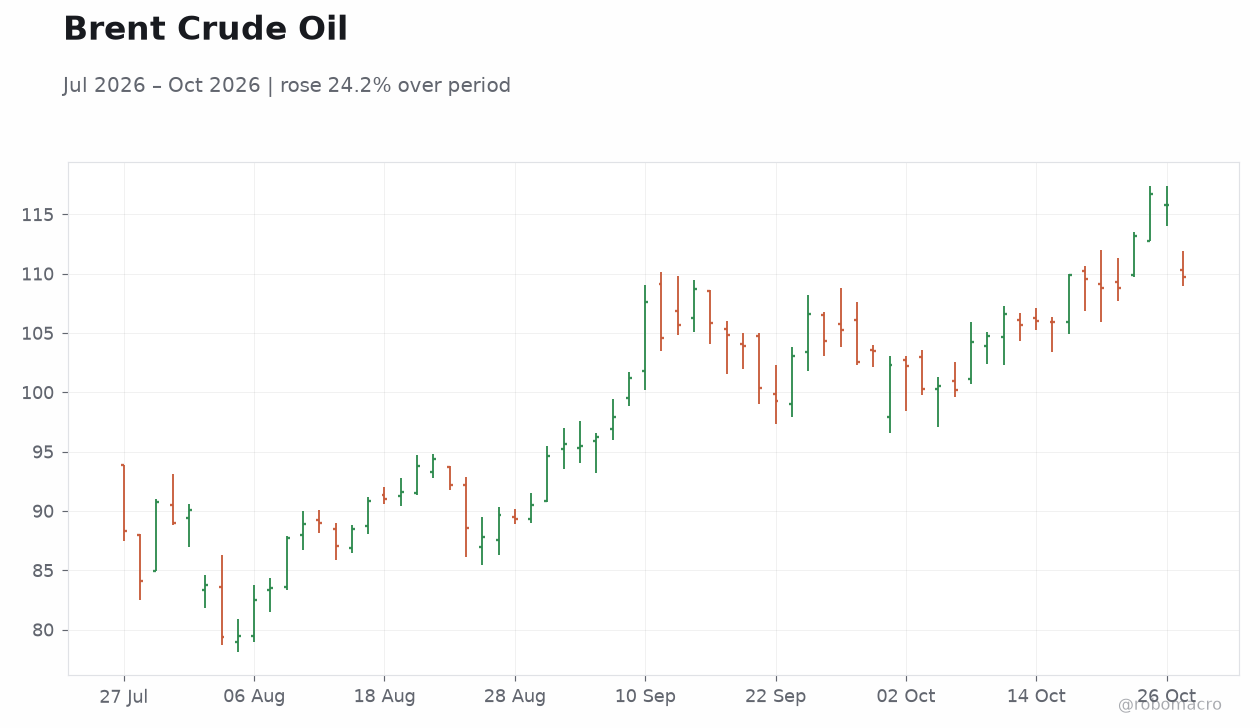
| Brent Crude | 109.74 | -5.24% |
| Gold | 4,073.10 | +0.86% |
| Bitcoin | 80,622.50 | +0.77% |
| Korea 3Y Govt Yield | 3.79% | -1 bp |
| Korea 10Y Govt Yield | 4.07% | -3 bp |
Prior Economic Events
| Data | Prior | Cons | Actual |
|---|---|---|---|
| Consumer Confidence Index | 106.60 | - | 105.40 |
| GDP Growth Quarter-over-Quarter Advance Estimate | 0.60 | 0.70 | 1 |
| GDP Growth Year-over-Year Advance Estimate | 3.70 | 3 | 3.40 |
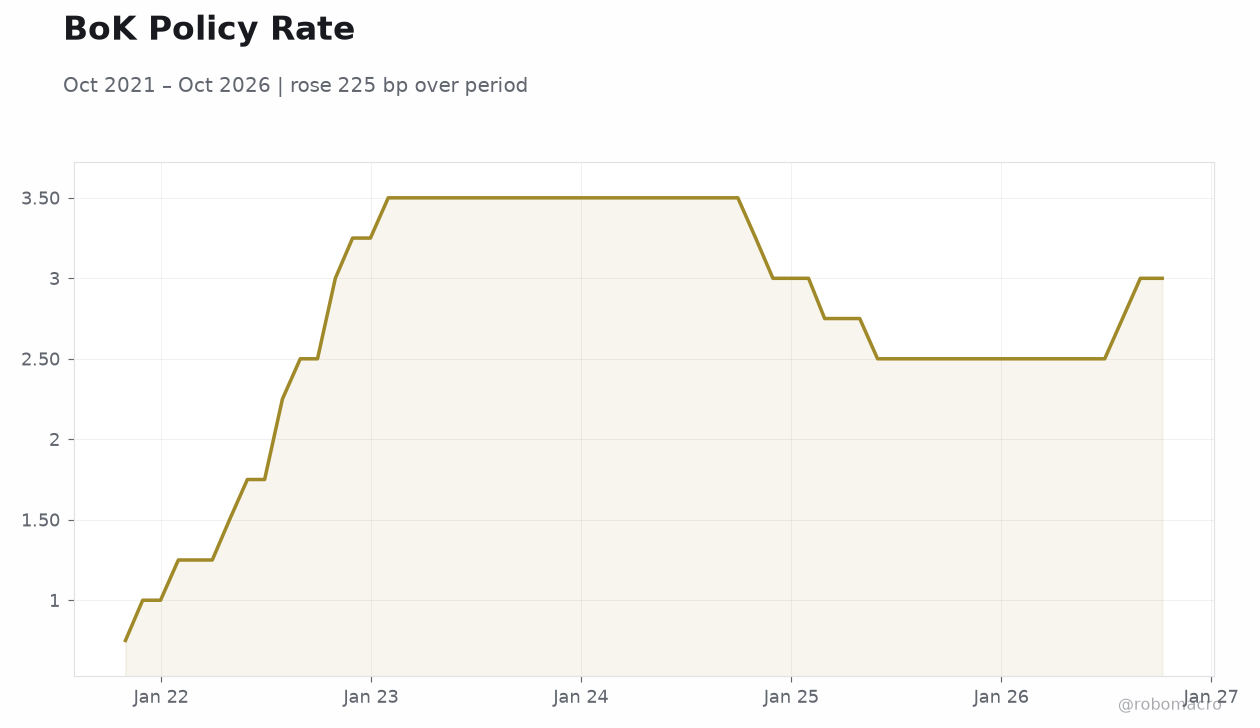 BoK Policy Rate | Type: macro_line | BoK Base Rate (BIS): 3 (2026-10-08) | Range: 0.75–3.5 | Trend(5pt): 0.75,3.5,3.5,2.5,3
Today's Economic Events
| Data | Prior | Cons | Time |
|---|---|---|---|
| Wednesday (2026-10-28) | |||
| Business Confidence Index | 79 | - | 17:00 |
| Saturday (2026-10-31) | |||
| Exports Year-over-Year | 83.70 | - | 20:00 |
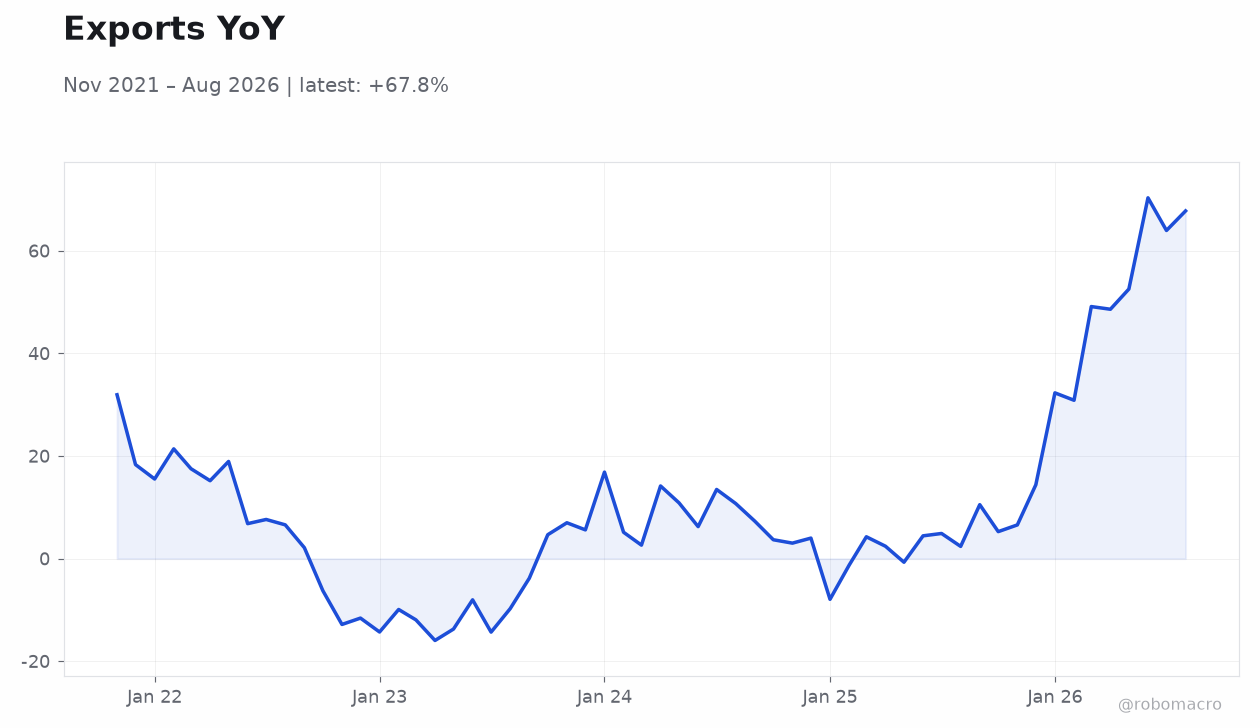
- Q3 GDP advanced 1.0% QoQ and 3.4% YoY, exceeding consensus on AI-driven exports and investment.
- Consumer confidence fell to 105.4 while KOSPI declined 1.46% and the won weakened 0.38% to 1,326.81.
- BoK maintained the 3.00% base rate on 22 October with hawkish forward guidance supporting the won outlook.
Yesterday's Recap
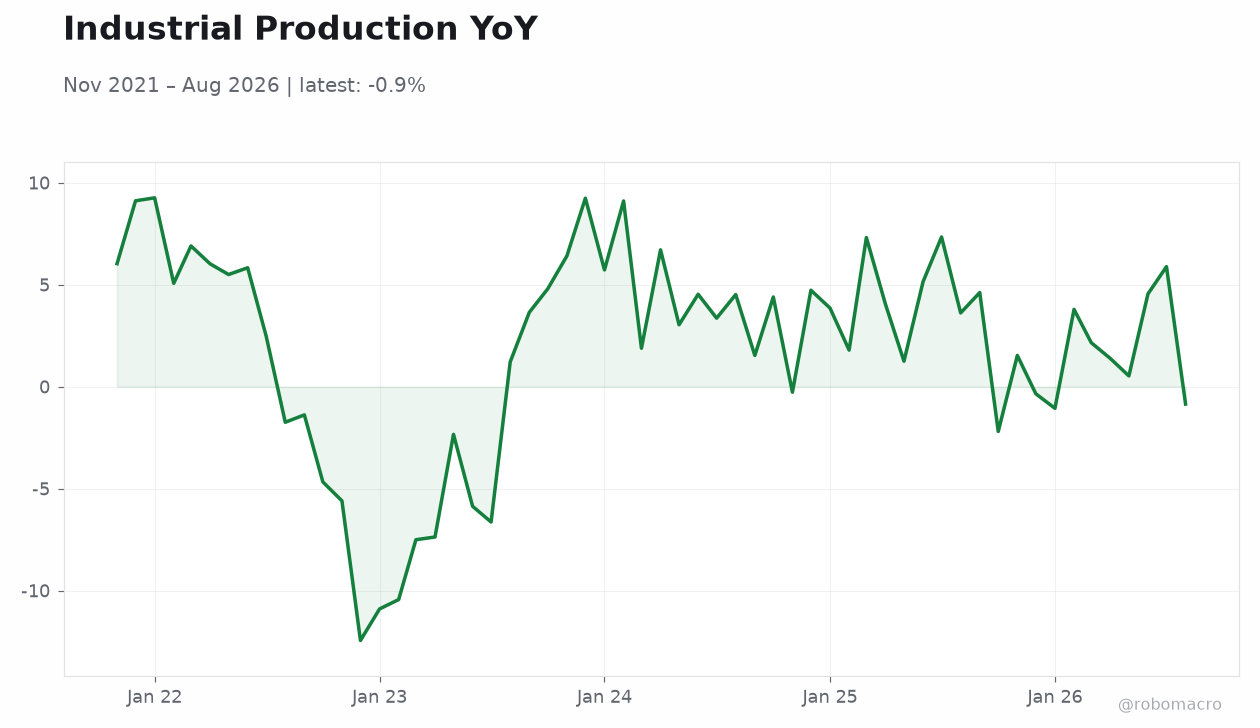
South Korea’s advance GDP estimates for the third quarter surprised to the upside, with quarter-over-quarter growth reaching 1.0% against a 0.7% consensus and year-over-year growth printing 3.4% versus 3.0% expected. The outperformance reflected stronger-than-anticipated exports and fixed investment tied to the semiconductor cycle. Consumer confidence slipped to 105.4 from 106.6, signaling softening household sentiment ahead of the holiday period.
Equity markets closed lower, with the KOSPI falling 1.46% to 5,469.47 and the KOSDAQ dropping 3.26% to 727.21 amid broad risk aversion. The won pared earlier gains, rising 0.38% to 1,326.81 against the dollar as investors positioned ahead of the Federal Reserve meeting. Government bond yields eased modestly, with the 10-year yield declining 3 basis points to 4.07% and the 3-year yield falling 1 basis point to 3.79%.
Samsung Electronics and SK Hynix shares advanced 3.99% and 5.57% respectively, providing a partial offset to the broader market decline.
The Day Ahead
Market participants will monitor the Business Confidence Index release scheduled for 28 October, which is expected to reflect ongoing semiconductor sector strength. Export data due on 31 October will provide further insight into October shipment trends following the robust Q3 performance. Attention also centers on the Federal Reserve policy decision later this week, given its potential impact on global risk sentiment and capital flows into Korea.
The won’s recent consolidation near current levels suggests limited immediate pressure, though any hawkish Fed surprise could test the 1,330 area. Domestic equity positioning remains focused on memory-chip names, with investors assessing whether AI-related capital expenditure momentum can sustain the recent outperformance in large-cap technology stocks.
Other Economic Notes
The Bank of Korea has highlighted Korea’s elevated exposure to global AI capital expenditure cycles, noting that a sudden reversal in Big Tech spending could transmit shocks rapidly through the domestic financial system. ↓ p.2